Neste divests its NAPCON technology to Lummus Technology

Neste, the world’s leading producer of renewable diesel and sustainable aviation fuel, has signed an agreement to divest its proprietary NAPCON technology to Lummus Technology.

NAPCON encompasses a comprehensive suite of digital solutions, including interactive operator training simulators, game-aided learning systems, real-time process optimisation tools, AI-based process predictors, and real-time process information gathering, monitoring, and analytics. These products have been continuously developed to meet the highest standards of process safety, operational profitability, and production asset competitiveness.

Markku Korvenranta, executive vice president and COO of Neste, commented: “I am thrilled by this announcement. Lummus has the capability to keep NAPCON technology competitive as well as secure the maintenance and development of existing installations for Neste and the broader NAPCON client base. We believe Lummus is the right partner to scale up NAPCON technology and ensure its long-term competitiveness.”

Leon de Bruyn, president and CEO of Lummus Technology, added: “I am grateful for the long-term partnership with Neste, renowned for their industry vision. The acquisition of NAPCON’s digital solutions and the continuation of our partnership with Neste represent transformative steps for Lummus. This move aligns with our strategic vision of integrating cutting-edge AI-driven solutions with process technology to enhance customer operations.”

Neste currently uses NAPCON installations across its production sites to optimise operations, ensure operator competence, and provide critical insights for refinery decision-making. As part of the transaction, the two companies have entered into a long-term service agreement to guarantee the continued maintenance and development of NAPCON systems at Neste facilities. Key personnel associated with NAPCON will also transfer to Lummus to ensure continuity and leverage critical expertise.

Lummus Technology, through its digital arm Lummus Digital and in collaboration with Ferroman, will provide ongoing digital services for NAPCON. Ferroman is a transatlantic provider of digital and engineering solutions for the steel and process industries, specialising in advanced automation, AI-driven optimisation, and green transition services across the Nordics, Middle East, and the Americas.

Lummus Digital, a joint venture between Lummus Technology and TCG Digital, combines process engineering expertise with advanced data science to deliver integrated digital solutions to industrial customers.

For more information visit www.neste.com

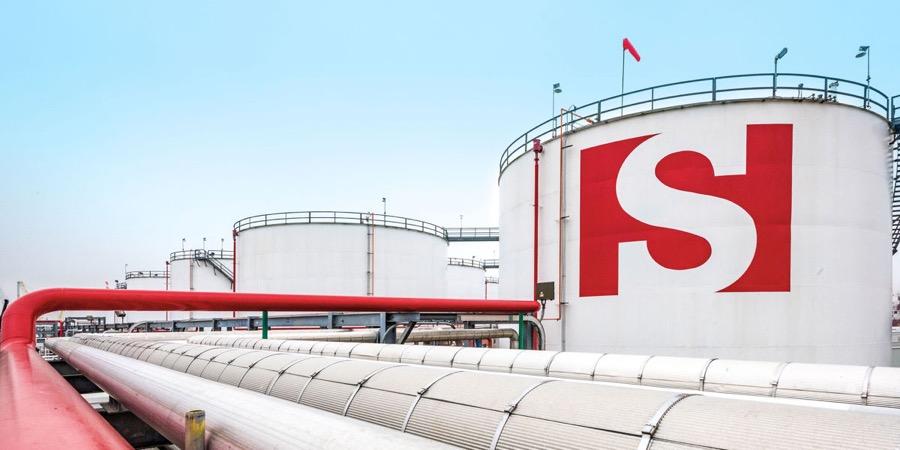
Stolthaven Terminals strengthens ties in Taiwan with visit to Kaohsiung

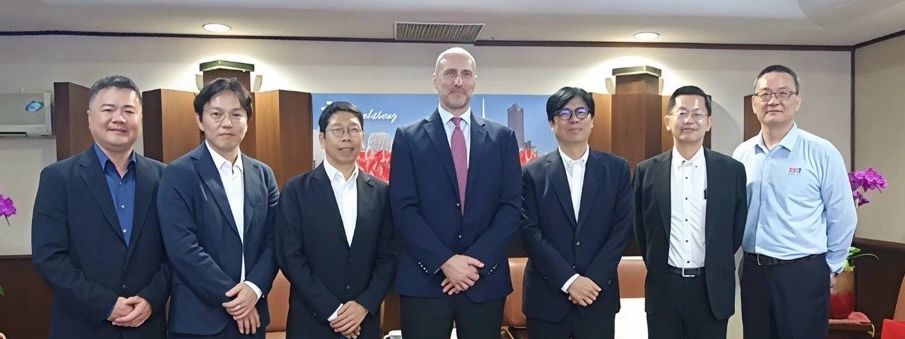
This week, Guy Bessant, president of Stolthaven Terminals, visited Taiwan to meet with the team developing the company’s newest facility, Stolthaven Revivegen Terminal Co. Ltd., and to engage in discussions with senior representatives of the Kaohsiung City Government.

During his visit, Bessant presented the Mayor of Kaohsiung City, Mr Chen Chi-mai, with a commemorative gift as a symbol of Stolthaven’s appreciation and to reaffirm the partnership and shared commitment to the city’s ongoing development and growth.

Speaking during the visit, Bessant said: “With our partners in Taiwan, we are building critical infrastructure. And together with our affiliated companies—Stolt Tankers and Stolt Tank Containers—the terminal will further strengthen our capabilities to provide supply chain solutions for local and multinational customers.”

The new terminal forms part of Stolthaven’s broader strategy to expand its presence in Asia and enhance its ability to deliver integrated, efficient, and sustainable logistics solutions across the region.

For more information visit www.stolt-nielsen.com

Baker Hughes awarded first technology agreement with Petrobras to develop definitive solution for pipeline corrosion

Baker Hughes, a leading energy technology company, has announced a joint technology development programme with Petrobras to deliver a definitive solution for stress corrosion cracking due to CO2 (SCC-CO2) in flexible pipe systems.

The pre-commercial agreement includes development, testing, and a purchase option for the next-generation flexible pipes, which will be engineered to provide an extended service life of 30 years in high-CO2 environments. The collaboration will be primarily carried out at Baker Hughes’ Rio de Janeiro Energy Technology Innovation Centre and its nearby flexible pipe manufacturing plant.

Addressing SCC-CO2 Challenges in Pre-Salt Fields

First identified in 2016, SCC-CO2 affects flexible pipes in pre-salt fields, where naturally occurring CO2 concentrations are high. If water enters a pipe’s annulus area, it can lead to corrosion of steel reinforcement layers, compromising structural integrity and reducing the lifespan of risers and flowlines.

This issue is particularly relevant in Brazil’s pre-salt fields, where Petrobras is actively reinjected CO2 from production operations to reduce flaring and enhance oil recovery efforts. Petrobras has committed to limiting atmospheric emissions, making carbon capture, utilisation, and storage a critical tool for achieving its sustainability objectives.

Advancing Flexible Pipe Technology

Until now, operators in high-CO2 environments have relied on solutions that mitigate SCC-CO2 impacts while limiting the service life of risers and flowlines. Baker Hughes’ flexible pipe systems and advanced monitoring technologies have proven effective in minimizing SCC-CO2 effects, and the company remains a key supplier of flexible pipe systems

For more information visit www.bakerhughes.com

Benko Products delivers custom foundationless railcar platform for safer loading

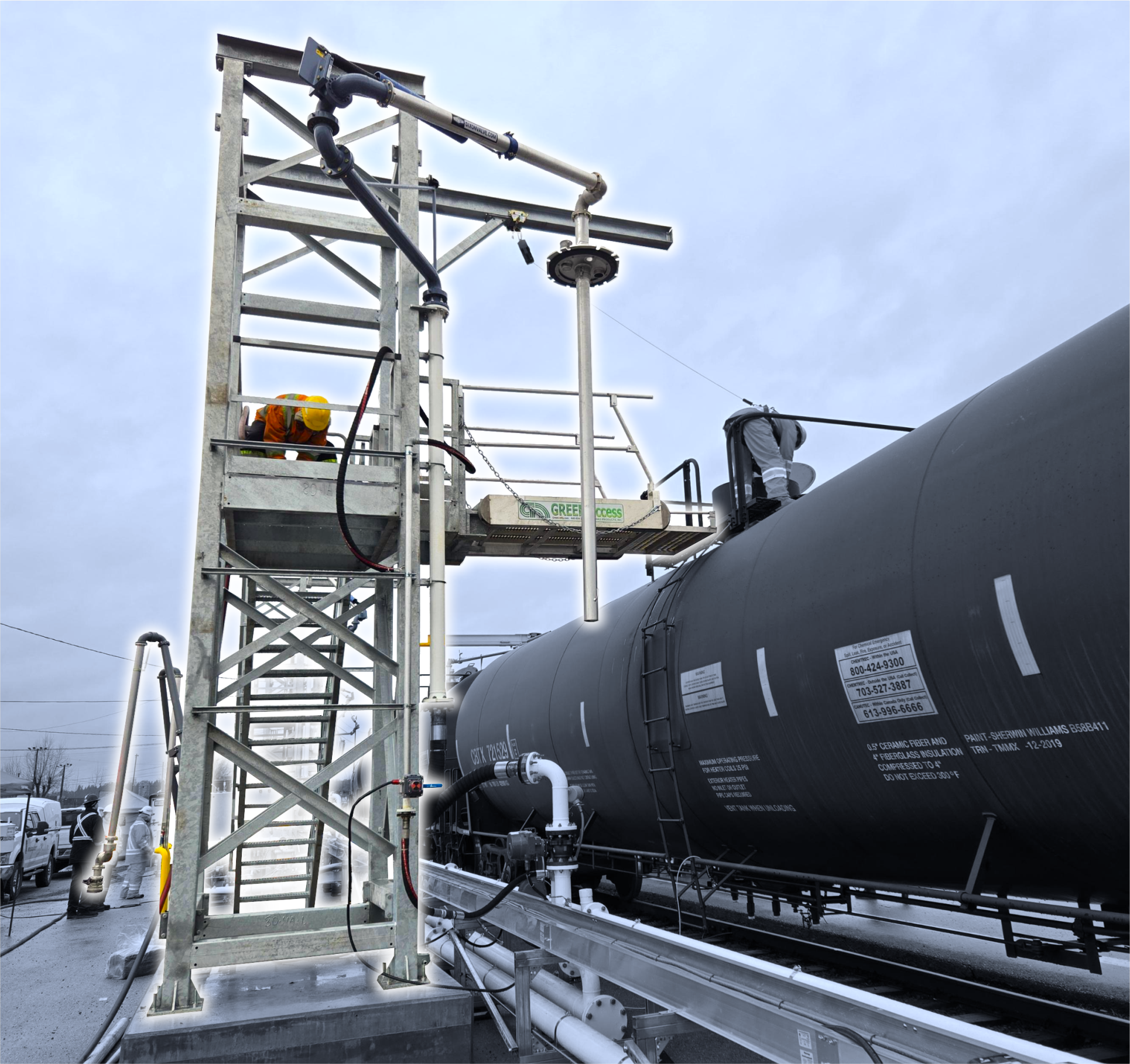
Benko Products, Inc., a leading manufacturer of truck and railcar loading safety equipment, has recently engineered a bespoke foundationless railcar platform to address the unique loading challenges of a key client.

The client required a safer, more efficient method for operators to access the tops of liquid railcars, which remained coupled throughout the loading process. Traditional safety cage systems proved unsuitable due to inconsistent crashbox configurations and the limited spacing between railcars.

In response, Benko Products developed a single-pedestal platform featuring a tracking safety bridge and a spring-operated fold-down ramp. This innovative design not only reduces the need for costly foundations, but also enables operators to access any point along the 13-foot platform with ease—eliminating the risks associated with climbing railcars while carrying tools.

To further enhance safety, the platform incorporates a fall restraint system with an overhead trolley beam, providing complete mobility and meeting OSHA’s 5,000-pound tie-off requirements.

This tailored solution demonstrates Benko’s commitment to delivering application-specific safety systems. The project also underscores the critical importance of considering variables such as fall clearance, secure tie-off capabilities, and chemical exposure when selecting fall protection equipment for rail and truck loading environments.

For more information visit www.benkoproducts.com

bp completes loading of first cargo from Greater Tortue Ahmeyim LNG project

bp has safely loaded the first cargo of liquefied natural gas for export from its Greater Tortue Ahmeyim Phase 1 project, located offshore Mauritania and Senegal. This milestone follows the announcement earlier this year of the project’s first gas flow.

The first LNG cargo from GTA marks bp’s third upstream major project start-up in 2025 and is part of the company’s plan to deliver 10 major projects by the end of 2027, in line with its strategy to grow its upstream oil and gas business.

Gordon Birrell, executive vice president of production & operations at bp, commented: “This first cargo from Mauritania and Senegal marks a significant new supply for global energy markets. Starting exports from GTA Phase 1 is an important step for bp and our oil and gas business as we celebrate the creation of a new production hub within our global portfolio. This is the culmination of years of work from the entire project and operations teams. Congratulations to all who were involved in safely reaching this landmark. I would also like to thank the governments of Mauritania and Senegal, and our partners – Kosmos Energy, PETROSEN and SMH – for their ongoing support and collaboration.”

The initial shipment of LNG was transferred to a carrier from the project’s floating liquefied natural gas vessel located approximately 10 kilometres offshore, where the natural gas had been cryogenically cooled, liquefied, and stored.

GTA is one of Africa’s deepest offshore developments, with gas resources situated in water depths reaching up to 2,850 metres. Recognised as a “project of strategic national importance” by the governments of Mauritania and Senegal, GTA Phase 1 is expected, once fully commissioned, to produce around 2.4 million tonnes of LNG per year. Allocations of gas volumes are also planned for domestic markets in Mauritania and Senegal when ready.

Dave Campbell, senior vice president for Mauritania and Senegal at bp, added: “This is a very proud day for Mauritania and Senegal. Throughout the development of this project, we have built strong relationships with the project’s host governments, local communities and our partners, and we look forward to strengthening these in years to come as we continue ongoing operations.”

bp entered Mauritania and Senegal in 2017. Since then, GTA construction activities have generated over 3,000 local jobs and engaged approximately 300 local companies across the two countries.

For more information visit www.bp.com

Vopak North America celebrates 50 years of growth and leadership in independent tank storage

Vopak, a global leader in tank storage, has been helping the world flow forward for over 400 years. This year, Vopak North America proudly marks 50 years of industry leadership, celebrating a legacy of resilience, innovation, and commitment to safe and sustainable storage solutions.

From its beginnings as Paktank Gulf Coast, Vopak North America has grown into one of the most trusted names in independent tank storage. Over the past five decades, the company has played a vital role in the logistics of liquid bulk storage, continually evolving through strategic expansions, technological advancements, and a steadfast focus on safety and sustainability.

“Vopak North America’s 50-year journey is a testament to resilience, adaptability, and our unwavering commitment to providing safe and sustainable storage solutions,” said Maria Ciliberti, president, Vopak US and Canada. “We are proud of our history and excited for the future as we continue to shape the industry and support the evolving needs of our customers.”

A Legacy of Excellence: From Paktank Gulf Coast to Vopak North America

Vopak North America’s journey began on December 4, 1975, with the incorporation of Paktank Gulf Coast. Established to meet the growing demand for reliable bulk liquid storage in the petrochemical and oil sectors, the company quickly built a strong presence along the U.S. Gulf Coast, particularly in the Houston Ship Channel.

A major milestone came in 1999 when Paktank Gulf Coast became part of Royal Vopak, following the merger of two Dutch logistics firms, Van Ommeren and Pakhoed. This consolidation created the world’s largest independent tank storage provider and propelled Vopak North America onto a path of accelerated growth and global connectivity.

Expansion, Innovation, and Sustainability

During the early 2000s, Vopak North America pursued a dynamic expansion strategy, acquiring new terminals, increasing storage capacity, and investing heavily in technological advancements. The company introduced automation, digital monitoring systems, and enhanced safety protocols, significantly improving operational efficiency and reducing risks.

Vopak North America has also remained a leader in sustainability. The company has invested in emissions control, alternative energy solutions, and initiatives to lower its environmental impact, aligning with global efforts to create a more sustainable energy sector.

Pioneering the Future of Energy Storage

In recent years, Vopak North America has expanded its portfolio beyond traditional energy products, playing a crucial role in storing and handling renewable energy sources such as hydrogen, ammonia, and liquefied natural gas. The company has embraced digitalisation with real-time monitoring and AI-driven predictive maintenance systems, further enhancing operational safety and efficiency.

With a strong commitment to reducing its carbon footprint and promoting circular economy practices, Vopak North America continues to upgrade its facilities with eco-friendly technologies and state-of-the-art safety systems.

Looking Ahead: Innovation, Growth, and Leadership

As it enters its next chapter, Vopak North America remains dedicated to innovation, sustainability, and operational excellence. The company is exploring new markets, forging strategic partnerships, and investing in emerging energy solutions to maintain its leadership in independent tank storage.

With a foundation built on 50 years of excellence and a vision for the future, Vopak North America is poised to continue leading in a rapidly evolving global energy landscape.

For more information visit www.vopak.com

Falcker discusses the power of predictive maintenance

Tank and terminal operators face a complex interplay of push-pull factors in both daily operations and long-term business strategies. Balancing short-term demands with long-term investment remains a constant challenge, particularly when managing budget constraints. However, predictive maintenance offers a forward-thinking approach that enhances operational efficiency and delivers lasting benefits.

Staying Ahead with Predictive Maintenance

Traditionally, asset maintenance has relied on either periodic inspections or reactive repairs. This means storage tanks are either serviced on a fixed schedule—sometimes prematurely—or only repaired when a problem becomes too severe to ignore. Both methods present inefficiencies, including unnecessary site visits, customer downtime, and costly failures that pose serious safety risks.

Predictive maintenance provides a smarter alternative by allowing operators to allocate resources more effectively. Instead of adhering to fixed maintenance schedules or reacting to unforeseen failures, predictive strategies use real-time data to optimise maintenance planning. Operators can monitor tank integrity, corrosion levels, and mechanical wear, enabling them to make data-driven decisions about when and where maintenance is required.

However, many operators struggle with fragmented data, which is often scattered across multiple systems, limiting their ability to extract meaningful insights. Centralised platforms that consolidate this information are proving to be game-changers, as they enable predictive maintenance to evolve into a reliable, actionable strategy that reduces costs while improving efficiency.

Proactive, Data-Driven, and Sustainable Maintenance

A smarter approach to maintenance means making each inspection more targeted and insightful. By leveraging real-time monitoring tools, operators can identify degradation patterns and anticipate potential issues before they lead to failures. This approach:

  • Optimises service intervals to prevent unnecessary maintenance.

  • Enhances safety by reducing the risk of unexpected failures.

  • Reduces downtime and improves asset availability.

  • Improves cost efficiency by streamlining operational budgets.

Predictive maintenance is not just about cost reduction; it represents a fundamental shift in how asset management is approached. Reducing unnecessary site visits and optimising maintenance schedules contributes to a safer, more sustainable work environment. With automation minimising high-risk manual inspections, worker safety improves while operational efficiency increases.

Standardization: The Key to Reliable Predictive Maintenance

One of the key challenges in predictive maintenance is ensuring consistency. Without standardised processes, data can become unreliable, leading to poor decision-making. Establishing clear methodologies for inspections, assessments, and repairs is critical to maximising the benefits of predictive strategies.

One solution that supports standardisation is the Asset Condition Monitor (ACM). This tool enables operators to:

  • Standardise visual inspections and track asset conditions over time.

  • Automate compliance calculations for industry standards such as API 653 and EEMUA 159.

  • Integrate inspection records with intelligent recommendations, allowing operators to scope work more accurately and proactively manage schedules.

Predictive Maintenance: The Future of Asset Management

By addressing structured workflows and implementing configurable checklists, predictive maintenance ensures that every inspection follows a uniform process. This enables operators to track trends over time, compare historical data, and make informed maintenance decisions.

As digital tools continue to advance, predictive maintenance is poised to become the industry standard rather than an exception. By embracing technology-driven solutions, tank and terminal operators can move beyond routine checkups and reactive fixes towards a smarter, more strategic approach to asset management.

For more information visit www.falcker.com

Metafuels and Evos partner to accelerate e-SAF production in Rotterdam

Swiss aviation technology firm Metafuels AG is set to open a new production facility for synthetic sustainable aviation fuel at the Port of Rotterdam, marking a significant milestone in the commercialisation of its proprietary aerobrew methanol-to-jet technology.

Metafuels is partnering with Evos Rotterdam to advance development of the plant, named Turbe. Evos, one of Europe’s leading storage companies for liquid energy and chemicals, brings vital infrastructure and operational expertise to the collaboration, underlining its commitment to supporting innovative energy solutions.
This latest project builds on Metafuels’ growing presence across Europe, following the recent announcement of Pizol, a planned production facility in Denmark. Initially, the Rotterdam site will produce 12,000 litres of e-SAF per day, with a second-phase expansion set to increase capacity tenfold to 120,000 litres per day.

Strong Investment Backing and Infrastructure

Metafuels’ rapid expansion is supported by robust financial backing, having raised $22 million in just over two years. This includes a $5 million grant from the Swiss Federal Office of Energy, positioning the company among the best-funded SAF startups in Europe.

The Evos Rotterdam terminal—Europe’s largest ethanol storage provider and a dedicated multimodal methanol hub—offers full connectivity by vessel, barge, truck and rail. The facility can store renewable methanol that meets International Methanol Producers and Consumers Association (IMPCA) standards, making it an ideal location for Metafuels’ operations.

Advanced Technology for Scalable, Low-Carbon Aviation Fuel

Metafuels’ patented aerobrew process converts renewable methanol into jet fuel with high energetic efficiency and ultra-high carbon conversion, resulting in a drop-in fuel that reduces lifecycle emissions by up to 90 percent compared to conventional jet fuel. Crucially, it requires no changes to existing aircraft or airport infrastructure.

The technology is flexible, capable of processing both bio-methanol—derived from biological waste—and e-methanol, produced using renewable electricity and captured carbon. This versatility enables the production of both bio-SAF and e-SAF, or a combination of the two, in response to market dynamics.

The need for such innovation is critical. Aviation currently accounts for more than 2 percent of global carbon dioxide emissions—approximately 800 million tonnes. When additional greenhouse gases and climate factors are considered, the sector’s total contribution to global warming increases to around 3.5 percent.

Aligning with EU Net-Zero Mandates

Development of the Turbe facility is progressing steadily, with key milestones already achieved. The next step is the launch of front-end engineering and design, with a final investment decision expected in mid-2026.

The project supports major European decarbonisation initiatives, including RefuelEU Aviation and the Carbon Offsetting and Reduction Scheme for International Aviation (CORSIA). Synthetic SAF is expected to play a pivotal role in meeting the EU’s climate goals, with the bloc’s sub-mandate for synthetic fuels set to begin at 1.2 percent in 2030 and increase to 35 percent by 2050.

Leadership Commentary

Saurabh Kapoor, CEO of Metafuels, stated:
“We have made excellent progress with our technology, and this first-of-a-kind commercial plant represents a major step forward in its deployment. We are very excited about our cooperation with Evos as we work towards delivering the Turbe project. Europe has ambitious decarbonisation targets, but without scalable and affordable SAF production, aviation will struggle to keep up.”

Christiaan Kop, managing director at Evos Rotterdam, added:
“Metafuels is addressing one of the aviation sector’s most urgent challenges. With our infrastructure and operational expertise, we are well positioned to support this sustainable aviation fuel project. This partnership reflects our commitment to scalable, efficient solutions that will drive the industry’s net-zero transition.”

Boudewijn Siemons, CEO of the Port of Rotterdam, also welcomed the development:
“We are delighted that Metafuels has chosen Rotterdam for this new e-SAF facility. Their partnership with Evos and use of existing methanol infrastructure supports our climate goals and strengthens the port’s position as a leading renewable fuels hub.”

This development signals a major step in Europe’s efforts to decarbonise aviation and establishes Rotterdam as a key player in the future of sustainable flight.

For more information visit www.evos.eu

Stolthaven Terminals partners with Rönesans Holding on a landmark terminal in Türkiye

Stolthaven Terminals has announced a partnership with Rönesans Holding to jointly develop a new terminal located in Ceyhan, Adana, Türkiye. The facility forms part of a large-scale development project valued at US $2 billion, which also includes a polypropylene production plant to be developed separately by Rönesans Holding. The plant is expected to have an annual production capacity of 472,500 metric tonnes, meeting approximately 17 percent of Türkiye’s PP demand.

The new terminal will feature a deep-sea jetty and feedstock storage services for the adjacent PP plant, incorporating advanced environmentally sustainable technologies to enhance efficiency. Situated within the Ceyhan Energy Specialised Industrial Zone, the terminal will also be ideally positioned to offer efficient and competitive storage and handling services to other customers in southern and central Türkiye. Plans are in place to expand the facility into a chemical terminal to support the future growth of the industrial zone.

Türkiye is one of the world’s largest importers of polypropylene, a versatile commodity used across a range of industries including textiles, automotive, and packaging. The development will boost Türkiye’s domestic production and distribution capabilities, reducing reliance on imports, and represents one of the largest private sector investments in the country.

Guy Bessant, president of Stolthaven Terminals, commented: “We are pleased to partner with Rönesans Holding on this landmark project. With more than 50 years of experience in the safe and efficient handling of bulk liquids and gases, and expertise in large-scale developments, Stolthaven Terminals is well positioned to deliver this critical infrastructure. This terminal will not only serve the Ceyhan PP Plant but could also provide future storage and logistics solutions for local and international companies operating in the region.”

Erman Ilıcak, president of Rönesans Holding, added: “This development exemplifies our commitment to sustainable, high-impact investments that support Türkiye’s economic and industrial ambitions. The Ceyhan PP Plant will create hundreds of new jobs and secure a more resilient and competitive supply chain for polypropylene across Türkiye and Europe.”

For more information visit www.stolt-nielsen.com

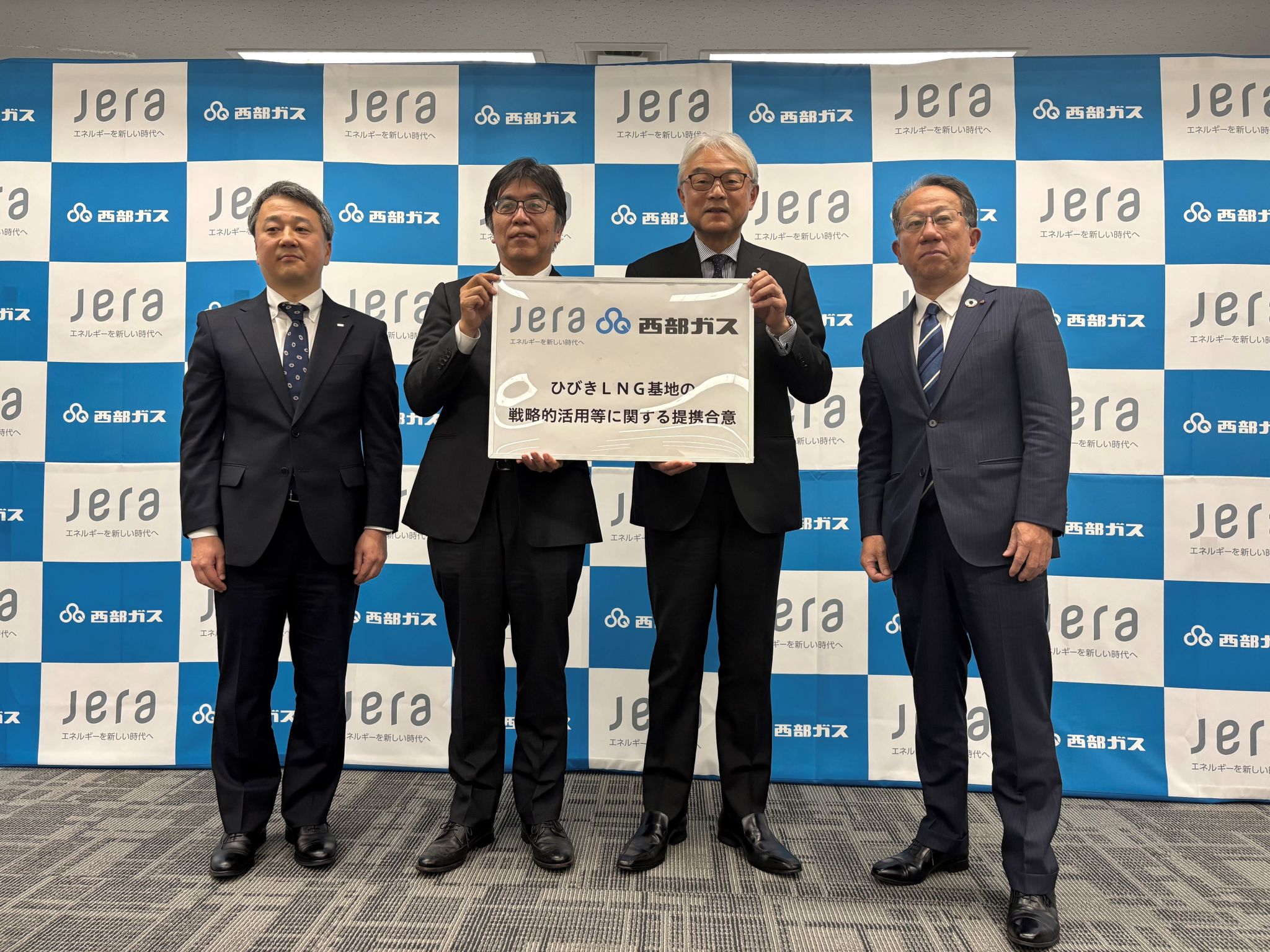
JERA and Saibu Gas enter strategic partnership to expand Hibiki LNG terminal

JERA Co., Inc. and Saibu Gas, the largest gas company in Kyushu and one of Japan’s top-four gas utilities, have signed a strategic agreement to enhance the utilisation of the Hibiki LNG Terminal. The partnership aims to strengthen stable LNG procurement and support the global growth ambitions of both companies’ energy businesses.

Located in Kitakyushu, the Hibiki LNG Terminal is set for expansion with the addition of a third storage tank, offering 230,000 cubic metres of capacity. Saibu Gas will invest in the development, with construction scheduled to begin in summer 2025 and commissioning expected in the first half of FY2029.

Under the agreement, JERA will utilise the expanded capacity to better manage fluctuations in LNG supply and demand, responding more flexibly to changes in electricity needs. The reciprocal LNG sharing framework established through the partnership will further stabilise energy supplies for both companies. Additionally, the terminal’s strategic location will position it as a key hub for business expansion across Asia and support broader decarbonisation efforts within Japan and the region.

For more information visit www.jera.co.jp

Storagetech™ successfully completes external floating roof mechanical seal order for Saudi Aramco Jubail Refinery Company

Storagetech™, a global leader in designing and manufacturing storage tank equipment, is proud to announce the successful completion of a tailor-made external floating roof mechanical seal order for Saudi Aramco Jubail Refinery Company (SASREF) in the Kingdom of Saudi Arabia.

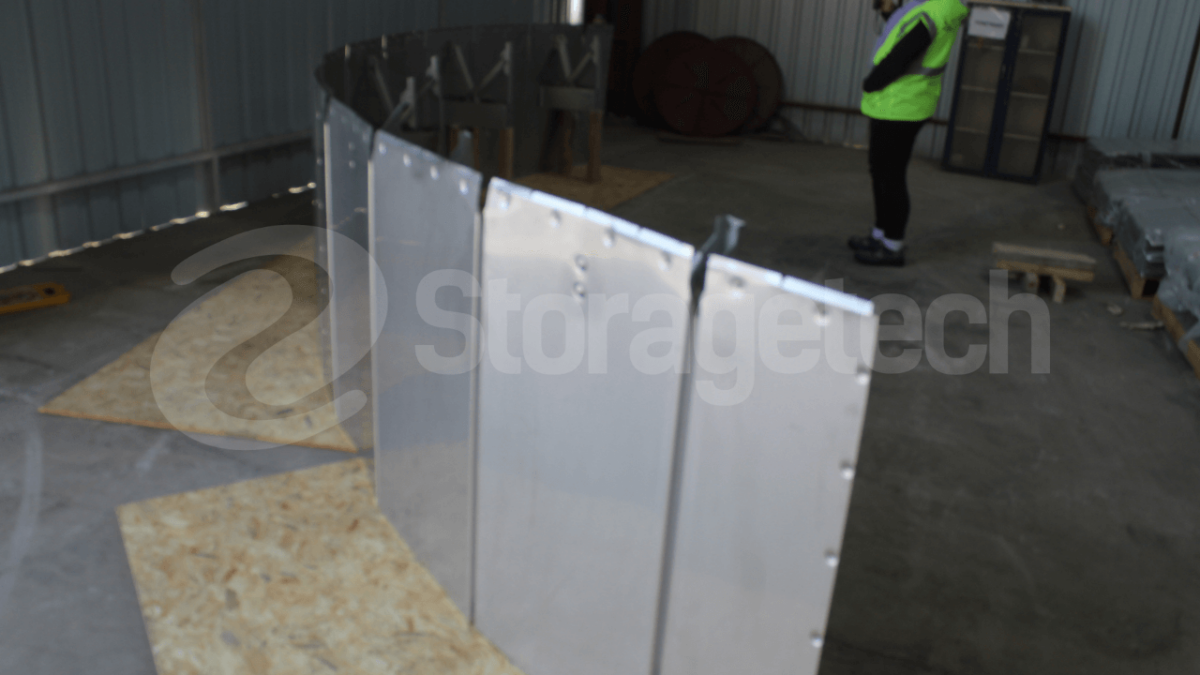
Storagetech™ was responsible for the design, material supply, fabrication, packaging, and installation supervision of scissor-type primary, secondary, and fabric mechanical shoe seals for three storage tanks with diameters of 60.96m, 43.89m, and 29.26m. The project required customised solutions to accommodate SASREF’s existing tank configurations and seal orientation, ensuring a precise fit for their operational needs.

The project was carried out in strict compliance with the latest API (American Petroleum Institute) standards, ensuring a high-performance sealing system that enhances safety, minimises emissions, and improves tank efficiency. The project also plays a crucial role in minimising vapour loss and emission control, aligning with Saudi Vision 2030’s commitment to environmental protection. By implementing advanced sealing technologies, Storagetech™ contributes to the safety of operations while protecting the environment from harmful emissions.

With extensive expertise, Storagetech™ supplied mechanical shoe seals made from PTFE-coated woven fibreglass fabric to enhance chemical resistance and temperature endurance. The solution was carefully designed to withstand harsh environmental conditions and volatile hydrocarbons while maintaining peak performance.
A key factor in the success of this project was Storagetech™’s ability to tailor solutions to client requirements. Working closely with SASREF, Storagetech™ ensured seamless integration of the sealing systems into the refinery’s existing tanks.

“This project underscores our commitment to delivering high-quality, customised tank sealing solutions that meet the most stringent industry standards,” said Can Öcal, Marketing & Communication Manager at Storagetech™. Our R&D team is continuously working on various material performance studies and real-time seal performance tests to ensure our products meet the highest industry benchmarks. “We take pride in our ability to provide SASREF with a high-performance sealing system that ensures safety, efficiency, and compliance with API regulations.”

With over 40 years of experience in mechanical seal and storage tank equipment manufacturing, Storagetech™ provides innovative solutions for oil & gas, petrochemical, water, and industrial applications worldwide. “Storagetech™ also operates a company in KSA Dammam to provide dedicated local support for our customers in the region,” said Ahmed Abdalaziz, KSA sales engineer at Storagetech™.

For more information visit www.storagetech.de

TotalEnergies and HitecVision join forces to continue the development of Polska Grupa Biogazowa in Poland

TotalEnergies has entered into a sales and purchase agreement with Norwegian energy investment firm HitecVision for the sale of a 50 percent stake in Polska Grupa Biogazowa, Poland’s leading biogas company. The deal, valued at an enterprise worth of €190 million, marks a strategic partnership aimed at accelerating the growth of Poland’s biogas sector.

PGB, founded in 2007 and acquired by TotalEnergies in 2023, currently operates 20 biogas units across Poland with a production capacity exceeding 450 GWh of biomethane equivalent. The company primarily produces electricity and heat through combined heat and power systems and is actively developing two additional facilities. With ambitions to expand into biomethane production, PGB aims to achieve a production capacity of 2 TWh of biomethane equivalent by 2030.

Strategic Alignment and Market Opportunity

The transaction reflects TotalEnergies’ broader strategy of forming strategic partnerships to support renewable energy growth while optimising the return on its investments.

“We are delighted to welcome HitecVision as a partner in biogas production in Poland,” said Stéphane Michel, president of gas, renewables & power at TotalEnergies. “This transaction will enable PGB to continue its growth in a country where biogas is rapidly developing. It is in line with the partial sale business model applied to our renewable assets, allowing us to maximise the profitability of our investments.”

For HitecVision, the acquisition aligns with its New Energy programme, which prioritises investments in biogas and biomethane to support energy transition goals across Europe.

“Biogas and biomethane are at the heart of HitecVision’s New Energy programme, and Poland represents a unique market opportunity to pursue profitable growth while contributing to the decarbonisation of Poland and the EU,” said Erlend Ellingsen, CEO and Managing Partner of HitecVision. “TotalEnergies has a well-established industrial footprint in Poland, and as partners, we have complementary skills that we will jointly implement to significantly expand PGB over the coming years, through projects in development as well as mergers and acquisitions.”

A Growing Sector in a Key European Market

The partnership between TotalEnergies and HitecVision underscores the growing importance of biogas in the EU’s broader decarbonisation efforts and Poland’s own energy transition goals. As the country continues to scale up renewable energy adoption, investments such as this one position PGB to play a central role in shaping a cleaner, more resilient energy future for Poland.

For more information visit www.totalenergies.com

BW Energy confirms significant oil discovery at Bourdon prospect offshore Gabon

BW Energy has confirmed a substantial oil discovery at the Bourdon prospect in the Dussafu Licence offshore Gabon, following the successful drilling of the second sidetrack, DBM-1 ST2. The appraisal well has demonstrated good reservoir and fluid quality, supporting the initial discovery announced on 7 March 2025. Management estimates indicate approximately 56 million barrels of oil in place, with around 25 million barrels considered recoverable.

“The appraisal well confirms the potential for establishing a new development cluster with a production facility following the MaBoMo blueprint. We expect at least four producing wells,” said Carl K. Arnet, CEO of BW Energy. “We continue to successfully expand the Dussafu reserve base which, together with multiple additional prospects yet to be drilled, will support long-term production and value creation in Gabon.”

Initial data from the appraisal shows that oil from the Bourdon field has the lowest viscosity among Dussafu discoveries, with an average measurement of 3.5 centipoise, compared to 5 cp and 7 cp at the Hibiscus/Tortue and Ruche fields, respectively.

Logging data and formation pressure measurements confirm approximately 11.2 metres of pay within an overall hydrocarbon column of 35.2 metres in the Gamba formation. The DBM-1 ST2 well was drilled by the Norve jack-up rig to a total depth of 4,731 metres.

The Bourdon discovery is located approximately 15 kilometres west of the FPSO BW Adolo and 7.5 kilometres southeast of the MaBoMo facility. The find will enable BW Energy to book additional reserves not included in its 2024 Statement of Reserves.

For more information visit www.bwenergy.no

Chevron delivers first oil while lowering development costs

For Isral Wright, working in the Gulf of America has demonstrated how success can be carried forward from one project to the next. Following his contribution to the industry-first Anchor Project, Wright has played a key role in bringing Chevron’s latest deepwater development, Ballymore, to first oil.

“Both projects are growing Chevron’s production in the region,” said Wright, Ballymore subsea hardware and installation engineer. “Getting them online is a big step forward.”

Maximising Efficiency Through Subsea Tiebacks

Ballymore, which achieved first oil on 20 April, is a deepwater oil field developed as a subsea tieback. Connected via a subsea flowline to Chevron’s existing Blind Faith facility approximately three miles away, the project enables Chevron to expand production without the need for a new platform. This tieback approach reduces development costs and accelerates the timeline for bringing production online.

A subsea tieback connects offshore oil and gas fields to existing infrastructure, facilitating efficient resource development. Ballymore’s integration with Blind Faith is a prime example of Chevron’s strategy to do more with less, capitalising on existing assets to drive production growth.

Strengthening Domestic Supply

Bringing the Ballymore Field online marks a significant milestone for Chevron. With first oil destined for Chevron’s Pascagoula Refinery, the project strengthens the domestic supply within the Gulf Coast refining network, supporting long-term energy security.

Ballymore is expected to produce up to 75,000 gross barrels of oil per day, with Chevron holding a 60 percent operating interest.

Highlighting the importance of projects like Ballymore, Wright said, “The world population has been increasing at a steady clip for a while, and this means there’s going to be a growing need for energy. To meet that demand, we need to have a portfolio of many different options, and this is one of them.”

Continued Growth in the Gulf

Ballymore and Anchor represent just part of Chevron’s expanding Gulf of America portfolio. Production at the Whale Project, where Chevron has a non-operating interest, commenced in mid-2024. Additionally, the company initiated water injection projects at the Tahiti and Jack/St. Malo facilities to boost output.

Chevron’s deepwater strategy focuses on the exploration and development of resources near existing assets, with a target to reach 300,000 net barrels of oil-equivalent per day in the Gulf by 2026.

Low-Carbon Production

The Gulf of America hosts some of the lowest carbon intensity producing assets in Chevron’s global portfolio, reinforcing the company’s commitment to delivering energy with a lower environmental footprint.

Building on Experience

Operating safely since 2008, Blind Faith continues to provide a reliable platform for Chevron’s operations. Ballymore benefited from standardised equipment designs and repeatable engineering solutions, with lessons from the Anchor Project applied to streamline its development.

Reflecting on the achievement, Wright noted the satisfaction of seeing both projects realised after years of effort. “It’s nice to see,” he said, adding of Anchor: “It’s kind of cool to know I was a part of something that has never been done before.”

For more information visit www.chevron.com

Osaka Gas announces participation in India’s renewable energy business to expand the Daigas Group’s energy business in the country

Osaka Gas Co., Ltd. president and CEO: Masataka Fujiwara has announced its entry into India’s renewable energy sector through a partnership with Clean Max Enviro Energy Solutions Pvt. Ltd., a leading supplier of renewable energy solutions to the commercial and industrial sector in India. This initiative marks the Daigas Group’s first venture into India’s renewable energy market, reinforcing its commitment to sustainable energy expansion and decarbonisation.

India’s Growing Renewable Energy Market

India’s rapid economic growth has led to a significant rise in long-term power demand. With abundant solar irradiation and favourable wind conditions, the Indian government has set an ambitious target of 500 GW of renewable energy capacity by 2030. To achieve this goal, comprehensive support measures have been introduced to encourage investment and innovation in the renewable energy sector.

By partnering with Clean Max, Osaka Gas aims to leverage its experience in energy infrastructure and expand its presence in India’s evolving energy landscape. This collaboration builds on the Daigas Group’s existing City Gas Distribution business in India and aligns with its strategy to support economic growth while advancing decarbonisation efforts.

Joint Business Structure

Osaka Gas and Clean Max will jointly develop and operate renewable energy projects in India through a newly established framework:

Formation of a Japanese Consortium – Osaka Gas Singapore, a wholly owned subsidiary of Osaka Gas, will partner with the Japan Bank for International Cooperation (JBIC) to establish a Japanese investment consortium.
Creation of Clean Max Osaka Gas Renewable Energy Pvt. Ltd. (CORE) – Osaka Gas, through the consortium, will establish a joint venture company with Clean Max, to which selected renewable energy projects owned by Clean Max will be transferred.
Development of 400MW of Renewable Energy Assets – CORE will develop new renewable energy projects, with a target of owning approximately 400 MW of renewable assets within the next three years.

Power Supply to C&I Customers via Corporate PPAs – Through direct Corporate Power Purchase Agreements (PPAs), CORE will supply renewable energy to commercial and industrial customers via the power grid, supporting their decarbonization goals.

Osaka Gas’ Role and Future Expansion

Osaka Gas will leverage its expertise in energy infrastructure development and operations to support CORE’s success, particularly in areas such as Corporate PPA customer acquisitions. Additionally, the company plans to explore further collaboration with Clean Max beyond this initial venture, including potential projects in green hydrogen, e-methane, and other emerging energy solutions.

In its Medium-Term Management Plan 2026: “Connecting Ambitious Dreams (Plan 2026),” the Daigas Group reaffirmed its commitment to accelerating business expansion in the Asian market through renewable energy projects and energy infrastructure developments. This initiative aligns with the Group’s broader mission to support Asia’s economic development while advancing its decarbonisation goals.

With this strategic partnership, Osaka Gas takes a significant step in its global renewable energy expansion, positioning itself as a key player in India’s clean energy transformation.

For more information visit www.osakagas.co.jp

Plains Midstream Canada expands with Invest Alberta

Plains Midstream Canada, a subsidiary of Plains All American, has officially celebrated the successful startup of its natural gas liquids fractionation facility in Fort Saskatchewan, Alberta, marking a significant milestone for both the company and the province’s energy sector.

Developed using existing infrastructure and with strategic support from Invest Alberta and other partners, the facility provides a quick-to-market solution for customers. With an investment exceeding $200 million, the project generated over 350 jobs during construction and enhances the integration and connectivity of Plains’ NGL value chain across the region.

This expansion underscores Alberta’s continued leadership in energy production and processing, while reinforcing the province’s appeal as a destination for long-term investment.

Government and Industry Leaders Celebrate the Milestone

The project has drawn praise from Alberta’s political leadership, highlighting its economic and strategic value.

Premier Danielle Smith remarked:

“Alberta is proud to be a global leader in energy. This expansion by Plains is a powerful example of how companies continue to choose Alberta for its strong workforce, reliable infrastructure, and pro-investment climate. It’s another vote of confidence in our province’s future and great news for our economy.”

Brian Jean, minister of energy and minerals, emphasised the project’s alignment with Alberta’s energy ambitions:

“Alberta has some of the largest natural gas and natural gas liquids reserves in the world. Projects like this one are a key part of making Alberta a supplier of low-emissions energy and the petrochemical-based products that define modern life. We congratulate Plains on advancing the natural gas liquids supply chain that will make Alberta and its Industrial Heartland a global petrochemical leader.”

Matt Jones, minister of Jobs, Economy and Trade, echoed these sentiments:

“Despite international economic uncertainty, Alberta’s pro-business environment continues to draw world-class companies to our province. Plains’ investment in Alberta sends a clear message – investing in Alberta isn’t just forward-thinking, it’s good business.”

From the company’s perspective, the expansion represents a continuation of Plains’ long-standing commitment to providing vital midstream services.

Michelle Podavin, president of Plains Midstream Canada, said:

“Alberta’s Western Canadian Sedimentary Basin is one of the key resource growth basins across North America. Plains is proud to provide essential midstream infrastructure solutions to its customers and celebrate this expansion in Alberta.”

Rick Christiaanse, CEO of Invest Alberta, concluded:

“Alberta’s energy sector is more important than ever. This expansion by Plains demonstrates the long-term value of welcoming investments into Alberta as the benefits continue to flow, years after the initial investment was made. We are thrilled to celebrate this contribution to the Alberta economy while creating jobs for Albertans.”

The launch of this facility further solidifies Alberta’s position as a hub for NGL production and petrochemical innovation, supporting economic growth and job creation while enhancing Canada’s energy infrastructure.

For more information visit www.investalberta.ca

CB&I and Shell demonstrate first commercial-scale liquid hydrogen storage tank design for international trade applications at NASA

CB&I, together with a consortium including Shell International Exploration and Production, Inc., GenH2, and the University of Houston, has announced the successful completion of a first-of-its-kind, affordable, large-scale liquid hydrogen storage tank concept. Developed at NASA’s Marshall Space Flight Center in Huntsville, Alabama, the concept aims to support international import and export applications for liquid hydrogen.

Mark Butts, president and CEO of CB&I, highlighted the significance of the project, stating, “Our collaboration with this world-class project team will help provide a path to low-cost, large-scale liquid hydrogen storage. We are proud to leverage our six decades of experience with cryogenic insulation and storage to advance innovative solutions for the energy transition market.”

The project, launched in 2021 and supported by the US Department of Energy (DOE), introduced a novel non-vacuum tank design for large-scale LH₂ storage—up to 100,000 cubic metres—offering a substantial cost advantage over traditional vacuum-insulated tanks. The concept is currently being demonstrated through the construction, start-up, and testing of a small-scale LH₂ tank at NASA MSFC.

Theo Bodewes, general manager of Hydrogen Technology at Shell, remarked, “At Shell, we believe in the power of collaboration to advance technology and scale up innovative solutions. With the invaluable support from the DOE, this project demonstrates how experts from industry, academia, and government can solve complex technology challenges.”

The demonstration tank will notably increase MSFC’s hydrogen test facility storage capacity and will serve as a platform to test material behaviour under cryogenic conditions. In addition to a six-month test programme, a Space Act Agreement among the project partners allows MSFC to utilise the tank over a five-year period, with CB&I and Shell continuing to develop and test new insulation technologies.

James Fesmire, chief architect at GenH2, noted, “We take pride in participating in this industry collaboration to advance commercial liquid hydrogen storage applications. This initiative has allowed us to develop testing capabilities for thermal insulation systems and produce essential data for unlocking the global potential of liquid hydrogen.”

Dr. Ramanan Krishnamoorti, vice president of energy and innovation at the University of Houston, added, “The ability to store liquid hydrogen at scale using a non-vacuum design is a pivotal advancement and opens the door to a more flexible, affordable global hydrogen trade infrastructure.”

Dr. Sunita Satyapal, director of the DOE’s Hydrogen and Fuel Cell Technologies Office, praised the collaboration, stating, “This first-of-its-kind concept is a great example of unleashing American energy innovation. This work can contribute to America’s leadership in growing global markets for hydrogen and hydrogen-based fuels.”

CB&I’s long history with NASA dates back to the 1960s, when it built the first LH₂ sphere with a capacity of 170 cubic metres. Over the last sixty years, CB&I has increased that threshold to 5,000 cubic metres, with the latest tank completed in 2022 for NASA’s Artemis programme. In total, CB&I has completed over 130 LH₂ storage vessels, reinforcing its longstanding partnership with NASA and its contribution to landmark space missions, including Apollo and Gemini.

For more information visit www.cbi.com

Hanseatic Energy Hub strengthens management team to drive construction and green transformation

Hanseatic Energy Hub has announced key changes to its management team to support the construction and commissioning of Germany’s first land-based terminal for liquefied gases in Stade, while also preparing for the LNG spot market and accelerating the transformation towards hydrogen-based energy solutions.

Arjen Schampers has been appointed CEO to oversee the construction phase, while Jan Themlitz has transitioned into the role of COO to lead the hub’s strategic development.

Arjen Schampers brings more than 25 years of experience managing large-scale infrastructure and energy projects. He has held senior leadership positions in the offshore wind and energy sectors, including as Managing Director of Merkur Offshore GmbH, where he successfully led the construction and operation of one of Germany’s largest offshore wind farms. Additionally, he has served on the boards of Greenlink Interconnector Ltd. and North Star Shipping Ltd., gaining extensive expertise in international energy infrastructure. His proven track record in delivering complex projects positions him well to guide the Stade terminal through its critical construction and commissioning stages.

The Stade terminal will initially handle imports of LNG, synthetic natural gas, and liquefied biomethane, and is designed to accommodate ammonia in the future as a carbon-neutral energy carrier derived from hydrogen. Situated at the Stade industrial site, the terminal benefits from strong synergies across the chemical, logistics, and energy industries, providing an ideal foundation for a modern energy hub.

The HEH management board now comprises Arjen Schampers as CEO, Jan Themlitz as CCO, Axel Zwanzig as CFO, and Alejandro Marjalizo Martinez as chief technical and operations officer , who is contributing LNG technical expertise to the construction of the terminal. Together, the leadership team is advancing HEH’s mission to secure Europe’s energy supply and support the transition to a CO₂-neutral energy future.

For more information visit www.hanseatic-energy-hub.de

Apollo to partner with bp on TANAP gas pipeline

bp and Apollo have announced an agreement for Apollo-managed funds to acquire a 25 percent non-controlling stake in BP Pipelines Ltd – bp TANAP, the bp subsidiary holding bp’s 12 percent interest in TANAP. The Trans-Anatolian Natural Gas Pipeline transports natural gas from Azerbaijan across Türkiye, forming a crucial link in the Southern Gas Corridor.

Under the agreement, Apollo-managed funds will purchase the non-controlling shareholding in bp TANAP for approximately $1.0 billion. The proceeds from this transaction will contribute towards bp’s broader programme to generate $20 billion in divestments and other proceeds.

While the deal enables bp to monetise a portion of its TANAP interest, the company will retain its controlling shareholding in bp TANAP and maintain a long-term strategic and commercial role, including governance rights in the pipeline. The transaction is expected to close in the second quarter of 2025, subject to regulatory and TANAP shareholder approvals.

Strengthening a Strategic Partnership
William Lin, bp executive vice president, gas & low carbon energy, welcomed the deepening collaboration with Apollo:

“We are pleased to extend our partnership with Apollo and to deepen our collaboration in this key piece of energy infrastructure for Europe. This transaction unlocks capital from our global portfolio while ensuring our continued role in a strategic asset that facilitates the delivery of Azerbaijani gas to Europe. bp and Apollo will continue to explore further opportunities for cooperation and mutually beneficial partnerships.”

TANAP’s Role in Europe’s Energy Infrastructure
TANAP, which extends approximately 1,800 km across Türkiye, forms the central section of the Southern Gas Corridor. The pipeline transports gas from the bp-operated Shah Deniz gas field in the Azerbaijan sector of the Caspian Sea to European markets, including Italy and Greece.

This agreement follows bp and Apollo’s previous collaboration on the Trans Adriatic Pipeline (TAP)—the final leg of the SGC, which was completed in November 2024. The two companies are actively exploring additional partnership opportunities across infrastructure, gas, and low-carbon energy assets.

Apollo’s Long-Term Investment in Energy Infrastructure
Apollo partners Skardon Baker and Leslie Mapondera highlighted the strategic importance of this investment:

Skardon Baker, Apollo Partner, stated: “We see significant potential with our scaled, long-term capital to partner with bp in alignment with their strategic objectives. We are pleased by the highly successful partnership to date.”
Leslie Mapondera, Apollo Partner, added: “We value the opportunity for our funds to further collaborate with bp on this critical European infrastructure asset. This investment underscores Apollo’s commitment to high-quality, large-scale infrastructure opportunities in Europe.”

Looking Ahead
With this latest transaction, bp and Apollo continue to build on their successful partnership, reinforcing their shared commitment to supporting essential energy infrastructure. As the global energy landscape evolves, both companies remain focused on exploring further strategic opportunities in natural gas, low-carbon energy, and infrastructure investments.

For more information visit www.bp.com

Aptamus Carbon Solutions and LBC Tank Terminals announce joint development agreement for CO2 marine terminals, completing CO2 supply chain from Port Tampa Bay

Aptamus Carbon Solutions LLC, a subsidiary of Overseas Shipholding Group, Inc. and a key player in energy transportation, has announced a significant development in its carbon capture and storage strategy through an agreement for the design and engineering of a CO₂ discharge terminal at LBC Tank Terminals’ facility in Baton Rouge, Louisiana. LBC, a global operator of bulk liquid storage terminals, contributes essential infrastructure and operational expertise to support the scaling of CO₂ transport and storage solutions.

This agreement complements a potential partnership with Port Tampa Bay to develop a CO₂ loading terminal, forming a complete and integrated supply chain for the collection, processing, marine transportation and permanent sequestration of captured CO₂ from Florida-based emitters. The CO₂ will ultimately be securely stored in the northern Gulf of Mexico region across Texas and Louisiana—an area known to have the largest confirmed capacity in the United States for underground CO₂ storage.

Supporting Carbon Capture in One of the Nation’s Highest-Emitting States

“This agreement with LBC provides further certainty and confidence in our company’s business case,” said Jeffrey Ross Williams, president of Aptamus. “With partners such as LBC and Port Tampa Bay, Aptamus is now better positioned to create an efficient, cost-effective and seamless supply chain for the temporary storage, processing and ocean shipment of captured CO₂ from one of the nation’s highest emitting states.”

Williams added that the project is expected to accelerate the uptake of carbon capture among Florida’s electricity generators, delivering significant health, economic and environmental benefits. “The reputations of our partners can be trusted to deliver the most effective solution for the permanent disposal of Florida’s CO₂ emissions,” he said.

Strategic Partnerships for Decarbonisation Infrastructure

Paul Anderson, president and CEO of Port Tampa Bay, welcomed the collaboration, stating: “Our partnership with Aptamus and OSG has the potential to create new jobs and deliver wide-reaching environmental and health benefits. This proposed partnership highlights the diversification of our maritime economy and reinforces our commitment to a sustainable and resilient future.”

Jeff Dewar, senior vice president Americas at LBC Tank Terminals, said: “LBC is delighted to partner with OSG and Port Tampa Bay on this critical decarbonisation infrastructure initiative. As an international operator with a proven record in liquid bulk logistics, LBC is uniquely equipped to help deliver scalable CO₂ infrastructure. This collaboration reflects our ongoing commitment to enabling low-carbon solutions through strategic investment and operational excellence.”

Backed by Federal Support

The proposed CO₂ supply chain is set to be supported by two grants from the US Department of Energy. One grant has been awarded to OSG for the design and engineering of a CO₂ collection, liquefaction and loading terminal at Port Tampa Bay, which is intended to serve as Florida’s primary carbon capture hub. The greater Tampa region alone emits more than 30 million tonnes of CO₂ annually, primarily from electricity generation.

A second grant is expected to fund a FEED-level study for the broader transport and storage network, known as the Carbon Ocean and Storage Transport 20 project. This study will cover the engineering of a 20,000-tonne tank vessel and its cargo system, the potential Tampa Bay loading terminal, and the Baton Rouge discharge terminal.

Located adjacent to an existing CO₂ pipeline network, the Baton Rouge terminal will enable direct delivery to Class VI injection wells, supporting permanent and safe geological storage.

Through this initiative, Aptamus, OSG, LBC and Port Tampa Bay are building a first-of-its-kind marine-based CO₂ supply chain—a scalable and sustainable model that supports climate goals and regional decarbonisation while creating long-term economic opportunities.

For more information visit www.lbctt.com

ADNOC signs 15-Year LNG sales agreement with Mitsui for Ruwais LNG project

ADNOC has announced the signing of a 15-year Sales and Purchase Agreement with Mitsui & Co., Ltd. for the delivery of up to 0.6 million tonnes per annum of lower-carbon LNG from the Ruwais LNG project.

This agreement marks the fifth long-term LNG SPA secured for the Ruwais LNG project and further strengthens ADNOC’s commitment to supporting Japan’s energy security while advancing the supply of cleaner energy globally. Mitsui is also one of the international partners in the Ruwais LNG development, highlighting the enduring energy partnership between the two companies and their shared commitment to sustainable growth.

Scheduled to commence operations in 2028, the Ruwais LNG project is set to become one of the world’s lowest carbon intensity LNG plants, powered by clean energy sources and advanced AI-driven technologies.

With up to 8 mtpa of the project’s total 9.6 mtpa production capacity already committed to customers worldwide, the Ruwais LNG project exemplifies ADNOC’s expanding global presence and its role as a reliable supplier of lower-carbon LNG.

Following the completion of the project, ADNOC Gas is expected to acquire ADNOC’s share in Ruwais LNG at cost, more than doubling its domestically operated LNG production capacity to approximately 15 mtpa and advancing its long-term growth strategy.

For more information visit www.adnoc.ae

Woodside signs LNG supply agreements with Uniper

Woodside has announced the signing of two significant LNG sale and purchase agreements with Uniper, further demonstrating the strong ongoing global demand for liquefied natural gas. Under the agreements, Woodside will supply 1.0 million tonnes per annum from Louisiana LNG LLC and up to an additional 1.0 Mtpa from its global portfolio through Woodside Energy Trading Singapore Pty. Ltd.

Woodside CEO Meg O’Neill described the agreements as an important milestone towards the final investment decision for the Louisiana LNG project.

“We are delighted to advance our longstanding relationship with Uniper through these milestone supply agreements. Uniper’s commitment speaks volumes about Woodside’s track record as a trusted LNG provider, built on decades of delivering reliable and flexible supply solutions for our global partners,” O’Neill said.

She highlighted that Louisiana LNG is Woodside’s largest growth project, benefiting from robust US gas resources, a prime site, best-in-class EPC and technology partners, and Woodside’s proven capability in project delivery.

“The addition of Atlantic Basin LNG supply to our established position in the Pacific strengthens Woodside’s portfolio and allows us to tailor contract structures based on various price indices and tenures to better meet our customers’ diverse needs,” O’Neill continued.

She also noted that the agreements reinforce the project’s unique advantages and its economic competitiveness while praising Uniper’s leadership in European energy markets as making them an ideal counterparty.

“In an environment of increasing demand for dependable sources of LNG, particularly in Europe, we remain focused on delivering reliable energy supply that will benefit our partners and stakeholders for years to come,” she added.

Uniper CEO Michael Lewis also welcomed the agreements, emphasising the importance of securing long-term LNG supply for Europe’s energy security and industrial competitiveness.

“We are very pleased to secure additional LNG supplies for our customers in Europe from a reliable supplier like Woodside. This deal will support our security of supply and flexible generation strategy, along with the potential development of additional gas-fired power plants in Germany to complement the renewable build-up,” Lewis said.

He further added that the new agreements strengthen Uniper’s cooperation with Woodside and are vital for ensuring a reliable and cost-effective energy supply, a cornerstone of a strong European industrial base.

Under the agreements, Louisiana LNG LLC will supply 1.0 Mtpa of LNG on a free-on-board basis for up to thirteen years from the project’s commercial operations date. In addition, Woodside Energy Trading Singapore Pty. Ltd. will deliver up to 1.0 Mtpa into Europe on a delivered ex-ship basis, commencing with Louisiana LNG’s COD and continuing until 2039. Both agreements are subject to Woodside’s final investment decision on the three-train, 16.5 Mtpa foundation development of Louisiana LNG.

For more information visit www.woodside.com 

Vici Energy expands trading operations with new Renovo office in Qingdao, China

Vici Energy, an integrated energy company, has announced the opening of its new Renovo Energy trading desk in Qingdao, further strengthening its decade-long presence in China and expanding its capacity to meet growing energy demands across Asia.

Strategically located in one of China’s key energy hubs, the Qingdao office will focus on the marketing and trading of crude oil, liquefied natural gas, and refined petroleum products. The new office enhances Vici Energy’s ability to respond to market dynamics and fosters closer collaboration with leading refineries in Shandong and Hebei provinces, ensuring a stable and efficient supply of crude oil and energy products.

Strengthening Market Presence and Future Growth
The Qingdao office serves as a strategic hub for Vici Energy, positioning the company to explore new business opportunities within Asia’s evolving energy landscape, including renewable energy and emerging sectors. This expansion aligns with the company’s vision of delivering reliable and sustainable energy solutions across the region.

The inauguration event was attended by government officials from Qingdao and Zibo, along with local industry leaders and business partners. The opening of the Qingdao office reflects Vici Energy’s ongoing commitment to China’s energy market, while also supporting the Belt and Road Initiative’s broader objectives of regional connectivity and economic integration.

With this latest expansion, Vici Energy reinforces its role as a key player in Asia’s energy sector, dedicated to providing efficient, innovative, and sustainable energy solutions to meet the region’s growing demand.

For more information visit www.vicienergy.com

DirecTank Environmental Products LLC announces new ownership

DirecTank Environmental Products LLC is excited to announce a significant change in ownership, transitioning away from private equity to embrace a customer-centric, long-term vision.

Effective immediately, DirecTank is now privately owned by a dedicated group of investors led by Brandon Austin.

Brandon comments “This shift liberates the company from the short-term mindset often associated with private equity, allowing us to focus on reinvesting in what truly matters: our customers, our team, and our products.”

Continuity in Commitment:

  •  Our entire Sales and Engineering team remains intact in their current roles.
  •  All customer contacts, phone numbers, and email addresses will remain the same.
  • Our dedication to providing industry-leading customer service and high-quality products is as strong as ever.

Exciting Changes Ahead:

  • We are relocating to a larger, expanded facility in Houston, TX, enhancing our operational and logistical capabilities.
  • Significant investments in inventory will improve availability and shorten lead times.
  • We are enhancing our quality assurance and control systems to ensure consistent, top-tier product performance.
  • Our focus on sustainable growth includes expanding our team and investing in the innovative tools necessary for future success.


This transition represents not just a change in ownership but a renewed commitment to transforming DirecTank into a stronger, more agile, and customer-focused partner for the years ahead.

Visit DirecTank Environmental Products LLC to find out more: www.directank.com

Technip Energies awarded a FEED contract for Jet Zero’s SAF project in Australia

Technip Energies has been awarded a Front-End Engineering Design contract by Jet Zero Australia Pty Ltd for Project Ulysses, a major bioethanol-to-sustainable aviation fuel development located in Townsville, Australia.

The FEED contract encompasses a comprehensive package of engineering activities, documentation, and planning to refine the project’s cost estimate and establish detailed timelines.

Project Ulysses is targeting annual production of 102 million litres of SAF and 11 million litres of renewable diesel by 2028. The facility will use Australian-sourced bioethanol and integrate Technip Energies’ and LanzaJet’s proven technologies. Technip Energies’ Hummingbird® technology will convert bioethanol into sustainable ethylene, which LanzaJet’s alcohol-to-jet technology will then transform into SAF.

Sylvain Cabalery, senior vice president of sustainable fuels, chemicals & circularity at Technip Energies, commented, “We are very pleased to see Project Ulysses moving forward to provide the first alcohol-to-jet SAF plant in Australia. With the global aviation industry looking for ways to further secure their supply and lower emissions, Technip Energies and LanzaJet’s integrated technology is a smart solution, bringing energy security while at the same time eliminating up to 70 percent of greenhouse gas emissions.”

For more information visit www.ten.com

Venture Global announces commercial operation of Calcasieu Pass LNG project

Venture Global announced the commencement of commercial operations at its inaugural LNG export facility, Calcasieu Pass, alongside the start of low-cost U.S. LNG sales to its long-term customers. Achieving this milestone just 68 months after taking a final investment decision, Calcasieu Pass ranks among the fastest greenfield LNG projects ever completed.

The project’s multi-billion-dollar contracts are expected to deliver a significant positive impact on the US balance of trade, particularly with several European allies. Calcasieu Pass’ innovative design — featuring a series of mid-scale, modular liquefaction trains and process facilities delivered and installed sequentially — coupled with Venture Global’s owner-led approach to construction, allowed the project to overcome a series of major challenges, including a global pandemic, two hurricanes, and a force majeure event related to critical manufacturing issues in the facility’s power island.

Following a comprehensive, multi-year rectification and remediation programme focused on key components of the facility, Calcasieu Pass is now fully prepared to operate safely and reliably. The project’s design, which incorporates redundancy features, has further strengthened its operational resilience.

Mike Sabel, CEO of Venture Global, commented, “I am incredibly proud of our team who have worked relentlessly and diligently to successfully construct and commission our first LNG project. We are excited to reach this milestone and are grateful for our regulators and supply chain partners who have worked with our team to achieve commercial operations as efficiently and safely as possible.”

Throughout construction, Calcasieu Pass maintained an exemplary safety record, significantly outperforming the industry average Total Recordable Incident Rate, as defined by the U.S. Bureau of Labour Statistics for the Heavy Construction Industry.

The long-term sale and purchase agreements at Calcasieu Pass are among the most competitive globally, with average liquefaction fees under $2 per million British thermal units. Long-term customers are set to benefit from access to low-cost North American LNG throughout the full duration of their 20-year contracts.

For more information visit www.ventureglobalLNG.com

Value Maritime and MOL complete carbon capture first

Value Maritime, a pioneer in emissions-reducing maritime technology, has successfully installed its unique exhaust gas cleaning system and carbon capture unit aboard Nexus Victoria, an LR1 product tanker owned by Mitsui O.S.K. Lines, Ltd.. The completion of this installation marks a significant development in CO2 emissions reduction in the shipping industry and demonstrates MOL’s commitment to sustainability.

A First in the Industry

VM’s 15MW next-generation EGCS Filtree system can filter sulphur and (ultra) fine particulate matter and can capture 10 percent of the vessel’s CO2 emissions with potential scalability to 30 percent if needed. Nexus Victoria, with a deadweight tonnage of 75,000, is now the largest vessel to incorporate VM’s SOx scrubber with advanced carbon capture technology and the first-ever LR1 tanker to sail with this system. The installation was completed in Singapore under the supervision of VM’s specialised technical team.

“Our first commissioning in Singapore is a milestone for Value Maritime,” said Alican Kilinc, operations director at Value Maritime. “We appreciate MOL’s trust in our technology and are excited to support their decarbonisation efforts. Collaborating with one of the world’s leading shipowners drives us to push innovation forward and provide the industry with the most effective emission-reducing solutions.”

Shipping it green

MOL has established the “MOL Group Environmental Vision 2.2” as a roadmap to achieve net zero greenhouse gas emissions by 2050 and promote the sustainable development of people, society, and the Earth. MOL positions the environmental strategy as one of the main strategies in its management plan, “BLUE ACTION 2035.”

“This system represents a crucial step in decarbonising vessels that cannot yet transition to next-generation fuels,” said Hiroyoshi Kubo, executive officer – Tanker Unit at MOL. “Together with Value Maritime, we are committed to advancing carbon capture solutions and building a CO2 value chain that contributes to a sustainable, carbon-neutral industry.”

How It Works: The Filtree System

VM’s Filtree system is designed to filter sulphur, CO2 and (ultra) fine particulate matter from the vessel’s exhaust stream. The system’s plug-and-play design includes onboard CO2 capture and storage capabilities, enabling captured CO2 to be offloaded onshore for reuse in greenhouse cultivation, methanol production, and even the food industry.

Expanding the Carbon Capture Network
Looking ahead, Value Maritime aims to expand its partnerships across Asia and enhance its carbon logistics infrastructure through Value Carbon, its dedicated carbon capture and storage sister company. “End-to-end carbon capture solutions are essential to achieving industry-wide decarbonisation,” said Christiaan Nijst, co-founder and director of Value Group. “By integrating maritime carbon capture with onshore utilisation, we’re closing the loop on emissions and creating a more sustainable shipping ecosystem.”

For more information visit www.valuemaritime.com

Mabanaft Group to change company names into MB Energy

Following more than 75 years of success, the Mabanaft group is entering a new era under a unified identity: MB Energy. Through a comprehensive rebranding, the group is reinforcing its position as a forward-looking energy provider, focused on innovation, decentralised energy solutions, and customer-centric services to support the energy transition.

By merging over 50 individual brands into a single, cohesive identity, MB Energy is streamlining its operations and strengthening its role in ensuring decentralised energy supply and energy security across Europe and beyond. The transition includes the rebranding of Oiltanking Deutschland, Hungary, and Denmark, which will now operate under the new identity “enport – by MB Energy”.

Jonathan Perkins, CEO of MB Energy*, described the transformation as a significant milestone:

“Our new brand marks an exciting new chapter — more than just a name or logo, it stands as a strong symbol of our commitment to a secure, future-ready energy supply. Building on our deep roots in Germany and decades of expertise in Europe and beyond, our flexible energy solutions and storage infrastructure ensure we can reliably serve our customers today while remaining well-positioned as their needs evolve. With this bold step forward, we are confidently shaping the future of our company and the markets we serve.”

The new brand identity reflects the company’s core competencies: delivering reliable, low-carbon, and tailored energy solutions for retail and commercial customers, underpinned by extensive experience in energy trading and storage infrastructure. A key pillar of the strategy is the group’s focus on decentralised storage and distribution systems, which play a vital role in enhancing energy security and facilitating the energy transition.

André Cardoso, SVP sales & marketing of MB Energy, added:

“With the new brand, we are combining our strengths to reliably and comprehensively supply our customers with energy today and in the future. I am proud to see how our company is coming together even more closely to shape the future of energy supply.”

The rebranding not only consolidates operations but positions MB Energy as a rising player in the energy sector — one that honours its Hanseatic heritage while embracing cutting-edge technologies to support evolving energy needs.

MB Energy will be rolled out across all communication platforms with a new logo, modern visual identity, and a clear vision for the future. In the coming phases, additional companies within the group — including WESTFA and members of the Petronord Group — will transition to the MB Energy brand.

*At the time of publication, the company is legally known as Mabanaft GmbH & Co. KG and will soon become MB Energy Holding GmbH & Co. KG.
Oiltanking Deutschland GmbH & Co. KG will soon operate as enport GmbH & Co. KG.

For more information visit www.mbenergy.com

SGB management team with new dual leadership

Carsten Schmidt and Martin Hücking took over responsibility for SGB GmbH as the new managing directors – Jost Berg is taking his well-deserved retirement after 36 years, 35 of which as managing director.

Jost Berg, who is celebrating his 65th birthday this year, is the son of company founder Dr. Fritz Berg, who founded SGB in Siegen in 1962. This business operated as Sicherungsgerätebau GmbH up until 2010, and Dr. Fritz Berg revolutionised environmental and water protection in the storage of water-polluting liquids with his patented vacuum solutions for leak monitoring in underground tanks. After joining the company in 1989, Jost Berg took over as managing director in 1990. Since then, many other innovative leak monitoring solutions have been added – not only for tanks, but also for pipelines. Today, around 480,000 SGB leak detectors and countless leak detection probes are monitoring double-walled tanks and double-walled pipes, single-walled tanks with leak protection lining and dome, and inspection chambers of all kinds all over the world: at filling stations, in refineries, in the chemical industry, in the food industry, on heating oil tank installations in domestic boiler rooms, in data centres, in ex-areas and in ex-systems, on emergency power supply systems, in high-vacuum systems, on hydrogen and LNG applications and much more.

Photo above: End of an era – Jost Berg hands over the baton to Carsten Schmidt and Martin Hücking (from left to right) as taking his retirement after 36 years at SGB. © SGB GmbH, April 2025.

“In every ending lies a new beginning – like Unamuno, I see the passing of the baton with both happiness and sadness,” says Jost Berg. “True to our motto ‘For a clean and unpolluted environment’, the company’s aim from the outset has been to develop and produce safe and reliable environmental protection systems, while at the same time protecting the people directly and indirectly affected by these systems. I have put a lot of passion and commitment in, experienced the ups and downs of the market, met innovative, technically skilled and highly interesting people, traveled the world and, yes, made the odd bad investment. But the bottom line is that I can draw an absolutely positive conclusion and am extremely grateful that I have been able to help write the company’s history up to this point together with an unbeatable team. Now I’m looking forward to the time ‘after SGB’ and will devote myself to my family, my hobbies and traveling.”

Jost Berg will be succeeded by Carsten Schmidt and Martin Hücking in dual leadership. Since 2022, SGB GmbH has been part of the globally operating ELAFLEX Group, one of the leading international specialists for refueling technology and safe connections for handling sensitive liquids and gases. “We are convinced”, says Stefan Kunter, speaker of the management board of ELAFLEX HIBY GmbH & Co. KG, “that the synthesis in the management of commercial, internationally oriented expertise on the one hand and many years of technical know-how combined with brilliant product knowledge on the other will continue the company’s success and combine continuity with new impulses.”

Carsten Schmidt, a business graduate (FH), is an expert in the field of international sales. He brings a wealth of knowledge to SGB, gained from over 25 years in the tank construction, rail and mining industries. The 52-year-old has experience in both product and project business at national and international level and was most recently deputy managing director of a global mining supplier. He has been part of the SGB team since the beginning of the year and has been a full-time managing director since the beginning of April, succeeding Jost Berg. “My aim is to strengthen and further develop SGB in its successful tradition as a leading manufacturer of leak detection technology with new impetus,” explains Schmidt.

Martin Hücking, born in 1965, has a degree in engineering and has worked for SGB since 1992. As technical director, he is responsible for a number of innovations and milestones, such as the first explosion-proof vacuum leak detector VL-H9 (1997), the first pressure leak detector with integrated manifold for multiple underground tanks ELC (1999), the first leak detectors for double-walled hose lines (1999), the first electronically operated leak detector (2002), the vacuum system for simultaneous monitoring of underground tanks and pipelines VIMS (2013), the first overpressure monitoring unit for simultaneous leak monitoring of tanks and pipelines LDU (2010), the first partially explosion-proof vacuum combination leak detector for underground tanks and pipelines VLXE-SAB T/P (2017), the first leak monitoring system for LNG pipelines LD VIP (2017) and the first electronic leak detector for ex-areas VLXE . . Ex (2020). “An open mind for innovation and inventiveness have always characterized the history of SGB. We have successfully mastered many challenges in the past. Always with an ear to the market and its needs. This is our strength, which we will continue to put into practice and build on,” adds Hücking.

“With Carsten Schmidt and Martin Hücking, we have gained two competent experts with experience in their specialist areas to manage SGB. We are looking forward to a good and successful cooperation and are confident about the future of our companies,” concludes Stefan Kunter: “I am very pleased and grateful that Jost Berg will continue to support us as a Senior Consultant in an advisory capacity in the future.”

For more information visit www.sgb.de/en/sgb-siegen-home/

Beyond performance GF’s SYGEF turns 50

With a legacy spanning over five decades, GF’s SYGEF® Standard and SYGEF® Plus PVDF piping systems continue to set industry benchmarks for performance in demanding water and chemical applications. Renowned for their high chemical and temperature resistance, along with exceptional purity properties, these systems are trusted across critical industries including pharmaceuticals, microelectronics, and chemical processing.

SYGEF was originally introduced by GF to address the growing demand for reliable flow solutions capable of handling aggressive chemicals and requiring high purity. Over time, the SYGEF brand has grown to incorporate a range of materials and technologies, but its PVDF offerings remain among the most successful and widely adopted.

SYGEF Standard: Durability in Corrosive Environments


Designed specifically for chemically aggressive and corrosive environments, SYGEF Standard offers outstanding mechanical strength in temperatures ranging from -20°C to 140°C. Its resistance to both oxidising and non-oxidising acids, along with its superior weather durability, makes it ideal for outdoor and industrial applications. Tailored welding technologies, including IR fusion, provide a contact-free, contamination-free joining process—essential for sensitive chemical environments.

SYGEF Plus: Unmatched Purity for High-Precision Industries


SYGEF Plus is engineered for ultra-high-purity applications where strict particle control is vital. All components of SYGEF Plus are manufactured under ISO Class 5 cleanroom conditions in Ettenheim, Germany, following a stringent quality assurance process from raw material selection to final installation. The system surpasses SEMI F57 standards and undergoes continuous improvements, including rigorous leach-out testing, to ensure maximum performance and safety in applications such as semiconductor manufacturing.

Commenting on the legacy and continued innovation of the SYGEF line, Sebastian Ehrlinspiel, product manager for SYGEF at GF, stated:

“In highly demanding industries such as microelectronics or chemical processing, companies are pushing the boundaries of technology. SYGEF Standard and Plus not only meet the requirements of today’s harsh or high-purity applications but have done so for the past 50 years. Combined with a complete solution approach that includes extensive services, our profound experience empowers customers to maximise the potential of their piping systems. Here’s to the next 50 years!”

GF’s ongoing investment in product innovation and service support ensures that SYGEF remains a future-proof choice for critical fluid handling systems worldwide.

For more information visit www.gfps.com

TEC expands UK presence with MEST Bitutainer™ for PolyBitumens, driving efficiency and reliability in bitumen storage

TEC Container Solutions has strengthened its presence in the UK through a new collaboration with PolyBitumens, deploying the MEST Bitutainer™ as a dedicated storage solution for bond coat emulsion at a customer site. This project not only addresses PolyBitumens’ bitumen storage requirements but also serves as a demonstration of TEC’s capabilities, paving the way for wider industry adoption of the MEST Bitutainer™ across the UK.

Project Overview

PolyBitumens sought a reliable and flexible storage solution to support its expanding external customer base. With the need for a dedicated tank for its bond coat emulsion, the company opted to lease the MEST Bitutainer™, which was delivered on-site in August. This advanced storage system is designed to enhance product delivery efficiency, streamline operations, and reduce costs while maintaining ease of use.

Enhancing Operations with the MEST Bitutainer™

The MEST Bitutainer™ has been positioned at the end customer site as a dedicated storage tank for PolyBitumens’ bond coat emulsion. To support seamless integration, a training and commissioning session was provided to ensure efficient use of the system.

The unit incorporates automated features, including automatic recirculation and temperature regulation, maintaining a constant 60°C to preserve product integrity. Its streamlined design allows spray truck operators to fill sprayer trucks directly, eliminating the need for on-site supervision and creating a self-sufficient solution.

Key Features Driving Efficiency

The MEST Bitutainer™ offers several advanced features tailored to PolyBitumens’ operational needs, including:

  • Automated Temperature Control & Recirculation: The system ensures consistent product quality by maintaining the required temperature and recirculating the emulsion daily, eliminating the need for manual monitoring by operators.
  • Ease of Operation: Designed for user-friendly operation, the MEST Bitutainer™ enables sprayer truck and delivery drivers to manage loading independently, thanks to simple controls, safety interlock features, and an intuitive interface.
  • Energy-Efficient & Insulated Design: Featuring a double-walled, insulated structure, the system reduces energy consumption while its self-bunded design mitigates spill risks, ensuring environmental compliance and operational safety.


PolyBitumens’ Perspective on the MEST Bitutainer™

Paul Kimber, business manager at PolyBitumens, highlighted the benefits of the deployment:

“PolyBitumens has operated a fleet of mobile storage tanks for several years, and due to growth, we needed to expand our fleet to meet increasing customer demand. During our research into available solutions for the UK market, we discovered TEC Projects. James and the TEC team provided invaluable support, and after discussing our requirements, they introduced us to the MEST Bitutainer™. The unit was delivered directly to our customer, and the feedback has been overwhelmingly positive. The MEST has transformed our storage capabilities by offering fully automated operation, which not only ensures product integrity but also eliminates the need for manual circulation and heating. This has significantly improved efficiency and cost-effectiveness for our customer. One of the standout features is the self-bunded design, which eliminates the need for costly containment bunds and ongoing maintenance to remove rainwater—an advantage over alternative mobile tank solutions. Additionally, its 40ft container format makes it highly versatile, allowing for quick relocation with just a power supply connection required. Overall, the MEST Bitutainer™ has been a game-changer for PolyBitumens, and we highly recommend it to businesses seeking efficient and sustainable bitumen or emulsion storage solutions.”

Key Benefits of the Deployment

The introduction of the MEST Bitutainer™ delivers substantial benefits for both PolyBitumens and its end customer:

For PolyBitumens – A dedicated storage solution ensures consistent capacity for regular deliveries, supporting logistics operations while maintaining product quality.
For the end customer – The ease of filling and discharge, combined with minimal maintenance and supervision requirements, makes the system a highly convenient and cost-effective storage option.

Looking Ahead

TEC Container Solutions will continue to closely collaborate with PolyBitumens and its end customer to monitor the MEST Bitutainer™’s performance and gather operational insights. These insights will drive ongoing improvements, with plans to introduce remote monitoring capabilities for enhanced functionality.

By continuing to innovate, TEC aims to solidify its position as a sustainability-driven leader in the bitumen logistics sector, setting new industry benchmarks for efficiency, reliability, and safety in bulk liquid storage solutions.

For more information visit www.teccontainersolutions.com

Matrix Service Company mobilises on LNG storage facility to supply back-up fuel for Dominion Energy’s Greensville and Brunswick county power stations

Matrix Service Company a leading contractor serving the energy and industrial markets across North America, has mobilised to site and commenced civil construction on a new liquefied natural gas storage facility. The facility will provide back-up fuel for Dominion Energy’s Greensville County and Brunswick County Power Stations, marking a critical milestone in the project’s development following the completion of engineering and procurement phases.

Once operational, the facility will feature an LNG production capacity of 180,000 gallons per day (equivalent to 15 million standard cubic feet per day), employing an amine pretreatment system and a nitrogen-cycle refrigeration system. It will also include a full containment LNG storage tank with a usable storage capacity of 25 million gallons, vaporisation capacity of 500 million standard cubic feet per day, and various common support facilities.

John R. Hewitt, president and CEO of Matrix Service Company, commented on the significance of the project:

“We are very pleased to have been selected by our long-standing client, Dominion Energy, as the EPC contractor on this important project, which helps improve quality of life for people in the region by assuring a supply of low carbon energy to fuel growing demand for electricity. Dominion has selected Matrix for four LNG projects since 2017.
This project complements our gas value chain strategy to combine our specialty vessel expertise with our core competency in balance of plant design and construction. We look forward to safely completing this facility with high quality, on-time, and on-budget.”

The project, awarded in the first quarter of fiscal 2024, is part of Matrix’s Storage and Terminal Solutions segment backlog. It is expected to be fully completed in the first quarter of calendar 2028, reinforcing Matrix’s position as a trusted partner in delivering complex energy infrastructure solutions.

For more information visit www.matrixservicecompany.com

Santos announces new discovery in Alaska while confirming strong progress on Pikka Phase 1

Santos is pleased to announce a significant oil discovery at the Sockeye-2 exploration well in the Lagniappe area, east of Prudhoe Bay on Alaska’s North Slope. The well was drilled as part of a joint venture with APA Corporation (50 percent), Santos (25 percent), and Lagniappe Alaska, LLC (25 percent), with APA carrying the exploration well costs under a 2023 farm-in agreement.

The Sockeye-2 well reached a depth of approximately 10,500 feet, successfully encountering a high-quality reservoir with 25 feet of net oil pay in a Paleocene-aged sand formation featuring an average porosity of 20 percent. Additional potential pay zones were also identified in the shallower Staines Tongue formation, further reinforcing the resource potential within the Lagniappe leasehold.

Progressing Towards First Oil at Pikka
Commenting on the discovery, Bruce Dingeman, executive vice president and president of Alaska at Santos, expressed optimism about the results and reaffirmed the company’s commitment to advancing key projects in the region.

“We are pleased with the Sockeye-2 exploration discovery and its confirmation of resource potential over our Lagniappe leasehold. In addition, we are now 80 percent complete at our Pikka phase 1 project. Pipeline installation is progressing well and is set to be completed over two winter seasons, positioning us to potentially accelerate first oil to the end of 2025, subject to logistics and weather conditions allowing for the mobilisation of key production modules via barge up the Hay River. Until greater certainty is achieved, guidance remains unchanged, with first oil expected in mid-2026,” Dingeman said.

Once operational, Pikka phase 1 is expected to deliver 80,000 barrels of oil per day at full production.

Commitment to Responsible Growth
Santos remains committed to disciplined investment in its Alaska assets, ensuring the safe and efficient development of resources while advancing critical infrastructure projects. The success of Sockeye-2 further strengthens the company’s position in the region and highlights its dedication to creating long-term value for shareholders and stakeholders.

For more information visit www.santos.com

VTTI advances hydrogen infrastructure initiative with heads of agreement negotiations

VTTI, a global leader in energy storage and infrastructure, has announced the commencement of negotiations for Heads of Agreements with interested parties, marking a key milestone in its ambitious Project Amplifhy. This development follows a strong market response to its initial request for expressions of interest and reflects the growing momentum behind hydrogen infrastructure in Europe.

The project is strategically aimed at enabling the large-scale import of hydrogen, thereby strengthening the hydrogen supply chain for the European Union and supporting the bloc’s 2030 decarbonisation and energy transition objectives.

Tom Smeenk, executive vice president growth at VTTI, highlighted the significance of this next step:

“The start of the negotiations for Heads of Agreement with interested parties marks an important step forward in our mission to develop Europe’s future hydrogen infrastructure. This phase represents a key milestone as we work toward establishing leading ammonia storage and cracking facilities for the import of hydrogen – supporting Europe’s 2030 hydrogen and decarbonisation goals and driving the transition to a more sustainable energy system.”

Project Amplifhy encompasses the development of ammonia import terminals and cracking facilities at VTTI’s strategically positioned sites in Rotterdam and Antwerp. These installations will facilitate the import and conversion of clean ammonia into hydrogen, a crucial vector in Europe’s transition to low-carbon energy, particularly for hard-to-abate sectors.

The importance of the Amplifhy initiative has been formally recognised by the European Commission, which has designated the projects as Projects of Common Interest. This designation underscores the project’s central role in Europe’s energy strategy and has enabled VTTI to secure approximately €20 million in co-funding to support the development of the Rotterdam and Antwerp sites.

With negotiations now underway, VTTI is poised to accelerate the realisation of Project Amplifhy, further cementing its leadership in building the infrastructure necessary for a sustainable and secure hydrogen economy in Europe.

For more information visit www.vtti.com

Building a sustainable future in Andalusia Tepsa’s new terminal

In response to the rapid energy transition and the increasing demand for eco-conscious solutions, Tepsa is making a significant move towards sustainability with the development of its first-ever storage terminal in Andalusia. Designed to handle a diverse range of bulk liquids—including chemical products, biofuels, and renewable materials—the new terminal in Huelva represents more than an expansion; it is a commitment to fostering sustainable growth, supporting renewable energy, and contributing to the circular economy.

Huelva: A Strategic Location for Sustainability

Huelva’s well-established industrial infrastructure and growing role in renewable energy make it an ideal location for Tepsa’s latest investment. As one of Spain’s key ports, it serves as a crucial hub for the movement of bulk liquids, including chemicals, biofuels, and other sustainable commodities.

By establishing a presence in Huelva, Tepsa aims to strengthen its logistical capabilities while aligning with the region’s drive for innovation in energy and environmental stewardship. The terminal will address the increasing demand for cleaner energy solutions while also creating economic opportunities within the region.

A Terminal Designed for the Future

The new facility will have a future capacity of 65,000 m³ for chemical products and biofuels, with tank sizes ranging from 700 m³ to 4,400 m³. The terminal’s infrastructure will include:

  • Steel and mild steel tanks with advanced features such as heating, insulation, recirculation, and nitrogen bubbling.
  • Land reserved for new energy projects, reinforcing Tepsa’s commitment to sustainability.
  • Infrastructure to facilitate loading and unloading of products via vessel, truck, and train, ensuring seamless logistics.


Sustainability at the Core of Operations

Tepsa is dedicated to reducing its environmental footprint and operating responsibly. Key sustainability measures incorporated into the new terminal include:

  • Air quality management advanced vapour recovery systems to mitigate emissions.
    Water management comprehensive treatment systems for rainwater and operational effluent.
  • Soil protection containment and spill prevention measures to safeguard the environment.
  • Noise and light management – Modern machinery and sound barriers to reduce noise pollution, complemented by energy-efficient lighting systems to minimise light spillage.


A Collaborative Effort Towards a Greener Future

This milestone has been made possible with the approval of the Andalusian Ministry of Sustainability and the Environment, which granted Unified Environmental Authorisation, ensuring the project meets stringent environmental standards.

The new terminal is part of a larger movement in Huelva’s transformation into a leading hub for renewable energy. Tepsa remains committed to building infrastructure that not only meets today’s demands but is also prepared for future challenges. Set to begin operations in the second quarter of 2027, the terminal represents a significant step forward in sustainability, innovation, and creating shared value for the communities it serves.

For more information visit www.tepsa.com

ARC Resources Ltd. announces consolidation of condensate-rich Montney assets at Kakwa

ARC Resources Ltd. has announced the signing of a definitive agreement to acquire condensate-rich Montney assets in Alberta’s Kakwa region from Strathcona Resources Ltd., in an all-cash transaction valued at approximately $1.6 billion. The transaction is effective as of 1 April 2025 and is expected to close in early July 2025, subject to customary closing conditions.

Strengthening Leadership in the Montney Play

The acquired assets are located directly adjacent to ARC’s existing operations in Kakwa, adding approximately 40,000 barrels of oil equivalent per day (boe/d) of current production. This includes 11,000 barrels per day of condensate, with the production mix split evenly between crude oil and liquids, and natural gas. Backed by a substantial drilling inventory, the acquisition cements ARC’s status as Canada’s largest Montney and condensate producer.

Strategic Rationale and Shareholder Value

The acquisition is aligned with ARC’s strategy to increase free funds flow per share and deliver high returns on invested capital. The transaction is expected to be accretive to ARC’s base plan, increasing free funds flow per share by approximately 10 percent in 2026, based on current strip pricing. ARC intends to return nearly all free funds flow to shareholders through a growing dividend and share buybacks, underpinned by a strong balance sheet and disciplined capital allocation.

Key Transaction Highlights

  • Expansion in Core Region: The acquisition increases ARC’s production at Kakwa by 24 percent, taking total output to over 210,000 boe/d, and extends Montney inventory life from 12 years to over 15 years. All newly acquired land is approximately 100 percent working interest.

  • Free Funds Flow Growth: The acquired assets are expected to contribute $200 million in free funds flow in 2026, before synergies.

  • Integrated Infrastructure: The deal includes full ownership of two natural gas processing facilities and condensate handling infrastructure, along with a 19 percent stake in a third-party deep-cut NGL recovery facility, aligning with ARC’s strategy to own and operate infrastructure for cost efficiency and operational control.

  • Synergy Realisation: ARC’s contiguous regional operations are expected to unlock significant operational synergies, including lower drilling and completion costs, supply chain efficiencies, downstream marketing improvements, and infrastructure integration.

  • Financial Prudence Maintained: Post-closing, ARC estimates net debt of approximately $2.8 billion, maintaining a net debt to funds from operations ratio of around 0.8x in 2025. The transaction will be financed through a $1.0 billion committed two-year term loan and existing credit facilities, preserving the Company’s robust financial position.

ARC plans to issue updated 2025 guidance following the close of the transaction to reflect the integration of the newly acquired assets. The acquisition marks a significant milestone in ARC’s continued growth strategy and reinforces its commitment to sustainable value creation for shareholders.

For more information visit www.arcresources.com