

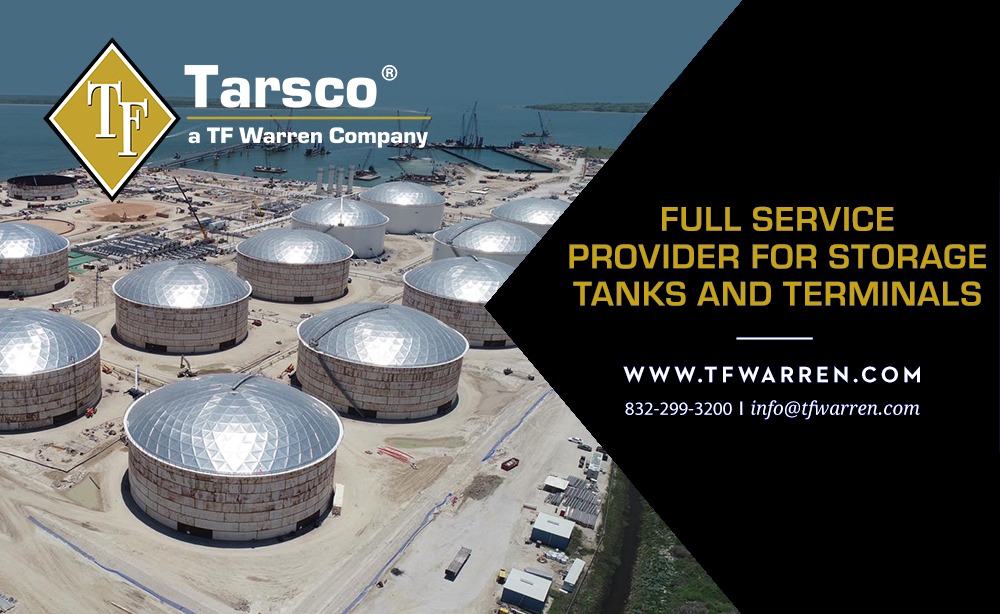
The Federation of European Tank Storage Associations (FETSA) represents the bulk liquid and liquefied gas storage sector across Europe. Comprising over 162 companies operating 768 terminals, FETSA plays a central role in Europe’s energy transition, security of supply, and industrial competitiveness. Bulk liquid terminals, strategically located at ports, airports, logistics platforms, and along inland waterways and pipelines, are essential components of the continent’s critical infrastructure.
FETSA is a key stakeholder in shaping European energy policy, advocating for the recognition of bulk storage infrastructure as vital to both legacy fuel systems and emerging energy carriers. As Europe moves toward climate neutrality, FETSA emphasises the need for a technologically neutral strategy that enables the adaptation of existing infrastructure to accommodate future fuels, such as hydrogen and synthetic fuels.

In its recent submission to the EU consultation on energy security reform, FETSA supports reforms that aim to strengthen the resilience of the stockholding system. It advocates for a more robust framework that can withstand a broader range of disruption scenarios, reflecting growing geopolitical uncertainties. FETSA also highlights the need for the EU to reduce energy dependencies, diversify supply routes, and reinforce its strategic autonomy.
At present, EU legislation mandates strategic oil reserves equivalent to 90 days of net imports or 61 days of inland demand. However, there are no similar obligations for gas, LNG, or renewable fuels, such as biofuels, methanol, or ammonia. FETSA calls for an expansion of strategic storage mandates to include these future energy carriers, citing their potential role in stabilising markets during supply disruptions and mitigating foreign leverage over the EU.
The case of the recent gas crisis, compounded by geopolitical tensions, supply interruptions, and infrastructure sabotage, underscores the urgency of enhancing storage capacity. Events such as the Russo-Ukrainian war, AI-driven cyber threats, and climate-induced disruptions to river transport further illustrate the vulnerabilities of Europe’s current energy logistics and storage systems.
FETSA’s recommendations include increasing stockpile sizes, diversifying the product mix, and aligning strategic storage with actual import risks and refining capacities. The organisation also calls for fast-tracked permitting processes for new storage infrastructure, greater public investment, and formal industry-government coordination. Furthermore, it supports a regional approach to stockholding, warning that purely national systems may lead to uncoordinated or protectionist behaviours during crises.
Additionally, FETSA advocates for transparent and practical reporting standards, equitable cost distribution, and stronger safeguards against stock accounting irregularities. Strategic storage, it argues, is a public good that underpins both economic and national security. Finally, FETSA urges regular reviews of stockholding rules to ensure that infrastructure can keep pace with evolving energy needs and technologies.
As Europe navigates the complexities of the green transition and global instability, FETSA asserts that strategic storage is not merely an operational concern but a cornerstone of resilience, autonomy, and long-term competitiveness.
For more information visit www.fetsa.eu