
OpenTAS 365 powers terminal transformation

OpenTAS 365 is more than “just” a new product launch, it is the moment where terminal management steps out of the Gordian Knot of fragmented systems and into a unified, cloud-native operating model designed for the energy transition era.

Terminal operators today are being pulled in all directions: rising volumes, new fuels, tightening regulations, geopolitical volatility and a workforce that is changing faster than their legacy systems can keep up. Traditional TMS landscapes have grown into patchworks of point solutions for truck, rail, ship, stock management, finance, customs and compliance, all loosely stitched together, hard to upgrade and nearly impossible to overview end-to-end. The result is operational friction: no real-time visibility, reactive planning, heavy manual work in order intake and stock reconciliation, and a growing exposure to compliance and cybersecurity risk.

This is the background against which we created OpenTAS 365 – and why launching it with the right industry platform was so important.

OpenTAS 365: complexity removed

OpenTAS 365 is the first Microsoft-aligned, cloud-native terminal management platform that unifies terminal operations, business operations and compliance in a single, extensible system – built on Dynamics 365, Power Platform and Azure. Instead of adding yet another module to an already complex landscape, it acts as a unified operating layer that connects planning, execution, data and decision-making end-to-end.

For terminal operators, this translates into tangible value:

  • Operational efficiency without complexity: AI-assisted planning, automated order intake and smart truck scheduling reduce truck turnaround times by up to 20 minutes per vehicle and free 20–40 hours of admin work per month.
  • Compliance and risk management made automatic: NIS2/NIS2KRITIS, EMCS, dangerous goods and ESG reporting are embedded into workflows, cutting customs processing times by up to 60 and taking audit timelines from weeks to days.
  • A future-proof path to autonomy: telemetry, data governance and Microsoft-native AI are built in from day one, enabling a gradual journey from rule-based automation (Level 2) to assisted and supervised autonomy – without rip-and-replace.
  • Migration without disruption: standardized playbooks, tools and coexistence scenarios allow Classic and QINO customers to move to OpenTAS 365 in 3–9 months per site, with minimal downtime.


In short, OpenTAS 365 is designed for real-world, brownfield terminals that must grow, diversify and digitalise – while keeping the site safe, compliant and running.

From automation to autonomy: the next logical step

For over 40 years, OpenTAS has helped terminals run smarter, safer and more efficiently across the global energy and chemical supply chain. But the questions we now hear from customers have shifted: it is no longer “Should we digitalise?” – it is “How do we turn digitalisation into measurable efficiency, resilience and eventually autonomy without betting the business?”.

OpenTAS 365 is our answer:

  • It gives operations leaders real-time dashboards across ship, truck, rail and pipeline, AI-assisted planning and predictive maintenance – so teams manage exceptions instead of spreadsheets.
  • It gives IT/OT leaders a single, Microsoft-based platform with zero legacy tech debt, standard industrial protocols, secure integration patterns and low-code extensibility.
  • It gives commercial and compliance leaders a predictable SaaS model, quantified ROI and compliance that is logged, auditable and automated.


The autonomy level framework built into OpenTAS 365 allows terminals to move step by step, from today’s rule-based automation to assisted and supervised autonomy, and ultimately towards highly autonomous terminal operations when the business is ready.

Why the partnership with Storage Terminals Magazine mattered

Launching such a strategic platform is not just a product milestone – it is a narrative milestone for the entire industry. This is why the collaboration with Storage Terminals Magazine has been so instrumental for OpenTAS 365. Their reach across independent storage, energy, chemical and logistics terminals has helped us put the right story in front of the right people: not a “feature drop”, but a new operating model for an industry under pressure.

Through thought leadership content, digital visibility and focused coverage, OpenTas’ joint activities ensured that the key messages landed where they matter most:

  • that terminals can significantly reduce operational complexity while increasing throughput and resilience;
  • that compliance and cybersecurity can shift from “necessary overhead” to strategic advantage;
  • and that autonomy is not a buzzword, but a practical, phased journey supported by a robust, Microsoft-native platform.


This collaboration gave OpenTAS 365 early visibility well beyond individual customer conversations, helping us build awareness and momentum ahead of the wider market rollout.

A personal note of gratitude from Wolfram Wege:

Bringing a next-generation platform like OpenTAS 365 to market is always a team effort – inside the company and across the ecosystem. I am deeply appreciative of the way Storage Terminals Magazine has leaned into this story and helped us elevate an industry-wide conversation around efficiency, compliance and autonomy in terminal management.

A special thank you to Tracey and Greg at Storage Terminals Magazine for their trust and support in bringing the OpenTAS 365 story to life, and to our external marketing and branding partners Peter, Grant, Mattis and Robert from brandigans.com for shaping the narrative and visual identity behind this launch.

For more information visit www.opentas.com
Essar Energy Transition, Spirit Energy and Progressive Energy join forces to advance CO2 infrastructure

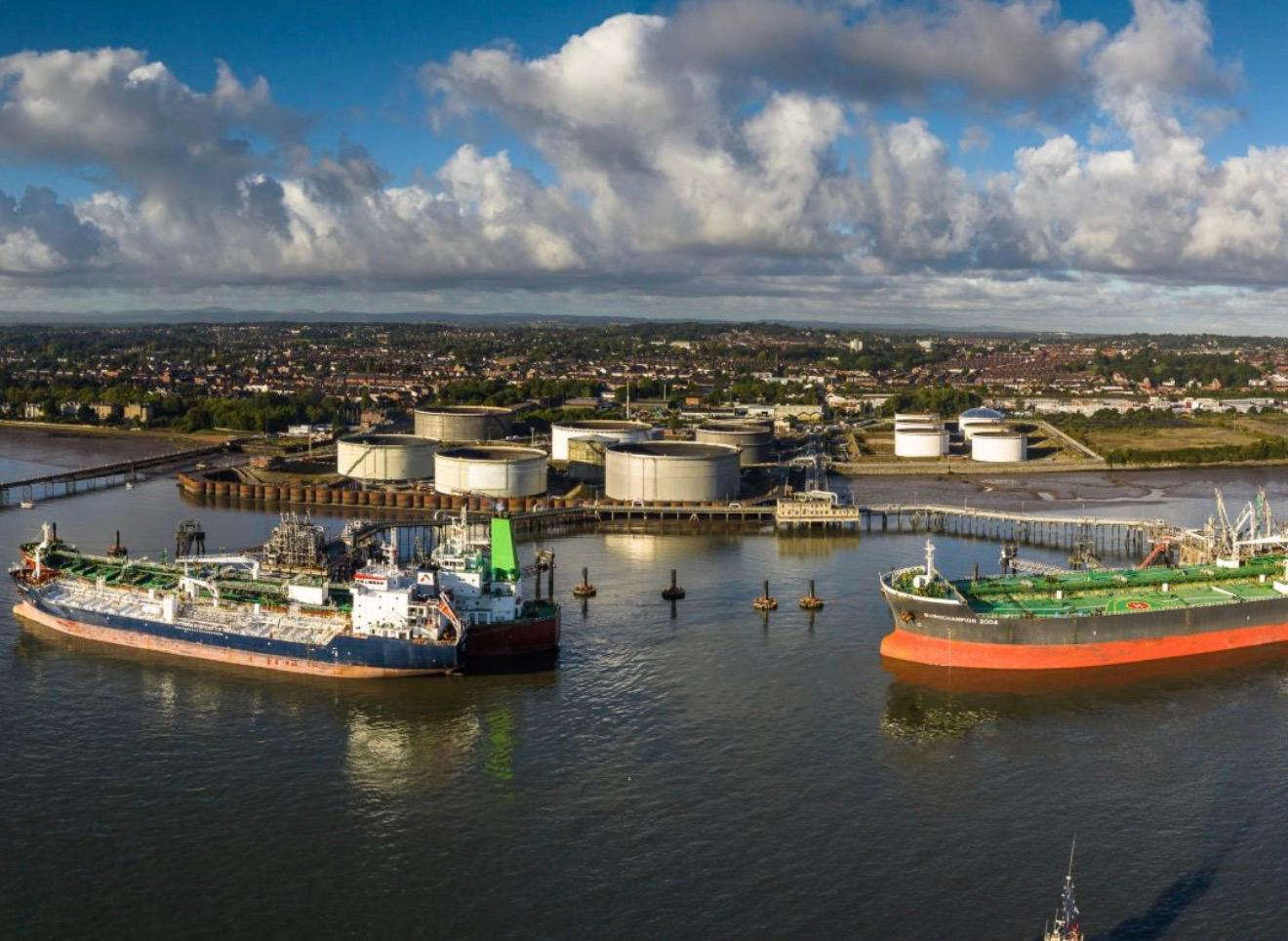
Essar Energy Transition has announced that its subsidiary, Stanlow Terminals Limited, has entered into a collaboration agreement with Spirit Energy and Progressive Energy Limited to explore the feasibility of a new integrated carbon capture, storage and shipping facility.

The agreement will assess the joint business case and development planning feasibility for a CO₂ shipping import terminal at STL’s Tranmere Terminal within the Port of Liverpool, as well as at the Stanlow Manufacturing Complex. The partners will also evaluate the potential to transport CO₂ received via the proposed terminal(s) to Spirit Energy’s Morecambe Net Zero carbon store in the East Irish Sea.

The collaboration represents a further step in efforts to transform the Stanlow manufacturing complex into a decarbonised energy hub, supporting long-term sustainable employment and industrial innovation across the region. It also aligns with EET’s US$3 billion investment programme aimed at becoming one of Europe’s leading low-carbon fuels producers.

Mike Gaynon said the partnership brings together complementary expertise to unlock new opportunities for CO₂ transport and storage while advancing Stanlow’s broader decarbonisation goals. He added that the initiative could strengthen the region’s industrial future.

Matt Browell-Hook highlighted carbon capture and storage as a key enabler of industrial decarbonisation in the UK, noting that the collaboration could provide a pathway for emitters nationwide to access storage solutions via the Stanlow site. He emphasised the importance of partnerships in supporting economic growth and safeguarding jobs.

Chris Manson Whitton said the collaboration enables the application of Progressive Energy’s expertise in low-carbon infrastructure to develop scalable CO₂ capture, transport and storage solutions. He added that the project could help secure the future of UK industry while reinforcing the region’s position in low-carbon energy innovation.

For more information visit www.stanlowterminals.co.uk

ExxonMobil marks CCS milestones in Louisiana with NG3 project startup

ExxonMobil has begun transporting and storing captured CO2 from the New Generation Gas Gathering (NG3) project in Louisiana, marking significant milestones in both its carbon capture and storage (CCS) business and in Louisiana’s growing global competitiveness.

Natural gas produced from East Texas and Louisiana is gathered through the NG3 gathering system for treatment at the NG3 Gillis facility, where up to 1.2 million metric tonnes per year (MTA) of CO2 is expected to be removed from the natural gas stream before the product is redelivered to Gulf Coast markets, including LNG facilities.

Real Progress in Carbon Capture and Storage

The startup marks ExxonMobil’s second active commercial CCS operation in Louisiana. In July 2025, the company began transporting and storing CO2 from CF Industries’ Donaldsonville Complex, enabling the production of low-carbon ammonia.

Two more CCS projects are lined up to start in 2026. ExxonMobil says every new contract and startup demonstrates that CCS momentum is building and that real progress is being made in lowering emissions from carbon-intensive industries. With more contracted CO2 volumes than any other company, across sectors including steel, ammonia, natural gas processing, industrial gases, methanol and power, ExxonMobil’s CCS network is rapidly becoming a leading solution for reducing carbon emissions from key industrial facilities along the US Gulf Coast.

The CO2 contracted across the two active projects accounts for up to 3.2 MTA, approximately one-third of the company’s committed CCS volumes. ExxonMobil is currently storing the CO2 from both projects in permanent geologic sites through enhanced oil recovery, with plans to transition to dedicated permanent storage.

What Carbon Capture and Storage Means for Louisiana

With its favourable geology and vast network of industrial and energy infrastructure, Louisiana is uniquely positioned to benefit from CCS, strengthening its core industries, driving economic growth and reducing emissions in the process.

CCS is already helping Louisiana stand out in key sectors such as ammonia, gas and LNG through the CF Industries and NG3 projects. As more CCS projects come online, they are expected to enhance the state’s production of steel, fertiliser, methanol and power, making those products more competitive globally while strengthening US energy security.

The ability to produce low-carbon products through CCS is also attracting companies with large-scale industrial projects, such as data centers, to Louisiana. The state has already seen approximately $61 billion invested into new emissions reduction projects.

Each new CCS project in Louisiana reinforces the state’s leadership in tackling what ExxonMobil refers to as the “dual challenge” meeting the world’s growing energy needs while lowering emissions. By helping hard-to-abate sectors reduce their carbon footprints, ExxonMobil says it is enabling those industries to continue delivering the energy and products communities rely on, while mitigating their environmental impact, what the company describes as its “And Equation” in action.

For more information visit www.corporate.exxonmobil.com

Chevron’s local engagement strategy in Africa sets the standard for International Oil Companies (IOC) operating on the continent

As global energy companies expand their local engagement reporting frameworks, questions persist over how closely sustainability commitments align with tangible, on-the-ground impact. For international oil companies (IOCs) operating in Africa, this alignment is increasingly measured by the extent to which local engagement strategies translate into economic participation, infrastructure development and technology transfer. For Chevron, one of the continent’s longest-standing operators, this balance is evident across its activities in Nigeria, Angola and the broader region.

Chevron’s sustainability reporting emphasizes community investment, environmental stewardship and workforce development. In Angola, where the company has operated for nearly seven decades through its subsidiary Cabinda Gulf Oil Company, more than 90 percent of the workforce is Angolan. This reflects sustained efforts to localize employment and build technical expertise. Over time, Chevron and its partners have invested upwards of $250 million in social and community development initiatives across the country, supporting healthcare, education and economic development programmes.

In Nigeria, Chevron has similarly prioritised local supply chains as a core component of its local engagement strategy. Over the past decade, the company has spent an estimated $1 billion annually on Nigerian suppliers and service providers, directing more than $10 billion to domestic contractors and businesses. This approach supports Nigeria’s local content framework while contributing to the development of indigenous capacity across engineering, logistics and oilfield services.

Despite these efforts, local engagement reporting by IOCs across Africa has often faced criticism for focusing heavily on corporate social responsibility initiatives rather than deeper economic integration. While community investments and environmental programmes remain important, policymakers across the continent are increasingly emphasising local participation in project development, procurement processes and energy infrastructure.

Chevron’s project portfolio highlights both the opportunities and challenges associated with bridging this gap. In Angola, the Sanha Lean Gas Connection Project, linking offshore gas fields in Blocks 0 and 14 to the Angola LNG facility, demonstrates how large-scale energy infrastructure can support domestic value creation. The project enables associated gas to be monetised rather than flared, strengthening Angola’s gas value chain while contributing to long-term energy security.

Beyond Angola, Chevron continues to expand its footprint across Africa, maintaining active exploration programs in Nigeria, holding stakes in producing assets in Equatorial Guinea and evaluating offshore opportunities in markets such as Namibia and Algeria. As African countries seek to expand oil and gas development while strengthening domestic industries, expectations are rising for international operators to ensure that local engagement commitments deliver measurable economic outcomes.

This growing emphasis on implementation has elevated the role of industry platforms in shaping the broader conversation. NJ Ayuk, executive chairman of the African Energy Chamber, has underscored the need for practical outcomes over symbolic commitments, noting that Africa requires partnerships that build industries, develop local skills and retain more value from natural resources within the continent. He highlighted platforms such as African Energy Week as important venues for stakeholders to move beyond project promotion and focus on delivering measurable sustainability results, adding that Chevron’s activities demonstrate leadership in this regard.

Ayuk further emphasised that partnerships capable of building industries are critical to Africa’s long-term development, pointing to Chevron’s approach as an example. He also noted that the company’s training and development initiatives have helped empower local communities, with many participants advancing into public service roles where they apply enhanced skills and best practices.

In addition, a significant number of individuals trained by Chevron have transitioned into the private sector, leading competitive companies and contributing to broader economic growth. The company’s support for entrepreneurship has also encouraged the establishment and expansion of locally owned businesses.

As expectations around local engagement continue to evolve, international operators such as Chevron face increasing scrutiny over whether sustainability commitments translate into meaningful economic participation. Within Africa’s energy sector, local content is emerging as a key metric, one that ultimately reflects the extent to which global companies contribute to building sustainable, long-term industries alongside their operations.

For more information visit www.energychamber.org

Petrofac Emirates acquired by Mason Capital Management-led Consortium

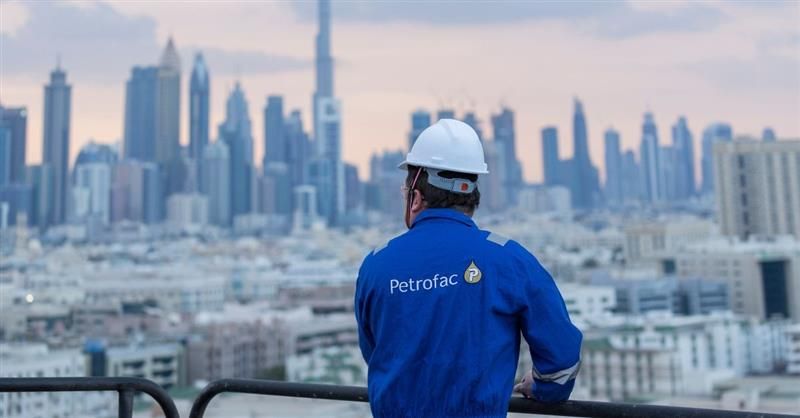
Petrofac has entered into an agreement to sell Petrofac Emirates to a consortium of financial investors led by Mason Capital Management LLC (“Mason”) and Pearlstone Alternative (UK) LLP.

Petrofac Emirates encompasses Petrofac’s core Engineering & Construction (E&C) capability, including the execution teams based in the UAE, Chennai and Mumbai. The transaction is expected to position Petrofac Emirates as a strong, self-sustaining company with no funded debt on its balance sheet and substantial growth opportunities ahead.

Tareq Kawash, group chief executive of Petrofac, described the deal as a noteworthy turning point in Petrofac Group’s restructuring journey. He noted that the transaction preserves Petrofac’s execution and engineering capability and delivers continuity for contracts currently under execution. Kawash highlighted Mason’s significant experience in the industry and expressed his belief that the transaction would enable Petrofac Emirates to grow ambitiously and build on its extensive track record. He extended his gratitude to the Petrofac team, customers and partners, whose support he said had been critical throughout the process. With Petrofac Emirates’ strong presence and experience in the UAE, Kawash said the business is well positioned for future success both in its home market and across the wider MENA region.

Sam Read, a partner at Mason, stated that the firm’s mission is to empower Petrofac Emirates to achieve its strategic goals, capitalise on new market opportunities, and leverage significant growth potential in the dynamic energy engineering, procurement, and construction (EPC) sector. Read described Petrofac Emirates as having market-leading capabilities and an unmatched track record of delivering for its customers and said Mason looks forward to partnering with the company to help drive continued success.

James Bennett, senior managing director at Teneo and joint administrator of Petrofac Limited, said the announcement was the product of many months’ work aimed at delivering a strong outcome for Petrofac Emirates. He noted that the transaction gives the business a clear path forward under new ownership and supports a smooth transition for customers, suppliers and employees. Bennett expressed gratitude for stakeholders’ continued support and said he looks forward to seeing Petrofac Emirates build a strong platform for the future.

Completion of the transaction remains subject to certain conditions, including customary governance, regulatory and stakeholder approvals, which the parties intend to obtain as promptly as possible.

For more information visit www.petrofac.com

FatHopes Energy appoints global engineering leaders to advance development of Malaysia’s strategic SAF refinery

FatHopes Energy (FHE), in collaboration with Bin Zayed International (BZI) Group, has appointed Technip Energies – through its consulting subsidiary Genesis – and Wison Engineering Ltd to conduct independent technical feasibility studies for its proposed sustainable aviation fuel refinery in Malaysia.

The appointments mark a pivotal step in the development of one of Southeast Asia’s most ambitious renewable fuel projects, as the aviation industry intensifies its push toward net-zero carbon emissions.

FatHopes Energy Appoints Technip Energies & Wison for SAF Study

Both firms were selected following a rigorous request for proposal process launched in Q3 2025, which drew submissions from leading engineering companies across Asia-Pacific, Europe, and the United States. The evaluation concluded in November 2025. Upon completion of the studies, expected by Q2 2026, one firm will be selected to proceed with the front-end engineering design phase, ultimately supporting the project’s final investment decision.

The refinery will use the Hydroprocessed Esters and Fatty Acids (HEFA) production pathway, a proven route for converting sustainable feedstocks into aviation fuel. FatHopes Energy’s feedstock strategy centres on used cooking oil and palm oil mill effluent oil, with plans to expand into spent bleaching earth oil, empty fruit bunch oil, and potentially algae oil in collaboration with a major Malaysian carbon emitter.

The project’s lifecycle assessments indicate carbon intensity reductions that exceed CORSIA benchmarks — the international standard for aviation carbon offsetting — underscoring its potential significance to global decarbonisation efforts.

“Bringing in world-class engineering partners is an essential milestone in the development of this project,” said Vinesh Sinha, Founder and CEO of FatHopes Energy. “It reflects our commitment to building a refinery that meets the highest global standards while supporting the aviation industry’s transition toward sustainable fuels.”

Strategically located near Port Klang along the Straits of Malacca, the facility is positioned to serve international SAF supply chains and reinforce Malaysia’s ambitions as a regional hub for sustainable fuel production.

For more information visit www.fathopesenergy.com

Stolthaven Revivegen Kaohsiung Terminal, Taiwan, now fully operational

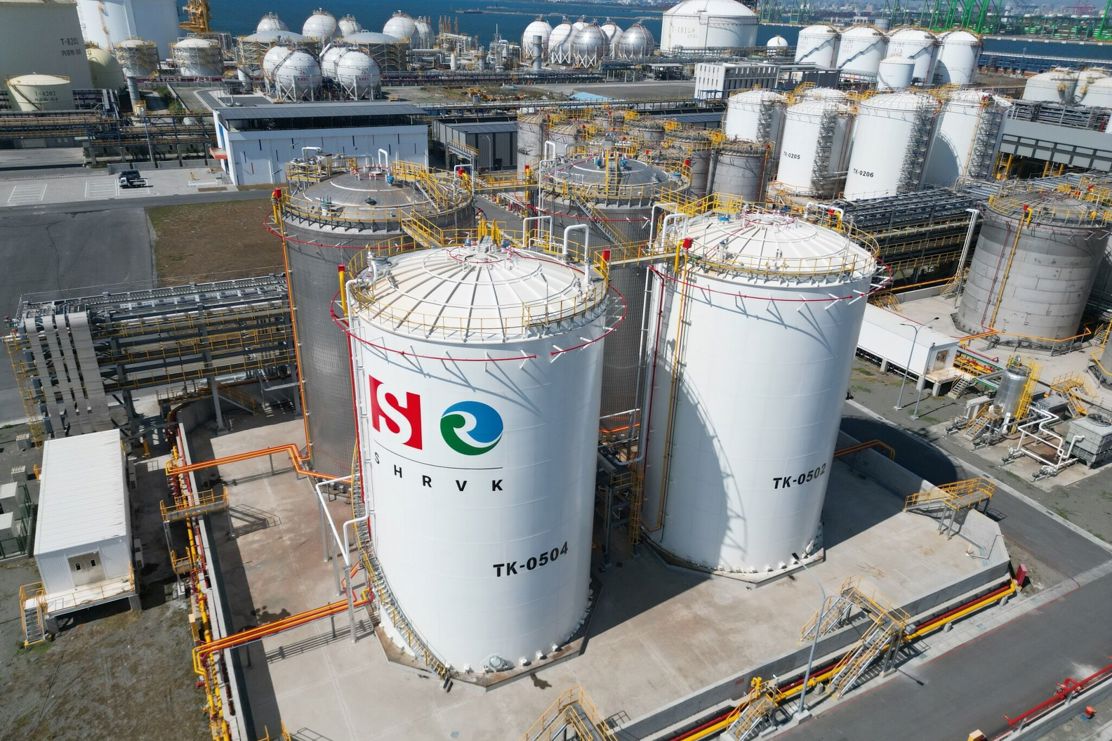
Stolthaven Terminals has commenced operations at its new Revivegen Kaohsiung Terminal (SHRVK) in Taiwan, bringing a modern, independent bulk liquid storage and logistics facility to one of Asia-Pacific’s most strategically significant maritime locations.

Positioned along a major global shipping route, SHRVK is designed to serve as an import, export and transshipment hub for bulk liquid chemicals and specialty products, connecting regional markets with international trade flows. Its proximity to Kaohsiung’s container port adds a further layer of logistical flexibility, enabling efficient distribution of packaged products, including ISO tanks and drums, across Asia.

As Kaohsiung’s only independent third-party liquid terminal, SHRVK fills a notable gap in Taiwan’s chemical logistics infrastructure, offering producers, distributors and traders access to flexible storage solutions backed by advanced digital operations.

The terminal’s first phase provides 61,200 m³ of storage capacity across carbon steel and stainless-steel tanks, complemented by multiple truck loading bays, ISO-tank and tank truck handling, and integrated drumming and smart filling services. The facility has been built with future expansion in mind, with additional land available for the development of purpose-built storage for gases or liquids as customer requirements evolve.

Beyond conventional chemical storage, SHRVK has been designed with the energy transition in mind. The terminal is equipped to handle low-carbon feedstocks, green methanol and bio-bunker fuels, positioning it as relevant infrastructure for customers navigating the shift toward more sustainable industrial and marine fuel solutions. Advanced automation and digital systems underpin operations throughout, with a focus on precision, safety and service consistency across complex supply chains.

Guy Bessant, president of Stolthaven Terminals, said that global chemical markets are experiencing ongoing shifts in production, supply availability and trade patterns. He noted that SHRVK is well positioned to support customers as they adapt to these changes and seek reliable infrastructure to maintain supply continuity. Bessant also highlighted that the terminal, together with the broader network of Stolt Tankers, Stolthaven Terminals and Stolt Tank Containers, enables seamless connections between ocean transport, storage and inland distribution.

The opening of SHRVK reflects a wider trend of investment in flexible, multi-product liquid storage capacity in Asia-Pacific as chemical trade routes continue to evolve. For Stolthaven, the new terminal extends its global network into a market where reliable, independent logistics infrastructure has until now been limited.

For more information visit www.stolt-nielsen.com

Port of Rotterdam Authority moves to unlock stalled hydrogen import investments

The Port of Rotterdam Authority is pushing to accelerate the development of hydrogen carrier import infrastructure, but a wave of planned terminals has yet to translate into firm investment decisions. To understand why, the Port Authority recently carried out a market consultation — and the findings point to a cluster of financial and regulatory obstacles that are giving companies pause.

At least nine companies are currently drawing up plans for terminals capable of handling hydrogen carriers including ammonia, methanol, liquid hydrogen, and LOHC (liquid organic hydrogen carriers). Some of these facilities would include on-site conversion capacity, such as ammonia cracking or LOHC dehydrogenation plants. The capital requirements are substantial, with individual terminal costs running into the hundreds of millions of euros, a scale of investment that demands a reasonable degree of certainty before commitments can be made.

Photo: Martens Multimedia

That certainty, according to the consultation, is currently in short supply. The single largest concern identified by participating companies is demand uncertainty for renewable energy carriers. This is closely tied to a lack of clarity around the policy frameworks intended to stimulate that demand, leaving potential investors without the long-term revenue visibility they need to proceed.

Infrastructure gaps compound the problem. Power grid congestion is cited as a significant barrier, as is the absence of hinterland pipeline connectivity — most notably the delayed Delta Rhine Corridor, which would link Rotterdam to Germany and open up a major demand market. Without that pipeline infrastructure in place, the commercial case for large-scale import terminals becomes harder to make.

Permitting uncertainty adds another layer of complexity. Companies report concerns about the unpredictability of procedure timelines and, in particular, the regulatory requirements around nitrogen deposition — an issue that has caused widespread project delays across the Netherlands in recent years. The combination of these factors means that most companies involved in the consultation do not expect their proposed terminals to be operational before 2030.

The Port of Rotterdam Authority has indicated that the risks identified through the consultation are now being prioritised and addressed in collaboration with public and private partners. The exercise signals a recognition that moving from planning to investment will require more than commercial appetite — it will require coordinated action on policy, permitting and infrastructure to reduce the risk burden on individual developers.

Rotterdam’s ambition to become a leading European hub for hydrogen imports remains intact, but the market consultation makes clear that the path there runs through some significant structural challenges. How quickly those challenges can be resolved will determine whether the current pipeline of terminal projects converts into the real infrastructure the energy transition demands.

For more information visit www.portofrotterdam.com

HES International steps up energy efficiency drive across European terminal network

HES International is making measurable progress on its sustainability agenda, with a coordinated programme of LED lighting upgrades and low-emission initiatives rolling out across its European terminal network. From Rotterdam to Gdynia, the bulk terminal operator is demonstrating that energy efficiency improvements can deliver both environmental and operational benefits at scale.

The most significant project is currently underway at HBTR, HES International’s largest dry bulk terminal in Rotterdam. Since launching in 2024, the terminal has been replacing 1,000 W halogen fixtures with 530 W LED alternatives as part of a multi-year upgrade expected to be completed in 2026. Of 390 LED fixtures purchased, 350 have already been installed, delivering a power reduction of 159.8 kW. The terminal estimates annual energy savings of approximately 700,000 kWh and around 300 tonnes of CO₂ emissions avoided each year. Beyond the numbers, improved lighting visibility is also contributing to safer working conditions at a site that operates around the clock.

At HBTT, HES International’s liquid bulk terminal in Botlek, a full LED replacement is more than 85 percent complete and on track to finish in 2026. The project has required specialised electrical equipment rated for hazardous environments, given that parts of the terminal are classified as explosion-risk areas. Current installations already deliver recurring annual energy savings of approximately 7,300 kWh, with the full picture expected once the final phase is complete.

In Amsterdam, HBTA has been ahead of the curve. The dry bulk terminal holds ISO 14001 certification with a specific focus on energy management, and more than 99 percent of its lighting has been upgraded to LED for several years. Recent work has focused on installing motion sensors in key traffic zones, adding a layer of smart control that boosts efficiency further while enhancing safety for both vehicles and pedestrians.

Across the border in Poland, HGBT in Gdynia completed its terminal-wide LED transition in 2023, covering yards, internal roads and warehouses. The terminal has since extended its sustainability drive to mobility, installing five electric vehicle charging points in late 2025 to support employees and visitors opting for lower-emission transport.

Back in Rotterdam, HBTM at Europoort is tackling energy consumption from multiple angles. An independent study by Optivolt identified opportunities to cut energy costs by up to 15 percent through optimising transformer load management, with adjustments already delivering cost savings. In parallel, around 45 percent of shed lighting at the site has been retrofitted with LED technology, with further work ongoing.

Taken together, these projects reflect a deliberate, group-wide approach rather than isolated initiatives. Each terminal is contributing according to its operational context, whether through large-scale infrastructure upgrades, smart lighting controls, or supporting the electrification of site transport. HES International has indicated it will continue publishing progress data as part of its commitment to transparency on ESG performance.

For an industry where terminals frequently operate 24 hours a day across large, energy-intensive sites, the scale of these gains is significant. HES International’s ongoing investment suggests that for bulk terminal operators, systematic energy efficiency programmes are increasingly becoming a core part of how sites are managed, not an optional add-on.

For more information visit www.hesinternational.eu

Stolt-Nielsen and NYK Line form strategic joint venture in Avenir LNG

Stolt-Nielsen Limited, through its subsidiary Stolt-Nielsen Gas Ltd., has announced that it has entered into a share purchase agreement to sell 50 percent of Avenir LNG Limited to Nippon Yusen Kabushiki Kaisha. Avenir LNG was founded in 2017 and has grown into a leading player in the liquefied natural gas bunkering sector, operating a global fleet of LNG bunker vessels.

Through the partnership, Stolt-Nielsen and NYK Line will expand their future small-scale LNG and LNG bunkering opportunities through the joint venture, supporting the global transition to LNG and bio-LNG for marine fuel and other industrial applications. Following a wave of dual-fuel LNG vessel orders in recent years, LNG is rapidly being adopted as a practical and scalable fuel enabling shipping to achieve emissions reductions. The new joint venture underscores both companies’ commitment to sustainable energy solutions for the maritime industry.

Udo Lange, CEO of Stolt-Nielsen Limited, said the joint venture deepened the company’s long-standing partnership with NYK Line while supporting Avenir LNG’s position in small-scale LNG supply and bunkering. He noted that NYK’s experience in shipping and logistics, together with potential market opportunities arising from the continued expansion of LNG-fuelled vessels, was expected to add value to Avenir LNG, its customers and Stolt-Nielsen’s shareholders. Lange added that the transaction reflected Stolt-Nielsen’s commitment to supporting sustainable energy solutions across global shipping supply chains by facilitating safe and reliable access to LNG fuel.

Hironobu Watanabe, chief executive of the energy division at NYK Line, highlighted the strong relationship NYK had built with Stolt-Nielsen through the chemical tanker business, describing it as a foundation of trust and proven partnership. He said NYK was pleased to establish the new joint venture through Avenir LNG, noting that LNG and bio-LNG fuel had taken on an increasingly essential and practical role in supporting a sustainable energy transition as the maritime industry accelerated its decarbonisation efforts. Watanabe expressed confidence that Avenir LNG would be well positioned to meet growing market demands and deliver enhanced value to the supply chain, and reaffirmed NYK’s commitment to advancing LNG and bio-LNG bunkering initiatives in pursuit of a more sustainable future for the maritime industry.

Jonathan Quinn, managing director of Avenir LNG, welcomed NYK Line as a strategic partner alongside Stolt-Nielsen. He described the joint venture as bringing together two highly respected shipping and logistics groups with complementary strengths and a shared long-term vision for LNG as a marine fuel. Quinn said NYK Line’s global reach and operational expertise would enhance Avenir LNG’s ability to develop its business, accelerate LNG bunkering solutions, and support customers’ decarbonisation strategies as the market continued to mature.

For more information visit www.stolt-nielsen.com

Neste commissions the world’s largest upgrading facility for liquefied waste plastic and scales up chemical recycling

Neste has successfully commissioned its new upgrading facility for liquefied waste plastic (LWP) at its Porvoo refinery in Finland. This EUR 111 million investment marks a major milestone in the scale-up of chemical recycling, enabling the production of high-quality feedstock for the plastics and chemicals industry. With an annual capacity to process up to 150,000 tons of liquefied waste plastic, the facility is the world’s largest LWP upgrading facility, and processing will be gradually ramped up.

“The successful commissioning proves that we can process liquefied waste plastic at an industrial scale. This achievement demonstrates Neste’s capability to develop advanced technology, set safety standards, and create new supply chains for challenging new raw materials. We are proud of this achievement, and I want to express my sincere thanks to our partners and employees whose dedication has allowed us to turn this vision into a reality,” says Jori Sahlsten, executive vice president of oil products at Neste.

Photo: Neste’s new facility to upgrade liquefied waste plastic into high-quality petrochemical feedstock is located at the company’s existing refinery in Porvoo, Finland. Source: Neste

Neste has processed liquefied waste plastic (e.g. pyrolysis oil) since 2020. The construction of the new upgrading facility and its integration to the existing oil refinery began in 2023 and was completed at the end of 2025. Production ramp-up was commenced in 2026 and will advance gradually depending on market and legislation development. 

The new facility allows Neste to close the quality gap between crude liquefied plastic waste and the high-quality drop-in raw materials required by the petrochemical industry. While mechanical recycling remains essential, it is often limited by the quality of the waste. Neste’s new facility is specifically designed to process oils derived from challenging waste plastic streams – such as multi-layer packaging, mixed plastic waste, and contaminated plastics.

“We enable the scale-up of chemical recycling by upgrading liquefied plastic waste. The plastic originates from low-quality waste streams not suitable for mechanical recycling and destined for incineration or landfills. Thanks to our new facility, even hard-to-recycle plastic waste can be upgraded to meet the feedstock quality requirements of companies manufacturing high-quality plastics. However, the current European Commission’s calculation rules on recycled content in the Single Use Plastics Directive threaten to limit the ability of refineries to serve EU’s recycled content targets. For Europe’s competitiveness’ sake, we need to ensure the calculation rules are amended to include refineries in the context of the EU Packaging and Packaging Waste Regulation,” says Maiju Helin, Director of Polymers and Chemicals at Neste.

In the new upgrading facility, Neste processes liquefied waste plastic together with crude oil. A mass balance approach is applied to attribute the recycled raw materials used in the process to the recycled Neste RE™ product. With the use of recycled Neste RE, a reduction of over 70 percent* in virgin fossil resource consumption (abiotic depletion) and a reduction of over 35 percent* in greenhouse gas (GHG) emissions can be achieved when plastic waste is chemically recycled instead of incinerated and then used to replace fossil feedstock in plastics manufacturing.

To advance the circularity of plastics, Neste, together with its partners Alterra and Technip Energies, also licenses liquefaction technology for chemical recycling of hard-to-recycle plastics.

For more information visit www.neste.com

Chevron taps Emmanuelle Garinet to lead exploration across Sub-Saharan Africa and the Americas

Energy supermajor Chevron has appointed Emmanuelle Garinet as director of exploration for the Americas and Sub-Saharan Africa, bringing one of the upstream industry’s most experience exploration geophysicists into a strategic leadership role overseeing discovery efforts across two of the world’s most important hydrocarbon regions.

The African Energy Chamber (AEC) – as the voice of the African energy industry – welcomes the appointment, with Garinet’s move to Chevron serving as a positive signal for Africa’s exploration sector. For the Chamber, placing an executive with decades of African exploration experience at the helm of a major international oil company’s discovery strategy could help unlock new investment across frontier basins, accelerate geological understanding and strengthen collaboration between operators and host governments.

Photo: Emmanuelle Garinet

Expanding Exploration Across Sub-Saharan Africa

Chevron’s African portfolio is entering a new phase of exploration-led growth as international energy companies continue to pursue new discoveries across frontier basins and established producing hubs.

Namibia has emerged as one of the most closely watched exploration regions in the world following a series of major deepwater discoveries in the Orange Basin. Chevron is currently evaluating prospects in the Walvis Basin, where the company plans to drill a new exploration well in PEL 82 between 2026 and 2027. The campaign follows earlier drilling in the Orange Basin, reflecting the company’s continued interest in Namibia’s rapidly evolving offshore petroleum system.

In West Africa, Chevron is expanding its deepwater presence in Nigeria after acquiring a 40 percent stake from TotalEnergies in offshore licences PPL 2000 and PPL 2001. The company is expected to deploy a drilling rig in late 2026 targeting resources near the Agbami field as part of a broader deepwater growth strategy.

Angola remains a cornerstone of Chevron’s African portfolio where, in December 2025, the company achieved first oil at the South N’dola platform in Block 0, producing approximately 25,000 barrels of oil per day using existing infrastructure. Associated gas from the project is routed to the Angola LNG plant, supporting the country’s gas monetisation strategy while reducing flaring.

For the AEC, these developments highlight the continued importance of exploration in unlocking new energy resources across the continent while supporting regional economic growth and energy security.

Americas Portfolio Provides Additional Growth

Beyond Africa, Chevron maintains a large upstream portfolio across the Americas.

In the US the company continues expanding production in the Permian Basin, where output is projected to reach around one million barrels of oil equivalent per day in 2026. Deepwater developments in the Gulf of Mexico also remains a key component of Chevron’s portfolio, contributing to long-term production growth.

In South America, Chevron’s position in Guyana’s prolific Stabroek Block – obtained through the company’s acquisition of Hess Corporation – places it within one of the world’s fastest-growing offshore petroleum provinces. Meanwhile, unconventional development in Argentina’s Vaca Muerta formation continues to support production growth in the region.

A Career Built on Global Exploration

Garinet’s career reflects more than three decades of experience in exploration geology, subsurface interpretation and international upstream leadership.

She began her career as a geophysicist, working on seismic analysis and subsurface evaluation before moving into management roles overseeing large exploration portfolios. Over time, she held senior leadership positions across multiple continents, including roles managing exploration programmes in Nigeria, Gabon and South America.

Her tenure at TotalEnergies also spanned the transformation of the company from Elf Aquitaine to ToalFinaElf and ultimately TotalEnergies.

One of her most notable achievements was leading the exploration team behind the Venus discovery offshore Namibia – one of the largest deepwater oil finds in recent years and a project expected to move toward a final investment decision in 2026.

“Exploration leadership with deep technical expertise and real experience in Africa’s basins is critical as the continent seeks to unlock new resources and attract global investment,” says NJ Ayuk, executive chairman, AEC. “Emmanuelle Garinet brings decades of geological insight and international exploration leadership. Her appointment at Chevron sends a strong signal about the continued importance of African energy development.”

Garinet has also been a prominent advocate for African energy development and has frequently spoken at the annual African Energy Week conference in Cape Town, where she has highlighted the role of advanced seismic data, frontier exploration and efficient permitting systems in unlocking new opportunities across the continent.

For more information visit www.energychamber.org

OPW 71SO segmented overfill prevention valve earns CARB approval

OPW Retail Fueling, a global leader in fluid-handling solutions, is proud to announce that its new 71SO Segmented Overfill Prevention Valve has received California Air Resources Board (CARB EVR) certification. The CARB designation signifies that the OPW Retail Fueling 71SO Segmented Overfill Prevention Valve, which significantly reduces storage, shipping, installation and testing complexities, also meets the industry’s highest safety, containment and emission standards by meeting the Enhanced Vapor Recovery requirements.

CARB certification is widely regarded as one of the most stringent regulatory benchmarks for fuelling equipment. Products that achieve approval, such as the 71SO Segmented Overfill Prevention Valve, can be trusted by regulators, fuel marketers and installers to meet or exceed the demanding environmental and operational standards required in modern fuelling infrastructure.

“Securing CARB EVR certification for the 71SO Segmented Overfill Prevention Valve is a milestone that underscores the OPW Retail Fuelling commitment to excellence,” said Ed Kammerer, vice president of global product marketing, OPW Retail Fuelling. “The CARB-approved 71SO enables fuel retailers in areas with the most stringent fuelling equipment performance and vapour-tightness standards to benefit from the breakthrough logistics ingenuity that the segmented 71SO provides.”

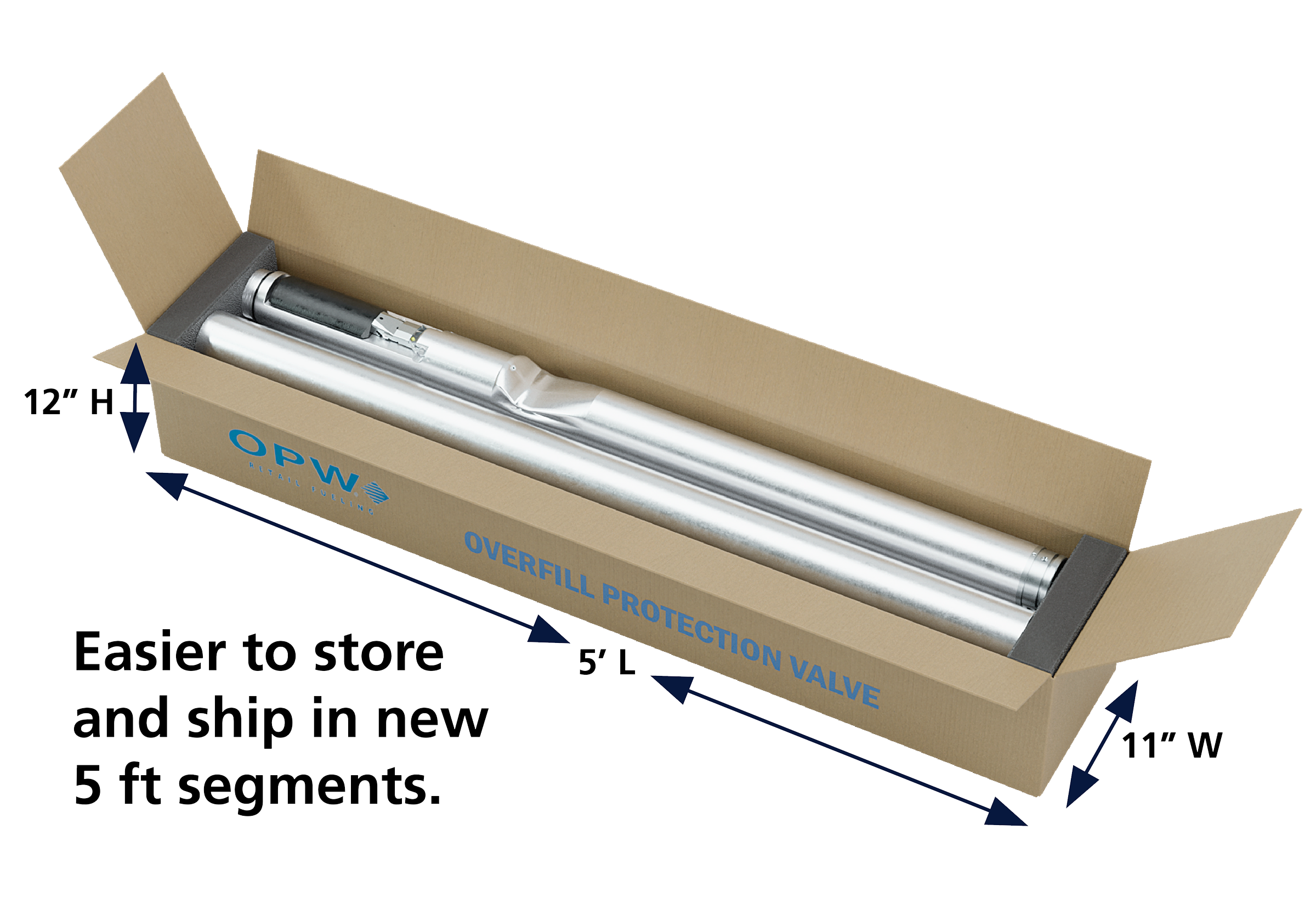
Now available to be shipped in four 5-foot segments, the 71SO Segmented Overfill Prevention Valve:


  • Simplifies Storage and Logistics: By dividing the drop tube into four interlocking sections, the modular design of the segmented 71SO supports more compact packaging and easier transport
  • Reduces Freight Costs: The valve segments eliminate overlength fees and prevent shipping damage
  • Delivers Uncompromising Performance: The valve retains the two-stage positive shut-off mechanism of the original 71SO Overfill Prevention Valve trusted by fuel retailers all over the world

Compatible with 4-inch fill risers, the 71SO Segmented Overfill Prevention Valve is ideal for new and retrofit applications. The four segments can be customised to fit tank diameters of 8-12 feet, with an overall length exceeding 223 inches. No excavation or special manholes are required. Installers can quickly and easily assemble the valve on-site without glue or epoxy. The valve can be immediately installed without having to wait 24 hours for epoxy to cure.

Testable versions of the 71SO Segmented Overfill Prevention Valve offer fuel retailers additional savings over the valve’s lifetime. Testable from the surface without removal from the tank, the 71SO allows operators to validate the valve’s performance in approximately 60 seconds compared to 60 minutes.

The valve’s automatic shut-off activates when the tank reaches 95 percent capacity, significantly reducing the risk of spills. A bypass valve enables topping off at a rate of 98% through a reduced flow rate of 5 gpm, after which the valve closes completely to halt delivery. The system operates without relying on internal tank pressure, allowing for faster and safer fuelling.

For more information visit opwglobal.com/opw-retail-fueling

Global LNG industry meets in Barcelona at LNGCON 2026 for strategy, dialogue and collaboration

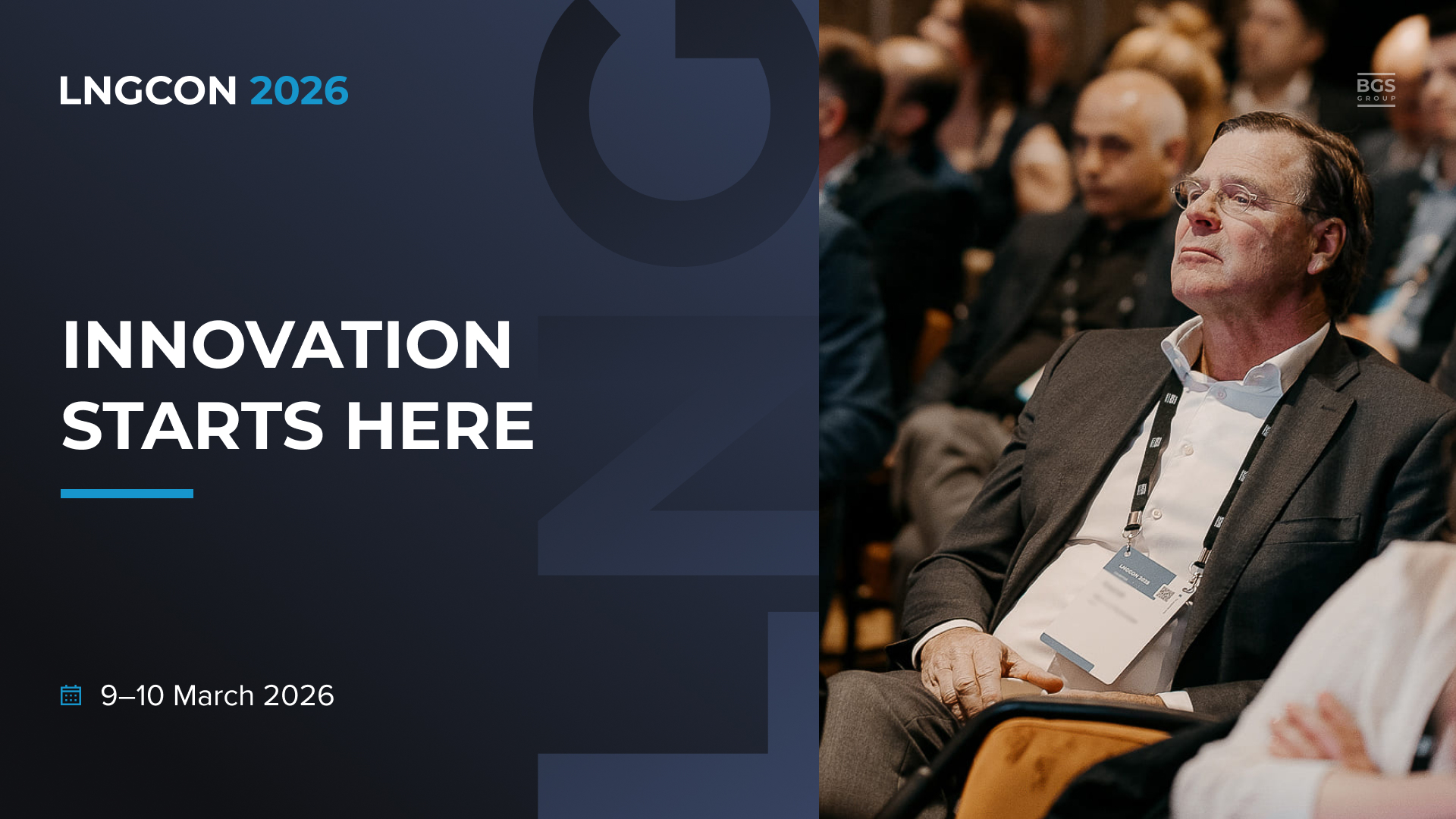
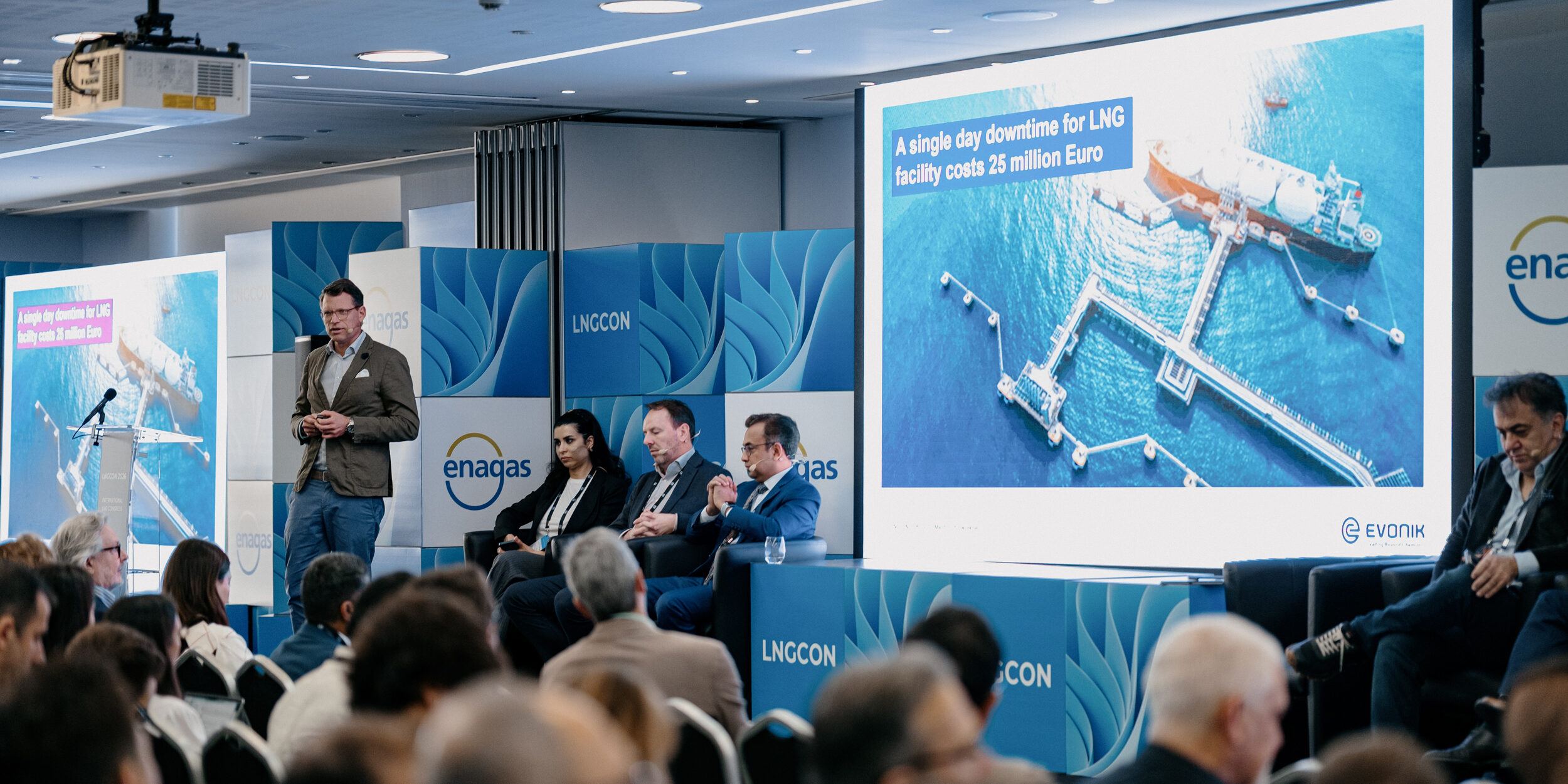
The 12th International LNG Congress (LNGCON 2026) was hosted by BGS Group in partnership with Enagás and with support from Repsol, Moeve, Baleària, Reganosa, Molgas Energy Group. On 9-10 March, executives, infrastructure operators, technology providers and policy experts explored gas projects, transport applications and the evolving role of the sector in Europe’s energy system.

Spanish gas infrastructure combines scale and flexibility, strengthening Europe’s security of supply while supporting the energy transition. Participants noted that Spain operates one of the most developed regasification networks in Europe, where LNG and bio-LNG already play a visible role in the energy mix. For this reason, Barcelona became a meeting point for the international gas community, bringing industry leaders together at LNGCON 2026.

The first day opened with the executive panel “LNG as a path to net zero.” Companies including Enagás, Cryostar SAS, Aspen Aerogels, Molgas Energy Group and Storengy Deutschland examined the balance between energy security and decarbonisation.

During the session Gregor Wenzel from Storengy Deutschland emphasised the importance of coordination across the European gas system. As he explained, the stability of Europe’s energy supply increasingly depends on the interaction between LNG deliveries and underground gas storage, highlighting the need for stronger integration of import infrastructure and storage capacity across Europe.

Additional conversations during the day covered practical aspects of gas use in transport, maritime operations and technologies aimed at reducing emissions. Industry perspectives were presented by companies including Eurogas, DEKI, Shell, Carbon Farming Germany, NEUMAN & ESSER Deutschland and Kanadevia Inova Schmack Biogas.

Marc Feldmann and Michael Feldmann from Carbon Farming Germany focused on the untapped carbon potential within biomethane production. As they explained, “the typical biomethane plant unknowingly discards 55-60% of the carbon in their possession by discarding production residue on agricultural farmland. Carbon escapes into the air as CO2 within one year. At the same time shipping is becoming the single biggest demand pull for European biomethane as FEUM and EU-ETS require sea carriers to fulfil continuously increasing compliance targets.”

The presentation also outlined a pathway to recover this carbon through the conversion of biogas residue into biochar, enabling 55% of carbon to be utilised in biochar (CCU) while additional outputs such as renewable LNG and liquid CO2 create benefits across agriculture, energy production and maritime transport.

The second day turned to emerging fuels and market development, including the role of bio-LNG and other alternative fuels. Contributions came from companies such as Evonik Operations, Endress+Hauser Group Services, Moeve, Nordsol, Enagás and UESTCO Energy Systems.

Eric Pelsise from Moeve outlined the decarbonisation challenge facing the shipping sector: “Maritime transport is central to global trade, but as a heavy industry it is one of the hardest sectors to decarbonise. Around 80% of worldwide commerce moves by sea and about 3% of global greenhouse-gas emissions come from shipping.” He added: “LNG leverages existing infrastructure, reduces local pollutants such as SOx, NOx and particulates and enables near-term regulatory compliance, while bio-LNG can deliver up to 90% lifecycle emissions reductions and is fully compatible with LNG-ready vessels and infrastructure.”

The programme extended into the third day with a technical visit to the Barcelona LNG Terminal organised by Enagás. Delegates explored key operational areas of the facility including the large-scale berth for gas carriers, the operations hub with metering and odorisation systems, vaporizers and compressors, and the small-scale berth designed for vessels with a capacity of up to 80,000 m3.

LNGCON 2026 once again confirmed the importance of dialogue across the gas industry as companies navigate infrastructure development, new fuels and evolving market conditions.

The conversation continues at the next edition. LNGCON 2027 takes place on 1–2 March in Amsterdam, the Netherlands. The event gathers industry leaders, infrastructure operators and technology providers to exchange practical insights and examine the next stage of the sector’s development.

Registration for LNGCON 2027 is now open at https://sh.bgs.group/3zo

Africa Energy Indaba 2026 celebrates landmark success with presidential keynote and strong continental participation

The 18th edition of the Africa Energy Indaba, held from 3–5 March 2026 at the Cape Town International Convention Centre (CTICC), concluded with resounding success, bringing together policymakers, ministers, investors, utilities and industry leaders from across the continent and around the world.

Recognised as Africa’s premier energy event, the Africa Energy Indaba once again served as a strategic platform for high-level dialogue, investment engagement and practical solutions aimed at advancing Africa’s energy future.

President of South Africa Cyril Ramaphosa’s address at the Africa Energy Indaba
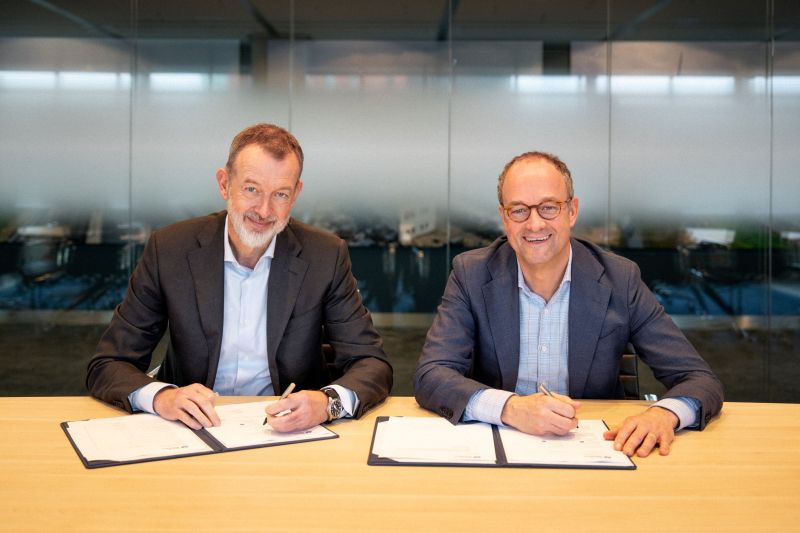
A highlight of the 2026 Indaba was the Presidential Keynote Address delivered by H.E. President Cyril Ramaphosa, underscoring the importance of energy security, infrastructure development and regional cooperation in unlocking Africa’s economic potential.

Addressing delegates from across the global energy ecosystem, President Ramaphosa emphasised that Africa’s abundant natural resources — including solar, wind, hydropower, gas and critical minerals — position the continent to become a competitive energy producer while meeting its development needs.

The President also highlighted that more than 600 million Africans still lack access to electricity, reinforcing the urgency of accelerating investment in energy infrastructure and innovation across the continent.

Major Announcements and Strategic Developments

The 2026 Africa Energy Indaba delivered several important announcements and partnerships that underscore the event’s role as a catalyst for energy investment and collaboration.

  • Mission 300 Commitment Expanded

As part of Mission 300 Day during the Indaba, The Rockefeller Foundation announced an additional US$10 million in support of Mission 300, the ambitious initiative led by the World Bank Group and the African Development Bank aimed at connecting 300 million Africans to electricity by 2030.

The announcement reinforced the growing momentum behind Mission 300 and highlighted the importance of global partnerships in addressing Africa’s energy access gap.

  • Nuclear Energy Cooperation Agreement

During the Nuclear Forum, South Africa’s Nuclear Energy Corporation (Necsa) and Russia’s Rosatom signed a Memorandum of Understanding (MoU) to strengthen cooperation in nuclear skills development, training and research.

The partnership supports South Africa’s nuclear expansion ambitions and focuses on developing the next generation of nuclear professionals, promoting women’s participation in the sector and advancing collaborative research programmes.

Global Nuclear Capacity Commitment

A further milestone of the Nuclear Forum was the signing of the Declaration to Triple Global Nuclear Capacity by 2050, in collaboration with the World Nuclear Association. The declaration reflects growing international recognition of nuclear power as a critical component of global energy security and decarbonisation strategies.

Advancing Continental Infrastructure and Investment

A key highlight of the Indaba was the Ministerial Roundtable on the Africa Ten-Year Infrastructure Investment Plan for Cross-Border Interconnectivity (TYIIP).

The roundtable focused on accelerating priority transmission and power infrastructure projects across the continent, strengthening project preparation mechanisms, improving cross-border coordination and mobilising both public and private investment to enable regional energy integration.

Energy leaders emphasised that cross-border interconnectivity and regional power pools will be essential to delivering reliable and affordable electricity across Africa.

South Africa Energy Investment Opportunities

The Indaba also hosted the South African Investment Forum, hosted by the Department of Electricity and Energy, which profiled a range of investment opportunities in South Africa’s evolving energy sector.

The forum provided investors with insights into new projects across renewable energy, transmission infrastructure, gas-to-power developments, nuclear energy expansion and emerging technologies.

A Platform for Strategic Energy Dialogue

The Africa Energy Indaba 2026 brought together energy stakeholders to explore pathways for:

  • Strengthening energy security and resilience across Africa
  • Accelerating energy investment and project development
  • Advancing regional power integration and cross-border infrastructure
  • Supporting Africa’s just and inclusive energy transition
  • Unlocking the potential of gas-to-power, renewables, storage and grid expansion

Government leaders, development finance institutions, utilities, private sector companies and technology innovators participated in a series of high-level discussions, ministerial roundtables and industry forums.

Key Outcomes and Strategic Discussions

Among the key themes and outcomes emerging from the 2026 Indaba were:

Energy Investment Acceleration
Delegates emphasised the need to significantly increase investment in generation, transmission and distribution infrastructure to meet Africa’s rapidly growing energy demand.

Regional Integration and Infrastructure Development
Ministers and industry leaders highlighted the importance of strengthening regional power pools and cross-border interconnectors to improve reliability and unlock continental energy markets.

Energy Transition Aligned with Industrial Growth
A central message from the conference was that Africa’s energy transition must support industrialisation, job creation and economic development while advancing sustainability goals.

Strategic Role of Natural Gas
The Africa Gas Forum reinforced the role of natural gas as a transition fuel capable of supporting electricity generation, industrial growth and energy stability across the continent.

Public–Private Partnerships
Strong emphasis was placed on collaboration between governments, investors and development partners to accelerate project implementation and mobilise large-scale energy financing.

Africa’s Energy Future

The Africa Energy Indaba continues to play a critical role in shaping the continent’s energy policy landscape and investment pipeline.

By convening key decision-makers and global stakeholders, the Indaba provides a platform where energy deals begin, partnerships are formed and practical solutions are developed to address Africa’s most pressing energy challenges.

As Africa’s energy demand grows and the global energy transition accelerates, the Africa Energy Indaba remains committed to driving dialogue, collaboration and investment that will power the continent’s future.

For more information visit www.energyindaba.co.za

Valkim Technologies publishes white paper calling for smarter emissions verification in floating roof tank compliance

Valkim Technologies LLC and Valkim Technologies BV have released a new white paper urging multinational asset owners to move beyond traditional geometry-based inspection methods and adopt a more outcome-oriented approach to emissions compliance for floating roof storage tanks.

The paper, titled From Proxy Geometry to Emissions Performance, is directed at operators managing assets under both US and European regulatory frameworks. It argues that while periodic seal gap inspections remain a valid compliance tool, they were designed for an era when direct emissions measurement was impractical, and that advances in field instrumentation now make it possible to add a meaningful performance verification layer alongside existing requirements.

The Drill Bit vs. The Hole

Central to the white paper’s argument is a distinction between proxy compliance and outcome verification. As the authors put it, regulators and communities do not need a more mechanised seal-gap ritual — they need confidence that emissions are actually being reduced. Seal gap measurement is described as “the drill bit,” while quantitative emissions verification represents “the hole”: direct, trendable evidence aligned to the environmental purpose of the regulation.

The paper does not propose replacing any mandatory US inspection requirements. Instead, it outlines a structured path for operators to add a performance layer that strengthens regulatory narratives, improves maintenance prioritisation, and reduces unnecessary worker exposure on tank roofs.

Bridging Two Regulatory Cultures

A key focus of the white paper is the divergence between US and European compliance philosophies. In the United States, tank compliance has historically centred on prescribed geometric criteria, observable, auditable, and enforceable. In Europe, under the Industrial Emissions Directive (IED) and Best Available Techniques (BAT) frameworks, the primary evidentiary question is whether emissions are demonstrably minimised under actual operating conditions.

Valkim Technologies notes that neither approach is inherently superior — they represent different evidentiary hierarchies shaped by regulatory history and enforcement capability. For multinational operators, however, managing two distinct compliance cultures creates internal fragmentation and limits the quality of environmental governance reporting.

The recommended solution is a single global performance doctrine: maintain prescriptive inspections where required by local rules, and standardise a quantitative verification layer deployable across the entire asset portfolio.

What the Performance Layer Looks Like

The white paper outlines a practical measurement methodology using pump-equipped, sample-draw multi-gas instrumentation with standardised sampling hose lengths and fixed circumferential station spacing. Methane is used as calibration gas, with a 500 ppm screening threshold serving as an early-indication benchmark for “attention required.”

Key controls include pre-use calibration documentation, consistent probe placement relative to the seal region, defined stabilisation dwell times per station, and systematic recording of wind speed, temperature, and roof position to contextualise variability. Data are captured in structured CSV format with timestamps, station identifiers, and environmental metadata.

The resulting dataset is not intended to replace geometric inspection records or permit-defined test methods. Its purpose is comparative and diagnostic: detecting localised seal degradation, prioritising targeted repairs, confirming post-repair improvement, and building a trendable performance baseline over time.

A Five-Phase Implementation Roadmap

To support practical adoption, the white paper presents a five-phase convergence roadmap. The first phase involves overlaying quantitative baselining onto a representative subset of tanks while leaving existing compliance obligations unchanged. Subsequent phases build toward trend analysis across seasons and operating states, integration of performance signals into maintenance planning, proactive regulatory engagement using the resulting dataset, and ultimately the institutionalisation of the method in standard work across contractors, shifts, and sites.

Safety and Cost Benefits

Beyond regulatory positioning, Valkim Technologies highlights meaningful safety and operational gains. Rim seal work occurs in elevated, potentially vapour-rich environments, and reducing the frequency of intrusive access tasks without reducing assurance has direct safety value. Targeted repair scheduling driven by performance data can also reduce outage scope and avoid uncertainty-driven contingency costs.

Corporate Governance Implications

The white paper closes with a governance argument particularly relevant for EU-anchored operators with US infrastructure. A consistent global doctrine, supported by auditable procedures and traceable datasets, allows companies to present a unified stewardship narrative to regulators, permit authorities, and ESG-focused stakeholders across jurisdictions. Rather than explaining why inspection practices differ by region, operators can state a single principle: mechanical integrity is maintained, and emissions performance is verified.

As Valkim Technologies summarises: “We comply, we verify, and we improve.”

For more information visit www.valkimtechnologies.com

Evos Rotterdam commences methanol and ethanol expansion project

Evos has begun work on a major expansion project at its Rotterdam terminal focused on the storage of (low-carbon) methanol and ethanol. The development was formally launched during a signing ceremony at the Port of Rotterdam, attended by Evos CEO Daan Vos and Port of Rotterdam Authority CEO Boudewijn Siemons, marking a significant milestone in the companies’ collaboration.

The project will involve the construction of five new storage tanks with a combined gross capacity of 67,500 cubic metres, alongside a new pump station. In addition, a new jetty will be built by the Port of Rotterdam Authority. The expansion will allow Evos Rotterdam to increase its handling capacity for methanol and ethanol, supporting both established industrial markets and rising demand for cleaner marine fuels used in bunkering.

Demand for methanol in traditional chemical markets remains strong, with formaldehyde continuing to account for the largest share of European consumption. At the same time, Europe is moving towards low-carbon methanol, with bio- and e-methanol expected to capture an increasing market share. Demand for low-carbon methanol as a marine fuel is anticipated to rise in the early 2030s as regulatory measures take effect. Meanwhile, Europe’s decarbonisation targets are also expected to drive higher ethanol imports, supported by increased use of renewable ethanol in road fuels and the expansion of sustainable aviation fuel production from alcohol-based feedstocks.

According to Vos, the investment strengthens the strategic role of Evos’ Rotterdam terminal as a key hub for methanol and ethanol while preparing the facility for the future scale-up of low-carbon marine fuels. He added that the company’s long-term “transition partnerships” strategy focuses on collaborative progress, and that working closely with the Port of Rotterdam positions both parties to support customers in industry and shipping as the energy transition accelerates.

Siemons said the expansion represents an important step toward improving the sustainability of the port. By investing in a new jetty and quay wall, the Port of Rotterdam Authority is creating the infrastructure required for the safe and efficient handling of cleaner fuels such as methanol. He noted that the collaboration with Evos reinforces a shared commitment to supporting the energy transition while helping ensure the port remains resilient and aligned with its goal of achieving climate neutrality by 2050.

The project is expected to become operational in early 2028.

For more information visit www.evos.eu

Zululand Energy Terminal launches EOI process for EPC contractors

Zululand Energy Terminal (ZET) has officially opened its bidding process for EPC contractors to deliver the ZET Liquefied Natural Gas Terminal at South Dunes, Port of Richards Bay.

The announcement marks a significant milestone in the project’s development, signalling that ZET is ready to move from planning into active construction procurement. The terminal, once complete, is set to become a key component of South Africa’s energy infrastructure, providing the country with access to cleaner, more reliable energy supply.

Contractor selection will proceed through a structured three-phase process, Expression of Interest, Request for Information, and Request for Proposal designed to identify the most capable and experienced EPC partners for a project of this scale and complexity.

EPC contractors wishing to participate are required to take immediate action. As a first step, interested parties must submit a signed Non-Disclosure Agreement (NDA) to tenders@zlet.co.za using the prescribed NDA Template. Upon receipt, ZET will furnish submitting parties with the official EOI documentation ahead of the formal EOI launch, which is imminent. All correspondence must be directed exclusively to this address, communications received through any other channel will not be considered.

ZET has confirmed that the EOI launch is scheduled to occur shortly, and contractors are strongly encouraged to submit their NDAs without delay to ensure they receive documentation at the earliest opportunity.

For more information visit www.zululandenergyterminal.co.za

INA completes the Rijeka Refinery Upgrade Project

INA has marked the completion of the Rijeka Refinery Upgrade Project, representing the largest single investment in the company’s history and one of the biggest industrial investments in modern Croatia, with a total outlay of nearly EUR 700 million.

The completion of the Delayed Coking Unit and associated facilities brings the refinery’s installed processing capacity to up to four million tons of crude oil per year. The upgraded facility is now capable of processing a broader range of crude, including heavier grades, with a key focus on production optimisation. The new unit is expected to increase the share of diesel in total production by around 30 percent — a development of strategic importance to the market, particularly during Croatia’s peak tourist season.

Rijeka Refinery: Source MOL

The upgrade also eliminates the need to import vacuum gas oil (VGO), which is predominantly of Russian origin on the European market, strengthening Croatia’s energy security and reducing its dependence on imported raw materials.

The completion ceremony was attended by representatives of the governments of Croatia and Hungary, ambassadors from several countries, regional and local community representatives, and the management of INA and MOL Group. Ahead of the ceremony, a Grant Agreement was signed with Croatia’s Ministry of Economy under the National Recovery and Resilience Plan for the construction of a green hydrogen production plant at the Rijeka Refinery, signalling the company’s continued commitment to sustainable development.

Zsuzsanna Ortutay, president of the management board of INA, described the upgrade as a strategic milestone, noting that the refinery would now be able to utilise every barrel of crude oil more efficiently and remain competitive for years to come. She highlighted that the benefits extend beyond the refinery itself, delivering greater energy security for Croatia and the region, more stable supply for customers, and a stronger position for INA as a regional supplier. Ortutay also noted that a commercial green hydrogen production plant — the first of its kind in Croatia — is set to be built on site before the end of the year.

Croatia’s Minister of Economy, Ante Šušnjar, underscored the project’s significance for national and regional energy security, stating that commissioning the Delayed Coker Unit marks a meaningful step forward in strengthening Croatia’s industrial sector. He called on the refinery to operate stably, sustainably and at full capacity, and reaffirmed Croatia’s intention to continue bolstering its energy infrastructure.

Hungary’s Deputy Minister of Foreign Affairs and Trade, Levente Magyar, framed the achievement in terms of shared regional energy sovereignty, emphasising that energy security in the region is indivisible and that the investment — which he described as of historical proportions — would serve as a guarantor of joint energy security, particularly in the current geopolitical climate.

József Molnár, CEO of MOL Group, acknowledged the completion of the construction phase while stressing that the work is only just beginning. He called on the refinery to become one of Europe’s most efficient, and reiterated MOL Group’s interest in a strong INA as a foundation for reliable energy supply across the region.

The scale of the project is illustrated by the construction figures: more than 10,000 tonnes of steel were used — equivalent to nearly one and a half Eiffel Tower structures, alongside 60,000 cubic metres of concrete, enough to build a medium-sized football stadium. More than half of the work was carried out by domestic contractors. The Rijeka Refinery upgrade forms part of a broader long-term investment cycle in which INA and MOL have committed more than EUR 1.3 billion to modernising refinery and logistics infrastructure over the past 12 years.

For more information visit www.mol.hu

Trafigura’s MorGen Energy reaches FID for 20MW green hydrogen project in Wales

Trafigura, a market leader in the global commodities industry, has announced that its wholly-owned subsidiary, MorGen Energy, has approved the final investment decision (FID) to begin construction of a 20MW green hydrogen production facility in Milford Haven, Wales. The West Wales Hydrogen project is among the first projects supported by the UK Government’s flagship Hydrogen Allocation Round (HAR1) to achieve FID.

With construction expected to begin in 2026 and commissioning targeted for early 2028, the West Wales Hydrogen plant is set to produce approximately 2,000 tonnes per annum of low-carbon hydrogen, fully compliant with the UK’s Low Carbon Hydrogen Standard. The hydrogen will serve a broad range of applications, including port decarbonisation, industrial heating, manufacturing and chemical feedstock.

Located on the site of a former oil refinery within the Celtic Freeport, the project is expected to support the creation of highly skilled jobs and the engagement of local contractors throughout the construction phase. The facility has the capacity to scale in subsequent phases as demand evolves, and is positioned to become a future hydrogen hub, supporting industrial decarbonisation across south Wales.

MorGen has selected Sheffield-based ITM Power to supply the electrolyser system, a move that supports domestic manufacturing and the development of the UK hydrogen technology sector. Project financing for the facility is being provided by Lloyds and Societe Generale.

Key Project Facts

Capacity: 20MW green hydrogen production facility

Output: ~2,000 tonnes per annum of low-carbon hydrogen

Location: Milford Haven, Wales — former oil refinery site within the Celtic Freeport

Timeline: Construction from 2026; commissioning by early 2028

CO₂ savings: Over 15,000 tonnes of CO₂e emissions savings expected annually

Revenue support: 15-year revenue support via the UK Government’s Hydrogen Production Business Model

Executive Commentary

Richard Holtum, CEO of the Trafigura Group, commented that the UK government’s hydrogen support framework was key to the project reaching final investment decision, describing it as a demonstration of how public policy and private capital can work together to support the decarbonisation of hard-to-abate industries. He added that the West Wales Hydrogen project reflects Trafigura’s ability to commercialise emerging commodity markets, connecting new supply with customers seeking reliable, low-carbon solutions.

Werner Lieberherr, CEO of MorGen Energy, described reaching FID as a defining milestone for MorGen and the UK hydrogen sector. He stated the project demonstrates that green hydrogen projects in the UK can be delivered as bankable infrastructure investments when strong industrial demand is combined with a clear and stable policy framework, and expressed gratitude for the strong support of the UK Government, especially the Department for Energy Security and Net Zero.

Minister for Energy Michael Shanks stated that the government is backing hydrogen because it is crucial in decarbonising industry, driving investment, boosting energy security and creating hundreds of jobs in industrial heartlands. He described the investment as evidence of Wales embracing the clean energy transition, with one of the UK’s first commercial-scale low-carbon hydrogen production plants creating new opportunities for local communities.

Secretary of State for Wales Jo Stevens noted that Wales is at the forefront of the green energy revolution, welcoming the West Wales Hydrogen project as among the first in the UK to reach this stage with the support of the UK Government. She called it a huge milestone in the delivery of a project that will create jobs and help grow the Welsh economy.

For more information visit www.trafigura.com

OPW employee named 2026 STEP ahead award honoree by the Manufacturing Institute

OPW, a Dover Company, announced today that Tina Desjardins, production engineering manager at its BASE Engineering business segment, has been recognised as a 2026 STEP Ahead Awards Honouree by the Manufacturing Institute, the workforce development and education partner of the National Association of Manufacturers.
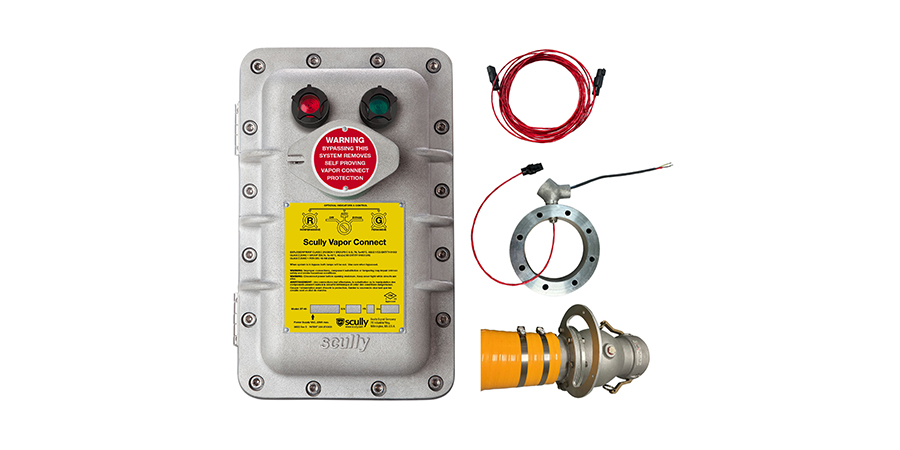
Desjardins is recognised for her leadership in advancing manufacturing operations at BASE Engineering’s Saint John, New Brunswick facility. She leads cross-functional initiatives to improve production efficiency, strengthen quality performance, and enhance workplace safety, while also mentoring early-career employees and supporting technical workforce development.

Tina Desjardins, production engineering manager
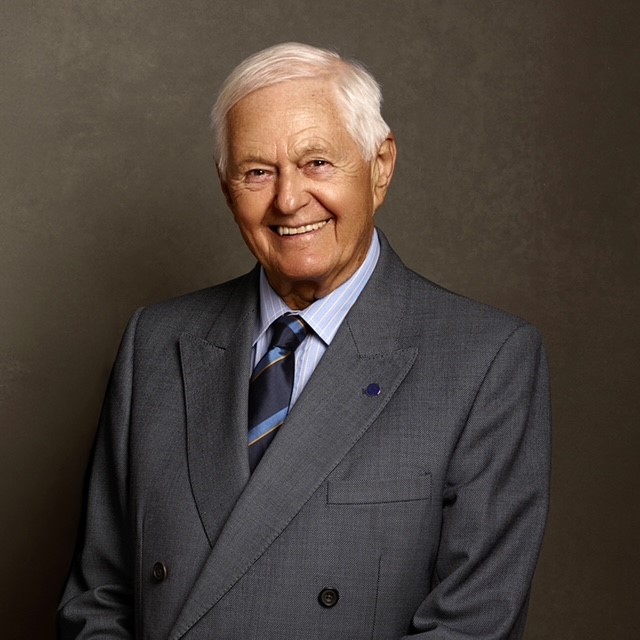
“We are proud to see Tina recognised by the Manufacturing Institute,” said David Malinas, president of OPW. “Her leadership reflects OPW’s commitment to operational excellence and to developing the next generation of manufacturing talent.”

Chosen from over 1,000 applicants across over 100 companies, Desjardins is among 145 recipients to be honoured at the annual STEP Ahead Awards Gala in Washington, D.C., on April 23, 2026.

These annual awards recognise employees who have excelled in their careers and showcase leadership across all levels of the manufacturing industry.

For more information visit opwglobal.com.

Scully Signal Company launches vapour connect™ kit to enforce vapour hose or loading-arm connection verification between tank truck to terminal at petroleum loading lanes

Scully Signal Company, a leader in hazardous liquid transfer safety, celebrates 90-years of innovation by announcing the launch of the Scully Vapour Connect™ Kit—a self-proving system for monitoring and verifying terminal to tank truck vapour hose or loading-arm connection as part of the loading permit. The result: terminal operators gain the ability to confirm vapour connection before every load, closing a critical gap in environmental protection, operational accountability, and investment security.

The Problem: A Missed Connection with Real Consequences

Connecting the vapour hose is a crucial part of the loading process after connecting the overfill and grounding plug. Yet unlike grounding and overfill protection, vapour hose connection has historically relied on driver compliance alone in certain regions of the world. When the hose is not properly connected or bypassed entirely, vapours generated during fuel loading escape to the atmosphere rather than flowing to the vapour recovery system, undermining both regulatory commitments and capital investments in environmental infrastructure.

Until now, no broadly adopted terminal solution made vapour connection verification a mandatory, tamper-resistant part of the loading process. Scully is changing that.

The Solution: Vapour Connection, Verified.

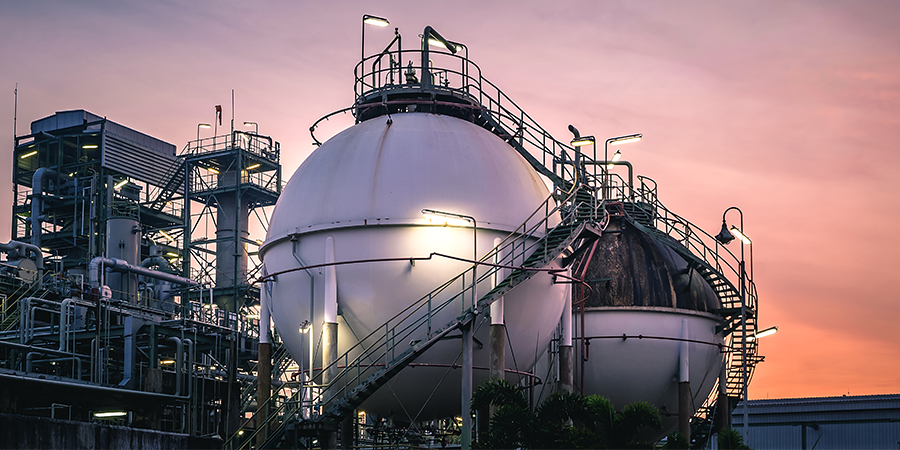
The Scully Vapour Connect™ Kit centres on the ST-46, a self-proving controller that can function independently or in tandem with existing Scully Overfill and Grounding controllers. The ST-46 incorporates vapour verification status as part of the loading permit so that a tank truck cannot receive a loading authorisation until a proper vapour connection is confirmed.

What sets the Vapor Connect™ Kit apart is its engineered resistance to workarounds or “cheating.” An integrated sensor and wiring are internal to the coupler and hose, and the system uses a proprietary signal that cannot be shorted to simulate a proper connection. For terminal operators who have invested in vapour recovery infrastructure, this technology ensures that investment delivers its intended return.

Key Product Features

  • Maximum vapour capture using closed system design with a poppet coupler adaptor
  • Trusted System that is difficult to “cheat” due to an integrated sensor and wiring internal to the coupler and hose, plus a proprietary signal that cannot be “shorted” to pass as a proper connection.
  • Provides an electrical output to TAS or batch controller as an option to include in the permit logic.
  • Best-in-class vapour flow using a high-flow pressure drop vapour coupler, resulting in reduced back pressure in the truck compartments benefiting in lower potential vapour release to the atmosphere.
  • No Truck Modifications Required due to its compatibility with standard 4″ vapor adaptors per API RP1004 specification.

Availability

The Scully Vapour Connect Kit is available now. For more information, product specifications, or to speak with a Scully representative, visit www.scully.com or contact your local Scully distributor.

About Scully Signal Company

Scully Signal Company has over 90 years of experience providing best-in-class liquid handling safety solutions. Scully’s products are trusted worldwide by terminal operators, carriers, and distributors to deliver dependability, safety, and service that the industry relies on.

For more information visit www.scully.com.

Glenfarne’s Texas LNG and Kiewit execute lump-sum turnkey EPC contract

Texas LNG Brownsville LLC, the liquefied natural gas export terminal being developed in the Port of Brownsville, Texas, by an affiliate of Glenfarne Group, LLC, and Kiewit, through its subsidiary Kiewit Energy Group Inc., have announced the execution of Texas LNG’s engineering, procurement, and construction agreement under a lump-sum turnkey contract structure. The announcement represents one of the final steps required for Texas LNG before making a final investment decision.

Under the terms of the agreement, Kiewit will perform the engineering, procurement of equipment, module fabrication, construction, and commissioning for the full Texas LNG facility, delivering a fully completed and operational facility to Glenfarne.

Brendan Duval, chief executive officer and founder of Glenfarne, noted that over the last 14 months, the Texas LNG project team has been embedded with Kiewit to complete the pre-FID engineering required for the project to begin execution. He stated that the process confirmed Kiewit’s capabilities and best-in-class execution and implementation expertise on the US Gulf Coast align with Glenfarne’s vision for Texas LNG. Duval added that together with Kiewit, the company will construct a world-class LNG facility that will make the Rio Grande Valley region proud and provide high-paying, quality jobs and technical training for the area for decades to come.

Eric Gutierrez, executive vice president of Oil, Gas and Chemical for Kiewit Energy Group Inc., expressed excitement at advancing the partnership with Glenfarne through Texas LNG, noting that the agreement allows Kiewit to bring its extensive experience and highly skilled workforce to deliver complex, integrated LNG EPC projects on time and on budget. He stated that Kiewit is proud to continue its work with Glenfarne in building a premier LNG export facility on the US Gulf Coast.

For more information visit www.glenfarnegroup.com

Fort Vale announces the death of founder Ted Fort

Ted Fort, who has died at the age of 88, started a company in 1967 that went on to become the world leader in the supply of valves and ancillary equipment for road, rail, helicopter refuelling and container tanks.

Fort established Fort Vale Engineering Limited in Colne, Lancashire, following the purchase of two production machines at a sale of surplus equipment from the Ministry of Defence. The two machines were perfect for the production of Fort’s new design of valve for the fuel oil delivery industry which went on to become an industry standard. By combining his design skills with keen business acumen, he quickly identified emerging markets and produced quality products to fill the demand. The ISO tank container market was one such and provided a major leap forward in the growth of the company. The Fort Vale Group now employs around 500 people worldwide, has offices and depots in six countries and a manufacturing centre in China as well as in the UK.

Edward Sagar Fort OBE  LLD (Hon) 

Edward Sagar Fort was born in 1937 in Colne, a typical cotton-weaving town in North East Lancashire. He lived in the family farmhouse with no electricity or sewerage for many years and, at the age of ten, raised hens to sell the eggs for pocket money.

Fort struggled at school, failing the eleven-plus examination and attending Park Secondary Modern School in Colne. His prospect for a decent career looked bleak until his mother managed to get him an apprenticeship at Rolls Royce, Barnoldswick. It was a turning point. Fort relished the environment and went on to gain HNC and HND certification at Burnley College. His work at Rolls included design and production operations on cooling ducts in the turbine blades of jet engines – an area of development that gave jet engines 50 percent more power and a fundamental progression to the modern jet power plants.

Fort left Rolls Royce for Lucas Aerospace, Burnley, in 1960 at the age of 22, working on combustion chambers with airflow testing rigs, which proved to be invaluable experience later in his career.

Sailing had become a favourite sport with which he continued for the rest of his life. Fort started racing a Firefly dinghy at Burwain Sailing Club in Foulridge, where he made many friends. It was a sailing friend, Tony Clegg, that he joined as deputy chief engineer at Drum Engineering, Bradford. At Drum he was introduced to the road transport industry and became involved with pumps and flow control valves for domestic fuel oil delivery tankers.

A visit to a Ministry of Defence surplus manufacturing equipment sale saw Fort put in derisory offers for a few machines. To his horror, he received a letter accepting the offer for two machines and an invoice for £550.0s.0d. He then started a business on his own and with help from his father, obtained a small machine shop in Colne in 1967.

Using his contacts obtained at Drum, he took on the challenge of a new valve design for a customer, which proved to be a huge success and the first ‘industry standard’ of many subsequent designs of his.

The company grew and, in 1974, moved to much larger premises in Nelson. The first export order had come in 1971 obtained on a trip to Ireland for the Firefly National Championships – the value, £10. As the tank container market was international, exports grew quickly and the first of four Queen’s Awards for Export Achievement (later, International Trade) was obtained in 1981. A King’s Award for Enterprise, International Trade, was gained in 2024.

In 1987 Fort was awarded with an OBE for contributions to business and exports and in 2018 an honorary degree from Lancaster University in recognition of his philanthropy and campaigning on the perils of climate change.

He continued sailing throughout his life and was part of the Olympic training squad in the build up to the 1976 games in the Soling class. He went on to sail in the Etchells class from 1985, racing at Cowes and many more championships abroad. He also sailed in the Dragon class and graduated from the Etchells to a 9.5m Tofinou which he particularly enjoyed racing at Cannes.

The growth of the Fort Vale Group included the acquisition and disposal of several businesses, most notably, current holdings of Francis Searchlights, Bolton, and Riggs Autopack, food industry equipment manufacturers in Nelson.

Fort Vale sales offices and depots were established in America, the Netherlands, Singapore, Australia and China.

In 2008, the company acquired the site of the Philips television manufacturing plant in Simonstone, Burnley, and built new offices with extended shop floor space. The site continues to be developed with investment in advanced manufacturing plant and design facilities.

Fort never forgot how important his apprenticeship at Rolls Royce had been and implemented an apprenticeship scheme at Fort Vale, which continues. He had great regard for his company workforce.  2018 saw the opening of a new on-site sports centre for employees.

He was listed in the Sunday Times Rich List, ranking as high as 150th, but Fort always said that with wealth comes responsibility. He set up two charitable foundations, one aiming to help youth in North West England and the other, set up with his partner of 25 years, the late Susan Friedlander, helping charitable causes in and around Beaulieu where they had settled.

His concern for man’s effect on climate change caused him to spread the word and increase the appreciation of the damage being done and its consequences. In 2020 he commissioned and constructed the Fort Climate Centre in Beaulieu with a view to promoting awareness and networking with educational establishments, community groups and businesses. The centre was officially opened in 2023 by HRH the Duchess of Sussex.

He is survived by two daughters and two grandchildren.

Edward Sagar Fort OBE LLD (Hon) – born 20th March 1937, died 7th March 2026.
For more information visit www.fortvale.com

OX2, Södra and TES advance Värö electric natural gas project in Sweden

OX2, Södra, and e-NG project development company TES have announced that they are advancing their development plans for an e-NG facility at the Värö peninsula in Varberg, Sweden, by entering the pre-frontend engineering design phase. The decision follows the signing of a letter of intent in January 2025 and the successful completion of an initial feasibility study assessing the technical and commercial viability of the concept.

Sweden imports significant quantities of fossil natural gas and biogas to supply chemical and industrial companies that depend on gas in their processes, primarily via pipeline from Denmark, with fossil-based natural gas still representing the lion’s share of the energy mix. The Värö e-NG project has the potential to materially support the Swedish energy transition, economy, and energy security and resilience.

The facility is designed to produce 1.2 TWh of e-NG (e-methane) annually. e-NG is produced by capturing biogenic CO₂ from Södra’s pulp mill at Värö and combining it with hydrogen produced onsite using renewable electricity. With 1.2 TWh of e-NG, the share of Swedish-produced fossil-free gas in the Swedish gas grid would increase significantly, representing more than a fourfold increase in domestic production of fossil-free gas.

The Pre-FEED phase, which will be carried out over a one-year period, is partly supported by SEK 16.8 million (approximately €1.6 million) in funding from the Industrial Leap (Industriklivet), the Swedish Energy Agency’s programme for industrial decarbonisation, which forms part of the EU Recovery and Resilience Facility and Next Generation EU. The funding will cover approximately 50 percent of the Pre-FEED and development costs.

During the Pre-FEED phase, the partnership will draw up technical designs, evaluate the potential for integration with Södra’s existing pulp mill operations, secure the necessary grid connections for electricity and gas distribution, advance permitting processes, and refine commercial agreements.

The partnership brings together complementary capabilities across the value chain. Södra operates the pulp mill that generates biogenic CO₂ as a by-product of its production processes. OX2 develops large-scale renewable energy projects in the region, while TES specialises in e-NG production technology and contributes technical know-how and market insight gained from scaling up similar projects globally.

e-NG is a fossil-free, chemically equivalent alternative to fossil natural gas, serving as a drop-in fuel that can be used immediately in existing infrastructure without modification. Potential applications include maritime fuel, chemical industry feedstock, and industrial processes.

The project has established a Heads of Agreement with an energy major for the purchase of the majority of the planned production volume. Subject to the findings of the Pre-FEED phase and a subsequent investment decision by the partners, the facility is expected to enter operation in the early 2030s, in time for the entry into force of sizeable EU RED III RFNBO obligations. Decisions on progressing to subsequent stages will be taken jointly by the partners based on the results of the current phase.

Emelie Zakrisson, country manager of OX2 Sweden, described the Värö e-NG project as a unique opportunity to deliver large-scale Swedish production of renewable gas close to the existing distribution pipeline. She stated that combining Sweden’s natural resources with strong industrial know-how gives the project the potential to support the industry’s transition, cut emissions, and move Sweden closer to real energy self-sufficiency.

Johannes Bogren, business area president of Södra Bioproducts, described the project as a strategic opportunity to turn existing biogenic CO₂ into renewable gas at scale. He noted that by integrating Södra’s processes with emerging market needs, the project can strengthen long-term value creation, enhance the value of every tree, and support industry’s shift away from fossil gas in Sweden and across Europe.

Marco Alverà, co-founder and CEO of TES, highlighted that Sweden’s abundant renewable power, access to biogenic CO₂, and strong industrial base provide the foundations to pioneer large-scale e-NG production. He expressed confidence that together with Södra and OX2, the partnership is developing a project ready to meet the growing demand driven by RED III obligations across Europe.

The Värö e-NG Project is funded through the Industrial Leap, which is part of the EU Recovery and Resilience Facility (RRF) and Next Generation EU, a government initiative run by the Swedish Energy Agency.

For more information visit www.tes-h2.com

The future of BioLNG: Europe 2026 – driving the path to carbon neutrality

ACI is proud to announce The Future of BioLNG: Europe 2026, taking place on 25–26 March 2026 in Turin, Italy. This leading two-day conference will unite policymakers, industry innovators, investors, and stakeholders from across the energy value chain to explore BioLNG’s vital role in advancing Europe’s sustainable energy transition.

With BioLNG poised to be a cornerstone in decarbonising transport, maritime, and industrial sectors, the event will provide a dynamic platform to address regulatory alignment, market growth, feedstock resilience, and the adoption of cutting-edge production technologies. Attendees will gain valuable insights from global case studies, practical applications, and strategic discussions on scaling infrastructure and overcoming deployment barriers.

Highlights of the Programme Include:

  • Expert-Led Conversations – In-depth discussions with policymakers and industry leaders on regulatory frameworks, market trends, and pathways to decarbonisation.
  • Technological Innovations – Breakthroughs in BioLNG production, integration of carbon capture and storage, and advanced liquefaction techniques.
  • Sector Applications – Real-world adoption in maritime and road transport, including cost challenges, fleet feedback, and comparative analysis with alternative fuels.
  • Sustainability Strategies – Securing sustainable feedstock sources, addressing methane slip, and enhancing cross-border supply chain efficiency.
  • Investment & Bankability – Exploring financing models, certification trust, and mitigating risks in BioLNG project development.

Key Topics to be Covered:

  • Financing & Bankability of BioLNG Projects
  • Regulatory Frameworks & Compliance (RED III, FuelEU Maritime, IMO)
  • National Incentive Schemes & Deployment Hotspots
  • Infrastructure & Cross-Border Supply Chains
  • Certification & Market Trust
  • Road & Maritime Transport Applications
  • Industrial Use Cases & Emissions Risk
  • Deployment Best Practices
  • Future Fuel Mix & Strategic Outlook

Who Should Attend:
BioLNG producers and distributors, liquefaction technology providers, biogas feedstock suppliers, transportation and maritime companies, policymakers, financial institutions, research organisations, and sustainability consultants.

Don’t Miss This Opportunity!
Shape the future of BioLNG and contribute to a carbon-neutral energy landscape. Register now and join the leaders driving innovation and sustainability in energy.

More Details on Sessions & Topics, please View Agenda: https://www.wplgroup.com/aci/agenda-elbe2-mkt/

The standard delegate rate is £1,995 which includes attendance of the two-day conference, all speakers’ presentations, lunches and networking opportunities as well as documentation from the event.

How Do I Register?

Online Registration Link: https://www.wplgroup.com/aci/event/future-bio-lng-europe/

Use Coupon code ELBe2MA for £100 Discount on your registration

Members/subscribers are entitled to a special discount on registration – to claim please contact Mohammad Ahsan on mahsan@acieu.net or +44 (0) 203 141 0606 quoting ELBe2MA

For more information visit www.wplgroup.com

Fabri Consulting Engineers and Cadxtra collaborate on industrial firefighting system design

Fabri Consulting Engineers has announced a new partnership with Cadxtra to deliver a firefighting system for an industrial paper recycling plant, further expanding its portfolio of fire protection engineering projects.

The scope of work includes the design of new water storage facilities, pumps, fire monitors, as well as associated detection and control systems. Fabri Consulting Engineers will provide the mechanical and electrical design to support the overall project, which will be managed and delivered by Cadxtra.

With more than 20 years of experience in firefighting system design within the oil and gas industry, Fabri Consulting Engineers brings extensive technical expertise to the project. The collaboration also builds on the company’s long-standing working relationship with Hawkes Fire, with whom it has successfully delivered numerous projects over the years.

By combining the capabilities of Fabri Consulting Engineers, Cadxtra and Hawkes Fire, the partnership aims to deliver an effective and reliable firefighting solution tailored to the requirements of the industrial facility.

Fabri Consulting Engineers noted that collaborations of this kind enable companies to leverage their respective strengths and technical knowledge, ultimately ensuring the best possible outcome for the end user. The company looks forward to progressing the project and continuing to strengthen partnerships across the industry.

For more information visit www.fabri.org

From 9 March LNGCON 2026 examines the projects reshaping the global LNG map

Every LNG project sets the direction for the market over the next decade. New terminals, FSRUs, small-scale infrastructure and capacity expansions influence trade flows, regional security and long-term decarbonisation pathways. Reviewing upcoming projects means understanding where capital moves and which regions accelerate their role in the global LNG map.

LNGCON 2026 brings this discussion to the stage in its Closing Panel dedicated to recent and upcoming LNG projects, taking place on 10 March. The session connects infrastructure operators, transmission system representatives and global producers to assess capacity growth and commercial priorities:

? Christian Waltermann, Business Development LNG at PRISMA European Capacity Platform;

? Sotirios Bravos, Chief Officer Commercial Services at DESFA;

? Rahul Tripathi, Senior Strategy Analyst at ADNOC Gas;

? Dainius Sivickis, Head of Business Development & Marketing at KN Energies;

? Stefaan Adriaens, Commercial Manager at Gate Terminal;

? Zuchrizan Zain, LNG Commercial Manager at SKK Migas.

Small-scale LNG utilisation, FSRU demand hotspots in Europe and Asia, new global capacity builds and LNG’s role in Indonesia’s transition agenda frame the final strategic exchange of the Congress.

LNGCON 2026 begins in just a few days. Make the most of the final opportunity to take part in the conversations defining the next phase of LNG development:

https://sh.bgs.group/3yh

Women leading the way in heavy industry, Thorne & Derrick International marks International Women’s Day

In recognition of International Women’s Day, Thorne & Derrick International is highlighting the growing contribution of women across its business and reaffirming its commitment to developing talent within traditionally male-dominated sectors. Women now represent 40% of the company’s workforce, with their work going beyond product supply, supporting engineered, certified solutions for customers operating in hazardous and high-voltage environments where failure isn’t an option, contributing to decision-making, and delivering steadfast outcomes on critical infrastructure projects.

The organisation’s focus on investing in people is reflected through hands-on development opportunities, mentorship, and support for professionals at different career stages — from apprentices building technical knowledge to experienced employees strengthening credibility in customer-facing roles and individuals returning to work after career breaks.

Chloe Johnston, the company’s first female apprentice sales engineer, is CompEx F trained, bringing safety-critical competence into customer-facing technical decisions. Having progressed into a sales engineer role, Chloe celebrates three years with the business in July and now mentors apprentice Elisa Thompson, supporting the next generation entering the industry.

Laura McCabe transitioned from an administrative role into engineering sales, completing her CompEx F training to become the organisation’s first female sales engineer and reaches ten years of service this year. Her experience reflects industry progress alongside ongoing challenges, including PPE historically not designed with women in mind and assumptions sometimes encountered on site, reinforcing the importance of continued awareness and inclusion.

Sarah Henderson joined the organisation seven years ago following a decade-long career break raising children. Through technical development and support, she built expertise and confidence in her role and believes diverse perspectives strengthen both problem-solving and customer engagement.

As part of ongoing development, Sarah and Chloe are scheduled to complete Nexans high-voltage tooling training in March, strengthening their capability to support complex HV projects.

Together, these professionals represent a growing presence of women in heavy industrial sectors underpinning critical infrastructure. Their work supports projects where reliable heating, lighting, and power are non-negotiable — particularly in hazardous and high-voltage environments — demonstrating the value of inclusive talent in delivering resilient outcomes.

This International Women’s Day, Thorne & Derrick International truly demonstrates this year’s ‘Give To Gain’ theme in practice: giving people training and exposure to produce stronger capability and more reliable outcomes for customers.

For more information visit www.thorneandderrick.com

AMPP Annual Conference + Expo 2026 showcases new technical sessions

The AMPP Annual Conference + Expo 2026 returns March 15–19 in Houston, Texas, bringing together professionals who work every day to protect critical assets from corrosion and deterioration. The event draws engineers, inspectors, contractors, asset owners, and researchers from around the world to exchange ideas, share technical expertise, and examine the issues in materials protection.

Several new additions to this year’s programme reflect the industry’s continued advancement. Technical sessions will examine topics such as pipeline safety, carbon capture infrastructure, water treatment and desalination systems, workforce development, and contractor engagement.

Across the conference, discussions will highlight sectors including maritime and defense operations, energy production and transportation, and civil infrastructure systems that support communities internationally.

New sessions introduced in 2026 include:

  • Preventing Failures in Structural Concrete: Corrosion, Coatings and CP
    Mon., March 16 | 8:00 AM – 12:00 PM | Room 360 DE
  • Pipeline Safety and Asset Integrity Management
    Mon., March 16 | 1:00 – 3:00 PM | Room 362 BC
  • Corrosion Management: Water Treatment, Desalination, Transmission and Reuse
    Mon., March 16 | 1:00 – 2:30 PM | Room 372 EF
  • RTS: Carbon Capture, Transportation, and Utilization Storage (CCTUS)
    Tues., March 17 | 8:00 – 9:00 AM | Room 371 DE
  • Jobsite Challenges, Strategies, and Safety Programs
    Tues., March 17 | 1:00 – 3:30 PM | Room 361 DE
  • Reinvention, Reentry, and Retention
    Wed., March 18 | 1:00 – 3:00 PM | Room 375 EF
  • Material Selection and Qualification in CCS Downhole Environment
    Thurs., March 19 | 10:00 AM – 12:00 PM | Room 342 DE


Besides the technical program, new experiences at the conference include Coffee & Conversation sessions connecting contractors with AMPP leadership, a new podcast booth inside the AMPP exhibit booth, and a Coffee with Congressman Wesley Hunt discussion on Monday morning. These additions highlight the conference’s expanding emphasis on workforce solutions, industry collaboration, and policy engagement.

Maritime & Defense Programming
For professionals supporting naval fleets, aerospace systems, and defence networks, the conference features sessions focused on operational readiness, materials durability, and corrosion policy.

Participants will hear insights from leaders representing organisations including the U.S. Marine Corps, US Air Force, US Coast Guard, NASA, the Department of Defence Corrosion Policy and Oversight Office, the American Bureau of Shipping, and Seaspan.

Highlighted sessions include:

  • OSD CPO and Service Corrosion Executive Policy Updates & Roundtable/Panel
    Wed. | 10:15 AM – 12:00 PM CT | Room 351 AB
  • Marine Coating Performance Under Pressure: Challenges and Innovations
    Mon. | 1:00 – 3:00 PM CT | Room 361 DE
  • Aerospace Corrosion Modeling and Environmental Severity
    Wed. | 8:00 – 10:00 AM CT | Room 362 BC
  • TC 04 TCI – Marine
    Tues. | 1:00 – 3:00 PM CT | Room 360 AB


Energy Industry Sessions
Energy infrastructure professionals—from oil and gas operators to pipeline and midstream companies—will find extensive programming focused on asset integrity, pipeline safety, carbon capture systems, and corrosion mitigation across complicated energy environments.

Featured sessions include:

  • SC 14 Oil and Gas – Upstream
    Mon. | 8:00 – 10:00 AM | Room 342 AB
  • Pipeline Integrity
    Mon. | 8:00 – 11:30 AM | Room 362 DE
  • Advance Protective Coating Technology Symposium & Forum
    Mon. | 8:00 AM – 12:00 PM | Room 350 DEF
  • Advances in Materials for Oil and Gas Production
    Mon. | 8:00 AM – 12:00 PM | Room 372 EF
  • Pipeline Safety Forum
    Tues. | 1:00 – 5:00 PM | Room 350 DEF


These sessions provide insights into materials performance, regulatory considerations, and new technologies designed to extend the life of energy infrastructure and improve operational safety.

Civil Infrastructure Focus

As governments and municipalities confront ageing infrastructure, AMPP programming provides practical solutions to extend the life of bridges, transportation systems, water networks, and public assets.

Key sessions include:

  • DOT Bridge Forum
    Mon. | 9:00 – 10:30 AM | Room 342 F
  • Metallic Corrosion in the Water & Wastewater Industries
    Tues. | 8:00 – 11:30 AM | Room 372 EF
  • Bridge Preservation: New Technologies for Concrete & Steel Structures
    Tues. | 1:00 – 5:30 PM | Room 371 AB
  • SC 17 Rail & Land Transportation
    Wed. | 1:00 – 2:00 PM | Room 360 AB
  • Coating & Lining Failures: Common & Unusual Causes of Premature Coating Failures
    Thurs. | 1:00 – 4:00 PM | Room 372 EF


These sessions highlight the role of corrosion control, coatings performance, and materials innovation in upholding critical infrastructure and ensuring public safety.

Explore the Full Technical Program
With hundreds of technical presentations, committee meetings, and industry forums, the AMPP Annual Conference + Expo remains one of the largest global gatherings dedicated to corrosion prevention and materials protection.

For more information visit www.ace.ampp.org

Penspen opens new Newcastle office to grow European asset integrity team

International engineering consultancy Penspen has opened a new office in Newcastle’s Time Central facility as it plans further growth in the European asset integrity market.

The new office is home to more than 30 integrity engineers, materials and corrosion consultants, and technical specialists who are responsible for supporting a range of UK and European gas network operators including Gas Networks Ireland, Trans-Anatolian Natural Gas Pipeline (TANAP), and National Gas.

The new facility will also host Penspen’s industry-recognised training courses, covering pipeline legislation awareness, pipeline defect assessment, and energy transition sessions focused on hydrogen and carbon capture.

The move follows a record year for Penspen, with over $500m in sales in 2025. Its Europe asset integrity team has welcomed several new leadership appointments over the last 18 months, including Chris Wood, director of Asset Integrity (Europe), Andrew Wynne, integrity manager, and Dominic Wynne, regional business development manager – Europe.

“I think this new space is a clear signal of our intent – Penspen are committed to growing our services and team in the north-east, with asset integrity at the heart of that strategy,” said Wood.

“This larger, modern space will allow us to better integrate our teams, strengthen our asset integrity operations, and continue to deliver our high level of customer service  in the future.”

Penspen has over 70 years’ experience in engineering, project management, asset integrity, and asset management services, with a growing track record in energy transition projects across the UK and Europe.

Wood added: “As an independent consultancy, we’re well placed to support customers across the UK and Europe with integrity services for major energy infrastructure projects that secure existing supply and also support the transition to future fuels. We have an ambitious growth strategy that will see us continue to build upon this legacy and our Newcastle team will play an important part in that journey.”

Present in Newcastle for two decades, Penspen were originally based in St Peter’s Basin, following the acquisition of Andew Palmer Associates in 2007.

The North-East’s role as a centre of excellence for asset integrity is a key driver for Penspen’s investment in the area.

“Newcastle is rightly recognised as a hub for pipeline integrity management, and Penspen’s name is synonymous with deep technical expertise and first-of-a-kind projects,” added Wood.

“We have long-term relationships with the local universities in the area, and we are proud to run a successful graduate training programme to ensure we’re developing the next generation of engineers in the region.

“The North-East is a strategic hub for our future growth, and I look forward to welcoming visitors to our new facility.”

For more information visit www.penspen.com 

Changes in Neste’s leadership team and organisation structure

Neste, the world’s leading producer of renewable diesel and sustainable aviation fuel, has appointed new leadership team members as part of an organisational change that primarily affects the company’s Renewable Products business.

Effective 1 April 2026, Renewable Products commercial, refining, and feedstock sourcing and trading will be represented in Neste’s leadership team. At the same time, Neste will establish a Renewable Products, North America business unit, responsible for all renewable products business in North America, including regional feedstock and commercial operations as well as the Martinez joint venture.

From 1 April 2026, Neste’s leadership team will consist of Heikki Malinen, president and CEO, alongside the following members, all reporting directly to the president and CEO: Jori Sahlsten, executive vice president, Oil Products business area; Artturi Mikkola, senior vice president, Renewable Products Feedstock Sourcing and Trading; Jukka Kanerva, senior vice president, Renewable Products Refining; Carl Nyberg, senior vice president, Renewable Products Commercial; an as-yet-unnamed president of renewable products, North America, with Carl Nyberg serving in an interim capacity; Markku Korvenranta, executive vice president and COO; Eeva Sipilä, CFO; and Hannele Jakosuo-Jansson, executive vice president, People & Culture.

Heikki Malinen, president and CEO of Neste, described the change as a next step to accelerate the company’s value creation and long-term growth, given the importance and potential of its renewables business. He expressed confidence that the new leadership team and structure will effectively drive Neste’s strategy execution and financial performance. Malinen warmly welcomed Artturi Mikkola, Jukka Kanerva, and Carl Nyberg to the leadership team, noting that all three bring strong track records in their respective areas of responsibility and have held several demanding leadership positions across Neste over the years.

The changes will not affect Neste’s financial reporting segments.

For more information visit www.neste.com

CB&I recognised with four 2025 STI/SPFA tank of the year awards

The Steel Tank Institute/Steel Plate Fabricators Association presented CB&I with four field-erected Tank of the Year awards during its recent annual meeting held in Clearwater Beach, Florida. STI/SPFA is a non-profit trade association whose member companies fabricate steel tanks, pipe, and pressure vessels for use across various industries.

CB&I was awarded Tank of the Year in four of eight field-erected categories for 2025. The winning projects were: two 80-foot diameter Methane Gas Spheres through Poole & Kent for Miami-Dade Water and Sewer in Miami, Florida (ASME category); an 18,400 Tonne-Hour Thermal Energy Storage Tank for the University of Massachusetts in Amherst, Massachusetts (API 650 category); a 2,000,000 Gallon Hydropillar through Redside Construction in Bainbridge Island, Washington (AWWA Elevated category); and an 87,500 Tonne-Hour Thermal Energy Storage Tank through JESCO for DTE Energy in Stanton, Tennessee (AWWA Reservoir category).

Mark Butts, president and CEO of CB&I, congratulated all employees who made each of the project recognitions possible, and expressed pride in the company’s legacy as a leader in industrial, energy, and water storage for over 135 years.

For more information visit www.cbi.com

ConocoPhillips full steam ahead well pad 104W-A delivers first oil

Well Pad 104W-A, featuring eight well pairs, achieved first oil on December 11, 2025, coming online ahead of schedule.

104W-A marks the first phase of a two-phase project. Construction is already underway on the second well pad, 104W-B, which will feature 12 well pairs.

At Surmont, wells operate in pairs: an injector and a producer. In the steam-assisted gravity drainage process, the injector pumps steam into the reservoir to heat the heavy oil and make it flow more easily. The producer, positioned below, collects the heated bitumen and water mixture and brings it to the surface.

Eamon Marron, Surmont development manager, noted that Pad 104W-A will play a key role in 2026 and sets up the asset to grow production into 2027, adding that Pad 104W-B is expected to come online approximately 12 months from the time of the announcement.

With 104W-A wells now online and flowing into Surmont 1 for central processing, first oil from the pad marks another important milestone for the asset, building momentum across the latest development phase and supporting Surmont’s long-term production outlook.

For more information visit www.conocophillips.com

Exolum advances maritime decarbonisation with CO₂ Logistics Hubs at Port Terminals

Exolum participated in the Maritime Transport Decarbonisation Conference to discuss CO₂ capture and the logistical infrastructure needed to support onboard carbon capture for existing vessels.

At the conference, organised by the Colegio Oficial de Ingenieros Navales y Oceánicos and the Asociación de Ingenieros Navales y Oceánicos de España, María José Bartolomé Vidal, project developer coordinator circular economy at Exolum, highlighted a key element to make onboard CO₂ capture viable for existing vessels: the management of CO₂ once it has been captured.

Exolum is developing logistics hubs at port terminals to aggregate emissions from multiple sources and facilitate their transport for storage or use. These infrastructures will enable vessels to safely and efficiently offload captured CO₂ and connect the capture process with the rest of the value chain.

Exolum noted that coordinated progress in standards, regulation, and infrastructure will allow this solution to scale and accelerate the decarbonisation of maritime transport an area in which the company is already taking firm steps.

for more information visit www.exolum.com

SEFE and Southern Energy sign LNG supply agreement for two million tonnes per year

SEFE Securing Energy for Europe and Argentina’s Southern Energy S.A. have entered into a Sales and Purchase Agreement for an eight-year LNG supply partnership. Under the agreement, SEFE will purchase two million tonnes per annum of LNG on a free on board basis, with deliveries scheduled to begin in late 2027. The Sales and Purchase Agreement follows the Heads of Agreement concluded in Argentina the previous year and marks the country’s first long-term LNG export contract.

Under the new agreement, SEFE will deliver approximately five million tonnes of LNG over the next decade, strengthening Türkiye’s long-term energy security while extending SEFE’s global LNG market reach. The LNG will be delivered from SEFE’s growing global LNG portfolio, which includes a stable foundation of long-term US LNG volumes.

Frédéric Barnaud, CCO of SEFE, noted that through shared determination and focus, the two companies moved from a Heads of Agreement to a fully-fledged Sales and Purchase Agreement in just over three months. He stated that this rapid progress demonstrates that SESA is the right partner for SEFE to expand its portfolio into South America and thereby strengthen Europe’s energy security. Barnaud added that with deliveries starting in 2027, SEFE becomes not only the first German energy company to offtake cargoes from Argentina, but also the country’s first long-term LNG customer globally.

Rodolfo Freyre, chairman of SESA, described the agreement with SEFE as significant for two key reasons. He explained that it confirms Argentina’s positioning as a new and strategic international LNG supplier, contributing to the diversification of global supply sources, while also representing a key contribution to strengthening Europe’s energy security. Freyre extended his thanks to the SEFE team and all SESA partners, whose contribution he described as essential to achieving the milestone.

For more information visit www.sefe.eu