
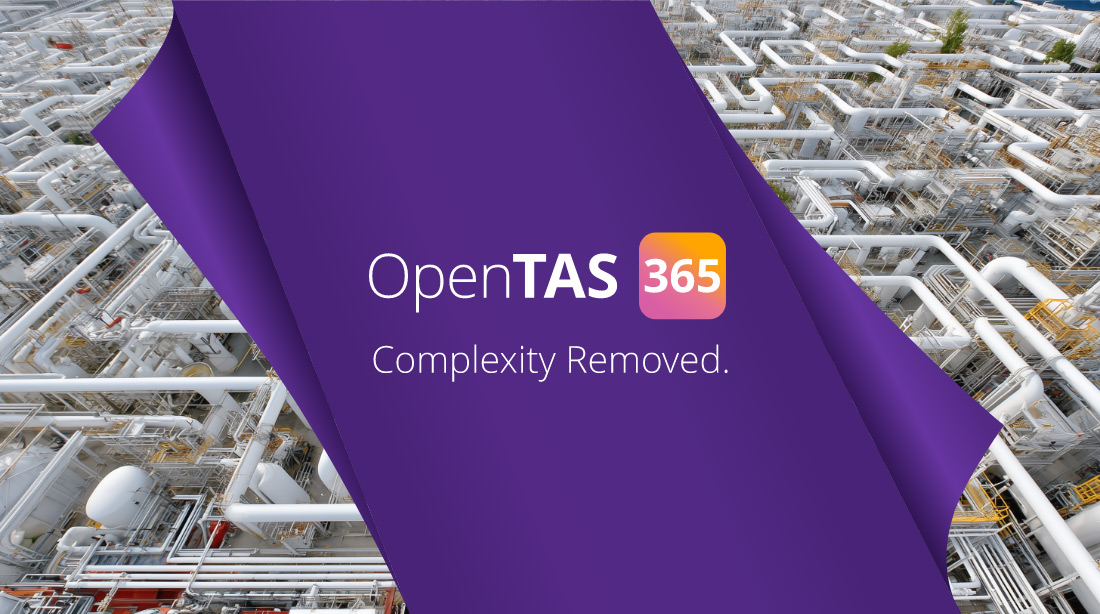
OpenTAS 365 is more than “just” a new product launch, it is the moment where terminal management steps out of the Gordian Knot of fragmented systems and into a unified, cloud-native operating model designed for the energy transition era.
Terminal operators today are being pulled in all directions: rising volumes, new fuels, tightening regulations, geopolitical volatility and a workforce that is changing faster than their legacy systems can keep up. Traditional TMS landscapes have grown into patchworks of point solutions for truck, rail, ship, stock management, finance, customs and compliance, all loosely stitched together, hard to upgrade and nearly impossible to overview end-to-end. The result is operational friction: no real-time visibility, reactive planning, heavy manual work in order intake and stock reconciliation, and a growing exposure to compliance and cybersecurity risk.
This is the background against which we created OpenTAS 365 – and why launching it with the right industry platform was so important.
OpenTAS 365: complexity removed
OpenTAS 365 is the first Microsoft-aligned, cloud-native terminal management platform that unifies terminal operations, business operations and compliance in a single, extensible system – built on Dynamics 365, Power Platform and Azure. Instead of adding yet another module to an already complex landscape, it acts as a unified operating layer that connects planning, execution, data and decision-making end-to-end.
For terminal operators, this translates into tangible value:
- Operational efficiency without complexity: AI-assisted planning, automated order intake and smart truck scheduling reduce truck turnaround times by up to 20 minutes per vehicle and free 20–40 hours of admin work per month.
- Compliance and risk management made automatic: NIS2/NIS2KRITIS, EMCS, dangerous goods and ESG reporting are embedded into workflows, cutting customs processing times by up to 60 and taking audit timelines from weeks to days.
- A future-proof path to autonomy: telemetry, data governance and Microsoft-native AI are built in from day one, enabling a gradual journey from rule-based automation (Level 2) to assisted and supervised autonomy – without rip-and-replace.
- Migration without disruption: standardized playbooks, tools and coexistence scenarios allow Classic and QINO customers to move to OpenTAS 365 in 3–9 months per site, with minimal downtime.
In short, OpenTAS 365 is designed for real-world, brownfield terminals that must grow, diversify and digitalise – while keeping the site safe, compliant and running.
From automation to autonomy: the next logical step
For over 40 years, OpenTAS has helped terminals run smarter, safer and more efficiently across the global energy and chemical supply chain. But the questions we now hear from customers have shifted: it is no longer “Should we digitalise?” – it is “How do we turn digitalisation into measurable efficiency, resilience and eventually autonomy without betting the business?”.
OpenTAS 365 is our answer:
- It gives operations leaders real-time dashboards across ship, truck, rail and pipeline, AI-assisted planning and predictive maintenance – so teams manage exceptions instead of spreadsheets.
- It gives IT/OT leaders a single, Microsoft-based platform with zero legacy tech debt, standard industrial protocols, secure integration patterns and low-code extensibility.
- It gives commercial and compliance leaders a predictable SaaS model, quantified ROI and compliance that is logged, auditable and automated.
The autonomy level framework built into OpenTAS 365 allows terminals to move step by step, from today’s rule-based automation to assisted and supervised autonomy, and ultimately towards highly autonomous terminal operations when the business is ready.
Why the partnership with Storage Terminals Magazine mattered
Launching such a strategic platform is not just a product milestone – it is a narrative milestone for the entire industry. This is why the collaboration with Storage Terminals Magazine has been so instrumental for OpenTAS 365. Their reach across independent storage, energy, chemical and logistics terminals has helped us put the right story in front of the right people: not a “feature drop”, but a new operating model for an industry under pressure.
Through thought leadership content, digital visibility and focused coverage, OpenTas’ joint activities ensured that the key messages landed where they matter most:
- that terminals can significantly reduce operational complexity while increasing throughput and resilience;
- that compliance and cybersecurity can shift from “necessary overhead” to strategic advantage;
- and that autonomy is not a buzzword, but a practical, phased journey supported by a robust, Microsoft-native platform.
This collaboration gave OpenTAS 365 early visibility well beyond individual customer conversations, helping us build awareness and momentum ahead of the wider market rollout.
A personal note of gratitude from Wolfram Wege:
Bringing a next-generation platform like OpenTAS 365 to market is always a team effort – inside the company and across the ecosystem. I am deeply appreciative of the way Storage Terminals Magazine has leaned into this story and helped us elevate an industry-wide conversation around efficiency, compliance and autonomy in terminal management.
A special thank you to Tracey and Greg at Storage Terminals Magazine for their trust and support in bringing the OpenTAS 365 story to life, and to our external marketing and branding partners Peter, Grant, Mattis and Robert from brandigans.com for shaping the narrative and visual identity behind this launch.
For more information visit www.opentas.com