MOL Group and Libya’s National Oil Corporation to establish strategic partnership in the oil industry

MOL Group has entered into a new strategic partnership with Libya’s National Oil Corporation. The Memorandum of Understanding sets the foundation for cooperation in hydrocarbons exploration, technological innovation and crude trading.

Strategic Framework

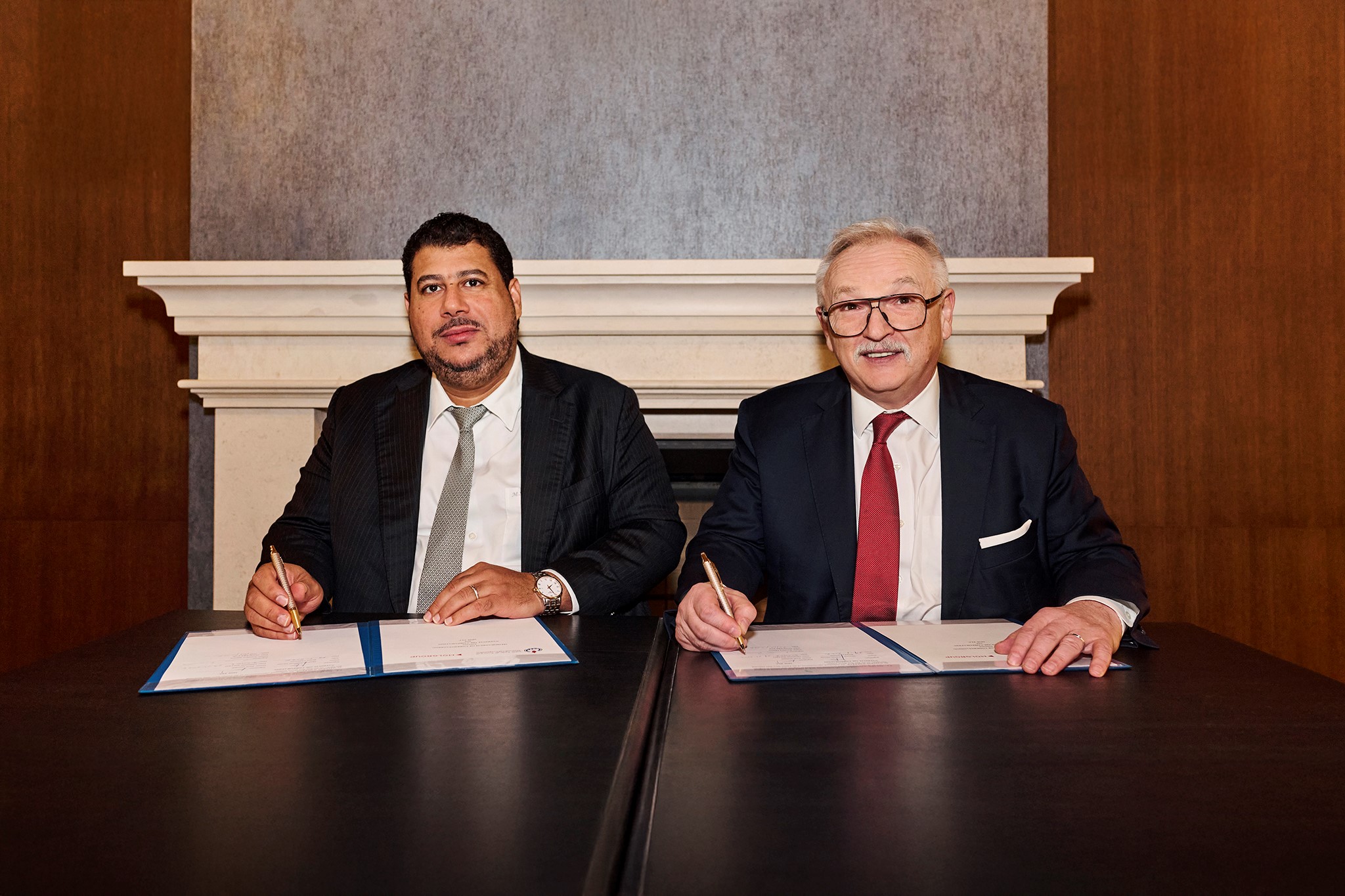
The memorandum of understanding was signed in Budapest by MOL Group Chairman and CEO Zsolt Hernádi and Masoud Suleman, chairman of the National Oil Corporation (NOC).

The strategic partnership agreement sets out the framework for NOC and MOL to exchange information and jointly explore potential areas of cooperation. These include hydrocarbon exploration and production, technological and field development innovations, oilfield services opportunities in Libya, crude supply and trading activities.

Regional Resilience and Energy Security

Zsolt Hernádi, chairman and CEO of MOL Group, said: “We recognise Libya’s oil and gas industry as a pillar of strength and expertise. I am sure that this new agreement will act as a catalyst for further expanding our international portfolio, creating clear mutual value for both companies and reinforcing the resilience of our region. From the perspective of security of supply and energy sovereignty, particularly for landlocked countries, diversification of sources is of crucial importance. Our cooperation also goes beyond business, as we have agreed to rebuild our educational, scientific, and university ties in order to learn as much as possible from each other. Such partnerships can also help Europe to find its own path to competitiveness, rather than switching between different forms of energy dependency.”

International Portfolio Expansion

As part of MOL Group’s international portfolio, the company has oil and gas exploration and production assets in nine countries, with production in eight countries: Croatia, Azerbaijan, Iraq, Kazakhstan, Russia, Pakistan, Egypt and Hungary. To maintain the updated SHAPE TOMORROW strategy target of at least 90 thousand barrels of oil equivalent per day production level over the next five years, MOL aims to further strengthen its international portfolio and seeks additional strategic partnerships.

Consequently, MOL has recently signed cooperation agreements with the national oil company of Kazakhstan (KazMunayGas), the national oil company of Azerbaijan (SOCAR), and the national oil company of Türkiye (Turkish Petroleum). As a result, MOL as operator starts onshore exploration in the Samakhi-Gobustan region of Azerbaijan, and joint exploration already started in Hungary with Turkish Petroleum.

For more information visit www.mol.hu

MB Energy inaugurates Hydrogen Refuelling Station for trucks in Lübeck

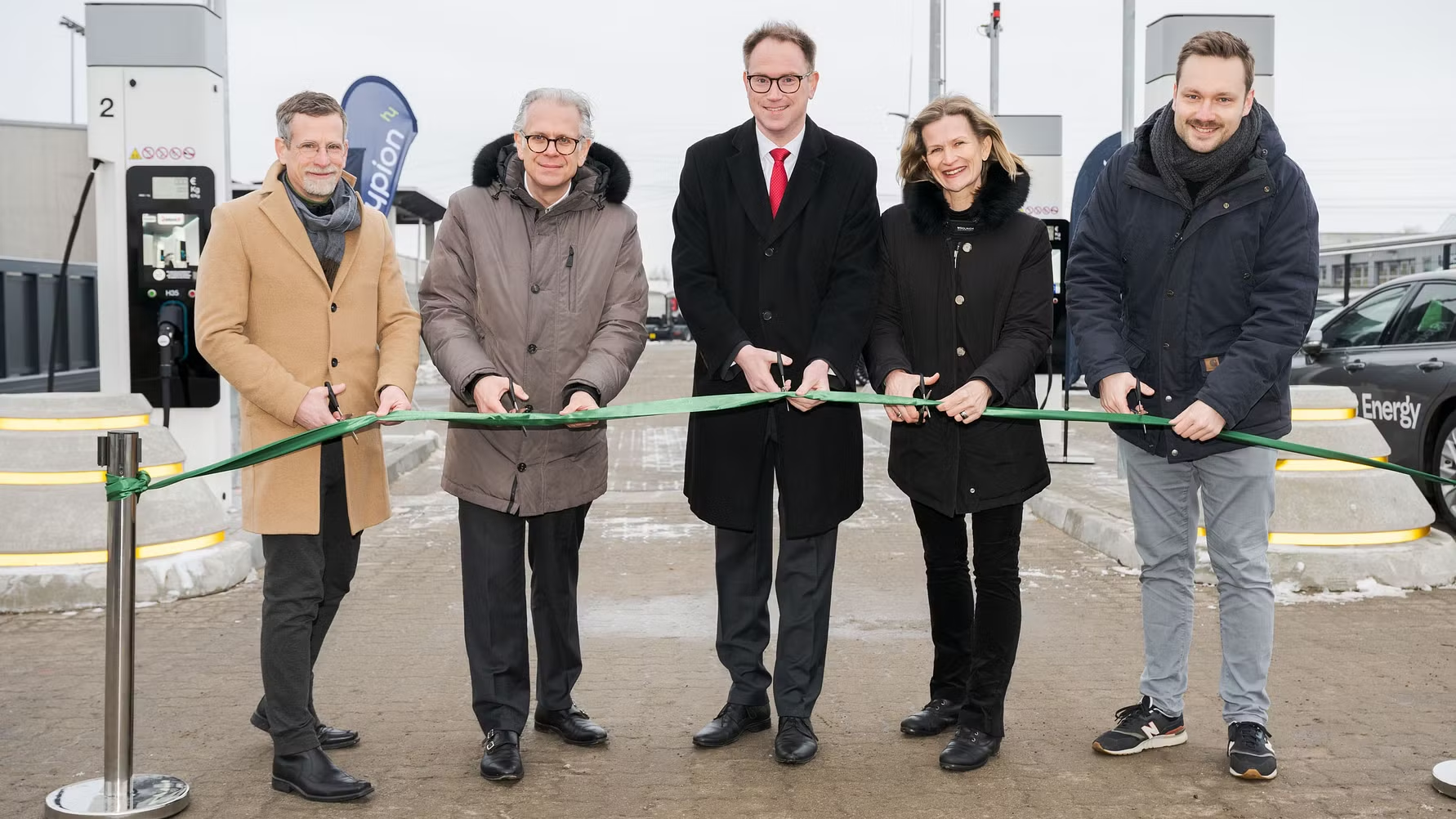
On 29 January, the MB Energy Group marked a significant milestone in its commitment to building a viable hydrogen infrastructure with the inauguration of a hydrogen refuelling station for heavy-duty vehicles (HDVs) in Lübeck, Germany. The official opening was attended by key customers, partners and stakeholders, including Jan Lindenau, Mayor of the Hanseatic City of Lübeck.

Construction of the station began following the receipt of the official building permit in July 2025. Designed by hydrogen infrastructure specialist Hypion, the facility has a daily capacity of up to 2,000 kilograms of hydrogen and is capable of refuelling up to 50 trucks per day.

Stefan Rehm, MD Hypion GmbH; Philipp Kroepels, director new energy, MB Energy; Jan Lindenau, mayor of the Hanseatic City of Lübeck; Annet van der Laan, CFO MB Energy; Till Homrighausen, hylane © MB Energy Holding GmbH & Co. KG

Strategically located close to the A1 and A20 motorway junction, the station sits alongside an existing diesel refuelling facility already operated by the MB Energy Group. It has been fully integrated into the group’s commercial road transport infrastructure, which includes more than 400 conventional fuel stations within the tankpool24 network.

Philipp Kroepels, director of new energy at MB Energy, highlighted the significance of the project, noting that the inauguration represents a tangible step towards supporting Germany’s hydrogen economy. He acknowledged the efforts of the project team, partners and suppliers in delivering the station within a short timeframe.

The project received financial support from the German Federal Ministry for Transport under the KsNI programme, which promotes climate-friendly commercial vehicle technologies and associated infrastructure.

Florian Lückmann, director of commercial road transport at MB Energy, emphasised the role of hydrogen in providing practical decarbonisation solutions for logistics and long-haul transport. He noted that the station enhances the company’s ability to offer low-carbon energy options, with hydrogen delivering short refuelling times, extended driving ranges and no compromise on payload capacity. He also reaffirmed MB Energy’s long-term commitment to developing a reliable and scalable hydrogen refuelling network.

The hydrogen station forms part of the wider tankpool24 network, which comprises more than 2,000 fuelling locations across Europe, including over 750 in Germany. The MB Energy Group’s commercial road transport unit is responsible for its integration and ongoing operation.

MB Energy continues to advance its multi-fuel strategy by investing in hydrogen, biofuels and e-fuels to support customers’ decarbonisation efforts. During 2025, the group established hydrogen refuelling stations in Sweden through its local operations and secured funding for additional sites.

The Lübeck project was developed and delivered in close collaboration with Hypion GmbH. Dr Stefan Rehm, managing director of Hypion, noted that the Lübeck hydrogen hub represents the company’s second high-performance refuelling station for heavy-duty mobility in Schleswig-Holstein, following the facility in Neumünster. He highlighted the importance of partnerships in accelerating the adoption of emission-free transport solutions.

With three hydrogen refuelling stations now fully operational, the MB Energy Group continues to strengthen its position in supporting future-focused commercial transport and accelerating the energy transition within the mobility sector.

For more information visit www.mbenergy.com

Europe maintains hydrogen commitment despite IMO setback, DNV analysis shows

Three months after the International Maritime Organization’s decision to delay a vote on the net zero framework, Europe continues to demonstrate commitment to hydrogen development through sustained policy support, infrastructure deployment, and production projects, according to analysis by Marte Riiber de Picciotto, service area manager, energy systems at DNV.

The October IMO meeting decision, effectively a no vote, was widely seen as a setback for hydrogen-derived fuels in shipping. Concerns were also amplified by strong lobbying against EU sustainable aviation fuel mandates, leading to well-justified fears that momentum would be lost.

Yet the past three months tell a different story, according to de Picciotto. Across Europe, hydrogen is still moving forward in policy, infrastructure, and production, albeit more selectively and at a more measured pace.

Europe Keeps Funding Hydrogen

European Hydrogen Bank: Launched its third auction in December with a EUR 1.3 billion budget, including EUR 300 million for maritime and aviation. Germany will add another EUR 1.3 billion for green hydrogen from Denmark, and Spain will contribute EUR 415 million. Spanish projects have been among the most successful in the auctions, though only a portion of projects awarded in earlier rounds have ultimately signed grant agreements.

German power plants: In January, the German government and the European Commission reached an “agreement in principle” to tender 12 GW of new hydrogen-ready gas-fired power plants this year. These backup plants would need to be fully decarbonized by 2045.

Policy Support Remains in Place

Sustainable Transport Investment Plan: Launched in November, with nearly EUR 3 billion in subsidies for clean aviation and maritime fuels by 2027, partly delivered through the European Hydrogen Bank and the Innovation Fund.

Innovation Fund: In December, the European Commission launched the latest round for net-zero technologies, with a total budget of EUR 2.9 billion. Part of this funding is likely to be awarded to hydrogen and derivative projects, in line with previous awards.

Projects of Common Interest (PCI): The second EU PCI list was announced in December, covering cross-border hydrogen pipelines, storage, and electrolyser developments. Once adopted, projects can access subsidies from the Connecting Europe Facility (CEF) for Energy, which has a 2028-2034 budget of almost EUR 30 billion.

Offshore Wind Declaration: At the North Sea Summit in Hamburg, the offshore wind declaration explicitly mentions the potential of offshore hydrogen production and calls for a “coordinated offshore system that combines offshore wind with hydrogen production”.

Infrastructure Moving from Plans to Pipelines

Germany: December saw 400 km of the Flow pipeline, part of the Core Grid, commissioned and ready for commercial operation.

Netherlands: Gasunie’s 32 km Rotterdam industrial cluster pipeline is almost complete, with first hydrogen flows expected later in 2026.

Denmark: Energinet will launch its capacity sale for the Danish hydrogen backbone on January 30, with the sale remaining open until December 1.

From DNV’s project experience, close to 70 percent of onshore pipelines are already technically suitable for hydrogen. The remainder also show potential, though some will require additional testing before hydrogen can safely flow. None of the pipelines assessed by DNV have been ruled out, making repurposing existing infrastructure a low-risk, cost-efficient way to support a gradual hydrogen transition. To secure cost-efficient solutions, each case needs to be assessed individually, taking asset-specific and key operational parameters into account.

Production Projects Begin to Deliver

Production projects are not standing still either. Hydrogen Europe’s most recent Clean Hydrogen Monitor shows that 2.8 GW of electrolysers are under construction in Europe. For example, Shell is nearing completion on its 200 MW Holland Hydrogen 1 project in Rotterdam; OMV is building a 140 MW plant in Austria, set to start operations by the end of next year; RWE has begun commissioning the first 100 MW phase of its 300 MW GetH2 Nukleus project in Lingen, Germany; and Uniper plans a final investment decision on the first 200 MW of its H2Maasvlakte project in the Netherlands. In Spain, Repsol has just taken FID on a 100 MW plant in the Petronor industrial complex in Bilbao.

These projects may not yet match the scale once imagined, but they are critical incremental steps toward a functioning hydrogen sector, according to de Picciotto.

A Question of Timing, Not Direction

As DNV’s Energy Transition Outlook shows, hydrogen and its derivatives will be critical over the long term, particularly for hard-to-electrify sectors. By 2060, these sectors are projected to rely on hydrogen for roughly 10 to 35 percent of their energy demand. To meet the goals of the Paris Agreement, hydrogen and its derivatives would need to account for about 15 percent of all global energy demand by 2050.

At the same time, deployment today falls far short of these levels. Hydrogen is projected to make up just 0.15 percent of the global energy mix by 2030, rising to around 4 percent by 2050 and close to 6 percent by 2060.

Against this backdrop, Europe is not stepping back from hydrogen, de Picciotto concludes. The region is getting more selective. Funding is still being provided, and production and infrastructure projects are still being built and commissioned. Progress may be slower, but it is grounded, practical and directed toward the hard-to-electrify sectors that will need hydrogen and its derivatives to achieve net zero in practice.

For more information visit www.dnv.com

EcoCeres inaugurates first sustainable aviation fuel plant in Malaysia, strengthening Hong Kong’s role in Asia’s Green Energy transition

EcoCeres Inc., a leading pure-play renewable fuels producer rooted in Hong Kong and recognized as a home-grown “unicorn”, has officially launched its state-of-the-art renewable fuel facility in Pasir Gudang, Johor, Malaysia, marking a historic milestone as the country’s first Sustainable Aviation Fuel (SAF) production plant. Commissioning and start-up of the plant were successfully achieved in October 2025. The facility also produces Hydrotreated Vegetable Oil (HVO) and Renewable Naphtha, with a combined maximum production capacity of 420,000 tonnes per year, reinforcing the company’s position in the global renewable fuels landscape and underscoring Hong Kong’s contribution as a platform for green innovation and investment.

Official Launch Ceremony

As host of the ceremony and a founding investor of EcoCeres, Dr. Peter Lee, chairman of Towngas and principal of Full Vision Capital, warmly welcomed YB Datuk Seri Dr. Noraini Ahmad, minister of Plantation and Commodities Malaysia, and invited her to officiate the inauguration of EcoCeres’ first SAF plant in Malaysia. The ceremony was further graced by Mr. Eddie Cheung, JP, permanent secretary for Environment and Ecology of the Hong Kong Special Administrative Region, together with EcoCeres co-chairmen Mr Alan Chan and Mr. James Tam, and CEO Mr. Matti Lievonen. Their presence marked a significant milestone and underscored the Hong Kong-headquartered company’s pivotal role in advancing cross-border collaboration in the low-carbon economy.

Regional Commitment to Sustainability

Reflecting on EcoCeres’ journey, Dr. Peter Lee said: “EcoCeres has grown from a laboratory in Hong Kong into one of the world’s leading producers of SAF, and this new Johor plant shows how regional commitment to sustainability can feed into the global search for climate solutions. With supportive government policies and the dedication of all our partners, we can turn the tide on climate change for future generations.”

Eddie Cheung, JP, permanent secretary for environment and Ecology of the Hong Kong Special Administrative Region, said: “EcoCeres shares Hong Kong SAR Government’s vision of achieving carbon neutrality and being a superconnector. The Johor SAF plant is a shining example of a Hong Kong company with a global vision putting one of its production facilities in a strategic location in the region.”

Technology-Driven Growth

As a technology-driven company, EcoCeres has developed its own proprietary waste-to-fuel processes in Hong Kong and successfully scaled them through its first facility in Zhangjiagang, China, which has helped the company become one of the world’s leading SAF producers by volume.

Matti Lievonen, CEO of EcoCeres, said: “The Johor plant is a major step forward for EcoCeres’ regional platform and for Malaysia’s renewable fuel industry. It also demonstrates our commitment to reliable supply capability and high product quality as customers’ demand for renewable fuel solutions accelerates. This facility supports Malaysia’s transition towards net-zero while strengthening Hong Kong’s strategic position as a regional hub for financing and scaling sustainable energy projects, enabling the supply of sustainable fuels to global industries. Our waste-to-fuel technology proves that economic growth and environmental stewardship can go hand-in-hand.”

Supporting Malaysia’s Net-Zero Goals

The establishment of this facility is aligned with Malaysia’s commitment to advancing renewable fuel development and adopting waste-to-fuel approaches to achieve its net-zero emissions target by 2050. At the same time, it showcases how Hong Kong’s innovation capabilities, capital markets and professional services ecosystem can enable the deployment of climate solutions across the region, with EcoCeres serving as a prime example of a Hong Kong-founded company commercialising homegrown technologies at scale overseas. By converting waste and residue feedstocks into high-value, low-carbon renewable fuels, EcoCeres supports Malaysia’s transition toward a sustainable and circular economy while addressing the growing demand for renewable fuels across aviation, maritime, transportation, mining and chemical industries.

YB Datuk Seri Dr. Noraini Ahmad, minister of Plantation and Commodities Malaysia, said: “The Malaysian government proudly supports EcoCeres’ pioneering facility, which aligns with our National Energy Transition Roadmap and National Agri-commodity Policy (DAKN) 2030. By fostering innovation in renewable fuels, we are creating high-value jobs, reducing carbon emissions, and strengthening Malaysia’s role as a leader in the green economy. This project exemplifies our commitment to sustainable industrial development.”

Global Expansion Strategy

EcoCeres remains committed to expanding its global footprint in renewable fuels, leveraging pioneering proprietary technologies to meet the increasing demand for sustainable energy solutions. From its Zhangjiagang plant in China to the new Johor facility in Malaysia, the company is building a regional platform anchored in Hong Kong that turns waste to wonders, supports global decarbonisation efforts and reinforces Hong Kong’s position as a super-connector for green development in Asia.

In addition to the Malaysian facility, EcoCeres’ Zhangjiagang plant also produces SAF and HVO, bringing its combined maximum global renewable fuels capacity to approximately 770,000 tonnes per year and further enhancing Hong Kong’s role as the headquarters of an integrated regional renewable fuels platform.

For more information visit www.eco-ceres.com

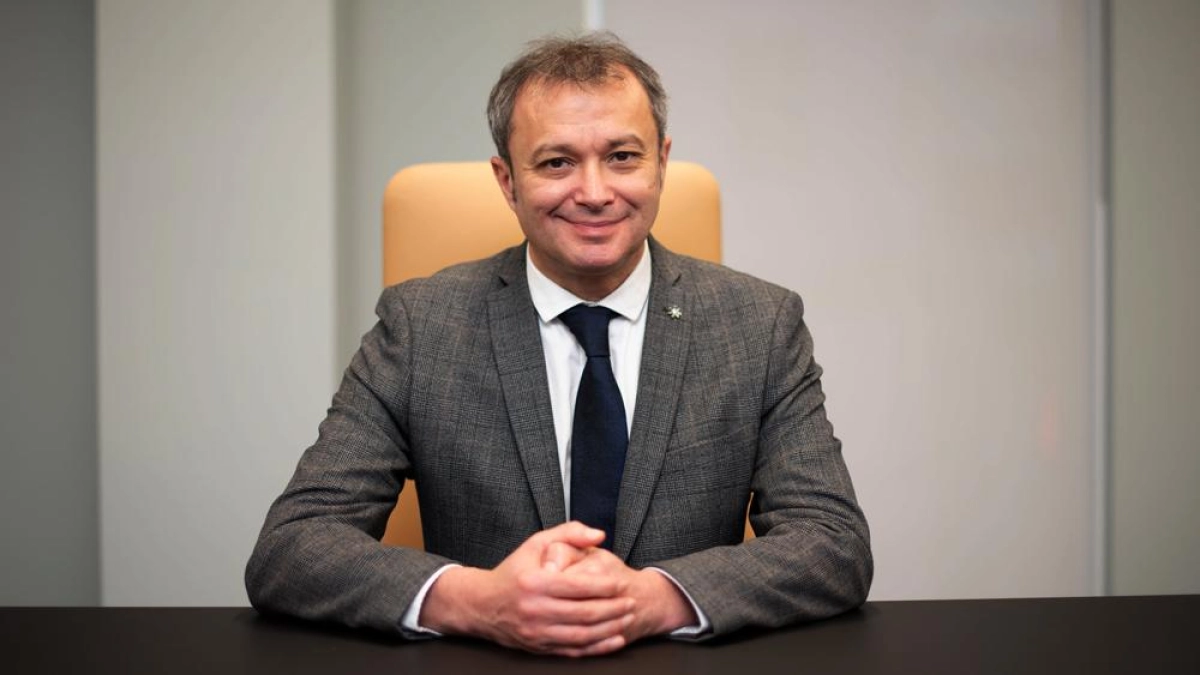
Eric Brisard joins Greenergy as managing director, France

Greenergy has announced the appointment of Eric Brisard as managing director, France. The newly created role follows the acquisition of French fuels and lubricants supplier Armorine in October 2025. Brisard will oversee Greenergy’s operations in the French market, lead its growth strategy and enhance Armorine’s offering.

Extensive Industry Experience

Brisard joins Greenergy from Bridgestone, where he held the role of managing director for the First Stop and Côté Route networks in France and the Benelux region. He brings extensive industry experience, having previously held senior roles at EG Group and BP.

Adam Traeger, CEO of Greenergy, said: “I am pleased to welcome Eric. He brings strong insight into the French market and the right leadership experience to oversee our operations in France. We are excited to start working together to accelerate Armorine’s European growth.”

Eric Brisard added: “Greenergy is an ambitious organisation, and this is an exciting time to join. I look forward to working with the teams at Greenergy and Armorine as we continue to expand and enhance our offering in the French market.”

For more information visit www.greenergy.com

Open season launch for Zeeland Energy Terminal

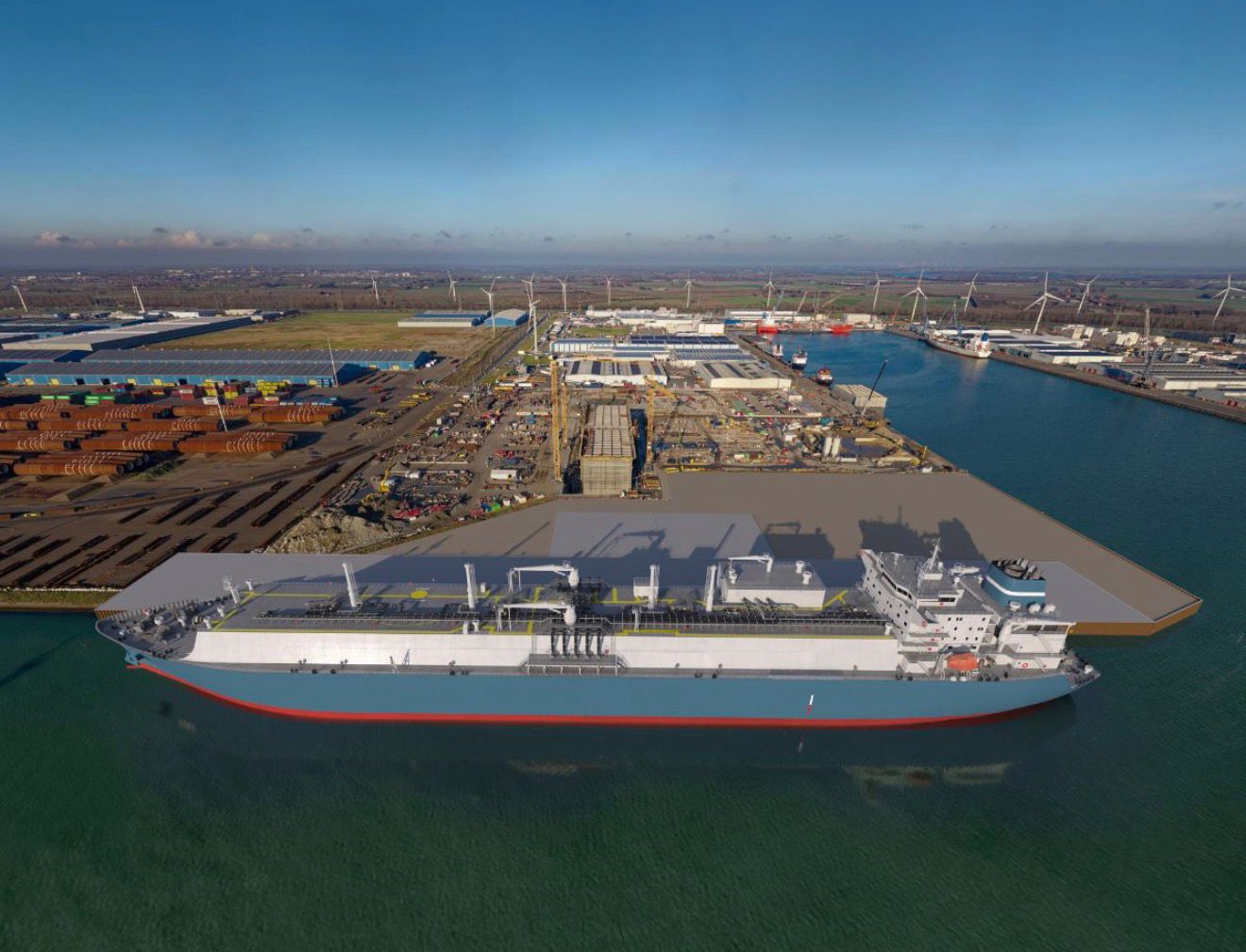
VTTI and Höegh Evi have announced the launch of the open season for the Zeeland Energy Terminal (ZET), marking a significant next step in the development of new LNG import infrastructure in the Netherlands. The project is intended to support national and European energy security and market needs from late 2029 onwards, while maintaining a strong focus on minimising environmental impact.

The project has continued to progress steadily, with the first phase of the permitting process completed and a suitable site secured in the Vlissingen-Oost harbour. A final investment decision is currently expected in the third quarter of 2027.

As an initial step in market engagement, participants are invited to express interest in future capacity at Zeeland Energy Terminal, a floating storage and regasification unit (FSRU)–based LNG terminal to be located in the harbour of Vlissingen-Oost.

According to Tom Smeenk, executive vice president Growth at VTTI, the launch of the open season represents an important milestone in engaging the market and shaping the terminal’s future capacity. He noted that the project addresses clear Dutch and European demand for reliable LNG import capacity and is expected to play a vital role in enhancing energy security, supported by a centrally coordinated permitting process.

Thomas Thorkildsen, CCO at Höegh Evi, highlighted the strategic importance of Zeeland and the Netherlands in strengthening European energy security. He emphasised that the floating Zeeland Energy Terminal will deliver reliable LNG import capacity, rank among the most efficient LNG terminals in Europe, and offer full flexibility to adapt to future needs. He added that Höegh Evi looks forward to engaging with customers during the open season and continuing the terminal’s development in partnership with VTTI.

Zeeland Energy Terminal is planned as a large-scale LNG import facility, providing approximately 7.5 bcm per annum of send-out capacity and at least 180,000 cubic meters of LNG storage. The terminal will enable the unloading of liquefied natural gas carriers and include the possibility for LNG bunkering.

The terminal is designed to support security of supply and market flexibility for both the Netherlands and the wider European market from late 2029.

Open season: market engagement

VTTI and Höegh Evi are inviting potential customers and interested parties to engage in discussions regarding capacity requirements, commercial structures, and future participation in Zeeland Energy Terminal. The open season will play a key role in shaping the terminal’s configuration as the project advances towards final investment decision.

Expressions of interest can be submitted via the Zeeland Energy Terminal website. The expression of interest phase of the open season will remain open until 6th March 2026, with the commercial process expected to conclude by the end of 2026.

Strategic infrastructure for energy security and transition

Zeeland Energy Terminal has been recognised as a project of national interest for the Netherlands, underscoring its strategic importance in strengthening the country’s energy system. The terminal will support the diversification of LNG import routes and enhance flexibility in the European gas market amid an increasingly complex and evolving energy landscape.

Natural gas is expected to remain a key component of the energy mix during the transition to renewable energy, providing reliability and flexibility. Zeeland Energy Terminal will complement existing LNG infrastructure in the Netherlands and across Europe, contributing to a resilient and competitive gas market. The FSRU solution is designed to be adaptable and can be modified to accommodate changing infrastructure needs throughout the transition to cleaner energy.

Subject to permitting and commercial alignment, Zeeland Energy Terminal is targeted to become operational from late 2029, delivering long-term value through secure, flexible, and future-oriented energy infrastructure.

For more information visit www.zeelandenergyterminal.com

Technical Toolboxes acquires HUVR to enhance asset integrity data management capabilities

Technical Toolboxes, the global leader in critical assessment software for energy infrastructure, has announced the acquisition of HUVR, a pioneer in inspection data collection and digital workflows for asset integrity programmes. This strategic move combines Technical Toolboxes’ 30-year history and expertise in pipeline and asset engineering software with HUVR’s next-generation asset data platform to redefine how the energy industry manages inspection records, compliance, and decision-making in the future.

Addressing Industry Challenges

Jim Schuchart, CEO of Technical Toolboxes, said: “Our customers have told us about their challenges in storing, sharing, and making decisions on their asset integrity data. Adding HUVR’s capabilities to Technical Toolboxes allows us to more rapidly deliver on connected capabilities between the two platforms. We’re well known for our critical engineering assessments. Integrating that with a flexible data storage platform to increase organisational insights and compliance in asset inspection is the next step in our journey.”

Unified Workflow Integration

Together with the capabilities of HUVR, Technical Toolboxes will create a more unified workflow and better customer experience between inspection field data collection (API 510, 570, 653), critical engineering assessment and data storage that is specifically tailored to the needs of energy asset owners and inspectors, while also ensuring these processes fit into the broader technological requirements of global energy operators.

Earl Crochet, midstream consultant, said: “I’m glad to know that HUVR will now be part of Technical Toolboxes. Having worked with both companies, they have various strengths in the inspection and asset data management spaces. I look forward to seeing how the combination will create more comprehensive solutions for both inspectors and asset owners going forward.”

Proven Track Record

Energy infrastructure operators are under constant pressure to deliver audit-ready compliance and streamline asset inspection processes to reduce costs through better decision making and technology. HUVR has over a decade of innovation serving a broad customer base of some of the world’s leading energy companies (such as ConocoPhillips, Invenergy and BTA Oil) with flexible, scalable asset data storage capabilities, serving as a critical bridge between field inspection, analysis, compliance and decision making.

Hill Davenport, Partner at BTA Oil Producers, said: “The implementation of HUVR’s platform yielded significant, measurable improvements across BTA Oil Producers’ operations and organisation. We look forward to the HUVR/Technical Toolboxes combination to further enhance the significant and measurable results for our company.”

For more information visit www.technicaltoolboxes.com

Pipelink and TotalEnergies complete critical ethylene pipeline installation beneath Brussels–Charleroi Canal

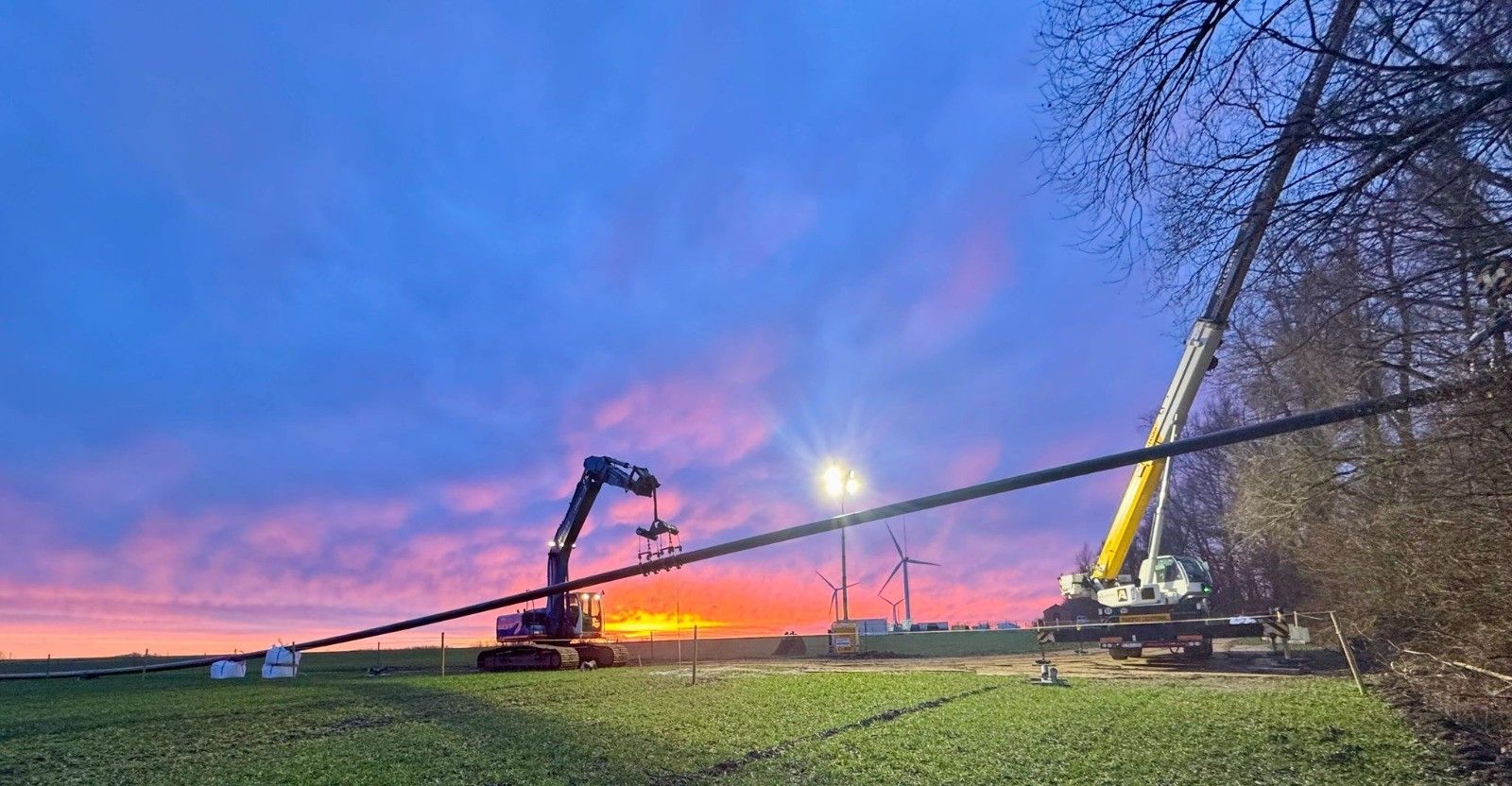
Pipelink is working together with TotalEnergies on the installation of a 12-inch ethylene pipeline beneath the Brussels–Charleroi Canal. This project enables the rerouting of an existing connection to a safer, more reliable and future-proof alignment.

Focus on Continuity and Environment

Throughout the project, Pipelink maintains a strong focus on operational continuity as well as on the environment in which it operates. In this way, Pipelink contributes to robust infrastructure that better aligns industry, people and the environment.

Image Source: Pipelink

Critical Technical Milestone

The operation marked the pulling-in of the 220-metre-long pipeline beneath the canal using a horizontal directional drilling (HDD) technique, a critical and technically challenging phase of the works.

This operation was successfully completed without incidents, thanks to thorough preparation and close collaboration on site.

These works form part of a larger turnaround project, where timing, safety and coordination between all parties are essential.

Expert Partnership

For the execution, Pipelink relied on the expertise of its partners:

  • Antea Group Belgium
  • Litran nv
  • Vinçotte
  • IBEVE

A Pipelink representative has offered thanks to all teams involved for their craftsmanship, strong collaboration and continued focus on safety and quality.

For more information visit www.pipelink.eu

JERA announces first LNG cargo from Barossa Gas field in Australia

JERA Co., Inc., a global energy leader and Japan’s largest power generation company, has announced the first LNG shipment from the Barossa Gas Project in Australia. The project, in which JERA holds a 12.5 per cent interest through its subsidiary JERA Australia Pty Ltd, commenced production phase commissioning and operations in September 2025. The first shipment is a key milestone in JERA’s efforts to build a resilient upstream portfolio and further enhance its global LNG value chain.

Strategic Supply Replacement

Barossa gas will be processed at the Darwin LNG plant, replacing supply feed gas from the Bayu-Undan gas field, which recently reached the end of its production life. The Barossa project involves development of the Barossa gas field and construction of a pipeline to the Darwin LNG facility for liquefaction and export. JERA will offtake approximately 425,000 tonnes of LNG annually, in line with its equity share.

Regional Energy Security

As energy demand continues to rise across Asia, securing reliable and competitively priced LNG has become essential for ongoing regional energy stability. With the geographic proximity to Asia and a proven track record as a reliable supplier, Australia remains a strategic source of LNG for the region.

Ryosuke Tsugaru, chief low carbon fuel officer at JERA, said: “This milestone reinforces JERA’s position in the upstream LNG value chain and underscores our role as a reliable energy provider for Japan and Asia. Australia has been a stable and trusted supplier of LNG to the region for decades, and the first cargo shipment from Barossa further strengthens our partnership as we continue to expand our competitive and resilient LNG portfolio.”

Long-Term Energy Strategy

Drawing on its extensive experience across the entire value chain – from upstream procurement to power generation – JERA will continue to contribute to global energy solutions, advancing both the energy transition and stable supplies of affordable energy. Acknowledged worldwide as a critical transition fuel on the path to NetZero, LNG is forecast to remain essential to many economies, particularly in Asia, and is expected to remain a key part of JERA’s strategy to provide reliable and sustainable energy in the years ahead.

For more information visit www.jera.co.jp

VTTI invests in rail infrastructure at Amsterdam terminal (ETA) to expand logistics capabilities

VTTI has confirmed a Final Investment Decision for a new rail infrastructure development at its Amsterdam terminal, marking a significant step in expanding its logistics capabilities and supporting evolving energy and transport markets.

Currently, products handled at VTTI Amsterdam (ETA) are transported by barge, vessel and road. The introduction of rail transport will enhance flexibility and efficiency for customers moving gasoil and renewable diesel, further strengthening the terminal’s multimodal connectivity.

The investment reflects VTTI’s ongoing focus on aligning infrastructure development with market demand. By adding rail as a transport option at the Amsterdam terminal, the company aims to improve connectivity while creating additional capacity to handle both conventional and renewable energy products.

The Port of Amsterdam has welcomed the decision, noting that the new rail infrastructure supports its ambition to increase the handling of biofuels and to promote their transport through sustainable and safe modes such as rail.

Construction of the rail facilities is scheduled to take place over this year and next, with commissioning expected by the end of 2027. The facility has been designed with future expansion in mind, including the potential to accommodate biodiesel loading.

Once operational, the new rail connection is expected to further reinforce VTTI Amsterdam’s role as a strategic hub for fuels and energy products in north-west Europe. The investment is aligned with VTTI’s long-term strategy, supporting current market requirements while facilitating a gradual shift towards a greater share of non-fossil activities. It also represents a meaningful contribution to the Port of Amsterdam’s wider connectivity and sustainability objectives.

For more information visit www.vtti.com

ANOH gas project achieves first gas

Seplat Energy Plc, a leading Nigerian independent energy company listed on both the Nigerian Exchange Limited and the London Stock Exchange, has announced that the 300 MMscfd ANOH gas project has achieved first gas.

Following the completion of the 11 km Indorama gas export pipeline and the receipt of regulatory approval from the Nigerian Upstream Petroleum Regulatory Commission, ANOH Gas Processing Company commenced gas deliveries to Indorama on Friday 16th January 2026. Supplies are being delivered under firm and interruptible gas sales agreements. To enable the start of gas flow, four upstream wells, which had been on standby since November 2025, were brought into production.

Since first gas was achieved, wet gas production has been stabilising, with processed gas deliveries of between 40 and 52 MMscfd supplied directly from the ANOH gas plant to the Indorama Petrochemical Plant. Condensate production has reached between 2.0 and 2.5 kboepd and is expected to increase further as gas throughput ramps up towards the plant’s design capacity.

Preparations are also underway to commence sales of processed gas to Nigeria LNG. The offtake agreement is structured on an interruptible basis and is expected to support the continued scaling of production towards the plant’s full design capacity of 300 MMscfd. Meanwhile, construction of the OB3 pipeline export route by the Nigerian Gas Infrastructure Company, originally designated as the primary route for supplying ANOH gas to the domestic market, has resumed, with a revised completion timeline to be communicated in due course.

The ANOH gas plant was developed by AGPC, an incorporated joint venture between Seplat Energy and NGIC. The integrated facility comprises two 150 MMscfd gas processing trains, liquefied petroleum gas recovery units, condensate stabilisation units, a 16 MW power plant and supporting infrastructure, and has been designed to operate with zero routine flaring.

Located across the unitised OML 53 and OML 21 fields, the ANOH gas plant unlocks an estimated 4.6 Tcf of condensate-rich gas resources. Seplat’s working interest 2P reserves in the unitised field stood at 0.8 Tcf at the end of 2024. The company is expected to benefit from two revenue streams: wet gas sales from OML 53 to the ANOH gas plant, and dividends derived from its 50 percent equity interest in AGPC.

LPG production from ANOH, combined with output from Seplat’s Sapele and Bonny River Terminal facilities, is expected to position the company as a leading supplier of clean cooking fuel to Nigeria’s domestic market. In addition, the ANOH gas plant will process previously flared gas from the Ohaji field, supporting Seplat’s onshore End of Routine Flaring programme, a key commercial and sustainability initiative.

The ANOH gas plant was delivered without a single recordable lost time incident over 17.5 million man-hours worked, reflecting a strong focus on safety and operational discipline throughout the project.

Roger Brown, Chief Executive Officer of Seplat Energy, said the ANOH development is the first of seven critical gas projects identified by the Federal Government of Nigeria to enter operations. He described it as a strategically important project for Seplat, its partner NGIC and the country as a whole, noting the challenges of delivering major gas infrastructure in the onshore Niger Delta. He added that the project represents Seplat’s third major onshore gas processing facility, increasing joint venture gross onshore gas processing capacity to more than 850 MMscfd.

Brown also highlighted that ANOH is expected to deliver material income streams for Seplat, reduce carbon intensity and make a significant contribution towards the company’s 2030 production target of 200 kboepd. He noted that the project will also enhance energy access through increased power generation and the supply of clean cooking fuels, while supporting broader economic development in Nigeria.

For more information visit www.seplatenergy.com

VIDA bioenergy marks progress at Wormslade, reinforcing its continued growth in renewable gas

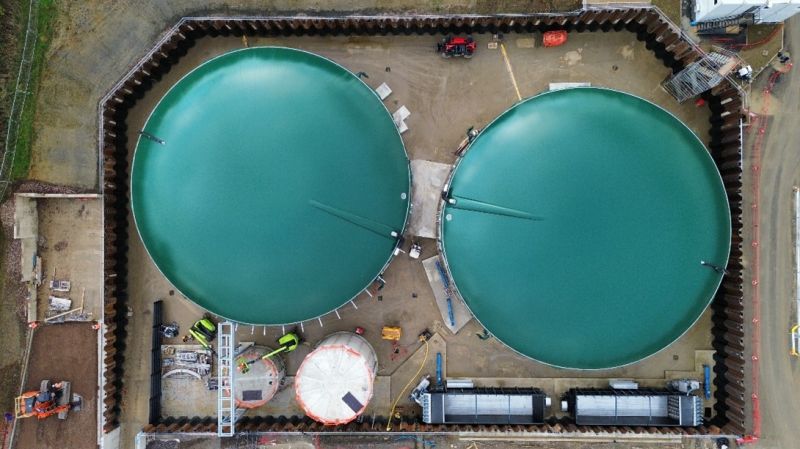
VIDA bioenergy has reached another key milestone at its Wormslade site, reinforcing its commitment to supporting the UK’s transition to renewable energy. Since construction began in February 2025, the project has progressed rapidly from concept to delivery. With civil works now largely complete and gas domes installed, the site is taking shape as a major new anaerobic digestion facility aligned with the UK’s renewable gas ambitions.

The Wormslade project reflects VIDA bioenergy’s broader growth strategy within the renewable gas sector. As the company expands its footprint, the development demonstrates how responsible innovation and strategic investment can contribute to a lower-carbon energy system, while advancing VIDA bioenergy’s mission to accelerate the transition to a sustainable, circular future through the local production of affordable and reliable renewable bioenergy.

Strategically located in a feedstock-rich region, Wormslade is expected to produce enough biomethane to heat approximately 5,000 homes each year once fully operational. This output is set to significantly increase VIDA bioenergy’s contribution to renewable gas production in the UK, supporting national decarbonisation objectives recently reaffirmed through the extension of the Green Gas Support Scheme, and providing a strong foundation for future projects.

Design and innovation

Wormslade is distinguished by a tailored design and operational approach that balances performance with environmental integration. The digester tanks are partially installed below ground and surrounded by high bund walls, helping the facility blend into the surrounding landscape.

From a technological standpoint, the plant addresses one of agriculture’s most persistent challenges: the large-scale processing of straw, an agricultural residue that has historically been difficult to utilise. By converting straw into renewable energy, the facility supports circular economy principles and contributes to the UK’s 2050 Net Zero Strategy.

Looking ahead, commissioning of gas processing systems is planned to begin in the second quarter of 2026, followed by performance testing and the transition to a fully production-ready AD plant in the third quarter of 2026.

Overall, the Wormslade project represents a meaningful step towards a more resilient, lower-carbon energy system, delivering long-term benefits for local communities, the environment and the UK’s energy security.

Community engagement

Community engagement has played a central role throughout the development of the Wormslade project. The first Public Information Event, held in Great Oxendon, brought together local residents, project partners and the VIDA bioenergy team to share updates and gather feedback. These discussions helped inform the project’s approach and fostered open, transparent dialogue with the local community.

Ongoing engagement continues through regular updates provided via leaflets, council notifications and the project website, ensuring local stakeholders remain informed as the project progresses.

For more information visit www.vidabioenergy.com

Cimarron and Bell Supply announce strategic partnership to deliver industry-leading vapour recovery unit rental fleet across key US basins

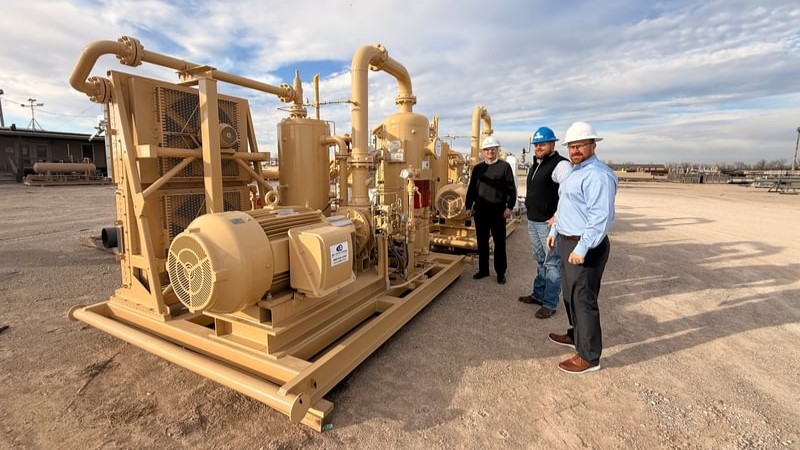
Cimarron, Inc., a global leader in emissions management and vapour recovery technology, and Bell Supply Company, LLC, a premier distributor of pipe, valves, fittings and MRO solutions to the energy sector, have announced a strategic partnership that significantly expands access to high-performance Vapour Recovery Units (VRUs) for operators across West Texas, New Mexico, South Texas and Oklahoma.

Under the agreement, Bell Supply will exclusively own, rent and manage a rapidly expanding fleet of next-generation VRUs designed and manufactured by Cimarron’s HY-BON division. Cimarron will continue to provide field service and maintenance, alongside its industry-leading remote monitoring platform, which incorporates advanced real-time data analytics, machine learning and predictive failure capabilities.

The partnership brings together Bell Supply’s extensive commercial reach, logistics infrastructure and established customer relationships with Cimarron’s deep engineering expertise and VRU performance records exceeding 98 percent mechanical availability. The result is a scalable offering that delivers both technical excellence and commercial simplicity for operators.

As part of the collaboration, operators will benefit from immediate access to an expanded rental fleet of purpose-built VRUs engineered for both low- and high-discharge-pressure applications commonly found in the Delaware and Midland Basins. Customers will also retain seamless continuity with Cimarron’s trained service technicians and 24/7 remote monitoring, supported by advanced predictive analytics designed to identify mechanical issues before they occur, thereby reducing downtime and unplanned emissions. Additional benefits include simplified contracting through existing MSAs already in place with Bell Supply and a single-source solution that combines premium equipment, proven field service and flexible commercial terms.

Jeff Foster, Chief Executive Officer of Cimarron, said the partnership would significantly accelerate the deployment of reliable and technologically advanced rental VRUs. He noted that the collaboration enables Cimarron to focus on engineering innovation and service delivery, while Bell Supply provides rapid deployment and commercial flexibility for customers.

Bruno Cheron, Chief Executive Officer of Bell Supply, said the addition of Cimarron-built VRUs represents a major enhancement to Bell Supply’s emissions-control rental portfolio. He added that customers will benefit from single-source access to premium equipment supported by Cimarron’s established service standards, delivered through Bell Supply’s flexible rental structures and existing billing relationships.

New VRUs currently in production at Cimarron’s manufacturing facilities feature enhanced discharge-pressure capabilities and integrated machine-learning algorithms capable of predicting component failures weeks in advance. The initial units are scheduled to be available for rental through Bell Supply from December 2025, with continued fleet expansion planned throughout 2026.

For more information visit www.cimarron.com

New principles of workplace health & wellbeing leadership launched

A new set of Principles of Workplace Health & Wellbeing Leadership has been launched, providing a clear, actionable framework designed to advance employee health and wellbeing through engaged and positive leadership, active workforce participation and collaborative practices.

Cross-Industry Collaboration

The Principles of Workplace Health & Wellbeing Leadership were developed by the Workplace Health & Wellbeing Leadership Working Group, which was established following the Health and Safety Executive’s Prevention 2024 Summit to foster collaboration in the promotion of positive wellbeing at work. The Working Group brought together the Health and Safety Executive and representatives from across the major hazard industry, including the Chemical Business Association, Chemical Industries Association, GMB Union, Grain LNG, National Gas, the Tank Storage Association, Unite the Union and Yorkshire Water.

The launch of the principles reflects a shared commitment to workforce wellbeing and a joint resolve to support cross-industry collaboration through the sharing of best practice and key learnings to drive continuous improvement.

Industry Leadership

Ken Rivers, non-executive board member for The Health and Safety Executive, said: “These Principles of Workplace Health and Wellbeing Leadership represent a significant step forward in how we approach occupational health across the major hazard industries. By bringing together regulators, industry leaders and trade unions, we have created a framework that builds on the sector’s proven track record in process safety leadership. I am pleased to have contributed to this collaborative effort, which I believe will help businesses protect their most valuable asset; their people.”

Stephen Elliott, chief executive of the Chemical Industries Association, said: “The future of our industry is built on people – their energy, creativity, and resilience. These Workplace Health & Wellbeing Principles are a call to action in shaping workplaces where every individual can flourish. By embracing wellbeing as a shared commitment, we unlock potential, spark innovation, and create a culture that inspires pride and purpose. Together, we can lead the way in setting a new standard – one where thriving people drive thriving businesses.”

Peter Davidson, CEO of the Tank Storage Association, said: “The Tank Storage Association has played an active role in the Working Group since its inception. These principles reflect our firm commitment to workforce wellbeing and cross-industry collaboration. I am proud to support this important initiative on behalf of the bulk storage and energy infrastructure sector.”

For more information visit www.tankstorage.org.uk

CSG obtains storage tank assessor accreditation

Leading waste management specialist CSG is now able to offer certified storage tank inspections for the first time, following investment in advanced drone technology and the qualification of an in-house specialist.

Sam Richards, who has been with CSG for five years, has successfully qualified as an EEMUA 159 Storage Tank Assessor. The achievement marks a significant milestone for the company, enabling it to deliver a complete inspection service internally.

CSG’s confined space team already has extensive experience in the cleaning, inspection, tankering, waste treatment, and management of storage tanks. For several years, the business worked alongside independent assessor Steve Scott, who reviewed inspection findings and produced formal reports. With Scott preparing for retirement, Richards undertook the EEMUA training programme and passed the examinations with distinction.

Richards explained that the company has an eight-strong confined space team and has steadily expanded its storage tank inspection services. Until now, CSG subcontracted the formal inspection and reporting process, but bringing this expertise in-house allows the company to provide a fully integrated service.

He also acknowledged the mentoring he received over the years, noting that working alongside Scott and examining numerous tanks provided an invaluable foundation. The qualification represents an important step forward for CSG, with plans already in place to further develop and grow the inspection team.

CSG’s inspections focus on the overall condition of storage tanks, ensuring that stored products have not caused damage and identifying any corrosion or structural concerns. The team conducts tests to confirm compliance with UK and international safety and environmental standards, while also providing guidance on risk-based maintenance and projected asset lifespan.

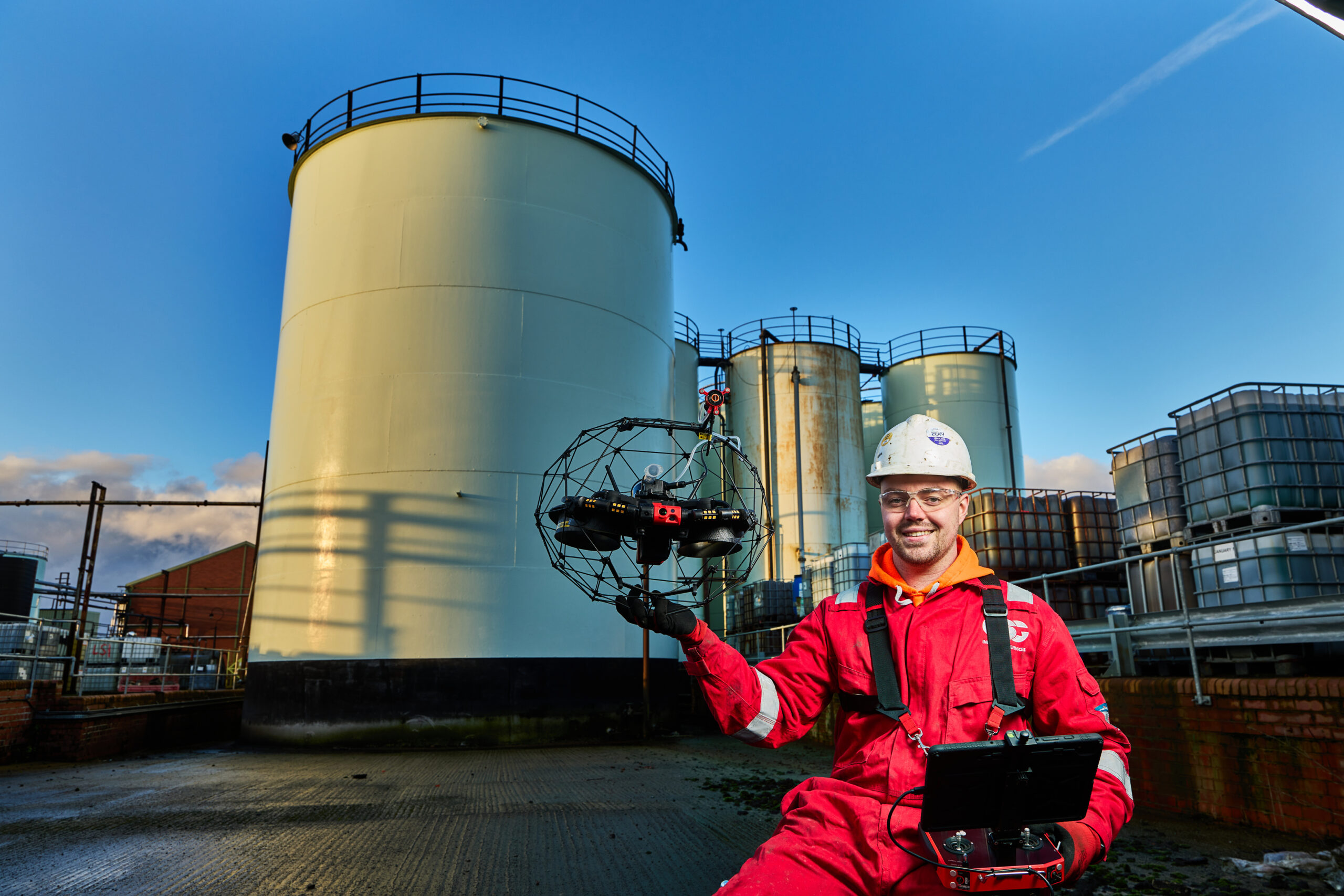
To enhance safety and efficiency, CSG invested £100,000 last year in a high-tech inspection drone. The technology has transformed the inspection process, significantly reducing time, cost, and risk.

Previously, scaffolding could take up to a week to erect around a tank to allow access. With the drone, inspections can begin almost immediately. CSG has worked on tanks up to 90 metres in diameter holding tens of thousands of tonnes of crude oil, where traditional inspection methods could incur substantial setup costs. The drone eliminates much of this expense, making inspections more cost-effective for clients.

In addition to improved efficiency, the drone enhances safety by removing the need for personnel to enter confined or hazardous environments. Equipped with LIDAR sensors and high-definition cameras, the drone creates highly accurate three-dimensional images that measure metal thickness and assess both internal and external tank conditions.

Alongside private inspections for clients, Richards and the team are also conducting assessments across CSG’s own nationwide sites to ensure ongoing compliance and safety.

Storage tanks generally require inspection every three to five years, making regular monitoring essential to maintaining operational integrity and meeting regulatory requirements.

For more information visit www.csg.co.uk

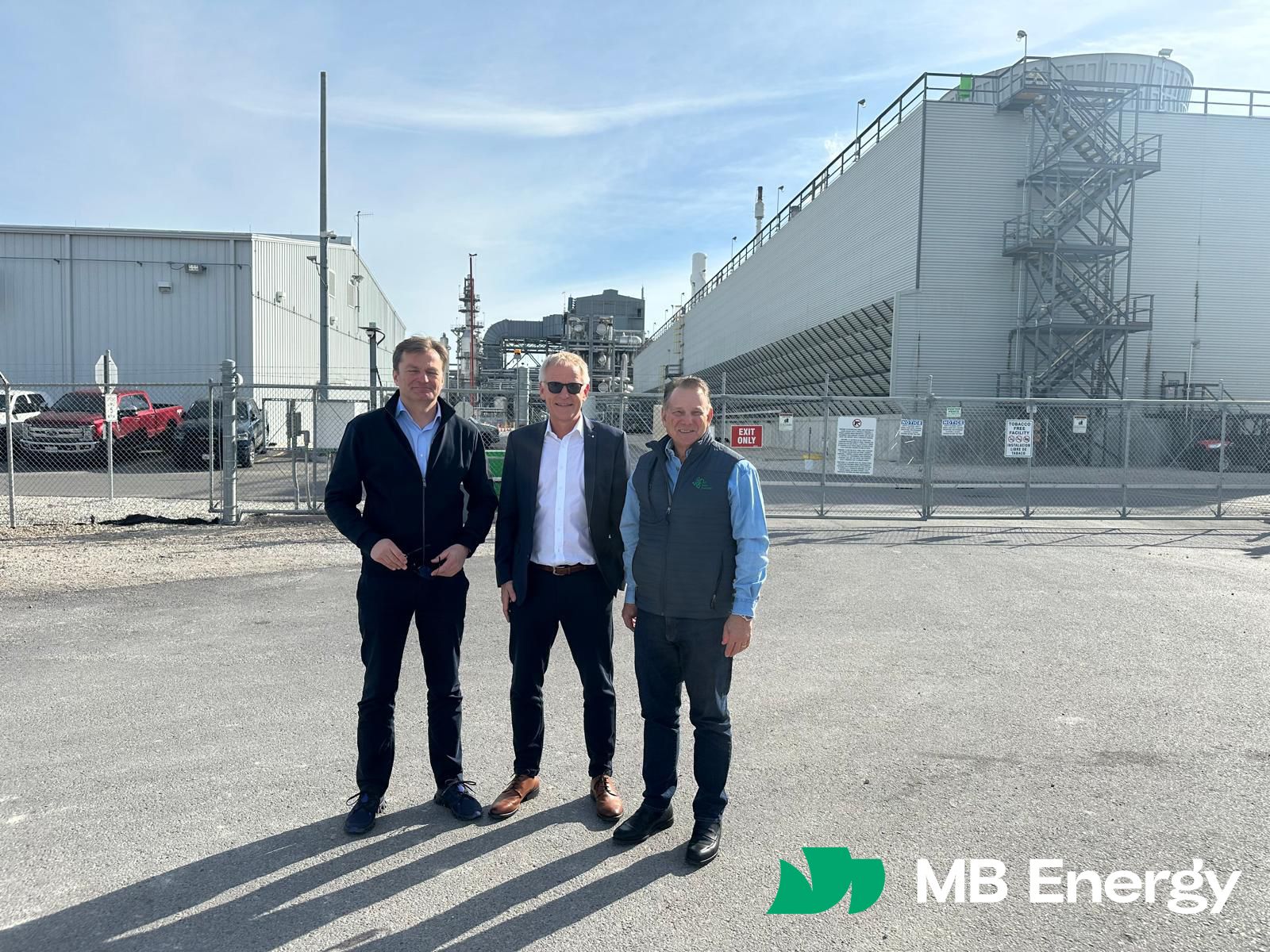
Hamburg Port Authority and MB Energy visit Gulf Coast Ammonia facility in Texas

MB Energy hosted Jens Meier, CEO of Hamburg Port Authority (HPA) Anstalt öffentlichen Rechts, for a visit to Gulf Coast Ammonia (GCA) in Texas City, USA. Together with Volker Ebeling, senior vice president new energy, supply & Infrastructure at MB Energy, Meier toured GCA’s ammonia production, storage and adjacent port facilities.

World-Class Production Facility

GCA is home to the world’s largest single-train ammonia synthesis plant. This state-of-the-art facility is scheduled to commence regular operations this year, with a nameplate capacity of approximately 1.3 million tonnes of ammonia annually, produced from hydrogen and nitrogen feedstock.

With storage capacity of around 70,000 tonnes and a dedicated deep-water export dock at the terminal of Advario, the site provides direct access to global ammonia markets.

Strategic Partnership

MB Energy is an owner and operating partner of this landmark project and will also market a significant part of GCA’s production, driving innovation on both sides of the Atlantic.

For more information visit www.mbenergy.com

Bureau Veritas named accredited EcoVadis consulting partner

Bureau Veritas has been named an Accredited Consulting Partner by EcoVadis, the global standard for resilient and sustainable supply chains. The designation recognises organisations formally equipped to support businesses in completing sustainability assessments, reviewing performance scores, and strengthening practices across environment, labour and human rights, ethics, and sustainable procurement.

Accredited Consulting Partners are carefully selected based on their expertise and experience, and are required to complete rigorous training on EcoVadis’ methodology and assessment processes through the EcoVadis Academy. Partners must also demonstrate a strong understanding of local environmental, ethical and human rights regulations, as well as complete the EcoVadis assessment for their own operations.

Marc Roussel, executive vice president, Urbanisation and Assurance at Bureau Veritas, commented, “Becoming an EcoVadis Accredited Consulting Partner reinforces our commitment to enabling businesses to build resilient and responsible supply chains. Bureau Veritas has a long-standing legacy of helping companies ensure integrity and resilience across global supply chains. Our partnership with EcoVadis further strengthens our ability to guide organisations toward sustainable transformation, helping clients not only meet compliance requirements but also embed sustainability into their procurement strategies and operational frameworks.”

Through its Accredited Consulting Partner status, Bureau Veritas now provides comprehensive support for supply chain sustainability, including guidance on EcoVadis assessment completion and compliance readiness, post-assessment performance reviews and strategic improvement planning, programme launch and supplier network engagement, and advanced value chain performance initiatives focused on responsible sourcing, traceability, and resilience.

Building on its extensive experience in sustainability transitions, Bureau Veritas integrates compliance, risk management and transformation strategies to help organisations embed sustainability across their operations and supply chains. This holistic approach includes diagnostics, advisory services, performance monitoring, and certification, with a strong focus on responsible sourcing, social audits, traceability, and resilience, enabling businesses to meet global standards, enhance transparency, and deliver measurable impact.

For more information visit www.group.bureauveritas.com

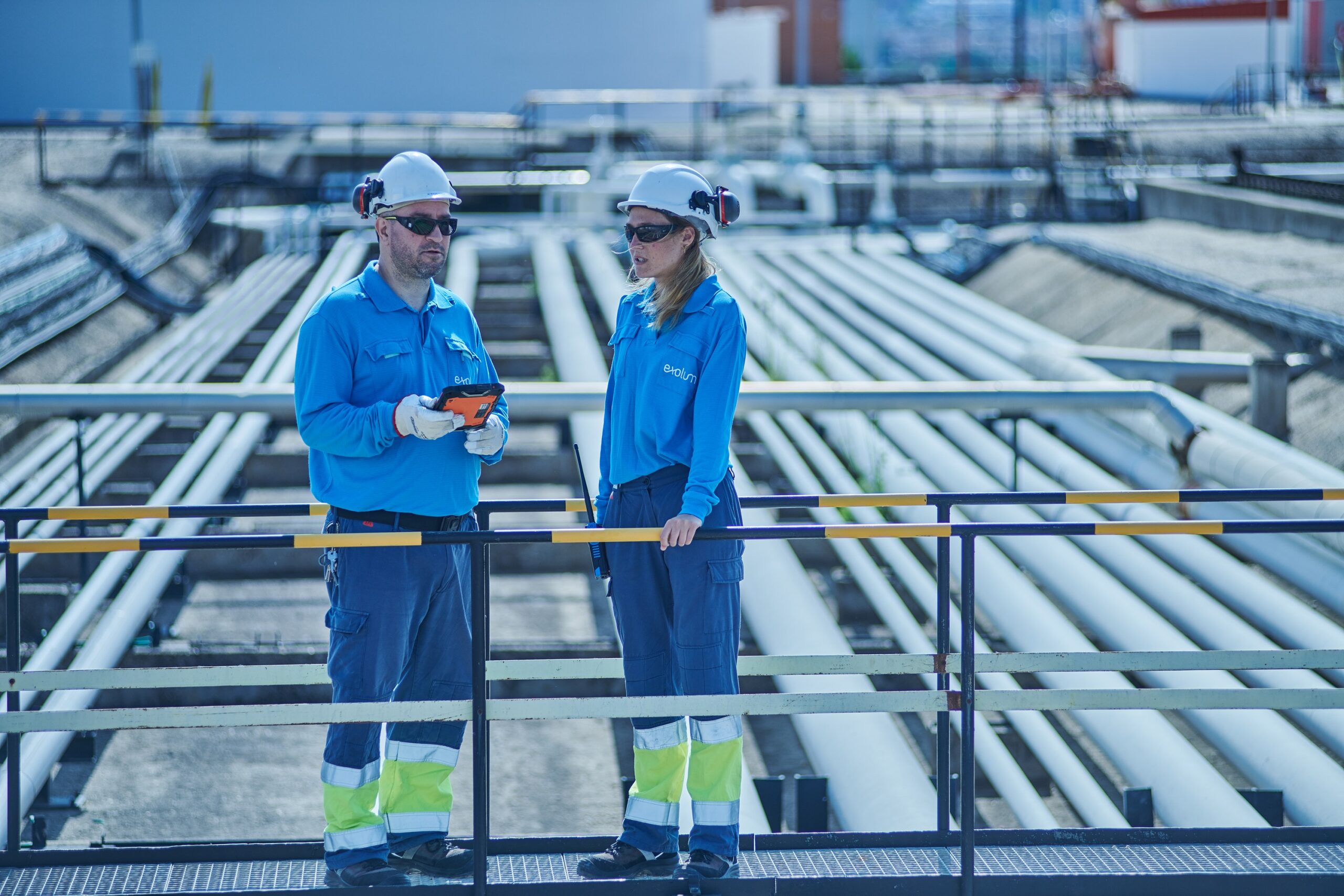
Exolum renews its “Top Employer 2026” certification and consolidates its position among Spain’s best companies in talent management

Exolum has obtained the “Top Employer 2026” certification for the third consecutive year. This distinction recognises the company’s human resources policies and its efforts to provide a stable working environment that creates opportunities for its professionals to develop their potential. With this achievement, the company joins a global community of nearly 2,500 organisations that stand out for their people management practices and for contributing to improving the world of work.

Rigorous Certification Process

To achieve this certification, the company completed a six-phase audit process under the HR Best methodology, carried out by the Top Employers Institute. The analysis evaluated 22 categories, including people strategy, work environment, equity, talent acquisition and learning programmes. After comparing its results with international standards, the organisation has validated Exolum’s position as a benchmark employer for 2026 in Spain.

Commitment to People

Cristina Jaraba, global people lead at Exolum, said: “Receiving the Top Employer 2026 recognition once again is a source of pride and an endorsement of our people management model. This result confirms our commitment to a corporate culture based on equality and diversity, where work-life balance and staff growth are priorities. At Exolum, we work to guarantee stable, quality employment, as well as caring for the physical, social and emotional well-being of our team.”

For more information visit www.exolum.com

LBC Tank Terminals, Associated British Ports and North Sea Port partner to advance carbon shipping in the North Sea

LBC Tank Terminals (LBC), Associated British Ports (ABP) and North Sea Port have signed a Memorandum of Understanding (MOU) to develop a Carbon Capture and Storage (CCS) terminal and shipping corridor connecting Northwest Europe with the UK. This will enable captured CO2 from industrial regions to be transported to secure storage, representing a vital step toward decarbonising energy generation and heavy industry while creating a new cross-border market for CO2.

Partnering to scale CO2 solutions

The MOU sets the stage for a collaborative effort to develop shipping routes for captured CO2, enabling hard-to-abate sectors to cut emissions while positioning storage terminals and ports as key players in the green economy.

Image: Supplied LBC

LBC provides operational expertise and infrastructure for temporary storage and shipment of captured CO2, while ABP contributes UK storage capacity through its planned CCS terminal at the Port of Immingham, linked to the Viking CCS cluster. North Sea Port, comprising a wide variety of industries looking into different decarbonisation routes, actively supports CCS projects through its strategic location and network. Together, the partners aim to deliver scalable solutions that accelerate the energy transition and will focus their collaboration on:

  • Designing port infrastructure for CO2 handling, storage and shipping
  • Building a robust value chain for CO2 transport between ABP’s Humber ports and North Sea Port
  • Driving innovation and efficiencies in Carbon Capture, Utilization, and Storage (CCUS) related transportation


Henrik Pedersen, chief executive officer of ABP, says:

“Ports have always been gateways for energy. Today, they are at the forefront of the energy transition. This agreement is about building the infrastructure and partnerships needed to decarbonise industry and create new opportunities for sustainable growth. It paves the way for the UK to utilise its world-leading geological assets to provide near-term options for emissions reductions across Europe and realise significant export potential for the UK. This is not just about reducing emissions – it’s about creating a new market for carbon shipping that will help Europe meet its climate goals and secure industrial competitiveness at pace.”

The North Sea offers significant geological capacity for permanent CO2 storage, and shipping provides flexibility in connecting emitters to those sites. Studies, including recent analysis by the Carbon Capture and Storage Association (CCSA), indicate that a pan-European CO2 market, including the UK, could reduce overall costs through scale and proximity of storage locations. By linking inland industrial regions, terminals, and offshore storage, the partners see this MOU as a step toward the practical implementation of cross-border carbon transport solutions that support both European and UK climate objectives.

Cas König, chief executive officer of North Sea Port, says:

“Our sustainability ambition is clear: a net zero port by 2050. To this end, we are creating connecting infrastructure with our partners. Carbon shipping is an essential additional and flexible link in the chain of industrial decarbonisation. By signing this MoU with ABP and LBC, we are taking a practical step to investigate a cross‑border CO2 corridor that connects emitters to certified storage in the North Sea. Leveraging our shared port infrastructure and maritime expertise, we aim to cut costs, accelerate deployment, and ensure the energy transition strengthens—not weakens—Europe’s industrial competitiveness.”

Connecting the CO2 value chain

“Signing this MoU is about moving from vision to tangible progress. By combining LBC’s operational expertise in safe and sustainable storage with the port capabilities of ABP and North Sea Port, we can design an efficient, scalable shipping corridor that connects European emitters to UK storage at pace, supporting a competitive, cross‑border CO2 market,” says Radboud Godron, group business development director New Energies at LBC Tank Terminals.

LBC’s terminal in Vlissingen is positioned as a central hub in this network. With direct access to the North Sea and strong connectivity to industrial regions across Northwest Europe, the terminal is optimally positioned for storage and onward shipment of captured CO2.

Expanding our footprint and reinforcing our role as a key infrastructure provider for new energy and low-carbon value chains, LBC recently signed an MOU with duisport to jointly develop an inland ammonia and CO2 terminal in Duisburg, developing a direct strategic link between the Ruhr area and Vlissingen in North Sea Port.

Together, the Duisburg–Vlissingen axis and the proposed UK shipping route position LBC as a connecting partner in safely and efficiently linking captured emissions from industrial regions to certified offshore storage locations.

For more information visit www.lbctt.com

Stolthaven Terminals retains EcoVadis Gold, ranking in top 2 percent for sustainability performance

Stolthaven Terminals has strengthened its sustainability performance and successfully retained its EcoVadis Gold Medal for another consecutive year, reaffirming its position among the top performers in the global warehousing and storage sector. The achievement places the company in the top 2 percent of all organisations assessed by EcoVadis worldwide.

The comprehensive assessment, which evaluates all wholly owned Stolthaven Terminals sites globally, highlights year-on-year improvements across key environmental, social and governance (ESG) criteria. The enhanced score reflects the company’s continued focus on responsible operations, transparent governance, and meaningful progress in sustainability initiatives across its terminal network.

Commenting on the achievement, Stolthaven Terminals president Guy Bessant said: “We are proud to retain our Gold rating for another year. With more than 75,000 companies evaluated across over 200 industries, maintaining Gold status while further improving our score demonstrates our strong and ongoing commitment to responsible and sustainable business practices.”

The latest EcoVadis result underscores Stolthaven Terminals’ long-term approach to sustainability and its dedication to embedding ESG principles across all aspects of its operations.

For more information visit www.stolt-nielsen.com

Santos delivers strong financial, operational and project milestones in 2025

Santos delivered a robust performance in 2025, underpinned by strong base business results, disciplined capital management and continued progress across major growth projects. The company generated free cash flow from operations of approximately $380 million in the fourth quarter, an increase of 30 percent on the prior quarter, lifting full year free cash flow to around $1.8 billion. The free cash flow breakeven price for the year was below $30 per barrel, reflecting Santos’ low-cost operating model.

Production remained resilient despite challenging operating conditions, with fourth quarter production of 22.3 million barrels of oil equivalent, up five percent quarter on quarter. Full year production reached 87.7 million barrels of oil equivalent. Sales volumes increased to 24.8 million barrels of oil equivalent in the fourth quarter, up 15 percent on the prior quarter, with full year sales volumes of 93.5 million barrels of oil equivalent. Sales revenue exceeded $1.2 billion in the fourth quarter and more than $4.9 billion for the full year. Unit production costs for the year remained below $7 per barrel of oil equivalent, excluding Bayu Undan, and within guidance. Gearing reduced to 26.8 percent, or 21.5 percent excluding operating leases.

A major milestone was achieved at Barossa LNG, with the first LNG cargo now loading at Darwin LNG. The BW Opal FPSO continued start-up and commissioning activities, ramping up gas export volumes to approximately 450 million standard cubic feet per day, around 75 percent of plant capacity. The six-well drilling programme in the Barossa gas field was successfully completed, with all wells intersecting excellent reservoir quality and average individual well deliverability of approximately 300 million standard cubic feet per day. LNG production commenced following completion of the Darwin LNG life extension project, and the first cargo has been sold on a delivered ex-ship basis for delivery to the Sakai terminal in Japan.

At Pikka Phase 1, the project reached 98 percent completion and is nearing mechanical completion, with commissioning progressing. Twenty-four wells were drilled and completed by the end of the fourth quarter, including the 23rd well which achieved the highest productivity to date, producing approximately 8,000 barrels per day. While capital expenditure for Phase 1 increased by around $200 million Santos share due to inflationary pressures, tariffs and logistics costs, the project remains on track for first oil late in the first quarter of 2026, with ramp-up to plateau expected mid-year.

Operational performance across the portfolio remained strong. In Papua New Guinea, the Hides F2 well was completed with an accelerated and safe start-up. Western Australia domestic gas production increased by approximately 19 percent following the successful completion of major shutdowns and compression upgrades. In the Cooper Basin, output recovered to pre-flood levels, with 91 wells returned to production in the fourth quarter. GLNG delivered full year LNG production of 6 million tonnes, with record production achieved across multiple fields and facilities.

Santos also advanced its growth and energy transition initiatives. A well-priced mid-term LNG portfolio supply contract was signed for approximately 0.6 million tonnes per annum from 2026. Preparations continued for the Beetaloo Basin appraisal programme, with regulatory approvals submitted and consultation undertaken. Moomba Carbon Capture and Storage Phase 1 continued to perform to plan, permanently storing more than 1.5 million tonnes of CO2 equivalent since start-up and receiving more than 900,000 Australian Carbon Credit Units.

Disciplined capital management remained a key focus. During the year, Santos raised a $1 billion senior unsecured fixed-rate bond, accelerated repayment of the PNG LNG project finance facility, and completed several non-core asset divestments to sharpen portfolio focus and strengthen the balance sheet.

Santos managing director and CEO Kevin Gallagher said that continued focus on operational excellence, disciplined project execution and safety underpinned the company’s performance throughout the year.

“Personal and process safety, and environmental performance, was outstanding, with the company in the top quartile of global industry benchmarks for personal safety and better than global average for process safety and environment performance,” Mr Gallagher said.

He added that the performance of the base business was a highlight of 2025, particularly given the impact of severe flooding in the Cooper Basin, and that Santos is now well positioned for production growth as Barossa and Pikka move into production.

Looking ahead, Santos expects Barossa LNG and Pikka Phase 1 together to lift production by around 25 to 30 percent by 2027 compared to 2024 levels, reinforcing the company’s platform for sustainable growth, disciplined capital allocation and long-term shareholder value.

For more information visit www.santos.com

Brunei Energy Services & Trading and Vitol announce extension of strategic LNG sales agreement

Brunei Energy Services & Trading and Vitol have announced the extension of their Liquefied Natural Gas Sale and Purchase Agreement. This extension reinforces the strong, multi-year partnership between the two companies and underscores their shared commitment to global energy security.

Building on Proven Partnership

The original agreement, signed in 2022 with deliveries commencing in 2023, established a supply of approximately 0.4 million tonnes per annum to Vitol’s Asian operations over a five-year term. Under the newly signed extension, BEST will continue to supply Vitol with up to four LNG cargoes per annum from 2028 through 2031.

This extension reflects the deep level of trust and operational excellence established between BEST and Vitol. It further highlights BEST’s growing role as a premier energy services provider and Brunei Darussalam’s reputation as a dependable source of LNG in the international market.

Strategic Partnership Growth

Yang Mulia Hajah Sharidatul Maryani Binti Hj Md Saidin, chief executive officer at BEST, commented: “We are delighted to further strengthen our partnership with Vitol through this agreement extension. This milestone is a testament to the reliability of our operations and the strength of the relationship we have cultivated since 2022. By securing this extension into 2031, BEST continues to demonstrate its capability to meet the evolving needs of the global energy market while contributing to the long-term growth of Brunei’s energy sector. We look forward to a continued, mutually beneficial collaboration with Vitol.”

Pablo Galante Escobar, head of LNG and EMEA Gas and Power at Vitol, said: “We are delighted to extend our long-term LNG SPA with BEST, a highly respected and important partner. We look forward to strengthening our partnership with BEST and Brunei Darussalam and working on further opportunities. Vitol is committed to offering reliable and flexible LNG solutions to customers worldwide.”

For more information visit www.vitol.com

BEH partners with OMV Petrom to join the Han Asparuh offshore exploration venture in the Black Sea

The Bulgarian State, through Bulgarian Energy Holding (BEH), has entered the Han Asparuh offshore exploration joint venture in the Bulgarian Black Sea, with a 10 percent interest.

BEH will pay its proportional share (10 percent) of the costs incurred in connection with drilling preparations and operations.

New Partnership Structure

In the new partnership structure, OMV Petrom remains operator, with a 45 percent stake, NewMed Energy holds 45 percent, and BEH holds 10 percent.

Exploration drilling started in December 2025 and is ongoing, with the drilling vessel Noble Globetrotter I contracted to drill two exploration wells.

Strategic Partnership

Cristian Hubati, member of OMV Petrom’s Executive Board, responsible for Exploration and Production, said: “This partnership reflects a shared commitment to unlocking the Black Sea’s potential as a reliable regional energy source in a safe and sustainable manner.”

Yossi Abu, CEO of NewMed Energy, said: “Our participation into Han Asparuh extends our deepwater portfolio and strengthens regional collaboration in the Eastern Mediterranean and Black Sea.”

Valentin Nikolov, CEO of Bulgarian Energy Holding, said: “By joining the joint venture, Bulgaria takes an active role in exploring its offshore resources and enhancing national energy security. Moreover, such projects can make a significant contribution to the economy.”

Economic Impact Analysis

A study recently issued by EY, commissioned by OMV Petrom and NewMed Energy, shows that unlocking the natural gas potential in the Bulgarian Black Sea could generate major benefits for the country’s economy and energy security. According to the analysis, every EUR 1 billion invested and spent in offshore projects could deliver up to EUR 5.2 billion in GDP and EUR 1.5 billion in state revenues.

Han Asparuh Block

Han Asparuh is an exploration block located in the Western Black Sea in Bulgaria, south of the Neptun block in Romania and has an area of 13,712 square kilometres with water depths slightly below 2,000 metres. Exploration activities started in 2012 and included geological and geophysical surveys and the drilling of three exploration wells. An extensive 3D seismic campaign was finalised in May 2020 to identify potential drilling targets.

OMV Petrom in the Black Sea

OMV Petrom has over 40 years of experience in oil and gas production in the Black Sea. In the Romanian sector, it operates several blocks, producing oil and gas in the shallow waters. In deep waters, OMV Petrom, in partnership with Romgaz, is developing the Neptun Deep project, with estimated volumes of 100 billion cubic metres of gas. First gas production from Neptun Deep is expected in 2027.

For more information visit www.omvpetrom.com

HES International reflects on a transformative 2025 and sets course for the Energy Transition

HES has shared an in-depth interview with Paul van Gelder, CEO of HES International, reflecting on a year of significant progress and outlining the company’s strategic direction as it moves further into the energy transition.

Looking back on 2025, van Gelder described the year as a period of major transformation for both HES International and the wider industry. He emphasised that rapid change across the sector demands clear strategic direction combined with decisive action. According to van Gelder, the past year was focused on building strong foundations for new energies, decarbonisation, long-term resilience and a more unified HES organisation.

Several key developments stood out during the year. In France, HES International acquired a new terminal, HES Fos, which van Gelder described as a strategic stepping stone for developments in green steel. He highlighted the importance of decarbonised steel production in supporting Europe’s strategic autonomy and underlined the need for strong domestic steel production capabilities. Another major milestone was achieved at HES Wilhelmshaven Tank Terminal, where the company secured the option to connect to Germany’s hydrogen backbone via the Wilhelmshaven Coastal Line. Van Gelder noted that this development represents more than a technical connection, positioning the terminal as a future New Energies Hub and enabling large-scale hydrogen imports into the German market at a critical time for Europe’s energy transition.

Decarbonisation continues to play a central role in HES International’s strategy. Van Gelder explained that the company is focused on implementation rather than ambition alone. In partnership with Harbour Energy, HES advanced its Carbon Capture and Storage cooperation, developing practical solutions to capture and permanently store CO₂ emissions from industrial sources. He described this collaboration as an important milestone in reducing the sector’s carbon footprint and supporting Europe’s climate objectives with scalable solutions.

HES International’s activities extend beyond hydrogen and carbon capture. In France, the newly established subsidiary HES Med Terminals signed a memorandum of understanding with GravitHy to develop port infrastructure linking GravitHy’s future industrial site in Fos-sur-Mer with HES’s dry bulk terminal. Van Gelder noted that the project demonstrates the essential role ports play in enabling new industrial ecosystems, particularly those focused on green steel and low-carbon value chains.

Operational excellence remains a core priority alongside long-term investment. At HES Bulk Terminal Rotterdam, the full modernisation of the train loading station was completed, upgrading an asset that has been in operation since 1976 and handles up to six million tonnes of iron ore annually. Van Gelder highlighted that by prioritising safety and automation, the terminal now operates a more efficient and future-proof system aligned with evolving customer needs.

Further milestones were achieved within the bulk terminal portfolio. In Poland, HES Gdynia Bulk Terminal officially opened a new fully automated flat grain warehouse, significantly increasing agricultural storage and handling capacity and reinforcing HES’s role within the agri-bulk supply chain.

The year also marked an important step towards the “One HES” vision. As of 2 April, EMO B.V. and European Bulk Services officially rebranded under the HES International name, becoming HES Bulk Terminal Rotterdam and HES Bulk Terminal Maasdelta respectively. In December, SOSERSID SOMARSID also transitioned to HES Med Terminals. Van Gelder explained that the rebranding goes beyond a new visual identity, reflecting a shared culture, aligned standards and a consistent customer promise across the group.

Customer engagement remained a key focus throughout 2025. Van Gelder highlighted the importance of personal relationships, pointing to the opportunity to host clients at HES Bulk Terminal Amsterdam during SAIL Amsterdam 2025 as a valuable moment to step back from daily operations and discuss the future of the industry in a unique maritime setting.

Looking ahead to 2026, van Gelder expressed particular enthusiasm about developments at HES Botlek Tank Terminal, where 65 percent of storage capacity will be dedicated to biofuels from January 2026, surpassing the company’s strategic target more than two years ahead of schedule. Additional new products will be introduced at the terminal, enhancing flexibility and relevance in a rapidly evolving energy market. At the same time, HES International will continue to accelerate its New Energies initiatives, supported by a new brochure outlining how the company enables hydrogen, CCS, biofuels and other emerging energy carriers across its terminal network.

Concluding the interview, van Gelder highlighted the importance of people, partnerships and customer trust in giving him confidence for the future. He expressed pride not only in the projects delivered, but also in building an organisation that is resilient, future-oriented and purpose-driven, with a clear focus on safe operations, responsible investment, pragmatic innovation and leadership at the intersection of industry, logistics and energy.

For more information and the original interview visit www.hesinternational.eu

Glenfarne’s Texas LNG project fully subscribed with RWE binding offtake agreement

Texas LNG Brownsville LLC, part of Glenfarne Group, LLC, has signed a definitive 20-year Sales and Purchase Agreement with RWE Supply & Trading, one of Europe’s leading energy companies, for the supply of one million tonnes per year of Liquefied Natural Gas. This corresponds to approximately 13 cargoes of LNG and 1.4 billion cubic metres (BCM) per year of natural gas respectively. Deliveries can be shipped by RWE to locations in Europe and worldwide.

Offtake Portfolio Complete

Glenfarne has now finalised the conversion of all of Texas LNG’s previously announced Heads of Agreements to fully binding long-term definitive offtake agreements.

Vlad Bluzer, Partner at Glenfarne Group, LLC and co-president of Texas LNG, said: “We welcome RWE, one of the world’s most versatile energy companies, as an offtake partner for Texas LNG and look forward to helping them fulfill the needs of their customers with clean, competitive energy. With the completion of offtake negotiations, Glenfarne is now focusing on finalising the financing process as we advance toward a final investment decision in early 2026.”

Jacob Meins, chief commercial officer of origination at RWE Supply & Trading, said: “I am pleased to welcome Glenfarne as a strong partner in our LNG supply. This partnership strengthens our international LNG portfolio and supports Europe’s security of supply.”

Low-Emission Technology

Texas LNG features the use of electric drive motors for LNG production, making this project one of the lowest-emitting LNG terminals in the world. The RWE agreement provides a framework to monitor, report and verify greenhouse gas emissions (GHG) from the well head to LNG loading to document how LNG cargoes produced from the Texas LNG terminal support the reduction of GHG emissions across the LNG value chain.

Kiewit is leading the engineering, procurement and construction of Texas LNG under a lump-sum turnkey structure.

For more information please visit www.glenfarne.com

MFE launches new offshore inspection division, led by 25-year subsea veteran

MFE has announced the launch of MFE Offshore, a new division dedicated to subsea and offshore operations. Built to serve offshore oil and gas, offshore wind and other maritime operators, MFE Offshore offers technology, expertise and hands-on support made specifically for the harsh realities of offshore environments.

Addressing Offshore Complexity

Dylan Duke, CEO of MFE Inspection Solutions, said: “Offshore inspections are incredibly complex, and demand more than just good equipment. For over 30 years, MFE has supported industrial inspections by helping customers choose the right tools, train their teams, and build workflows that actually work in the field. MFE Offshore formalises that approach for subsea and offshore operations, bringing together specialised technology, deep technical support, and experienced offshore leadership.”

Image Source: MFE

Many inspection tools are designed for labs or controlled settings. But offshore operations require equipment that can perform reliably in harsh conditions, including saltwater exposure, confined spaces and the use of specialised tools like underwater drones and subsea positioning systems. MFE Offshore was made to address these challenges head-on, helping operators deploy inspection solutions designed for real-world offshore environments.

Consultative Approach

Continuing MFE’s long-standing practice of supporting clients all the way through the inspection process, MFE Offshore operates in a consultative manner, working closely with customers to understand their specific inspection challenges. The team helps identify the right technologies, delivers hands-on training, supports implementation and remains engaged after deployment to ensure lasting success.

Experienced Leadership

Wendy Post, general manager of MFE Offshore, who brings more than 25 years of offshore industry experience, said: “Offshore personnel don’t have the luxury of trial and error. Harsh environments, limited access, and tight inspection windows mean everything has to work the first time. MFE Offshore was built to support those realities, helping operators find inspection tools designed for offshore use, training teams to deploy them correctly, and staying engaged long after the equipment arrives.”

Post brings more than 25 years of offshore industry experience and has spent over a decade in industry leadership roles, including helping to found and establish the Southeast chapter of the Hydrographic Society of America and serving for 14 years on boards within the hydrographic and marine technology community at both the regional and national levels.

Proven Track Record

MFE serves over 9,000 companies and delivers more than 26,000 hours of training each year. With the launch of MFE Offshore, the company extends its mission of empowering inspection teams with the right technology and support to the unique demands of offshore environments.

For more information visit www.mfe-is.com

OPW Retail Fueling to showcase engineering excellence at WPMA

OPW Retail Fueling, a global leader in fluid-handling solutions, will highlight its latest offerings at Booth M475 during the upcoming Western Petroleum Marketers Association WPMA EXPO, Feb. 17-19, at the MGM Grand Resort in Las Vegas, NV.

During the expo, OPW Retail Fueling will showcase a wide array of products, including its latest fueling system enhancements, the 71SO Segmented Overfill Prevention Valve and the segmented 61T-4SC Drop Tube, which simplify shipping and storage.

“Innovation at OPW Retail Fueling reflects a comprehensive approach to product design that prioritises safety, quality and efficiency at every touchpoint,” said Ed Kammerer, vice president global product marketing, OPW Retail Fueling. “‘Fueled By Excellence,’ our mission is to optimise every step of the value chain for our distributors, their customers and end users. Our product managers and district managers look forward to showcasing how our products deliver on that promise at WPMA.”

The 71SO Segmented Overfill Valve:

  • Retains the breakthrough two-stage positive shut-off mechanism of the original OPW 71SO
  • Allows for more compact packaging and easier transport due to the drop tube’s four 5′-long interlocking sections
  • Eliminates shipping damage and overlength shipping fees
  • Is easily pieced together during on-site installation without the need for glue or epoxy


The 61T-4SC Segmented Drop Tube:

  • Transfers product from the fill connection point to within 6″ (or per local requirements) of the bottom of the underground storage tank
  • Allows for submerged filling of the tank, resulting in a more efficient delivery flow rate
  • Reduces the buildup of vapors or foam in the tank
  • Features 062″-thick drop tube walls to prevent denting and damage during installation or removal
  • Is easier to store and ship because of the drop tube’s 3 segments

In addition to sharing product information with booth guests, OPW Retail Fueling will record episodes of its groundbreaking podcast, “The Fueling Station,” at the show.

For updates from the OPW booth during the show, follow along on LinkedIn and Facebook.

To learn more  visit www.opwglobal.com/opw-retail-fueling.

Tepsa wins Grand Port Maritime de Dunkerque’s Expression of Interest for part of the former SRD refinery brownfield site

Tepsa has been selected by the Grand Port Maritime de Dunkerque following an Expression of Interest process for part of the former SRD refinery brownfield site.

As part of the EOI, the Port of Dunkirk chose the complementary projects proposed by Technip Energies and Tepsa. Under the agreement, Tepsa, an independent European leader in bulk liquid storage, will develop and operate a new storage terminal with a capacity of 145,000 cubic metres. The facility will be dedicated to bulk liquids serving the battery manufacturing and recycling value chain, the European chemicals sector and energy transition industries.

In addition, Tepsa will provide maritime logistics services to Technip Energies in support of its adjacent project to produce sustainable aviation fuel from second-generation ethanol, further strengthening the industrial ecosystem at the site.

Commenting on the announcement, Bruno Hayem, chief executive officer of Tepsa, thanked the Grand Port Maritime de Dunkerque for its continued trust. He noted that, as long-standing partners, Tepsa is proud to contribute to the development of the Dunkirk area and the wider Hauts-de-France region, and to support the port’s ambition to position Dunkirk as a leading hub within the Northern European port range.

For more information visit www.tepsa.com

Trafigura signs offtake agreement for advanced sustainable aviation fuel produced from biogas

Trafigura Pte Ltd, a market leader in the global commodities industry, has signed a binding six-year offtake agreement with SP Developments Uruguay S.A., a subsidiary of Syzygy Plasmonics, to purchase advanced sustainable aviation fuel (“SAF”) from Syzygy’s first commercial facility, located in Uruguay. The agreement covers the entire production volume from Syzygy’s flagship biogas-to-SAF project, with first deliveries targeted in 2028. It also includes an option for Trafigura to purchase additional volumes from Syzygy’s future projects.

Innovative Light-Driven Technology

Syzygy’s technology converts biogas into SAF using renewable electricity through an innovative light-driven chemical reactor process. The pathway has received ISCC pre-certification to produce Renewable Fuels of Non-Biological Origin (RFNBO) and Advanced BioSAF compliant fuels, offering a scalable solution to meet expanding SAF mandates in Europe, the United Kingdom and other markets.

Pictured: Estancias Del Lago agro-industrial complex, where NovaSAF-1 will be built. Image credit: Estancias Del Lago.

This agreement demonstrates Trafigura’s approach to advancing emerging low-carbon technologies through market-based solutions.

Jason Breslaw, Head of Low Carbon Fuels Business Development at Trafigura, commented: “By providing commercial certainty through long-term offtake commitments, Trafigura can enable innovative companies like Syzygy to secure project financing and scale production. This offtake agreement complements our strategy to support the industry’s efforts to diversify SAF supply, particularly as regulations increasingly mandate the use of advanced fuels. Trafigura’s global low-carbon fuels network positions us to help aviation customers meet these requirements efficiently and cost effectively.”

World’s First Electrified Biogas-to-SAF Facility

Syzygy’s first commercial-scale project, named NovaSAF-1, will be located in Durazno, Uruguay and will be the world’s first electrified biogas-to-SAF facility producing RFNBO-compliant SAF. It will leverage biogas from the Estancias Del Lago powdered milk plant and Uruguayan renewable electricity to produce synthetic paraffinic kerosene (SPK) SAF with 90% lower lifecycle emissions than fossil jet fuel.

Trevor Best, CEO of Syzygy Plasmonics, said: “This agreement marks a critical step in our journey toward commercial-scale impact and disrupting the SAF market. With a signed offtake agreement from a global leader like Trafigura, and after having successfully completed FEED engineering in December, we’re now ready to secure financing for the construction of NovaSAF-1 and move our technology from potential into production.”

Strengthening Low-Carbon Fuels Supply Chain

The agreement further strengthens Trafigura’s presence across the entire low-carbon fuels supply chain, from feedstock sourcing through subsidiaries such as Greenlife in Australia, to blending and distribution capabilities via Impala Terminals and Greenergy, and into-wing supply to aviation customers globally.

For more information visit www.trafigura.com

Cortec discusses how you can stay nimble in the 2026 Oil & Gas Market with VpCI preservation

Remaining agile in an ever-changing oil and gas (O&G) market continues to be a significant challenge for the industry. Outlooks for 2026 suggest limited demand growth alongside higher supply, conditions that may prompt some operators to scale back drilling and production activity. At the same time, shifting government policies and international events have the potential to alter market dynamics rapidly. Given the scale of O&G operations, even small market changes can have far-reaching impacts that are difficult to address quickly. While no single solution can eliminate this uncertainty, an effective corrosion protection strategy can play a key role in reducing losses associated with unpredictable market fluctuations.

Preserving asset value through corrosion prevention

By the time multi-year greenfield drilling projects reach completion, market conditions may no longer support immediate start-up, leaving newly installed equipment idle and exposed to corrosive environments. Similarly, existing oil rigs face the risk of equipment degradation when assets are decommissioned without appropriate preservation measures. Implementing practical corrosion prevention strategies enables O&G companies to maintain equipment in near-new condition, allowing assets to be brought back online efficiently when market conditions improve.

Minimising start-up delays with effective preservation

The choice of preservation method is critical to maintaining operational readiness. Traditional corrosion protection approaches often rely on greasy rust preventatives that are difficult to remove, dehumidification systems that can fail, or costly nitrogen blanketing that must be fully reapplied if leaks occur. In contrast, Cortec® corrosion solutions are designed to be easy to apply, require minimal monitoring and support a faster return to service.

VpCI® emitters and fogging fluids can be applied based on internal equipment volumes, ensuring consistent protection of complex internal spaces through corrosion-inhibiting vapour diffusion. For external protection, solutions such as VpCI®-126 HP UV Shrink Film and MilCorr® VpCI® coatings complete the protective system, providing durability in outdoor conditions. When equipment is required for renewed operations, protective films and emitters can be removed quickly, allowing for a rapid and efficient start-up.

Preparing for 2026 market volatility

Whether the 2026 O&G market leads to increased decommissioning activity or shifts unexpectedly towards higher demand, VpCI® preservation solutions can help operators remain flexible. By keeping equipment preserved in a ready-to-use state, O&G companies are better positioned to respond quickly to changing market conditions and capitalise on future upturns. Further guidance on maintaining operational agility in the evolving O&G market is available from Cortec®.

For more information visit www.CortecVCI.com

Bureau Veritas retains EcoVadis Gold rating in 2025, strengthening its sustainability performance

In 2025, Bureau Veritas further strengthened its sustainability performance, improving its overall score and retaining its EcoVadis Gold rating.

The EcoVadis Gold distinction places Bureau Veritas among the top five percent of companies assessed globally and recognises its continued progress across key sustainability criteria, including environmental stewardship, ethical business conduct, labour and human rights, and responsible procurement. The improved score reflects ongoing efforts to embed sustainability and responsible practices throughout the organisation’s operations and value chain.

Bureau Veritas has continued to focus on reducing its environmental footprint through targeted initiatives aimed at improving energy efficiency, lowering emissions and promoting more sustainable ways of working. At the same time, the company has reinforced its commitment to ethical labour practices by fostering safe, inclusive and respectful working environments, while upholding high standards of integrity and compliance across its global workforce.

Transparency and accountability remain central to Bureau Veritas’ approach, with clear governance frameworks and responsible business policies guiding decision-making at all levels. Retaining the EcoVadis Gold rating underscores the company’s long-term commitment to continuous improvement and its role in supporting customers and partners in achieving their own sustainability objectives.

For more information visit www.group.bureauveritas.com

ADNOC Gas signs $3 billion, 10-year LNG deal with Hindustan Petroleum Corporation Limited

ADNOC Gas plc and its subsidiaries have signed a long-term liquefied natural gas sales and purchase agreement with Hindustan Petroleum Corporation Limited, valued at between US$2.5 billion and US$3 billion over a ten-year period. ADNOC Gas is listed on the Abu Dhabi Securities Exchange under the symbol ADNOCGAS.

The agreement was announced during an official visit to India by President His Highness Sheikh Mohamed bin Zayed Al Nahyan, during which he met with Indian Prime Minister Narendra Modi. As part of the visit, His Excellency Dr Sultan Ahmed Al Jaber, UAE Minister of Industry and Advanced Technology and ADNOC managing director and group chief executive officer, and Vikas Kaushal, chairman and managing director of HPCL, formally exchanged the signed contract.

The agreement converts a previously signed heads of agreement into a binding long-term sales and purchase agreement for the supply of 0.5 million tonnes per annum of LNG. Over its duration, the contract is valued at approximately US$2.5 billion to US$3 billion and represents a further strengthening of the strategic energy partnership between the United Arab Emirates and India.

The deal reinforces ADNOC Gas’ position as a reliable and trusted LNG supplier to Asia’s fast-growing markets, while supporting India’s ambition to increase the share of natural gas in its energy mix to 15 percent by 2030. It also reflects the expanding commercial relationship between ADNOC Gas and Indian energy companies.

With this agreement, the total value of contracts supported and operated by ADNOC Gas now exceeds US$20 billion. India has become the UAE’s largest customer and plays a central role in ADNOC Gas’ long-term LNG strategy, with the company’s growth closely aligned to India’s continued energy demand.

By 2029, ADNOC Gas is expected to operate 15.6 million tonnes per annum of LNG capacity, of which 3.2 million tonnes per annum is contracted to Indian energy companies, including HPCL. Supplies under the agreement will be sourced from ADNOC Gas’ Das Island liquefaction facility, which has a production capacity of up to six million tonnes per annum and is among the world’s longest-operating LNG plants. Since commencing operations, the facility has delivered more than 3,500 LNG cargoes worldwide, demonstrating a strong record of operational performance and reliability.

The HPCL agreement aligns with ADNOC Gas’ broader strategy to diversify its customer base and expand its footprint in India and other key growth markets across Asia. Over the past three years, ADNOC Gas has secured multiple long-term LNG supply agreements, ranging from 0.4 to 1.2 million tonnes per annum with contract durations of up to 14 years, further strengthening its position as a leading supplier of reliable, lower-carbon LNG to the region.

For more information visit www.adnocgas.ae

Zeeco, Inc. completes acquisition of Devco Process Heaters

Zeeco, a global leader in advanced combustion and environmental solutions, has announced the acquisition of Devco Process Heaters, a Tulsa-based fired-heater design and technology company. The move strengthens Zeeco’s position in the United States midstream oil and gas market.

Comprehensive Solutions Provider

Through its newly expanded capabilities, Zeeco will be a comprehensive single-source provider not only of combustion equipment but also of installation, field service, construction and aftermarket solutions. Combined with Zeeco’s industry-leading, company-owned manufacturing facilities, this acquisition ensures fast, reliable and cost-effective delivery of complete combustion equipment solutions.

The acquisition included Devco Heaters’ brand, existing products and expertise. All former Devco Heaters employees, including owner Jeff Hutsell, have been integrated into new and expanded roles within Zeeco.

Strategic Milestone

Darton Zink, president and CEO of Zeeco, said: “The Devco acquisition marks a significant milestone for Zeeco, reinforcing our mission to serve customers to the fullest. It expands our midstream capabilities, enabling us to deliver a complete portfolio of solutions and equipment that provide greater efficiency, reliability and value.”

Proven Track Record

For more than 20 years, Devco Heaters has designed and manufactured direct and indirect fired heaters, thermal oxidisers, electric heater packages and auxiliary equipment. These solutions serve applications in the midstream, petrochemical, aircraft testing labs, food processing and other industries.

Jeff Hutsell said: “As Devco Heaters enters this new chapter with Zeeco, I’m excited to hand over the brand and personally join Zeeco to continue our momentum to serve clients globally. I have great confidence in Zeeco’s leadership, people and culture, and believe our combined strengths will deliver exceptional value for years to come.”

The acquisition was finalised on December 5, 2025.

For more information visit www.zeeco.com

Port of Gävle signs 25-year agreement with Inter Terminals

Port of Gävle has signed a new 25-year agreement with Inter Terminals. The agreement benefits both parties through increased long-term stability and predictability, creating stronger conditions for planning, development and investment – including Inter Terminals’ continued transition toward fossil-free operations through the storage of SAF (Sustainable Aviation Fuel) at the Port of Gävle.

Long-Term Framework

The agreement was signed on January 19, 2026. It covers areas for terminals and storage tanks and clearly defines the framework and conditions for Inter Terminals’ long-term use of the port’s land, facilities and infrastructure.

Fredrik Svanbom, CEO of Gävle Hamn AB, said: “By entering into a 25-year agreement, we strengthen the long-term stability and predictability that provide a solid foundation for continued development at the port. It enables more efficient planning and reduces friction in our cooperation – while ensuring clarity regarding security, requirements and compliance. Inter Terminals is an important partner at the port, and we look forward to continuing to develop together.”

Enabling an Accelerated Transition

Inter Terminals is an established provider of storage and logistics solutions for liquid energy products and, increasingly, renewable fuels. The company has operated at the Port of Gävle since 1993 and currently stores jet fuel and SAF.

Johan Zettergren, managing director of Inter Terminals Sweden AB, said: “We are very positive about our presence in Gävle. This is a large, modern port with a strategic location in the Baltic Sea – at the heart of an industry-intensive region and close to major airports and population centres. Given today’s geopolitical realities, we believe Gävle’s logistics position will become even more important. We are pleased to continue developing our long-term collaboration with Port of Gävle.”

For more information visit www.interterminals.com

Penspen wins major Swiss CO₂ pipeline study (Basel–Zurich corridor)

International engineering consultancy Penspen has been awarded a pre-FEED study by CO₂ Pipeline Schweiz AG to support the development of a national CO₂ transport system in Switzerland.

The study focuses on the high-level design of a CO₂ pipeline corridor between Basel and Zurich, with consideration of onward connections across eastern and central Switzerland. The work forms part of Switzerland’s wider effort to establish carbon transport infrastructure capable of supporting national emissions reduction targets.

Darren Bartlett, director of engineering and energy transition
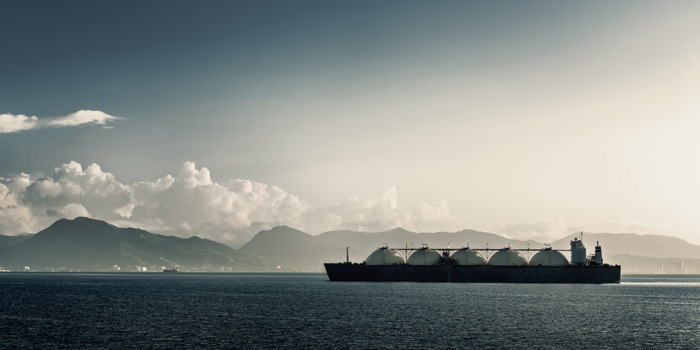
Penspen’s scope covers the technical design of the pipeline backbone and associated hubs, including intermediate valve stations, compressor stations and supporting infrastructure. The project, delivered by Penspen’s engineering teams in Aberdeen and London, will also provide routing support, site selection input, support to the economic evaluation and guidance on regulatory and standards alignment for CO₂ transport within the Swiss context. The project is scheduled to complete in March 2027.

A key objective of the study is to help shape consistent technical and assessment standards for CO₂ pipelines in Switzerland. These standards are intended to support future project development and provide a common reference for operators, regulators and stakeholders. Penspen has extensive engineering experience in long-length pipeline projects for the transportation of CO2, with recent work including the HyNet CO₂ transportation pipeline at Liverpool Bay in the UK and a dense phase CO2 pipeline in the United Arab Emirates.

Darren Bartlett, director of engineering and energy transition at Penspen commented: “This appointment builds on Penspen’s global experience supporting large scale CO₂ transport and storage projects and reflects the growing demand for early phase engineering studies that can underpin the safe and practical deployment of carbon management infrastructure.

“Together with CO2 Pipeline Schweiz AG, we are proud to progress this pioneering carbon transportation system project designed to serve multiple emitters including waste incineration, cement plants and industrial plants across the region, contributing to Switzerland’s national emissions reduction goals.”

Dominik Wlodarczak, CEO, CO2 Pipeline Schweiz AG, said: “We are happy to benefit from Penspen’s comprehensive expertise in designing pipeline systems and from its customer-centred interactive approach.”

For more information visit www.penspen.com

ENGIE and Gulf sign 15-year LNG agreement

ENGIE and Gulf have signed a 15-year liquefied natural gas sales and purchase agreement, strengthening Thailand’s long-term energy security. Under the terms of the agreement, ENGIE will supply approximately 0.8 million tonnes per annum of LNG to Gulf, one of Thailand’s largest private energy companies.

The LNG will be delivered on an ex-ship basis, with deliveries scheduled to commence in 2028. The agreement supports Thailand’s national gas supply strategy by diversifying sources of natural gas, enhancing price and supply stability, and reinforcing the country’s overall energy resilience.

The partnership represents a significant step towards securing reliable and sustainable energy supplies to support Thailand’s continued economic growth.

For more information visit www.engie-sem.com