

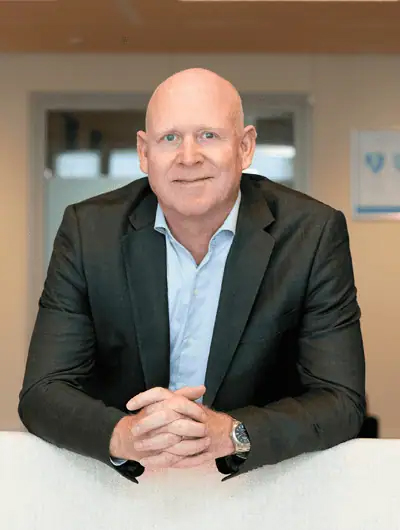
HES has shared an in-depth interview with Paul van Gelder, CEO of HES International, reflecting on a year of significant progress and outlining the company’s strategic direction as it moves further into the energy transition.
Looking back on 2025, van Gelder described the year as a period of major transformation for both HES International and the wider industry. He emphasised that rapid change across the sector demands clear strategic direction combined with decisive action. According to van Gelder, the past year was focused on building strong foundations for new energies, decarbonisation, long-term resilience and a more unified HES organisation.
Several key developments stood out during the year. In France, HES International acquired a new terminal, HES Fos, which van Gelder described as a strategic stepping stone for developments in green steel. He highlighted the importance of decarbonised steel production in supporting Europe’s strategic autonomy and underlined the need for strong domestic steel production capabilities. Another major milestone was achieved at HES Wilhelmshaven Tank Terminal, where the company secured the option to connect to Germany’s hydrogen backbone via the Wilhelmshaven Coastal Line. Van Gelder noted that this development represents more than a technical connection, positioning the terminal as a future New Energies Hub and enabling large-scale hydrogen imports into the German market at a critical time for Europe’s energy transition.
Decarbonisation continues to play a central role in HES International’s strategy. Van Gelder explained that the company is focused on implementation rather than ambition alone. In partnership with Harbour Energy, HES advanced its Carbon Capture and Storage cooperation, developing practical solutions to capture and permanently store CO₂ emissions from industrial sources. He described this collaboration as an important milestone in reducing the sector’s carbon footprint and supporting Europe’s climate objectives with scalable solutions.
HES International’s activities extend beyond hydrogen and carbon capture. In France, the newly established subsidiary HES Med Terminals signed a memorandum of understanding with GravitHy to develop port infrastructure linking GravitHy’s future industrial site in Fos-sur-Mer with HES’s dry bulk terminal. Van Gelder noted that the project demonstrates the essential role ports play in enabling new industrial ecosystems, particularly those focused on green steel and low-carbon value chains.
Operational excellence remains a core priority alongside long-term investment. At HES Bulk Terminal Rotterdam, the full modernisation of the train loading station was completed, upgrading an asset that has been in operation since 1976 and handles up to six million tonnes of iron ore annually. Van Gelder highlighted that by prioritising safety and automation, the terminal now operates a more efficient and future-proof system aligned with evolving customer needs.
Further milestones were achieved within the bulk terminal portfolio. In Poland, HES Gdynia Bulk Terminal officially opened a new fully automated flat grain warehouse, significantly increasing agricultural storage and handling capacity and reinforcing HES’s role within the agri-bulk supply chain.
The year also marked an important step towards the “One HES” vision. As of 2 April, EMO B.V. and European Bulk Services officially rebranded under the HES International name, becoming HES Bulk Terminal Rotterdam and HES Bulk Terminal Maasdelta respectively. In December, SOSERSID SOMARSID also transitioned to HES Med Terminals. Van Gelder explained that the rebranding goes beyond a new visual identity, reflecting a shared culture, aligned standards and a consistent customer promise across the group.
Customer engagement remained a key focus throughout 2025. Van Gelder highlighted the importance of personal relationships, pointing to the opportunity to host clients at HES Bulk Terminal Amsterdam during SAIL Amsterdam 2025 as a valuable moment to step back from daily operations and discuss the future of the industry in a unique maritime setting.
Looking ahead to 2026, van Gelder expressed particular enthusiasm about developments at HES Botlek Tank Terminal, where 65 percent of storage capacity will be dedicated to biofuels from January 2026, surpassing the company’s strategic target more than two years ahead of schedule. Additional new products will be introduced at the terminal, enhancing flexibility and relevance in a rapidly evolving energy market. At the same time, HES International will continue to accelerate its New Energies initiatives, supported by a new brochure outlining how the company enables hydrogen, CCS, biofuels and other emerging energy carriers across its terminal network.
Concluding the interview, van Gelder highlighted the importance of people, partnerships and customer trust in giving him confidence for the future. He expressed pride not only in the projects delivered, but also in building an organisation that is resilient, future-oriented and purpose-driven, with a clear focus on safe operations, responsible investment, pragmatic innovation and leadership at the intersection of industry, logistics and energy.
For more information and the original interview visit www.hesinternational.eu