VTTI TyreLoop Antwerp launches market consultation for tyre-derived oil offtake

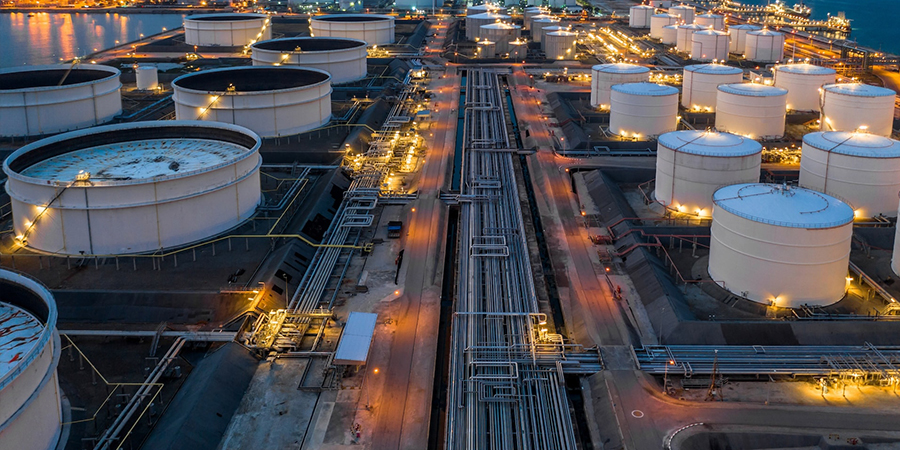
VTTI has announced the development of its TyreLoop project at the existing VTTI Antwerp terminal in Belgium, marking a significant step in the company’s commitment to supporting the circular economy and global energy transition. The innovative initiative focuses on converting end-of-life tyres into valuable secondary raw materials, including Tyre-Derived Oil and Recovered Carbon Black.

Strategic Partnership and Technology

The project represents a major milestone in VTTI’s sustainability efforts, with the company having made substantial progress during the 2025 feasibility phase. VTTI has secured Pyrum Innovation AG as its development partner through a consultancy agreement signed in February, alongside contracting specialised permitting and engineering consultants.

Pyrum brings proven expertise in waste tyre recycling through thermolysis technology, having been selected following a comprehensive evaluation process. The German company’s proprietary and patented thermolysis technology, combined with its successful track record of industrial-scale operations across Europe, positioned it as the ideal partner for this ambitious project.

Market Engagement Initiative

VTTI officially launched a market consultation process on September 9, 2025, seeking potential offtakers for Tyre-Derived Oil produced by the facility. The structured approach involves a two-phase process, with interested parties required to submit expressions of interest by October 17, 2025, at 18:00 CEST.

The consultation process requires participants to complete a comprehensive information package including a non-disclosure agreement and detailed questionnaire. Following the initial phase, VTTI aims to finalise Heads of Agreements with selected partners by the first quarter of 2026, establishing the commercial framework for the project’s operations.

Advanced Production Process

The TyreLoop facility employs a sophisticated three-stage production process designed to maximise resource recovery and minimise environmental impact. The process begins with off-site pre-treatment, where waste tyres undergo shredding and separation to remove steel wire and textile components, leaving clean rubber granulates for processing.

The core thermolysis process occurs on-site through thermal decomposition at high temperatures, producing TDO, pyrolytic gas, and recovered carbon black. The system demonstrates remarkable efficiency by utilising pyrolytic gas to generate electricity for heating the pyrolysis reactors. Notably, the natural rubber content contributes to a minimum 40 percent biogenic component in the resulting pyrolysis oil.

Post-treatment operations transform the solid char fraction through milling and pelletising processes, creating rCB suitable for various applications including new tyre production, mechanical rubber goods, and specialty products such as paints.

Quality Assurance and Certifications

The partnership with Pyrum ensures access to best-in-class pyrolysis technology, enabling consistent TDO quality backed by thousands of tonnes of delivered product from Pyrum’s Dillingen plant. The facility plans to obtain comprehensive certifications including ISCC+, REACH compliance, ISO 9001 and 14001 standards, VDA 6.3, IMUG ESG certification, and ISCC EU designation.

Strategic Location Advantages

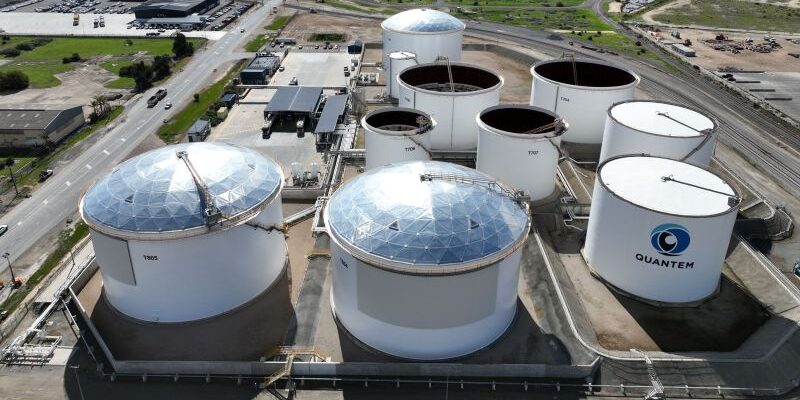
The project benefits from VTTI Antwerp’s strategic positioning within the Port of Antwerp and Bruges, situated at the heart of Europe’s largest integrated chemical cluster. The location provides exceptional connectivity through extensive pipeline networks and proximity to major end-of-life tyre markets in Germany, the United Kingdom, and France.

The existing terminal infrastructure offers significant operational advantages, including established utilities, experienced operators with strong safety cultures, and comprehensive logistics capabilities. The facility supports multiple transportation modes through dedicated train, truck, and ship loading facilities, enabling efficient distribution across European markets.

Broader Sustainability Goals

TyreLoop directly supports VTTI’s ambitious target of generating 50 percent of earnings from transitional and sustainable energies while expanding infrastructure that enables circular economy solutions globally. The project exemplifies the company’s commitment to environmental responsibility by reducing dependence on virgin materials and supporting sustainable industrial practices.

The initiative addresses the growing challenge of waste tyre management while creating valuable secondary raw materials, demonstrating how industrial innovation can simultaneously tackle environmental concerns and create economic value in the transition toward a more sustainable energy future.

For more information visit www.vtti.com

MB Energy and Pattern Energy forge strategic partnership for cleaner energy future

In a significant development for international clean energy cooperation, representatives from Canadian and German energy companies recently convened in Berlin to discuss ambitious plans for green fuel exports and imports between the two nations.

The high-level meeting brought together Philipp Kroepels, director of New Energy at MB Energy, Canada’s newly appointed minister of energy and natural resources Timothy Hodgson, and Frank Davis, assistant vice president of Pattern Energy. Their discussions centered on establishing a comprehensive green energy supply chain that could reshape the transatlantic energy landscape.

Green Hydrogen and Ammonia Production

Pattern Energy, recognised as one of North America’s leading developers and operators of renewable energy facilities, is positioning itself to support green hydrogen production in Canada. The company’s initial focus involves a proposed green ammonia project located at the Port of Argentia, which would serve as a cornerstone for Canada’s emerging clean fuel export industry.

The project represents a strategic approach to converting renewable energy into transportable green molecules, specifically targeting the European market’s growing demand for clean fuel alternatives.

German Import Infrastructure

MB Energy has outlined its role as the European partner in this transatlantic energy corridor, planning to import green molecules to Germany through its established infrastructure network. The company brings significant advantages to the partnership, including extensive import terminal capabilities, sophisticated logistics expertise, and an established customer base spanning heavy industries and transportation sectors.

Central to MB Energy’s strategy is Hamburg, where the company is advancing the permitting process for what would become Germany’s first large-scale ammonia import terminal. This facility would not only serve as an import hub but could also feature onsite conversion capabilities to transform ammonia back into hydrogen, pending regulatory approvals. Such conversion capabilities would enable direct supply to the German gas grid, significantly expanding the potential applications of imported clean fuels.

Strategic Implications

Minister Hodgson emphasised Canada’s commitment to becoming a leading supplier of cleaner energy to Germany, framing the initiative as a crucial component of both nations’ energy transition and industrial decarbonisation strategies. This partnership aligns with broader international efforts to establish reliable supply chains for clean energy alternatives.

The collaboration represents a convergence of Canadian renewable energy generation capabilities with German import infrastructure and market demand, potentially creating a model for future international clean energy partnerships.

The meeting concluded with expressions of commitment from all parties toward advancing this sustainable energy corridor, highlighting the collaborative approach needed to achieve meaningful progress in global energy transition efforts.

For more information visit www.mbenergy.com

Exolum successfully demonstrates hydrogen transportation through conventional pipelines

Exolum has achieved a new milestone that strengthens its position as an innovative company in the energy sector, successfully demonstrating that hydrogen can be transported safely and efficiently through conventional pipelines in the form of Liquid Organic Hydrogen Carriers.

The pilot project involved transporting 400,000 litres of hydrogen liquid carrier over 192 kilometres between Exolum’s Bilbao and Burgos facilities. The operation integrated the product into daily operations without incidents and validated the technical feasibility of hydrogen transportation through existing pipeline infrastructure.

This achievement follows Exolum’s previous successful demonstration of the same technology at its Immingham facilities in the UK, further confirming the viability of LOHC technology for hydrogen transport across different operational environments.

The successful pilot highlights Exolum’s capacity for innovation and reinforces the company’s commitment to developing a more sustainable and competitive energy model. The demonstration represents a significant step forward in proving the commercial viability of using existing pipeline infrastructure for hydrogen transportation, potentially reducing the infrastructure investment required for the hydrogen economy.

The project demonstrates how conventional energy infrastructure can be adapted to support the transition to cleaner energy sources, offering a practical pathway for scaling hydrogen distribution networks whilst leveraging existing assets.

For more information visit www.exolum.com

Gerotto Robotics unveils new case study: A tech shift to save lives

The Ohaaki Geothermal Power Station in New Zealand operates cooling towers that accumulate substantial sludge deposits at their base over time. Historically, de-sludging has been attempted only every four to eight years. Until recently, this meant sending crews into a high-risk confined space, relying on physically demanding manual labour to complete the task and workers being exposed to hazardous conditions.

Dormant sludge releases hydrogen sulphide, which is a toxic, highly flammable gas with a strong odour. The towers’ unique concrete hyperboloid design added another layer of difficulty, restricting access and making removal of sludge both physically demanding and logistically complex.

InterGroup are a leading industrial services provider with over 45 years of operational experience, and were tasked with finding a safer, more efficient solution. They have successfully deployed robotic cleaning systems for over two decades in hazardous environments such as the hydrocarbon tank infrastructure at Marsden Point in Whangarei.

The Gerotto robotic technology selected for this project was supplied by KOR Equipment Solutions, who are the exclusive distributor of Gerotto across Australia and New Zealand.

.

 Challenge: Hazardous Working Conditions

 The primary hazard in the Ohaaki towers was hydrogen sulphide. As the sludge remained dormant over years, this gas built up in the oxygen-poor environment and was ready to be released during disturbance. It posed the threats of being significant toxicity to workers and the risk of ignition.

Under manual methods, crews needed extensive personal protective equipment (PPE) and could only operate in short, closely monitored intervals. Operator fatigue was inevitable, requiring frequent crew changes. This meant more personnel, more shifts, and extended project timelines. Each additional hour spent in the tower increased operational cost and prolonged the cooling tower’s downtime.

The confined space amplified these issues. Heavy hoses, awkward manoeuvring, and poor visibility slowed progress and increased the strain on workers. Meeting both safety requirements and productivity targets in such conditions was a constant challenge.

Solution: Robotic Technology

InterGroup deployed the Gerotto Lombrico S, which is a compact, tracked ROV engineered for hazardous, no-man-entry applications. Its robust, sealed body is capable of manoeuvring through confined, irregular structures while being remotely operated from a safe location outside the danger zone.

Equipped with a live video feed, operators could precisely control the ROV’s movements, guiding it to vacuum sludge directly into a waiting vacuum truck. The removed sludge was then treated with lime for stabilisation before being transported to InterGroup’s Auckland facility for processing and disposal.

This method removed the need for any manual entry into the hazardous zone. It also allowed for continuous operation, as the ROV did not require the rest periods or PPE changes that manual crews needed. Operators could work in shifts, maintaining productivity without placing personnel in harm’s way.

 Project Results

The change in performance was substantial:

  • Productivity – Increased from approximately 13–14 tonnes per shift using manual methods to around 50 tonnes per shift with the Gerotto Lombrico S.
  • Crew Size – Reduced from 8 operators to 3, cutting labour requirements and associated costs.
  • Operational Continuity – Enabled 24/7 operation without safety-driven stoppages.
  • Risk Elimination – Removed the need for crew entry into the hydrogen sulphide environment, significantly lowering exposure risks.

The combination of increased throughput, reduced manpower, and enhanced safety resulted in faster project turnaround and earlier recommissioning of the cooling tower, meeting both operational and safety objectives.

Client Expectations

InterGroup’s client (Contact Energy) had a clear priority to remove the sludge efficiently without compromising worker safety. The Gerotto solution exceeded these expectations by delivering greater productivity, a smaller crew footprint, and a complete elimination of confined space entry.

Vian Smith, head of industrial at InterGroup, remarked:“The Gerotto proved its value on this project, not only exceeding the client’s expectations but also delivering clear safety benefits. By removing the need for manual entry into the hazardous cooling tower our crew faced zero risk. This is a smarter, safer way of working.”

 The Ohaaki project is a clear demonstration of how Gerotto ROV technology, supplied by KOR, can transform operations in hazardous, confined environments. By replacing manual entry with remotely operated systems, operators can:

  • Maintain high productivity in dangerous conditions
  • Remove personnel from direct exposure to harmful gases and unstable structures
  • Complete projects faster and at lower total cost

For industrial cleaning, sludge removal, or confined space maintenance where safety and operational efficiency cannot be compromised, Gerotto ROVs offer a proven, world-class solution.

For more information visit www.gerotto.it or www.intergroup.co.nz


CB&I awarded contract by Lithium Nevada LLC for Thacker Pass

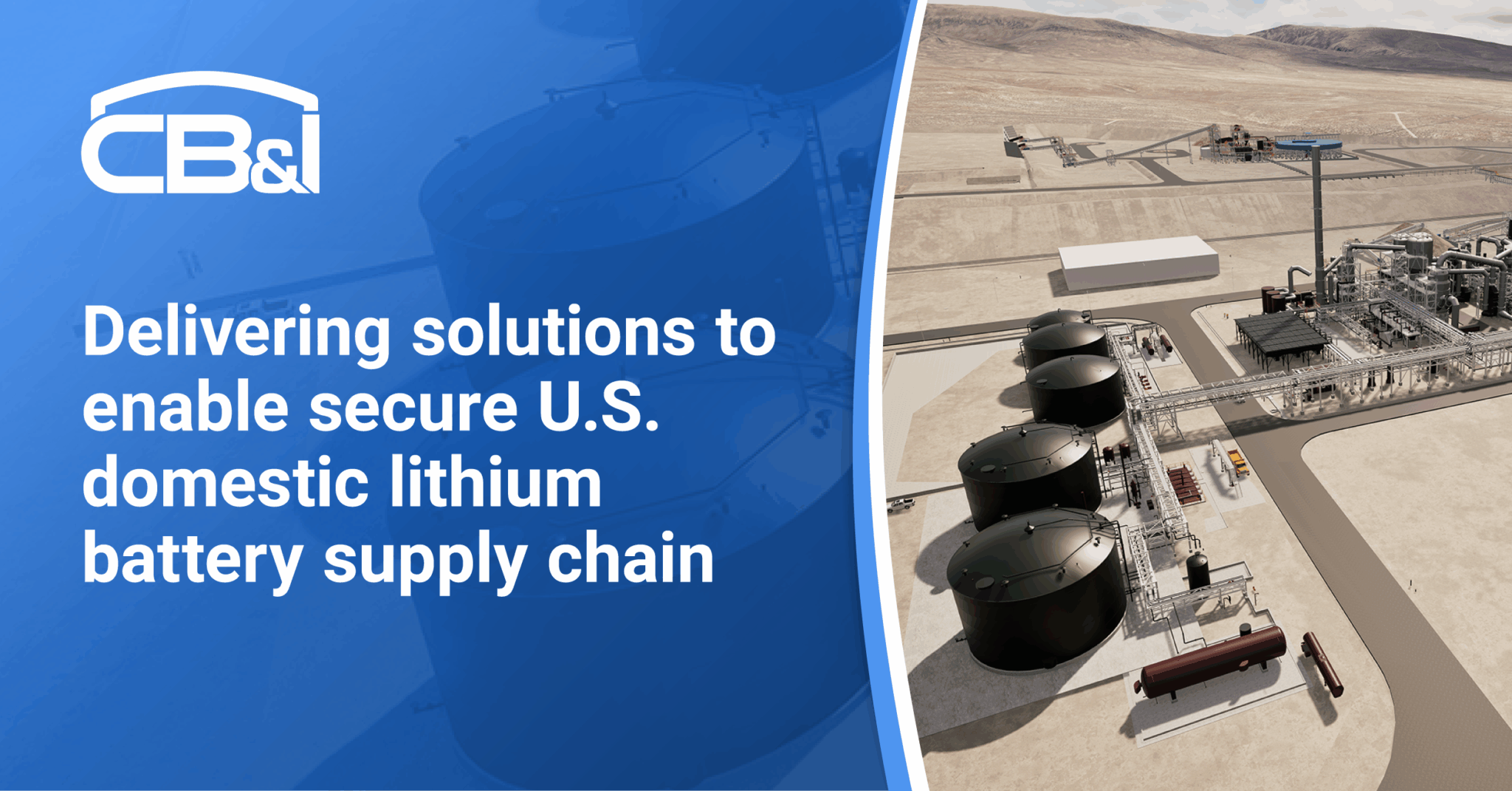
CB&I has announced it has been awarded a large contract by Lithium Nevada LLC, a wholly owned subsidiary of Lithium Americas Corp., to execute the engineering, procurement, fabrication, and construction of 36 flat-bottom atmospheric tanks at Thacker Pass.

Thacker Pass, located in northern Nevada’s Humboldt County, represents the world’s largest known measured lithium resource (measured and indicated) and reserve (proven and probable). The project is managed by engineering, procurement and construction management contractor, Bechtel. As demand for lithium is expected to increase over the next decade, Thacker Pass will play a vital role in reducing US reliance on foreign critical minerals and creating a secure domestic lithium battery supply chain.

Strategic National Significance

Mark Butts, CB&I president and CEO, commented on the award: “We are proud to support Lithium Nevada and Bechtel in delivering a lithium project of national significance. Thacker Pass will help enable a US supply of lithium and create well-paying jobs during construction and operations. Our team is honoured to contribute CB&I’s legacy of tank engineering and construction excellence to this important project.”

The atmospheric storage tanks produced by CB&I for the Thacker Pass lithium mine will store various process solutions, chemicals, and products that are used during the multiple stages of purification to extract lithium from clay deposits. These tanks, designed to meet stringent environmental, seismic, and safety requirements, will be constructed using CB&I’s proprietary field construction methods and state-of-the-art fabrication capabilities.

Industry Partnership

Richard Gerspacher, Lithium Americas executive vice president, Capital Projects, praised the partnership: “CB&I’s expertise in large-scale storage infrastructure for complex industrial processes that require precise specifications and reliability makes them a great fit for Thacker Pass. CB&I’s proven track record, global expertise, and experience with industrial storage solutions makes them an ideal partner for this critical infrastructure component to support North America’s largest lithium mining project.”

Dan Dawson, Bechtel deputy project director, added: “CB&I is an example of the industry-leading contractors and suppliers that have joined the team delivering Thacker Pass. We welcome them to the project and look forward to seeing the tanks take shape as the plant comes together.”

The contract award represents a significant milestone for the Thacker Pass project and underscores CB&I’s role in supporting America’s transition to domestic critical mineral production and battery supply chain independence.

For more information visit www.cbi.com

BW Energy completes Maromba FPSO financing and signs short-term lease for the development rig

BW Energy has announced the completion of a $365 million project finance facility, backed by China Export & Credit Insurance Corporation, to fund the refurbishment and redeployment of the Maromba Floating Production Storage Offloading vessel to the Maromba field offshore Brazil. Separately, the company has finalised a short-term lease with Minsheng Financial Leasing Co., Ltd for the acquisition of the Maromba development rig.

The project finance facility was significantly oversubscribed and will cover approximately 80 percent of the total FPSO project cost. The funding is provided by a syndicate comprising The Export-Import Bank of China, Abu Dhabi Commercial Bank PJSC, Arab Banking Corporation B.S.C., National Bank of Fujairah, and Commercial Bank of Dubai. CEXIM, ADCB and Bank ABC acted as Mandated Lead Arrangers, whilst ADCB and Bank ABC served as Structuring and Advisory and Documentation Banks. Bank ABC is also acting as Technical Advisory Bank.

Financing Structure

The facility carries an interest rate of SOFR plus a margin of 2.8 percent, and is structured as a project finance loan with progressive drawdowns during the construction period followed by a 6.5-year amortisation period after project completion. A commitment fee of 40 percent of the margin applies to undrawn amounts until completion.

Brice Morlot, CFO of BW Energy, commented on the financing: “The closing of this financing marks an important milestone in the Maromba development, demonstrating our ability to secure competitive long-term funding and build strong relationships with a diversified group of new lenders from Middle East and Asia. Furthermore, it reflects our strategy of reusing existing production infrastructure, which not only reduces overall development costs and environmental footprint but also enables access to cost-effective ECA-based financing.”

Equipment Acquisition

The short-term lease with MSFL covers the purchase price of $107.5 million for the Super Gorilla class jack-up rig BW MAROMBA B. The arrangement allows BW Energy to begin preparations for the Maromba field development whilst working with MSFL to finalise the long-term funding. The current lease is structured as a bareboat charter with interest-only payments and will be replaced by a long-term charter once completed.

The completion of this financing package represents a significant step forward in BW Energy’s development of the Maromba field, demonstrating the company’s ability to attract international capital for its offshore Brazilian operations whilst maintaining a focus on sustainable development practices.

For more information visit www.bwenergy.no

ConocoPhillips adds Gulf Coast LNG supply with latest long-term agreement

ConocoPhillips has announced the signing of a long-term sales and purchase agreement to lift 1 million tonnes per annum of liquefied natural gas from the Rio Grande LNG project under development by NextDecade Corporation, near Brownsville, Texas.

Under the agreement, ConocoPhillips will offtake LNG over a 20-year term on a free-on-board basis, subject to NextDecade making a positive final investment decision on Train 5.

Khoa Dao, chief commercial officer for ConocoPhillips, commented on the partnership: “ConocoPhillips is pleased to announce our agreement with a premier operator in NextDecade at Rio Grande LNG, where we will be a key foundation customer for Train 5. We’re excited to help move this project closer to FID while advancing our global LNG portfolio strategy and 10 to 15 MTPA offtake ambition. We continue to build scale and diversification, adding supply and sales points offering further optionality for optimisation.”

Technology Integration

Additionally, ConocoPhillips’ extensive expertise and experience in heavy hydrocarbon removal from feed gas is being utilised at the Rio Grande LNG facility through its OCP CryoSep® technology. OCP CryoSep provides targeted recovery and/or removal of heavy hydrocarbons that would otherwise freeze or lead to high BTU content in LNG and is offered as a stand-alone unit for any LNG liquefaction process or as an integrated unit for the Optimised Cascade® process LNG trains.

ConocoPhillips continues to enhance its flexible and reliable LNG supply network to meet growing energy demand. Most recently, the company announced a long-term offtake agreement for 4 MTPA of LNG from Port Arthur LNG Phase 2, which is in addition to a prior agreement for 5 MTPA of LNG from Phase 1.

The Rio Grande LNG agreement represents another strategic step in ConocoPhillips’ expansion of its global LNG portfolio, reinforcing its position as a key player in the international liquefied natural gas market whilst supporting the development of major US export capacity.

For more information visit www.conocophillips.com

ADNOC Gas to join FTSE emerging index, unlocking over $250 million in fund investment

ADNOC Gas plc and its subsidiaries has announced that its shares have been selected for inclusion in the FTSE Emerging Index —part of the FTSE Russell Global Equity Index Series —with inclusion effective when markets open on 22 September 2025.

ADNOC Gas believes this milestone will enhance its visibility among global institutional investors, broaden its shareholder base, and support liquidity on the Abu Dhabi Securities Exchange (ADX). Market analysts estimate that inclusion may result in up to $250 million in incremental investment.

The FTSE Emerging Index is widely tracked by international investors and measures the performance of large and mid-cap companies across advanced and secondary emerging markets within the FTSE GEIS.

Strategic Growth Trajectory

Fatema Mohamed Al Nuaimi, chief executive officer of ADNOC Gas, commented on the development: “Joining the FTSE Emerging Index is a strong endorsement of ADNOC Gas’ fundamentals and consistent delivery on our strategy. This achievement reinforces our ambition to diversify our institutional investor base, enhance liquidity, and elevate our global investment profile. It follows our recent inclusion in the MSCI Emerging Markets Index and reflects market confidence in our growth trajectory.”

She added: “With a robust pipeline of strategic projects, including $20 billion in planned capital expenditure, and a clear pathway to deliver over 40 percent EBITDA growth by 2029 versus 2023, we remain committed to creating long-term, sustainable value for our shareholders.”

With greater exposure to institutional investors, ADNOC Gas expects increased liquidity, deeper market penetration, and enhanced stock visibility, further solidifying its position as a leading energy player in the global market. The inclusion follows the company’s recent addition to the MSCI Emerging Markets Index, demonstrating continued recognition of its strategic growth initiatives and market performance.

For more information visit www.adnocgas.ae

TOYO awarded first phase of major overhaul project for Turkmenistan Gas Chemical complex

Toyo Engineering Corporation, in collaboration with Rönesans Endüstri Tesisleri – a member of Rönesans Holding, a leading global contracting and investment group headquartered in Turkey—has been awarded the first phase of a major overhaul project for a large-scale gas chemical complex by Turkmenhimiya (TH). TH is a state-owned enterprise responsible for the production and distribution of chemical products in Turkmenistan.

Since its founding in 1961, TOYO has been actively engaged in global projects across the CIS region and neighbouring countries, having constructed 46 petrochemical and fertiliser plants to date. In Turkmenistan, TOYO participated in the construction of the Kiyanly Polymer Plant in 2018, located in the Turkmenbashi district of Balkan Province, which includes gas separation, ethylene, polypropylene, and high-density polyethylene production facilities.

Strategic Partnership Development

In August 2024, TOYO signed a memorandum of understanding with TH to investigate the possibility of collaboration on future investment projects, primarily focused on gas-processing developments. The newly awarded project marks the first initiative under this agreement.

Following continuous discussions with TH, TOYO and its consortium partner RET have secured the contract. Under the arrangement, TOYO will be responsible for the detailed planning, engineering, and partial procurement of equipment and materials for the gas separation unit, ethylene production unit, and polypropylene production unit. RET will oversee the major overhaul of the high-density polyethylene production unit and the utility unit.

TH is also planning to award TOYO with RET the next phase of the major overhaul project for the large-scale gas chemical complex in Turkmenistan in order to reliably start up production.

TOYO aims to contribute to the development of Turkmenistan’s chemical industry by leveraging its extensive experience and expertise in gas chemical and fertiliser plant construction for future projects in the country. The project reinforces TOYO’s commitment to supporting industrial development across the CIS region through its established technical capabilities and strategic partnerships.

For more information visit www.toyo-eng.com

Square Robot launches high temperature inspection robot with C1D2 certification

Square Robot, Inc., a global leader in robotic tank inspections, has developed its newest high temperature inspection robot, the SR-3HT, which has formally received NEC/CEC Class I Division 2 (C1D2) certification. The SR-3HT is now commercially available and capable of inspecting aboveground storage tanks where product storage temperatures range from -10°C to 55°C (14°F to 131°F).

The C1D2 certification was issued by FM Approvals, a third-party Nationally Recognised Test Laboratory, confirming the system is safe for use in hazardous locations. This certification and the expanded capabilities of the SR-3HT provides a solution for tank owners requiring onstream robotic tank inspections for tanks with products stored at elevated temperatures that sit outside Square Robot’s previous operating range of 0°C to 40°C (32°F to 104°F).

David Lamont, Chief Executive Officer, commented on the development: “Our Engineering team developed the SR-3HT in response to significant client demand in both the US and international markets. We frequently encounter higher temperatures due to both elevated process temperatures and high ambient temperatures, especially in the hotter regions of the world, such as the Middle East. The SR-3HT employs both active and passive cooling technology, greatly expanding our operating envelope. A great job done (again!) by our Engineers delivering world leading technology in record time.”

The SR-3HT represents the seventh certified model variant in Square Robot’s growing portfolio of robotic excellence. Beginning with the C1D2 SR-1 inspection robot, followed by the SR-3 robot and the Side Launcher system—which achieved C1D1 certification earlier this year—Square Robot continues to expand its robotic fleet capabilities.

The launch of the SR-3HT addresses a significant market need for inspection solutions in high-temperature environments, particularly benefiting operators in regions with extreme ambient conditions or elevated process temperatures.

For more information visit www.squarerobot.com

Vopak Terquimsa divests terminal in Barcelona

Vopak Terquimsa, a joint venture in which Vopak holds a 50 percent stake, has completed the divestment of its Barcelona terminal to Tradebe Port Services. The facility primarily serves the storage of petroleum products, chemicals and vegetable oils.

The Barcelona terminal was considered less strategically attractive for Vopak’s operations. Following the divestment, Vopak retains its 50 percent shareholding in Vopak Terquimsa Tarragona, a terminal strategically positioned within the industrial cluster of Tarragona, Spain.

The company expects to report an exceptional gain from the transaction in the third quarter of 2025. However, Vopak has indicated that the impact of this divestment will not be material to its 2025 outlook.

The disposal reflects Vopak’s continued focus on optimising its portfolio and concentrating resources on strategically important assets within key industrial regions.

For more information visit www.vopak.com

KN Energies supports launch of Latvia’s first CO₂ capture pilot facility

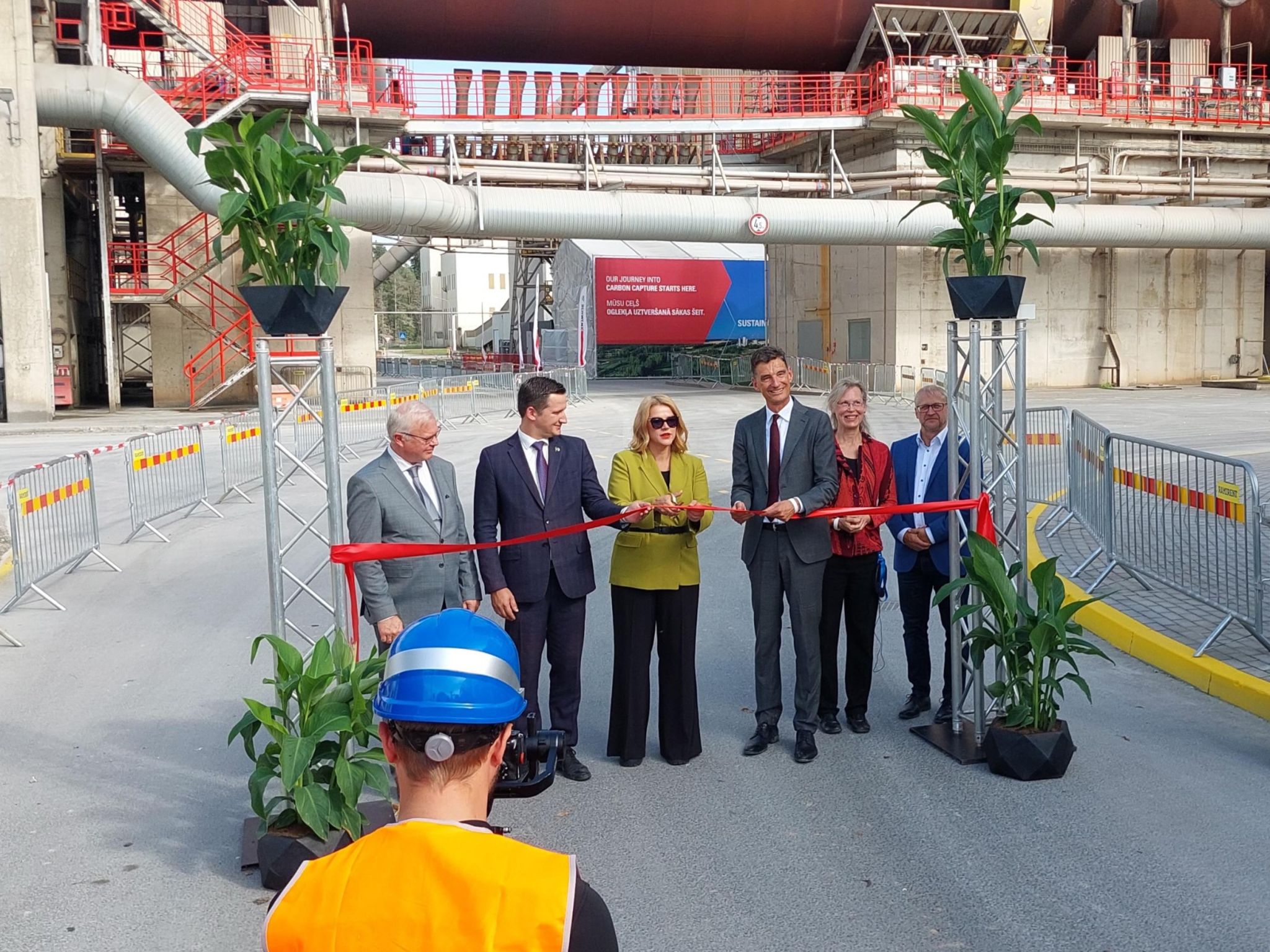
KN Energies has joined industry leaders, innovators, and government representatives in Brocēni, Latvia, to mark a significant milestone in the Baltic region’s journey toward climate neutrality with the launch of SCHWENK Latvija’s first CO₂ capture pilot facility.

The company was represented at the event by Justinas Jazbutis, head of decarbonisation Projects, and Paulius Kažukauskas, senior business development manager. Their participation underscores KN Energies’ strategic commitment to developing carbon capture and storage solutions that support industrial decarbonisation across the Baltic states.

The Brocēni cement plant, which accounts for a substantial portion of Latvia’s industrial CO₂ emissions, is currently testing several post-combustion capture technologies, including solutions from Norway’s Capsol Technologies ASA, to identify the most effective pathway toward large-scale CO₂ reduction. SCHWENK’s ambitious target to capture up to 800,000 tonnes of CO₂ annually by 2030, with an additional 800,000 tonnes planned by sister company Akmenės cementas, establishes a significant precedent for the entire region.

“We are extremely excited about our partners’ success,” commented Justinas Jazbutis. “The Brocēni cement plant, which accounts for a significant share of Latvia’s industrial CO₂ emissions, is now testing several post-combustion capture technologies — including solutions from Norway’s Capsol Technologies ASA — to identify the most effective path toward large-scale CO₂ reduction. SCHWENK’s ambition to capture up to 800,000 tonnes of CO₂ annually by 2030 and later on another 800,000 tonnes of CO₂ by sister company Akmenės cementas, sets a powerful precedent for the entire region.”

Paulius Kažukauskas added: “By piloting different capture technologies, SCHWENK Latvija is paving the way for large-scale CO₂ reduction. The CCS Baltic Consortium project, being developed by KN Energies, will ensure that once these technologies are ready for deployment, the region has a reliable CO₂ transportation and storage network in place — turning today’s pilots into tomorrow’s industrial decarbonisation solutions.”

KN Energies has congratulated SCHWENK Latvija and all partners involved for their leadership and vision, expressing anticipation for continued collaboration to make CCS a reality in the region. The pilot facility represents a crucial step forward in the Baltic states’ industrial decarbonisation efforts and demonstrates the potential for large-scale carbon capture implementation across the region’s heavy industry sector.

For more information visit www.kn.lt

Monkey Island LNG selects ConocoPhillips’ optimised Cascade® process technology

Monkey Island LNG has announced the selection of ConocoPhillips’ Optimised Cascade® Process liquefaction technology for its planned 26 million tonnes per annum natural gas liquefaction and export facility in Cameron Parish, Louisiana. The technology selection represents a major milestone in the project’s development and reinforces the company’s commitment to operational excellence and competitive LNG supply capabilities.

Strategic Technology Selection

Following an extensive technology evaluation study analysing multiple liquefaction solutions, Monkey Island LNG selected the Optimised Cascade® process based on its superior operational characteristics. The technology’s operational flexibility, rapid restart capabilities, high efficiency, and proven performance above nameplate capacity were identified as key factors in the selection decision.

The comprehensive technology assessment demonstrates Monkey Island LNG’s methodical approach to project development, ensuring optimal technology integration for long-term operational success. The selection validates ConocoPhillips’ Optimized Cascade® technology as a leading solution for large-scale LNG projects requiring reliable, efficient performance.

Competitive Advantage and Value Proposition

Greg Michaels, CEO of Monkey Island LNG, emphasised the technology’s role in the company’s strategic objectives: “The ConocoPhillips Optimised Cascade Process will enable Monkey Island LNG to provide customers with long-term, secure, and competitively priced LNG supply. The decision marks a major milestone in advancing Monkey Island LNG’s mission to deliver TrueCost LNG™- a radically transparent, cost-efficient model that eliminates hidden fees and aligns incentives across the LNG value chain.”

The TrueCost LNG™ approach represents an innovative commercial model designed to address traditional LNG industry pricing structures. By integrating proven liquefaction technology with transparent pricing mechanisms, Monkey Island LNG positions itself to deliver enhanced value proposition to customers whilst maintaining competitive market positioning.

Advanced Technology Integration

ConocoPhillips’ Optimised Cascade® technology brings proven performance capabilities to the Monkey Island LNG project, with operational benefits including enhanced efficiency and reliability characteristics. The technology’s ability to operate above nameplate capacity provides additional operational flexibility and potential revenue optimisation opportunities.

Darren Meznarich, who leads ConocoPhillips LNG Technology and Licensing, highlighted the technology’s advanced capabilities: “ConocoPhillips is pleased to support Monkey Island LNG with our new mega-module Optimised Cascade template, designed to reduce costs, plot size and overall project risks for our clients.”

The mega-module template approach offers significant project development advantages, including reduced construction complexity, optimised facility footprint, and enhanced risk mitigation. These characteristics support accelerated project development timelines whilst maintaining operational reliability and cost efficiency.

Strategic Location and Infrastructure

The 246-acre project site on Monkey Island in Cameron Parish, Louisiana, provides strategic advantages, including access to deepwater shipping channels and abundant US natural gas supply sources. This location positioning enables efficient feedgas supply and product export capabilities essential for large-scale LNG operations.

The site’s proximity to established natural gas infrastructure and deepwater port facilities creates operational synergies that support competitive project economics. The integration of advanced liquefaction technology with strategic location advantages positions Monkey Island LNG to serve global LNG markets efficiently.

Project Development Milestone

The technology selection represents a critical advancement in Monkey Island LNG’s project development timeline, establishing the technical foundation for detailed engineering and construction planning phases. The integration of Optimised Cascade® technology reinforces the project’s commitment to operational reliability and efficiency.

With proven liquefaction technology secured, Monkey Island LNG can advance project development activities including detailed design, procurement planning, and construction preparation. The technology selection provides clarity for project stakeholders and supports continued investment and development momentum.

Market Position and Industry Impact

The selection of ConocoPhillips’ Optimised Cascade® technology strengthens Monkey Island LNG’s position in the competitive US Gulf Coast LNG development landscape. The combination of proven technology, strategic location, and innovative commercial approach creates differentiation in an increasingly crowded market.

The project’s 26 MTPA capacity positions Monkey Island LNG among major US LNG export developments, with the potential to make significant contributions to US energy export capabilities. The facility’s planned capacity and operational characteristics support long-term supply security for international customers seeking reliable LNG sources.

Technology Partnership and Innovation

The partnership with ConocoPhillips establishes a collaborative relationship between a proven technology provider and an innovative project developer. ConocoPhillips’ extensive experience in LNG technology development and licensing provides Monkey Island LNG with access to continuous technological improvements and operational support.

The mega-module approach represents advanced engineering solutions that address traditional LNG project challenges, including construction complexity and project risk management. This technological innovation supports improved project economics whilst maintaining operational performance standards essential for competitive LNG supply.

For more information visit www.monkeyislandlng.com

Noord Natie Odfjell Antwerp Terminal secures ISCC certifications and Voka Charter for 2025

Noord Natie Odfjell Antwerp Terminal (NNOAT) has reached significant sustainability milestones in 2025, securing dual ISCC certifications whilst earning recognition through the Voka Charter for Sustainable Entrepreneurship. These achievements demonstrate the terminal’s comprehensive approach to environmental responsibility and position it as a leader in sustainable bulk liquid storage operations within the Port of Antwerp.

Dual ISCC Certification Achievement

NNOAT has successfully obtained both ISCC PLUS and ISCC EU certifications, establishing the terminal as a certified facility for handling sustainable and renewable materials. The ISCC PLUS certification covers circular and bio-based materials outside EU legislative scope, ensuring that recycled and renewable raw materials stored at the facility maintain traceability and sustainability standards throughout the entire supply chain.

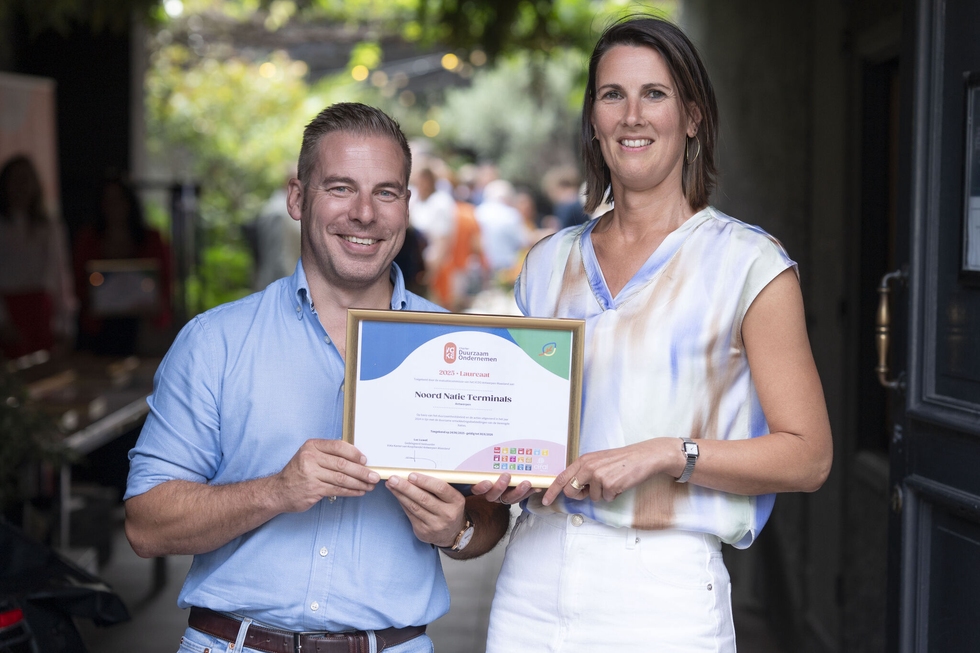
Operations manager Karel Verbist and sustainability & environmental manager Wendy Hendrickx
The parallel ISCC EU certification addresses European regulatory requirements for sustainable biomass and biofuels, guaranteeing that products handled at NNOAT contribute to climate objectives whilst meeting stringent environmental standards. This dual certification approach enables the terminal to serve diverse market segments whilst maintaining comprehensive sustainability compliance.

The certifications validate NNOAT’s operational systems and procedures, confirming the facility’s capability to handle sustainable materials with appropriate documentation and traceability protocols. This achievement strengthens the terminal’s position as a trusted partner for companies seeking certified sustainable storage solutions.

Voka Charter Recognition Renewed

NNOAT has been named a laureate of the Voka Charter for Sustainable Entrepreneurship for 2025, following a positive evaluation of the terminal’s 2024 sustainability initiatives by an external assessment committee. This recognition reflects the terminal’s consistent commitment to measurable environmental and social improvements.

The renewed charter award demonstrates NNOAT’s ability to build upon previous achievements through continuous improvement and innovation in sustainability practices. The external evaluation process validates the terminal’s systematic approach to implementing and monitoring environmental initiatives.

Comprehensive Sustainability Implementation

Over the past year, NNOAT implemented ten new initiatives aligned with the United Nations’ 17 Sustainable Development Goals (SDGs), addressing diverse areas including energy efficiency, biodiversity, well-being, and education. This comprehensive approach demonstrates the terminal’s understanding of sustainability as a multifaceted challenge requiring integrated solutions.

The SDG-aligned initiatives reflect NNOAT’s strategic approach to sustainability, connecting operational improvements with global environmental and social objectives. This framework enables the terminal to measure and communicate its contributions to broader sustainability goals whilst addressing specific operational challenges.

Strategic Market Position

The combination of ISCC certifications and Voka Charter recognition positions NNOAT as a responsible and forward-thinking partner within the Port of Antwerp’s industrial ecosystem. These achievements enhance the terminal’s competitive advantage in serving clients requiring certified sustainable storage solutions.

The certifications enable NNOAT to participate in growing markets for sustainable and renewable materials, supporting the transition towards circular economy principles in bulk liquid storage operations. This positioning aligns with evolving customer requirements and regulatory expectations for environmental performance.

Future Sustainability Commitments

NNOAT has committed to implementing an additional ten sustainability actions in the coming year, demonstrating ongoing dedication to environmental improvement and innovation. This forward-looking approach ensures continued progress towards enhanced environmental performance and operational excellence.

With ISCC certifications established and the Voka Charter renewed, the terminal is well-positioned to contribute further to Odfjell’s broader sustainability objectives whilst supporting the development of circular economy principles within the Port of Antwerp.

Industry Leadership and Impact

The achievement of dual ISCC certifications places NNOAT among the leading terminals in Europe for certified sustainable material handling. This recognition strengthens the facility’s role in supporting the transition towards renewable and circular materials in industrial applications.

The terminal’s comprehensive approach to sustainability, combining operational certifications with systematic initiative implementation, establishes a benchmark for environmental responsibility in bulk liquid storage operations. NNOAT’s success demonstrates the potential for industrial facilities to achieve significant environmental improvements through strategic planning and systematic implementation.

The recognition through the Voka Charter further validates the terminal’s contribution to regional sustainability objectives whilst strengthening its reputation as a responsible industrial partner committed to long-term environmental stewardship and continuous improvement.

For more information visit www.odfjell.com

Lee Company announce new cryogenic check valve operates at fluid temperatures down to – 320˚f

The Lee Company is pleased to announce the release of the Cryogenic Check Valve – the first product in our extensive lineup to be qualified for operation at temperatures down to -320˚F. This milestone reinforces The Lee Company’s position as a global leader in precision fluid control and marks the start of active and ongoing testing at our in-house cryogenic test facilities.

While the standard acceptance testing is performed at room temperature as a cost and time-saving measure, qualification testing for this innovative check valve was performed with the valve submerged in liquid nitrogen. This testing confirmed leakage results of less than 10 SCCM of helium at -320˚F.

The Cryogenic Check Valve incorporates fitting ends per AS standards, making it easy to integrate into existing systems. The valve’s materials were carefully selected for their compatibility with hydrogen and other fluids used at cryogenic temperatures. In addition, the valve’s adaptable construction supports material changes to suit a wide range of environments.

Key Features of the Cryogenic Check Valve:

  • Temperature range: -320°F to 275°F
  • Pressure rating: up to 5000 psi
  • Leakage: <10 SCCM helium at -320°F
  • Lohm resistance: 85 Lohms (fully open) (Cv = 0.24)
  • Fitting interfaces: AS4395E04 (inlet) & AS4395E06 (outlet)
  • Materials: Nitronic 50, 316 CRES, A286 CRES, cobalt alloy, polyimide seat

This product is ideal for use in aerospace and other mission-critical systems that handle ultra-low temperature fluids, such as satellite propulsion systems. Applications include cryogenic propulsion, thrust vector control, and thermal management loops using liquid hydrogen or oxygen, as well as precision fluid control in life support and fuel management systems.

For more information visit www.theleeco.uk

Keith Shoemaker to join Coastal Bend LNG as CCO

Coastal Bend LNG announced today the appointment of Keith Shoemaker as chief commercial officer, effective 1st October 2025. The appointment brings comprehensive natural gas industry experience to the company during a period of significant sector evolution and international market expansion.

Extensive Industry Experience

Shoemaker’s career encompasses the complete natural gas value chain, providing him with deep commercial expertise and strategic vision across multiple industry segments. His professional journey began as a pipeline engineer before progressing through increasingly senior roles in transportation, physical and financial trading, risk management, and hedging operations.

The appointee subsequently assumed leadership positions at prominent natural gas producers, including Rice Energy and EQT, where he developed a comprehensive understanding of upstream operations and commercial strategy. This breadth of experience across every stage of the natural gas industry positions him as a valuable strategic asset for Coastal Bend LNG during a pivotal period for the sector.

Strategic Vision and Market Approach

Shoemaker expressed enthusiasm about joining the Coastal Bend LNG leadership team, citing the organisation’s entrepreneurial approach and environmental focus. “I’m impressed by the entrepreneurial spirit of the management team and the project’s intentional focus on reducing carbon impact,” he stated. “I’m excited to join a team that shares my belief in LNG’s ability to expand global access to reliable energy whilst addressing the challenge of greenhouse gas emissions.”

His appointment reflects Coastal Bend LNG’s strategic emphasis on combining commercial excellence with environmental responsibility, aligning with industry trends towards lower-carbon energy solutions and sustainable development practices.

Commercial Leadership Mandate

In his new role as chief commercial officer, Shoemaker will concentrate on expanding Coastal Bend LNG’s international market presence and strengthening the company’s competitive position as the LNG industry continues to evolve. His mandate encompasses developing commercial strategies that leverage emerging market opportunities whilst supporting the company’s environmental objectives.

The appointment comes at a critical juncture for the global LNG sector, with increasing demand for reliable energy sources coinciding with growing emphasis on reduced greenhouse gas emissions. Shoemaker’s comprehensive industry experience positions him to navigate these complex market dynamics whilst building strategic partnerships and expanding market access.

Industry Context and Market Positioning

The timing of Shoemaker’s appointment reflects the dynamic nature of the global LNG market, where companies are increasingly required to balance commercial growth with environmental stewardship. His background in both traditional natural gas operations and strategic commercial development provides Coastal Bend LNG with leadership capabilities suited to current industry challenges.

The appointment underscores Coastal Bend LNG’s commitment to attracting experienced industry professionals who can drive commercial success whilst supporting the company’s sustainability objectives. Shoemaker’s track record in leadership roles at established natural gas producers demonstrates his ability to execute complex commercial strategies in competitive market environments.

Future Strategic Direction

With Shoemaker’s appointment, Coastal Bend LNG strengthens its commercial leadership team as the company pursues international market expansion and enhanced industry positioning. His comprehensive understanding of natural gas markets, combined with experience in risk management and strategic trading, provides the company with enhanced capabilities for navigating complex global energy markets.

The new Chief Commercial Officer’s passion for leveraging LNG to improve global energy access whilst addressing environmental challenges aligns with industry trends towards sustainable energy development. His leadership is expected to support Coastal Bend LNG’s objectives of expanding reliable energy access whilst maintaining focus on reduced carbon impact and environmental responsibility.

The appointment reflects the company’s strategic approach to building leadership capabilities that can effectively address evolving market demands whilst supporting long-term commercial growth and environmental stewardship objectives.

For more information visit www.coastalbendlng.com

LBC Seabrook goes live with UAB-Online in Houston, USA

Digital maritime platform UAB-Online has successfully completed its first United States deployment at LBC Tank Terminals’ Seabrook facility in Houston, marking a significant milestone in the company’s North American market expansion strategy. The implementation represents the platform’s inaugural entry into the competitive US maritime technology sector, demonstrating its capability to transform traditional terminal operations through comprehensive digitalisation.

Strategic Market Entry Achievement

The LBC Seabrook Terminal deployment establishes UAB-Online as the first digital coordination platform to fully replace paper-based vessel coordination systems at a major US liquid bulk storage facility. This market entry validates the platform’s technological capabilities and positions UAB-Online to capitalise on growing demand for maritime digitalisation across North American ports.

The successful US launch builds on UAB-Online’s established presence in international markets, with the Houston implementation serving as a reference site for future North American expansion opportunities. The partnership with LBC Tank Terminals provides UAB-Online with access to one of the world’s busiest maritime corridors and a strategic foothold in the US energy infrastructure sector.

Comprehensive Platform Capabilities

UAB-Online’s implementation at LBC Seabrook demonstrates the platform’s ability to address complex terminal operational challenges through integrated digital workflows. The system replaces traditional coordination methods involving phone calls, emails, and paper forms with automated processes that accelerate operations while strengthening safety protocols and improving overall efficiency.

The platform’s core functionality encompasses complete vessel coordination management, from initial Notice of Readiness submissions through final departure procedures. Digital checklists, including DOS (Declaration of Security), DOI (Declaration of Inspection), and SSSCL (Ship/Shore Safety Checklist), ensure compliance with international maritime regulations while reducing human error and operational risks.

Phased Implementation Excellence

The structured three-phase rollout strategy showcased UAB-Online’s methodical approach to digital transformation, minimising operational disruption while maximising adoption success. Phase one established foundational integration for dossier creation and Notice of Readiness submissions, creating immediate operational improvements.

Phase two introduced enhanced documentation sharing capabilities through PDF format integration, improving transparency and stakeholder communication. The final phase delivered complete digital document creation and advanced checklist functionality, including ISGOTT 6 protocols and comprehensive operational arrangements management.

This phased approach allowed LBC Tank Terminals to gradually transition from legacy systems while maintaining operational continuity, demonstrating UAB-Online’s understanding of complex terminal operational requirements and change management best practices.

Operational Performance Improvements

Early implementation results demonstrate UAB-Online’s significant impact on terminal efficiency metrics. Berth turnaround times have improved by several hours per vessel call, directly translating to increased terminal throughput and enhanced customer satisfaction. The platform’s real-time coordination capabilities have eliminated traditional coordination delays associated with manual communication methods.

Safety performance improvements include a significant reduction in incidents linked to miscommunication, validating UAB-Online’s standardised workflow approach. The platform’s comprehensive logging and verification capabilities provide complete operational transparency, creating predictability for shipping lines and enhanced reliability for terminal customers.

Pre-transfer coordination efficiency has been dramatically enhanced through digital check completion, eliminating traditional paperwork bottlenecks and reducing administrative overhead. These improvements demonstrate UAB-Online’s ability to deliver measurable operational value while supporting regulatory compliance requirements.

Technology Leadership and Innovation

The successful LBC Seabrook implementation positions UAB-Online as a technology leader in maritime digital transformation, particularly in the complex liquid bulk storage sector. The platform’s ability to integrate with existing terminal infrastructure while delivering comprehensive digitalisation demonstrates advanced technical capabilities and industry expertise.

UAB-Online’s real-time data sharing and collaborative workflow features address critical maritime industry challenges, including communication gaps, compliance verification, and operational coordination complexity. The platform’s design philosophy emphasises stakeholder integration, ensuring all parties involved in vessel operations access identical real-time information and standardised processes.

Strategic Partnership and Market Position

The collaboration with LBC Tank Terminals provides UAB-Online with access to a global network of liquid bulk storage facilities, creating opportunities for platform expansion across multiple international locations. LBC Tank Terminals’ selection of UAB-Online validates the platform’s competitive advantages in the maritime technology sector.

The partnership demonstrates UAB-Online’s ability to work with leading terminal operators to achieve digital transformation objectives while maintaining operational excellence. This reference relationship strengthens UAB-Online’s position for future partnerships with major maritime infrastructure operators seeking digital modernisation solutions.

Market Impact and Future Expansion

The Houston Ship Channel implementation provides UAB-Online with exposure to one of the world’s most significant maritime trade corridors, handling more tonnage than any other US port. This strategic location offers visibility to international shipping lines, port authorities, and energy companies evaluating digital transformation solutions.

UAB-Online’s successful deployment at LBC Seabrook creates a foundation for expanded US market penetration, particularly as American ports invest in digital infrastructure to maintain competitive advantages in global trade. The platform’s proven performance in Houston’s demanding operational environment establishes credibility for future deployments across North American maritime facilities.

The implementation supports broader Houston Ship Channel modernisation efforts, complementing physical infrastructure investments with advanced digital capabilities. UAB-Online’s contribution to operational efficiency and safety aligns with port authority objectives to enhance Houston’s position as a global energy and chemical trade hub.

Competitive Advantages and Value Proposition

UAB-Online’s success at LBC Seabrook demonstrates the platform’s ability to deliver immediate operational improvements while supporting long-term strategic objectives. The combination of efficiency gains, safety enhancements, and compliance improvements creates compelling value propositions for terminal operators facing increasing competitive pressures.

The platform’s comprehensive approach to maritime digitalisation, encompassing everything from initial vessel coordination through final documentation, positions UAB-Online as a complete solution provider rather than a point solution vendor. This holistic capability differentiates the platform in a market increasingly demanding integrated digital transformation approaches.

For more information visit www.uab-online.com

Vår Energi achieves major production milestone with 400,000 barrels per day

Norwegian energy company Vår Energi has reached a significant operational milestone by achieving production levels of 400,000 barrels of oil equivalent per day (kboepd), surpassing the target ahead of schedule. The achievement represents a major validation of the company’s operational capabilities and strategic execution, positioning Vår Energi among Norway’s leading oil and gas producers.

Accelerated Production Growth

The production milestone has been driven primarily by the successful ramp-up of the Jotun FPSO (Floating Production, Storage and Offloading) vessel at the Balder field, which continues to exceed performance expectations. The facility’s ahead-of-schedule performance trajectory indicates peak production is now anticipated during September, earlier than originally projected.

The accelerated timeline demonstrates Vår Energi’s effective project management and operational excellence in bringing major production assets online. The Jotun FPSO’s performance has become a cornerstone of the company’s current production capacity, showcasing advanced offshore production technology and operational efficiency.

Portfolio-Wide Performance Excellence

Beyond the Balder field’s exceptional performance, Vår Energi’s achievement reflects strong deliveries across its broader asset portfolio. The company’s diversified production base has contributed to sustained high-level output, demonstrating the resilience and quality of its operational infrastructure.

This portfolio-wide performance indicates effective asset management and optimisation across multiple fields and production systems. The consistent delivery from various assets provides operational stability and reduces dependency on single-field production, creating a robust foundation for sustained output levels.

Long-Term Production Strategy

Looking ahead, Vår Energi aims to maintain production within the 350-400 kboepd range over the long term, supported by an extensive development pipeline. The company’s strategic planning encompasses approximately 30 early-phase projects, creating a substantial foundation for sustained production levels and future growth opportunities.

This project portfolio represents significant long-term value potential, with early-phase developments providing multiple pathways for production maintenance and expansion. The robust pipeline demonstrates Vår Energi’s successful exploration and development activities, creating options for continued operational growth.

Strategic Value Creation Framework

The production achievement aligns with Vår Energi’s strategic objective of delivering long-term, sustainable value creation for all stakeholders. The company’s ability to exceed production targets ahead of schedule demonstrates operational excellence and effective capital deployment in high-value projects.

The milestone validates Vår Energi’s integrated approach to asset development, combining advanced technology deployment with operational expertise to maximise production efficiency and economic returns. This strategic framework positions the company to capitalise on favourable market conditions while maintaining operational flexibility.

Operational Excellence Recognition

Vår Energi’s success reflects the contributions of its workforce and strategic partnerships with suppliers and service providers. The company’s collaborative approach to operations has enabled the execution of complex offshore projects while maintaining safety standards and operational efficiency.

The recognition of dedicated teams and partners highlights Vår Energi’s commitment to stakeholder collaboration and shared success. This collaborative model supports continued operational excellence and creates foundations for future project success across the company’s development portfolio.

Market Position and Industry Standing

Achieving 400,000 barrels per day of production establishes Vår Energi as a significant player in Norwegian oil and gas production. The milestone positions the company among Norway’s leading independent producers, demonstrating scale and operational capability competitive with major international energy companies.

The production level achievement, combined with the extensive early-phase project portfolio, creates a platform for sustained market presence and potential further growth. Vår Energi’s operational success and strategic positioning support its role as a key contributor to Norwegian energy production and economic activity.

Technology and Innovation Leadership

The successful ramp-up of the Jotun FPSO represents advanced offshore production technology in action, showcasing modern floating production capabilities. The ahead-of-schedule performance indicates effective technology deployment and operational optimisation, establishing benchmarks for future developments.

This technological success creates competitive advantages in future projects and demonstrates Vår Energi’s capability to execute complex offshore developments efficiently. The experience gained through the Balder field operations provides valuable insights for optimising performance across the broader project portfolio.

For more information visit www.varenergi.no

David Malinas appointed as new OPW president

OPW, a Dover Company, announced that it has named David Malinas as the company’s new president, effective immediately.

David brings more than 20 years of operational leadership experience to his new role. He most recently served as chief operating officer of Duravant, a global automation equipment company headquartered in Chicago. Prior to Duravant, David served as president of the Industrial Process segment at ITT, and held senior executive roles at Thermo Fisher Scientific and Danaher Corporation.

David is no stranger to Dover. He first joined the company in 2019 as senior vice president of operations, a role he held for nearly four years. During that time, he led the development and execution of Dover’s manufacturing strategy, with a strong focus on footprint optimisation, continuous improvement, supply chain efficiency, and quality enhancement. His efforts were instrumental in driving profitable growth across Dover’s operating companies.

“OPW has always represented innovation, quality, and a commitment to operational excellence,” said David Malinas, newly appointed president of OPW. “I’m thrilled to rejoin the Dover organisation and work alongside our talented OPW team, building on this strong foundation to accelerate growth, drive performance, and deliver long-term value for our customers.”

David holds a Bachelor of Science in Chemical Engineering and a Master of Science in Manufacturing Engineering from Case Western Reserve University, as well as a Master of Business Administration from Harvard Business School.

David succeeds Kevin Long, who spent 11 years with Dover, including serving as president of OPW since 2017.

For more information visit www.opwglobal.com

Gpi Tanks delivers 8 stainless steel tanks for a sustainable expansion project

GPI Tanks has successfully completed the delivery and installation of eight custom-engineered stainless steel storage tanks for Dutch food manufacturer Oliehoorn, marking a significant milestone in the company’s expanding portfolio of sustainable industrial solutions. The comprehensive project demonstrates GPI Tanks’ ability to deliver complex, multi-phase installations that support clients’ environmental and operational objectives.

Strategic Project Execution

The Oliehoorn project presented GPI Tanks with a multifaceted challenge that required both technical expertise and logistical coordination. The company was tasked with replacing existing indoor storage infrastructure while supporting the client’s transition to a fully gas-free and electric production facility, positioning GPI Tanks as a key enabler of sustainable manufacturing transformation.

GPI Tanks’ involvement began through a competitive tender process managed by Synamic, an independent food industry project management specialist. The company’s success in securing the contract was attributed to its comprehensive proposal approach and professional presentation capabilities, demonstrating the value of GPI’s customer-focused business development strategy.

Technical Excellence and Engineering Capabilities

The project scope encompassed complete engineering and production of eight 40m³ capacity stainless steel storage tanks, including seven specialised oil tanks and one vinegar tank for bulk storage applications. GPI Tanks’ technical team delivered advanced features including insulation systems, dimple plates for temperature control, and integrated agitation equipment, showcasing the company’s capability to provide sophisticated storage solutions tailored to food industry requirements.

A critical aspect of the project involved the design and installation of a comprehensive steel platform system measuring 14,000 x 850mm, complete with a 7,500mm caged ladder and requisite safety features. This infrastructure component highlighted GPI Tanks’ ability to deliver complete turnkey solutions beyond basic tank manufacturing.

International Manufacturing Excellence

The project leveraged GPI Tanks’ international operational structure, with engineering and production executed by GPI Tanks Poland, followed by coordinated transportation and final installation by GPI Tanks Netherlands. This dual-phase approach allowed the company to optimise manufacturing efficiency while maintaining local expertise for customer service and on-site operations.

Transportation logistics involved two partial deliveries by truck, demonstrating GPI Tanks’ capability to manage complex delivery schedules that accommodate client operational requirements. The coordinated approach between Polish manufacturing and Dutch installation teams exemplified the company’s international collaboration strengths.

Installation Excellence and Safety Leadership

GPI Tanks completed the entire installation process within a two-day timeframe, reflecting the company’s operational efficiency and project management capabilities. The installation phase included deployment of a dedicated on-site safety officer, underscoring GPI’s commitment to workplace safety standards and client confidence.

“Gpi carried out the installation excellently and entirely to our satisfaction,” noted Bas Veenstra, Technical Project Manager at Synamic. “What we also greatly appreciated was that Gpi provided a dedicated safety officer on-site, ensuring that work was carried out safely at all times.”

Client Partnership and Adaptability

Throughout the project lifecycle, GPI Tanks demonstrated flexibility in addressing client modifications and adjustments, maintaining project momentum while accommodating evolving requirements. This adaptability reinforced the company’s reputation for customer service excellence and technical responsiveness.

The collaborative approach extended beyond basic equipment delivery to include comprehensive consultation on sustainability objectives and operational optimisation. GPI Tanks’ involvement supported Oliehoorn’s ambitious goal to achieve a 40 percent energy consumption reduction and progress toward CO₂-neutral production.

Market Position and Future Opportunities

The successful completion of the Oliehoorn project strengthens GPI Tanks’ position in the sustainable food processing equipment sector, a market segment experiencing increased demand as manufacturers prioritise environmental performance and operational efficiency. The project demonstrates the company’s capability to support complex facility modernisation initiatives that integrate sustainability objectives with production capacity expansion.

GPI Tanks’ proven ability to deliver turnkey storage solutions that enable bottom-emptying processes and improved product quality positions the company to capitalise on growing market demand for advanced food processing infrastructure. The project serves as a reference point for future sustainable manufacturing projects across the European food industry.

The collaboration with established industry partners like Synamic also highlights GPI Tanks’ strategic approach to building relationships with key project management specialists, creating pathways for future business development in specialised industrial sectors.

For more information visit www.gpi-tanks.com

Baker Hughes awarded long-term service agreement by bp for Tangguh LNG operations, supporting Indonesia’s energy future

Baker Hughes, a leading energy technology company, announced Tuesday that it has been awarded a significant long-term service agreement by bp for the Tangguh Liquefied Natural Gas plant located in Papua Barat, Indonesia. The comprehensive 90-month contract encompasses spare parts provision, repair services, and field service engineering support for critical turbomachinery at the facility.

The agreement covers essential equipment including heavy-duty gas turbines, steam turbines, and compressors across three LNG trains, ensuring the facility’s continued reliable operation. This latest contract reinforces Baker Hughes’ position as a key solutions provider in the energy sector.

Building on Established Partnership

The new service agreement represents an extension of Baker Hughes’ enduring relationship with bp at the Tangguh LNG project, which dates back to 2009. The partnership was further strengthened in 2024 when Baker Hughes received an award to supply additional critical power and compression systems for bp’s Tangguh UCC Project.

The Tangguh LNG facility serves as a cornerstone of Indonesia’s energy strategy and plays a vital role in delivering safe and reliable energy to the Asia-Pacific region. Baker Hughes’ ongoing support is designed to contribute to the sustained performance and availability of the plant’s critical turbomachinery, which is fundamental to LNG operations.

Strategic Importance and Local Partnership

“This long-term service agreement with bp for Tangguh LNG is a testament to our continued partnership and commitment to progressing energy development in Indonesia,” stated Tiffany Pitts, vice president of Gas Technology Services at Baker Hughes. “Our advanced technology and expertise will help ensure the optimal performance of the Tangguh facility, which is crucial for meeting the region’s energy demands.”

To fulfill the local content requirements of the agreement, Baker Hughes is partnering with PT Imeco Inter Sarana as its local consortium partner, demonstrating the company’s commitment to supporting local industry development.

Regional Expansion Strategy

This agreement aligns with Baker Hughes’ strategic focus on supporting its LNG footprint through critical equipment asset management services. The contract follows the company’s recent announcement to expand its existing service capabilities in the Asia Pacific region to address the area’s growing energy expansion and transition requirements.

The partnership underscores the critical role of advanced turbomachinery services in maintaining the reliability and efficiency of LNG operations, particularly as the Asia-Pacific region continues to experience increasing energy demands and transitions toward cleaner energy sources.

For more information visit www.bakerhughes.com