Technip Energies awarded a substantial contract for SkyNRG’s Sustainable Aviation Fuel project in the Netherlands

Technip Energies has been awarded a substantial contract by SkyNRG for the DSL-01 project, a new sustainable aviation fuel production facility to be developed in Delfzijl, the Netherlands.

The award covers engineering, procurement, construction and commissioning for Europe’s first standalone greenfield SAF production facility. It follows the successful completion of the Front-End Engineering & Design phase by Technip Energies and marks a significant step in the long-standing collaboration with SkyNRG.

The DSL-01 project is designed to produce 100,000 tonnes per annum of SAF using the Hydroprocessed Esters and Fatty Acids (HEFA) pathway, processing sustainable waste feedstocks such as used cooking oil.

The project integrates an advanced feedstock pre-treatment unit and an on-site hydrogen plant based on Technip Energies’ proprietary Steam Methane Reforming (SMR) technology. This configuration is intended to improve cost efficiency and minimise lifecycle emissions, thereby enabling large-scale competitive production of SAF.

The contract represents Technip Energies’ sixth HEFA-based SAF project in Europe, reinforcing its position as a key enabler for sustainable aviation fuel capacities in the region.

Sylvain Cabalery, head of commercial, Project Delivery & Services business unit at Technip Energies, commented on the award: “We are pleased to have been entrusted by SkyNRG to deliver this important sustainable aviation fuel project. With a planned capacity of 100,000 tonnes per year, this initiative marks a significant advancement in scaling SAF production across Europe. Technip Energies has delivered more than 60% of the installed SAF production capacity globally. This award reinforces our leadership in this strategic market and underscores our continued commitment towards a more sustainable future.”

Maarten van Dijk, chief executive officer and co-founder of SkyNRG, described the milestone as defining for the company. “Reaching this milestone for DSL-01 is a defining step in our journey toward operating our own SAF production capacity,” he said. “Together with Technip Energies as our trusted and expert EPCC partner, we can now turn years of development into a physical facility. Scaling SAF is essential for the future of aviation, and this project is a concrete contribution to its decarbonisation.”

For more information visit www.ten.com

AD Ports group joins Cameroon dry bulk terminal concession in strategic african expansion

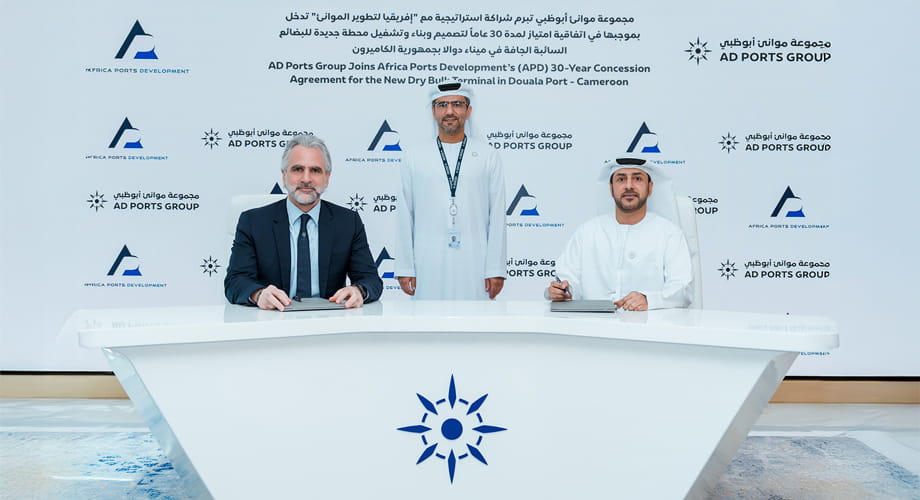
AD Ports Group, a leading global enabler of trade, logistics, and industry solutions, has joined Africa Ports Development’s (APD) 30-year concession to design, build and operate a new dry bulk terminal at the Port of Douala in the Republic of Cameroon.

The agreement establishes an investment structure in which AD Ports Group, together with two other UAE investors, owns 60 percent of the operating company alongside Africa Ports Development LTD’s 40 percent ownership, implying an effective economic interest of 51 percent for AD Ports Group.

Based on this ownership structure, AD Ports Group’s share of investment is expected to be around AED 320 million (EUR 73.4 million) for the development of phase 1 of the dry bulk terminal. The initial phase will comprise two berths and approximately 450 metres of quay wall, with an annual handling capacity of around 4 million tonnes of dry bulk cargo, including clinker, gypsum, fertiliser, and grain.

Construction is scheduled to take place between 2026 and 2028, in close collaboration with the Port Authority of Douala, to address strong and sustained demand at Cameroon’s principal maritime gateway.

Mohamed Eidha Al Menhali, regional CEO of AD Ports Group, emphasised the strategic importance of the agreement. “This agreement represents a strategically important expansion of AD Ports Group’s presence in Africa and reinforces our commitment to developing high-impact maritime infrastructure in high-growth markets, in line with the vision of our wise leadership,” he said. “The Douala dry bulk terminal will enhance trade resilience, support industrial development, and strengthen Cameroon’s role as a gateway to Central Africa.”

Al Menhali added that through the partnership with Africa Ports Development, the companies are combining local market expertise with AD Ports Group’s global capabilities in port development and operations to support the Port Authority of Douala’s modernisation plans. He commended the Port Authority for the significant progress achieved in recent years, which has driven strong growth in Cameroon’s maritime sector.

Marc Tabchy, managing partner of Africa Ports Development, welcomed the collaboration. “We are honoured to bring this partnership to life with AD Ports Group, a global reference that shares our firm belief in this project, in Cameroon, and in the potential of the African continent,” he said. “Building upon the opportunity provided by the Port Authority of Douala’s modernisation and specialisation initiatives, this collaboration establishes a strategic synergy combining our group’s ambition and regional depth with AD Ports Group’s operational excellence.”

Located at the Port of Douala, the largest maritime port in Cameroon, the new terminal will serve a critical role in handling the country’s bulk imports and functioning as a transit hub for landlocked Central African markets. The facility will strengthen regional supply chains and enhance the efficiency of key cargo flows, while benefiting from strong hinterland connectivity linking Douala with major industrial centres and regional trade corridors across Central Africa.

The investment marks a continuation of AD Ports Group’s expanding footprint across Africa, building on established investments and operations in Egypt, Morocco, Tunisia, Kenya, Tanzania, Angola, and the Republic of the Congo, reinforcing its position as a preferred partner for trade, logistics, and trade-enabling infrastructure across the continent.

For more information visit www.adportsgroup.com

Neptune Energy announces that Römerberg 10 successfully put into production

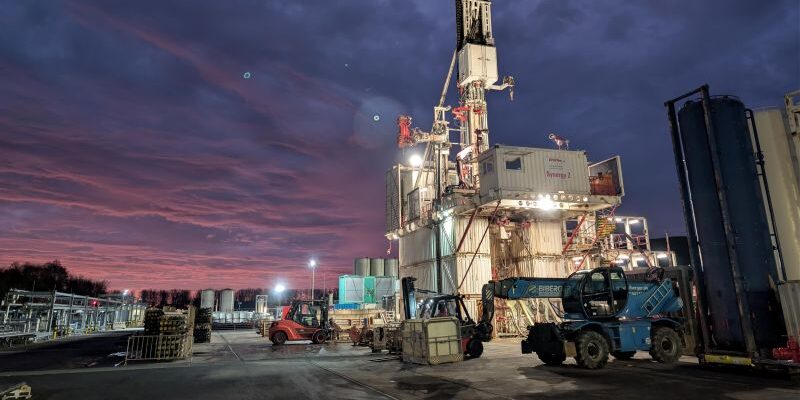
The consortium consisting of Palatina GeoCon and Neptune Energy has successfully drilled and tested the Römerberg 10 well at Clusterplatz II on Franz-Kirrmeier-Straße in the north-east of Speyer, with initial results showing promising quantities of oil. The partners are continuing their investment in the site based on the positive findings.

Horst Prei, head of operations Hub South at Neptune Energy, highlighted the precision required for the operation. “Every well is unique and requires precise technical preparation,” he said. “We are very satisfied that everything has progressed according to plan.”

Drilling work commenced at the end of October last year, with the drilling phase lasting approximately three months until the reservoir was reached at around 2,500 metres depth. The well was subsequently fitted with a production string and tested for the first time.

Jürgen Siewerth, authorised representative at Palatina GeoCon, explained the testing process: “In this step, we check how much oil can be produced from the well. Only then do we temporarily close the well and dismantle the drilling rig. Once the site has been cleared, we connect the well to the existing production facilities.”

The initial test results have exceeded the consortium’s expectations. “The data is promising,” Prei emphasised, adding: “We are now observing how stable the production rate develops. However, we will only be able to make reliable statements about the long-term production rate after a few weeks.”

In recent months, the daily extraction rate has been around 300 tonnes as the operation undergoes technical optimisation. The consortium expects a significant increase in production with the commissioning of Römerberg 10.

Looking ahead, planning will begin for follow-up wells Römerberg 11 and 13, for which technical preparations are already underway with implementation scheduled for 2027. The consortium is also modernising the existing crude oil processing facilities with larger storage tanks without requiring additional space.

For more information visit www.neptuneenergy.de

Evos Terneuzen hosts provincial executive of Zeeland at zero-emission terminal

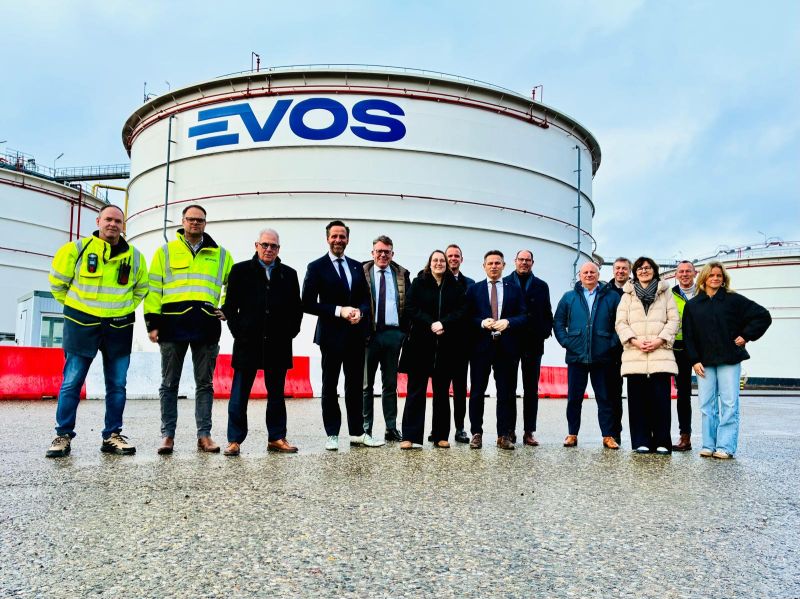
Evos Terneuzen welcomed the Provincial Executive of Zeeland this week, hosting all deputies and the King’s Commissioner for a visit to the facility.

Evos Terneuzen operates as a multimodal industrial zero-emission terminal and (bio)naphtha blending hub. The facility’s strategic location between Rotterdam and Antwerp, combined with deep-sea access, enables the supply of sustainable feedstocks to the chemical complex in the region.

As critical cluster infrastructure within North Sea Port, Evos Terneuzen hosted the delegation for a joint tour of the terminal, presenting its operations and capabilities. The visit was led by Evos Terneuzen colleagues Marco S., Jeroen de Visser, and Tim Verhulst, who guided the group through the site.

Through its Terneuzen and Ghent terminals, Evos plays a key role in North Sea Port, which the King’s Commissioner described as being of national importance during the visit.

For more information visit www.evos.eu

Wison New Energies added to Petrobras’ FPSO EPC qualified suppliers list

Wison New Energies has been officially added to Petrobras’ FPSO EPC Qualified Suppliers List, marking a significant recognition from one of the world’s leading deepwater operators and FPSO owners, renowned for its rigorous technical and delivery standards.

The qualification reflects Wison’s integrated engineering, fabrication and complex project execution capabilities, positioning the company to participate in future FPSO developments within one of the most active offshore markets globally.

The addition to Petrobras’ qualified suppliers list represents an important milestone for Wison New Energies as it seeks to support the Brazilian oil major’s upcoming projects and establish long-term partnerships in the deepwater sector.

For more information visit www.wison-energies.com

MFE launches PulsePro PEC system for shutdown-free CUI screening

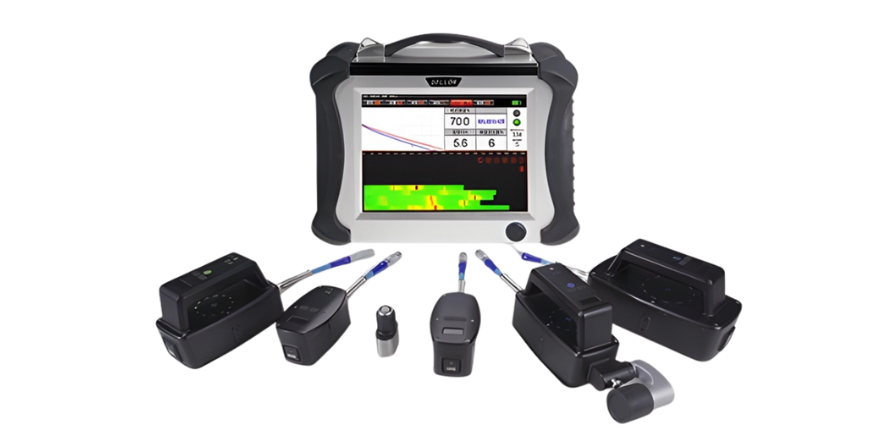
MFE has announced the launch of the MFE PulsePro, a new pulsed eddy current inspection system designed to perform fast screening for corrosion under insulation (CUI). Built to operate without requiring shutdown time, the MFE PulsePro enables inspection teams to evaluate asset condition without removing insulation, halting operations, performing surface preparation, or using couplant.

Dylan Duke, CEO of MFE Inspection Solutions, emphasised the critical nature of the problem the system addresses. “CUI is one of the most expensive problems faced by oil and gas and other heavy industries,” he said. “Teams need answers fast, without costly shutdowns. And that’s just what the PulsePro gives you: fast, actionable data, without having to remove insulation or halt operations.”

Traditional CUI inspections typically require insulation removal, access planning, and prolonged shutdowns, particularly when screening large areas. During the wait for planned outages, corrosion and wall thinning continue to develop, allowing both the problem and associated maintenance costs to escalate.

The PulsePro was developed to address this challenge, enabling rapid, in-service pre-assessment on insulated piping, vessels, tanks, and structural components, including in high-temperature environments where downtime and rework prove costly. The system can take readings on stainless steel, features an EMAT probe for straightforward handoff and data confirmation, and requires no subscription for purchase and use.

Jason Acerbi, CTO and VP of USA sales at MFE, explained the practical design philosophy behind the system. “PEC is most valuable when it’s used the way inspection teams actually work—screen fast, document clearly, and hand off clean results for confirmation,” he said. “The MFE PulsePro was designed for multi-skill teams in the field, with built-in documentation, integrated thermal and visual imaging, and a probe-handle readout that speeds up checks. The goal is simple: help teams find the right targets sooner, without removing insulation or stopping operations.”

MFE supports thousands of inspection teams worldwide, delivering training and technical guidance across a wide range of advanced NDT workflows. The company is recognised for helping customers select, deploy, and support best-in-class inspection tools from leading manufacturers. When MFE identifies clear needs in the field, the company also develops its own solutions—including the MFE Detect LW and the newly launched MFE PulsePro.

For more information visit www.mfe-is.com

HES Fos and Alteo sign a long-term partnership agreement

HES Fos, a subsidiary of HES International BV, and Alteo, part of the UMSI Group, have signed a long-term partnership agreement covering the maritime unloading, storage and downstream logistics of hydrated alumina destined for Alteo’s industrial site in Gardanne.

Under the agreement, HES Fos will manage vessel unloading operations at the Fos Mineral Terminal, product storage and truck loading for onward transport to the Gardanne plant. These activities were previously handled in Marseille; however, constraints related to rail connectivity, combined with Alteo’s objective to reduce road transport, have prompted the relocation of the logistics flows to Fos-sur-Mer. The move supports a long-term decarbonisation strategy.

To ensure continuity of operations, HES Fos will initially adapt a former clinker warehouse to enable the storage of hydrated alumina. In parallel, engineering studies are under way for the development of dedicated infrastructure. Once the new facility is commissioned, currently expected around 2029, rail loading operations will also be incorporated, allowing a gradual transition from road to rail transport.

The agreement marks an important milestone in the development of HES Fos following its acquisition of the terminal in July 2025. It also underlines the company’s capability to support industrial customers through long-term partnerships while contributing to the development of Fos-sur-Mer as a key logistics and industrial hub.

For Alteo, the partnership represents a significant step in the evolution of its Gardanne site. By supporting the transformation of its logistics chain, the agreement aligns closely with the company’s decarbonisation objectives, including a clear pathway towards increased use of rail transport.

The first vessel call under the new agreement is expected at the HES Fos terminal in June this year.

For more information visit www.hesinternational.eu

Exolum, Methanex and Ørsted launch UK’s first commercial bio-methanol bunkering service at Port of Immingham

Exolum, Methanex Corporation and Ørsted have announced the launch of the United Kingdom’s first commercially ready bio-methanol storage and supply service for shipping at the Port of Immingham. The Port of Immingham is the U.K.’s largest port by cargo volume and a critical gateway for energy and bulk materials, making it an important hub for maritime operations and low-carbon fuel supply.

Advancing Maritime Decarbonization

The initiative underscores the partners’ commitment to advancing decarbonisation in maritime transport – even as the International Maritime Organization (IMO) recently deferred its vote on implementation of its Net Zero Framework, a policy regarded as critical to reducing emissions in shipping. Despite this delay, the companies are prioritising action to drive progress in one of the world’s hardest-to-abate sectors.

Image provided by Exolum

Collaborative Infrastructure Solution

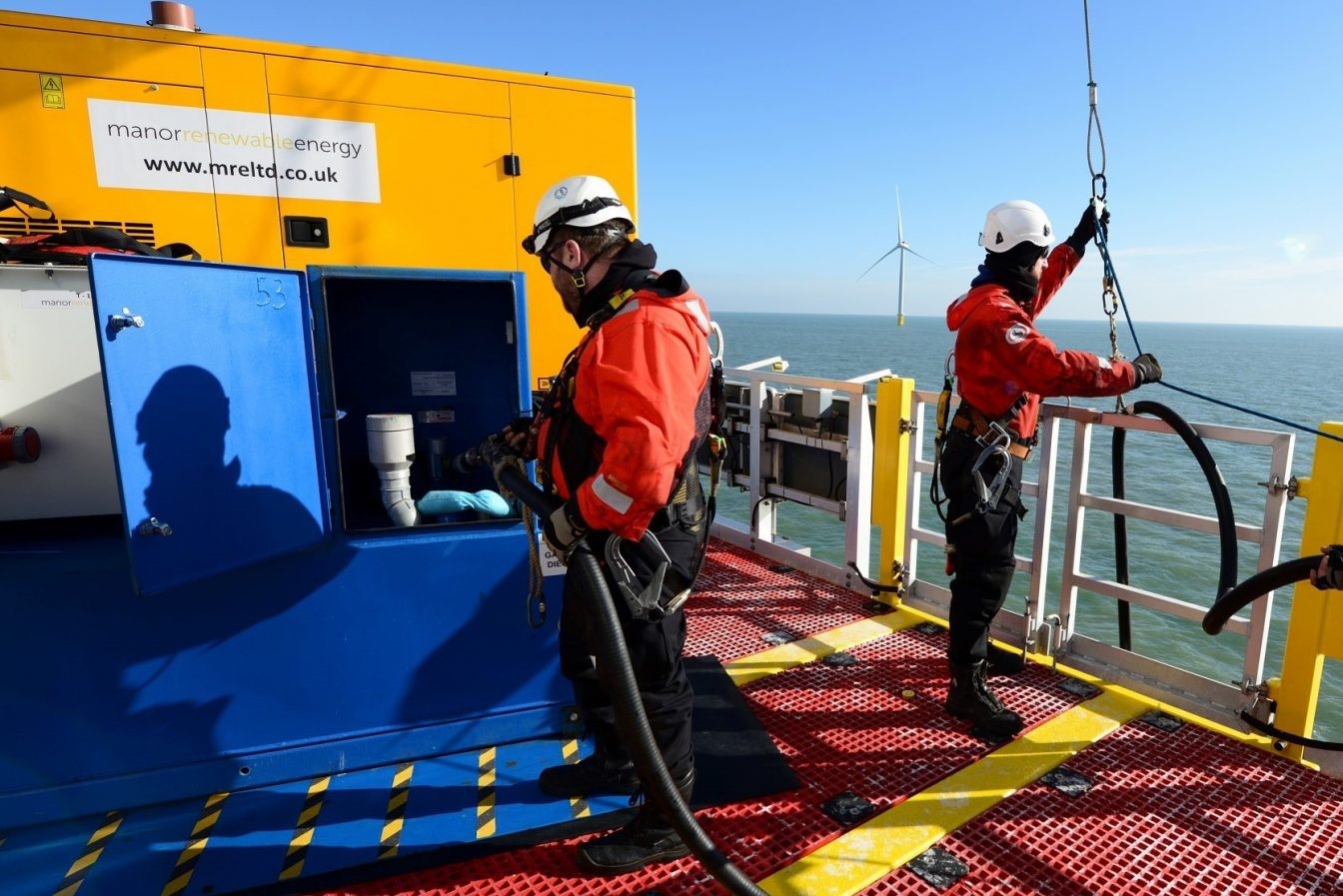
The initiative will provide marine bunkering services for bio-methanol, one of the leading green fuels for decarbonising shipping. Exolum will provide the storage and fuelling infrastructure at its Immingham facility, leveraging its extensive experience and strategic assets. Methanex will supply the bio-methanol for the project. Ørsted will be the first to utilise this service for its North Sea offshore wind farm maintenance vessels supporting the U.K.’s clean energy ambitions.

This collaboration demonstrates how existing energy infrastructure can be adapted to support new, sustainable fuels and highlights the partners’ shared commitment to accelerating the maritime sector’s transition to low-carbon operations.

Addressing Domestic Shipping Emissions

In the U.K., domestic shipping accounts for 4.7 percent of transport-related CO₂ emissions – more than the country’s buses, trains and domestic aviation combined. This project marks a significant first step toward addressing that challenge and the wider challenge of decarbonising international shipping emissions.

Partner Perspectives

Stephen Land, North-West Europe chief executive at Exolum, said: “This is a groundbreaking project for Exolum as it exemplifies how our energy logistics can help deliver our customers’ green transition. It demonstrates how the strategic location of our infrastructure and our extensive experience in the transport and storage of various products can help transform one of the most difficult sectors of today’s economy to decarbonise.”

Mika Bärlund, lead category manager at Ørsted, said: “Ørsted is pleased to be the first to fuel its service-operation vessels with bio-methanol as part of this partnership. This project aligns with our commitment not only to create opportunities for local suppliers but also to help develop leading-edge technologies, in particular technologies which help us in our goal to deliver more sustainable operations and assist with the broader decarbonisation of the maritime sector. Finally, it is a step towards our vision of creating a world that runs entirely on green energy.”

Stuart McCall, vice president, low carbon global market development at Methanex, said: “Methanex is proud to supply the bio-methanol for this milestone initiative. As the world’s largest producer and supplier of methanol, we are committed to developing and supporting innovative solutions that accelerate the transition to low carbon shipping.”

Steven Clapperton, head of marine (Humber) at Associated British Ports, owner of Port of Immingham, said: “This initiative marks a significant milestone for the Port of Immingham and the wider maritime sector. By enabling bio-methanol bunkering, we are taking practical steps toward decarbonising one of the hardest-to-abate industries. Associated British Ports is proud to support partners like Exolum, Ørsted, and Methanex in driving innovation that aligns with the U.K.’s clean energy ambitions and positions our ports at the forefront of sustainable shipping.”

For more information visit www.exolum.com

Carbis Solutions Group promotes Doug Joseph to corporate business development & strategic growth role

Sam Carbis Solutions Group, LLC announced the promotion of Doug Joseph into an expanded leadership role focused on corporate business development and strategic growth, advancing the company’s commitment to national expansion and long-term market leadership.

In his new role, Doug will lead executive-level relationship development and strategic partnership initiatives to expand Sam Carbis Solutions Group’s national project pipeline. He will also oversee the identification, development, and growth of a high-performing distributor network across the Western United States, supporting consistent brand representation and accelerated market penetration.  “Doug has a proven ability to build trusted relationships, build networks, and convert those connections into real growth opportunities for us and our partners alike” said Jason Shannon, Director of Sales & Marketing at Sam Carbis Solutions Group. “His leadership will be key as we expand our footprint, strengthen our channel strategy, and continue delivering value to partners and clients nationwide.”

Doug brings extensive experience in business development, strategic partnerships, and relationship-driven growth. His responsibilities will include engaging executive stakeholders to originate and advance high-value opportunities, representing Sam Carbis Solutions Group at industry events and strategic forums, and collaborating cross-functionally to align market opportunities with the company’s capabilities.

Doug’s transition is effective immediately.

For more information visit www.CarbisSolutions.com

Scottish Africa Business Association strengthens subsea links with Egypt at subsea expo

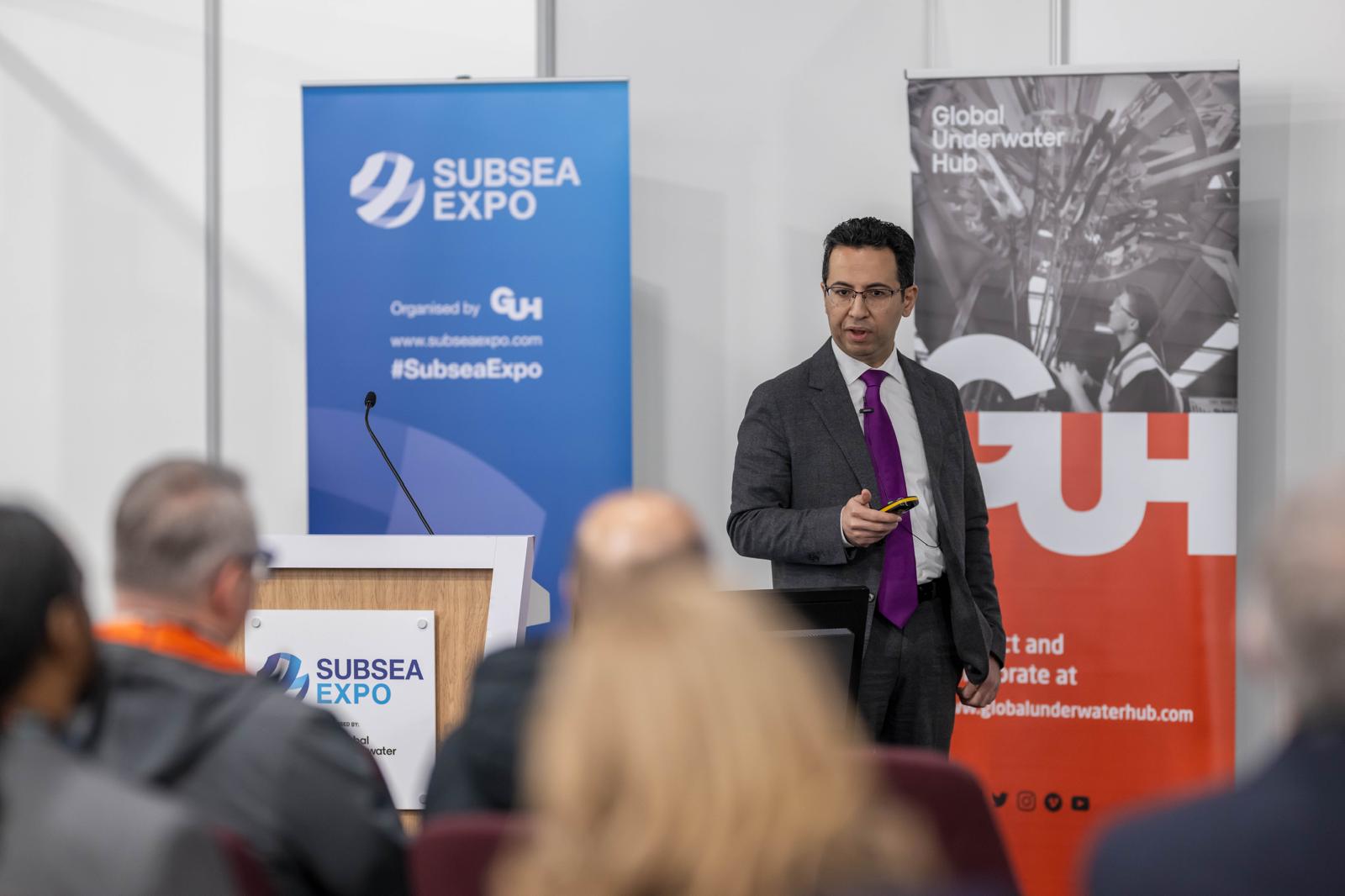
The Scottish Africa Business Association (SABA) has strengthened international links and opened new opportunities for Scottish companies following a highly successful presence at Subsea Expo in Aberdeen, organised by the Global Underwater Hub.

As part of its programme at the event, SABA hosted an inward delegation from Egypt and was delighted to welcome Minister Plenipotentiary Wael Abdelraheem to Scotland for the first time. His visit, supported by the Scottish Government, formed part of ongoing efforts to deepen commercial ties between Scotland and one of North Africa’s most strategically important energy markets.

Wael Abdelraheem, Minister Plenipotentiary (Source: Scottish Africa Business Association (SABA)

During his time in Aberdeen, Minister Abdelraheem attended the Subsea Expo evening reception and held a series of meetings with SABA member companies and other businesses from across the North-east. Discussions focused on opportunities for collaboration in subsea engineering, offshore services, inspection and maintenance, digital technologies and supply chain partnerships.

SABA’s exhibition stand attracted hundreds of visitors over the two-day event, with strong interest in opportunities across multiple African markets. Conversations covered subsea infrastructure, offshore wind, energy transition projects, exporting challenges and education & skills training, creating a significant pipeline of follow-up activity for the organisation and its members.

Seona Shand, COO at the Scottish Africa Business Association, said: “Subsea Expo provided an outstanding platform to showcase Scottish capability and connect businesses with real opportunities across African markets. We were particularly pleased to welcome Minister Plenipotentiary Wael Abdelraheem to Scotland for the first time and to facilitate meaningful introductions between Egyptian stakeholders and our members.

The level of engagement at our stand exceeded expectations, with hundreds of conversations taking place and strong interest in the expertise Scotland has to offer. There is clear demand for subsea and offshore capability across Africa, and we now have a substantial programme of follow-up to help translate these connections into tangible business opportunities.”

Egypt is emerging as a major regional energy hub, with significant investment in offshore gas production in the Mediterranean, expansion of subsea infrastructure and a growing focus on energy security and export capacity. Major developments such as the Zohr gas field and associated pipeline networks have driven demand for subsea installation, inspection, repair and maintenance services, as well as specialist engineering, digital monitoring and asset integrity solutions.

Alongside its established oil and gas sector, Egypt is also investing heavily in energy transition projects, including offshore and coastal renewable energy, hydrogen and power interconnection initiatives. This is creating new opportunities for companies with experience in subsea construction, cable installation, offshore wind foundations, survey, robotics and environmental monitoring.

With its strategic location, large domestic market and strong government focus on infrastructure and energy development, Egypt offers a gateway for Scottish companies looking to expand their presence across North Africa and the Eastern Mediterranean.

Building on the momentum from Subsea Expo and the Minister’s visit, SABA will lead a trade delegation to Egypt in April 2026 in partnership with The EIC. The mission will focus on the energy sector providing Scottish companies with direct access to key government stakeholders, operators and local partners.

The programme will include market briefings, business-to-business meetings, site visits and networking opportunities designed to help participants understand the operating environment and identify concrete opportunities.

Seona Shand added: “Egypt represents one of the most exciting growth markets for subsea and offshore services in the region. The conversations that took place in Aberdeen demonstrated strong mutual interest, and our April mission will give Scottish companies the opportunity to build relationships on the ground and position themselves for upcoming projects.”

Subsea Expo is the world’s largest subsea exhibition and conference, bringing together global operators, contractors, technology providers and supply chain companies. SABA’s presence at the event reflects its ongoing role in helping Scottish organisations access international markets through trade missions, inward delegations, market intelligence and tailored business support.

Following the strong response at Subsea Expo, SABA will now work with participating companies to progress introductions, provide market insight and support next steps as businesses explore opportunities across Egypt and other African markets.

For more information visit www.AfricaScot.com

Petredec and Carnot Engines partner on next-generation engines

Petredec, a global leader in the liquefied petroleum gas industry, has entered into a strategic partnership with UK-based startup Carnot Engines to accelerate the deployment of next-generation, highly efficient, fuel-flexible engine technology across the transport, maritime and power generation sectors.

Carnot Engines’ proprietary engine can achieve thermal efficiencies of up to 70 percent under targeted operating conditions, more than double that of conventional combustion engines, significantly reducing fuel consumption and associated emissions. Efficiency gains are driven by a novel opposed-piston design and advanced high-temperature materials which significantly reduce heat losses to unlock energy typically lost in conventional engines. The technology is underpinned by a growing portfolio of proprietary patents.

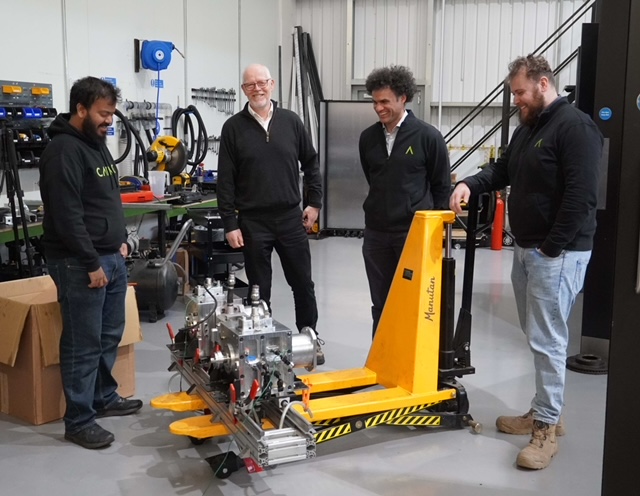
(from left to right): Nadiur Rahman, co-founder & COO, Carnot Engines; Philip Harwood, Petredec fleet director and Carnot board member; Archie Watts-Farmer, co-founder & CEO, Carnot Engines; Francis Lempp, co-founder & CBO, Carnot Engines.

The engine is designed to operate across a broad range of fuels, including LPG, hydrogen, ammonia, methanol, biofuels, biogas, LNG and diesel, and can switch between fuels as required. This fuel flexibility provides a low-risk, adaptable decarbonisation solution across heavy-duty power sectors.

The partnership combines Petredec’s operational expertise and global industrial asset base with Carnot Engines’ innovative technology to accelerate the development of engines that are highly efficient, multi-fuel capable and ready for real-world deployment across multiple sectors.

“This partnership reflects our conviction that sustainability must be delivered through practical, implementable solutions,” said Philip Harwood, Petredec fleet director and Carnot Board Member. “We are focused on achievable pathways that make our operations more efficient and environmentally responsible. LPG is a cleaner burning, readily available fuel, and combining it with Carnot Engines’ highly efficient engines, creates an optimal synergy to deliver cleaner power and transport at lower cost, while benefiting the environment. We are excited to fund the R&D for the LPG version of the Carnot engine and to become shareholders. Having met with Carnot Engines’ founders, it’s clear that they share Petredec’s passion for sustainability and commitment to their technology. Carnot Engines has assembled an exceptional design and engineering team, from aerospace and elite motor sports to quantum physics, whose vision and attention to detail have already set new benchmarks. We are proud to partner with them in bringing this innovative technology to market.”

Carnot Engines has attracted support from leading industrial and academic partners. Alongside Petredec, shareholders include Oxford University Innovation, Mitsui O.S.K. Lines and Carisbrooke Shipping, reflecting the calibre of its technology and strategy.

Archie Watts-Farmer, CEO, Carnot Engines, said: “We are thrilled to be partnering with Petredec. As a company, Petredec offer a unique and perfect fit with our strategy to accelerate the delivery of decarbonised power solutions into our target markets. Petredec’s deep expertise across the whole value chain provides the perfect knowledge to optimise our engines for LPG fuel, which we believe will provide a key role in the decarbonising pathway for many industries.”

Durability testing is targeted to commence Q2 2026, with initial commercial demonstrators anticipated to follow in H2 2026, subject to development milestones.

For more information visit www.petredec.com

Gerotto joins Sprint Robotics

Gerotto announces that it has been accepted as an associate participant of Sprint Robotics. Founded in 2015, Sprint Robotics is an industry association dedicated to promoting and advancing robotic technologies for the inspection, maintenance and operation of critical infrastructure and industries. It brings together contractors, manufacturing companies and asset owners from around the world who want to shape the future of industrial innovation.

Being accepted into this association is a milestone and a new chapter that confirms our technological leadership in no-man entry solutions. The high level of interlocutors within Sprint Robotics will certainly be a stimulus to contribute to the growth of robotics applied to industrial remediation and tank cleaning. – comments Alessandro Gerotto, CEO of Gerotto Federico Srl

Photo:Alessandro Gerotto, CEO of Gerotto Federico Srl 

Peter Voorhans, managing director. the SPRINT Robotics Collaborative: We are very pleased to welcome Gerotto as a new Associate Participant of the SPRINT Robotics Collaborative. Gerotto Federico S.r.l., a leading Italian innovator in industrial maintenance and robotic cleaning technologies, continues to strengthen its position as a pioneer in no man entry solutions for hazardous environments and brings a strong reputation and deep technical expertise in the storage tank inspection and maintenance space. We look forward to Gerotto’s valuable contributions and to collaborating closely as we continue to drive innovation and deliver meaningful impact for our members.

Gerotto, with its Gerotto Robotics business unit, was a pioneer in 2002 in the design of no-man entry robots to operate in confined and explosion-risk spaces. Today, thanks to ATEX/IECEX certifications, numerous international patents and a cross-cutting range of “AI-ready” products, Gerotto can provide integrated solutions for oil & gas, mining, construction, water treatment and nuclear plants.

 For more information visit www.gerotto.it

DESFA announces appointment of new CEO, Maria Sferruzza

Maria Sferruzza has been appointed CEO of DESFA, effective February 8, 2026, following the expiration of Maria Rita Galli’s term. The appointment has been made in accordance with the shareholders’ agreement in force.

Extensive Energy Sector Leadership

Maria Sferruzza served as the executive director of International Engineering, Construction & Solutions at Snam, a role she has held since October 2021. She brings more than 30 years of international leadership experience across the energy sector, with a strong track record in managing complex, large-scale energy infrastructure projects worldwide.

Strategic Appointment

By appointing Ms. Maria Sferruzza, DESFA’s shareholders reaffirm their commitment to fast-tracking the company’s growth trajectory and strengthening Greece’s positioning as a regional energy gateway to Southeastern Europe.

DESFA shareholders also thanked Mrs. Galli for her contribution to the company’s evolution during her tenure and look forward to welcoming Mrs. Sferruzza as the company continues to reinforce its role in the regional and European energy landscape.

Professional Background

Maria Sferruzza joined the energy industry in 1995 and began her career in the Oil & Gas Division of General Electric as a compressors application engineer and subsequently assumed roles of increasing responsibility in sales, commercial and operational functions in both the United States and Italy. In 2011, she became the global sales general manager for GE Oil & Gas Services and in 2017 she was appointed GE officer.

Following the 2017 merger between General Electric’s Oil & Gas Division and Baker Hughes, Mrs. Sferruzza took responsibility for the Global Service Business Unit and LNG segment strategy, reporting directly to the CEO of the Turbomachinery and Process Solutions division. In 2018, she moved to Asia as Senior Vice President for Asia Pacific within Baker Hughes’ Global Operations structure, before returning to Italy in 2021 to join the Snam Group.

She has also served as a non-executive director on the board of Italgas, Italy’s main gas distribution system operator, and as chairwoman of Stogit, a Snam subsidiary managing gas storages across Italy.

For more information visit www.desfa.gr

Port of Rotterdam Authority and VOTOB take new step in combating tank storage spoofing

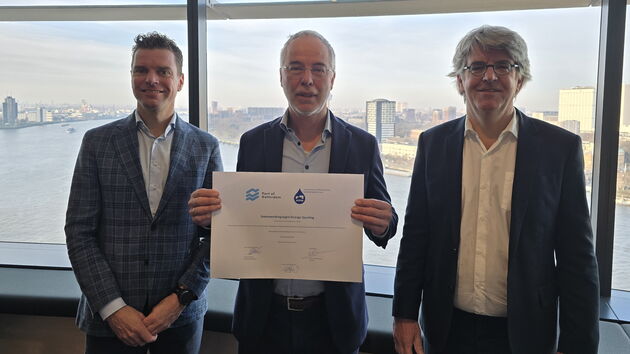
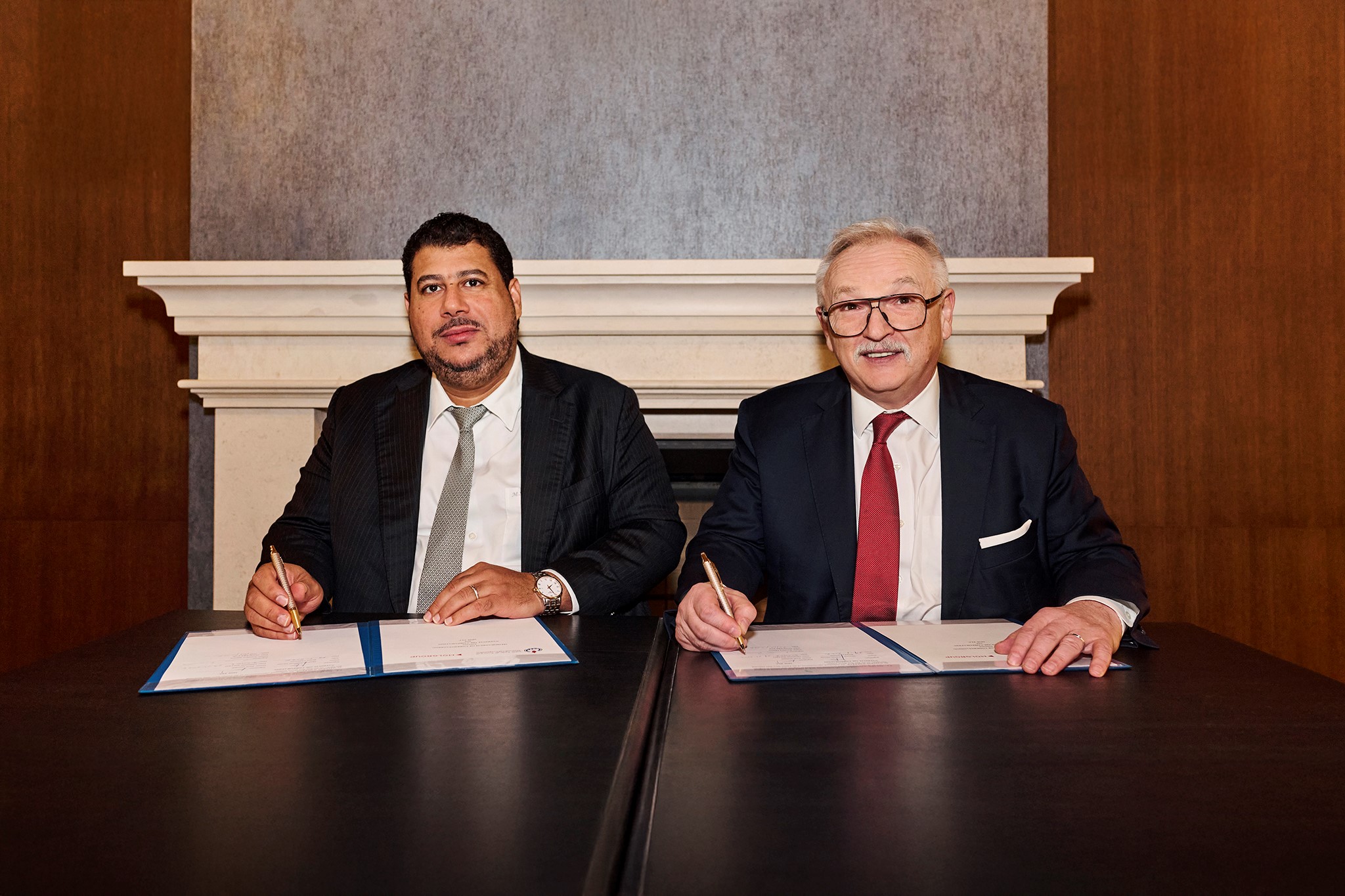
At the World Port Center, a cooperation agreement was signed between the Port of Rotterdam Authority and VOTOB to continue and expand a task force aimed at combating the fraud scheme known as storage spoofing.

With this step, both parties send a clear signal to international fraudsters who target the port of Rotterdam and other seaports with this persistent form of deception. TCT The Commodity Traders and the Police (Seaport Police District, including the Digital Expertise team) are also part of the task force.

From left to right: Marijn van Schoote (Director Ferm Seaports), Willem-Henk Streekstra (Director of VOTOB), Ronald Backers (Advisor Business Intelligence Port of Rotterdam Authority)

Understanding Storage Spoofing

Storage spoofing, or tank storage spoofing, is the collective term coined in Rotterdam for all forms of selling non-existent storage capacity and inventories of raw materials and products at terminals, particularly in the port of Rotterdam area. In this form of internet fraud, criminals offer goods via fake websites that impersonate well-known tank storage companies. Victims include international traders who are misled and lose substantial sums of money to non-existent deals, and legitimate companies in the port area whose names and data are misused. In some cases, tank trucks even arrive at terminals to collect products that do not exist.

Significant Economic Impact

The annual damage to traders is estimated at at least €10 million, as a lower bound based on insight into amounts actually paid. In 2025, deals with a total offered value of €2.5 billion were reported to the task force. In addition, there is significant damage for companies whose names and data are misused, as well as reputational damage to the ports as a whole.

Willem-Henk Streekstra, director of VOTOB, said: “Several of our members have been dealing with this for years. With this cooperation, we are providing professional support to reduce storage spoofing. It is good to address this issue so actively together with the Port Authority and other partners. Together we can do more than each of us individually. It remains extremely frustrating when your company name is misused and people lose large amounts of money.”

Task Force History and Evolution

The first examples of this type of fraud date back some 15 years. About ten years ago, the number of incidents began to increase, leading to the establishment of a task force in 2017, at the time under the banner of Ferm Rotterdam (now Ferm Seaports). Among other things, an awareness campaign was launched, laying the foundation for the current task force.

Through interviews, background articles and tools on the website, a blacklist of unreliable websites and a whitelist of websites where entrepreneurs can safely do business, the fight against ‘storage spoofers’ was taken up. The blacklist of fraudulent websites now contains more than 1,250 domains and is continuously expanded.

The task force – consisting of Ferm, the Port of Rotterdam Authority, the Seaport Police and several VOTOB members – entered a cooperation with the Dutch Foundation for Internet Domain Registration (SIDN) in 2020 and with The Commodity Traders (TCT) in 2024. SIDN supports the offline takedown of fraudulent websites with a .nl domain. TCT supports the task force with due diligence to assess the reliability of offered deals and documents and to determine which websites should be added to the blacklist. Fraud cases are prevented on a daily basis.

New Cooperation Platform

Within Ferm, the task force previously operated via the domain ferm-rotterdam.nl/storage-spoofing, and has now moved to www.storagespoofing.nl, a platform of the Port of Rotterdam Authority, VOTOB, TCT and the Seaport Police. From VOTOB, several terminals in the port of Rotterdam also participate in the task force.

Marijn van Schoote, Director of Ferm Seaports, said: “Ferm Seaports is a national platform for the cyber resilience and robustness of seaports of national importance. Storage spoofing is a form of digitalised crime that affects the economy and the integrity of ports, as well as the people who work there. It is therefore positive that this new cooperation ensures continued attention to combating this type of fraud. We are very pleased that the Port of Rotterdam Authority and VOTOB recognise this urgency.”

Combating Digital Deception

The primary tools used by fraudsters are fake websites, emails and other forms of digital contact based on trust and forged documents. Much information about (spoofed) companies is publicly available (via websites, chambers of commerce, Google Maps, etc.), and content can easily be copied. This has led to a proliferation of unreliable websites that are increasingly difficult to distinguish from legitimate ones. The task force is actively committed to identifying these websites, blacklisting them and having them taken offline.

For more information visit www.portofrotterdam.com

OEG enhances operational efficiency with AST Reygar’s IRAMS Technology

AST Reygar announced their ongoing support to OEG Energy Group, a leading provider of temporary power and engineering solutions for the offshore industry, by delivering additional IRAMS satellite monitoring units to enhance operational efficiency and offshore asset management.

OEG Energy Group, has been awarded two major projects requiring the deployment of temporary power generator sets across geographically diverse offshore locations. To ensure seamless monitoring and control of their industrial assets, OEG Energy Group turned to AST Reygar’s innovative IRAMS technology.
Optimising Offshore Operations with IRAMS

AST Reygar’s IRAMS systems have been successfully deployed across two key projects:

1.South Coast, USA – Providing temporary solutions to support offshore industrial projects.

2.North Sea Region (UK, Germany, Danish, and Dutch waters) – Delivering robust monitoring solutions across multiple jurisdictions and challenging marine environments.
These projects required AST Reygar to not only supply their proven IRAMS technology but also customise solutions to meet OEG Energy Group’s specific operational requirements.

Bespoke Engineering for Enhanced Performance
To meet the high demand for these projects, AST Reygar’s technical team worked diligently to fulfil a large-scale order of new IRAMS units. The customer’s specifications necessitated compact, customised enclosures to house the systems, a challenge that AST Reygar met with exceptional engineering expertise and flexibility. As a result, more than 40 live IRAMS units were successfully deployed and are now fully operational, ensuring increased efficiency and reliability for OEG Energy Group’s offshore power solutions.

Delivering Value through Advanced Technology

IRAMS technology offers OEG Energy Group a wide range of benefits, including:

-Real-Time Monitoring – Continuous oversight of offshore assets for optimal performance and early fault detection.
-Enhanced Operational Efficiency – Proactive maintenance capabilities that reduce downtime and improve reliability.
-Customised Solutions – Tailored IRAMS configurations to meet unique challenges of offshore environments.

Taras Pavlyuk, technical sales engineer at AST Reygar, highlighted the strong partnership between the two companies:“OEG Energy Group has been a valued customer for many years, and we are pleased to continue supporting their operations with AST Reygar’s industrial satellite and IoT monitoring solutions. Their commitment to operational excellence aligns with our mission to deliver innovative, data-driven technologies for the offshore sector.”

Whilst Robert Williams, equipment manager at OEG Energy Group, continued to praise AST Reygar’s responsiveness and expertise:
“Our relationship with AST Reygar has been built over many years and successful projects. In this case, our topside division was supporting two live offshore projects across two regions, each requiring an additional solution to enhance asset monitoring. AST Reygar delivered ahead of schedule, allowing our teams to deploy the additional hardware offshore and meet our client’s needs seamlessly.”

Looking Ahead
With IRAMS technology now fully integrated into their operations, OEG Energy Group is well-positioned to manage and monitor temporary power generator sets across multiple offshore locations efficiently. This collaboration underscores AST Reygar’s commitment to delivering state-of-the-art solutions and fostering long-term partnerships in the offshore energy sector.
AST Reygar looks forward to continuing their support for OEG Energy Group as they drive innovation in temporary power solutions, leveraging advanced technologies like IRAMS to enhance performance, reliability, and efficiency across their operations.

For more information visit www.ast-reygar.com

A new chapter for Scandinavian Tank Storage

Scandinavian Tank Storage (“STS”) has entered a new phase following the completion of its parent company, K-Svets Storage AB (renamed STS Holding AB) ownership change on December 11, 2025. After decades of development under the Kristensson family, who built a resilient and well-performing company through K-Svets Storage AB, the parent company is now owned by a Swedish investment company. The transaction was initiated and led by Knut Pousette and Jimmy Lindgren, alongside a select group of investors through Aktiebolaget Nordiska Sjöterminals Kompaniet (“ANSK”). This new ownership establishes a long-term and experienced foundation for STS’s continued role in the Nordic energy system. STS will continue to operate independently under its existing brand, organisation and operational principles.

Nordic Network Built for Reliability

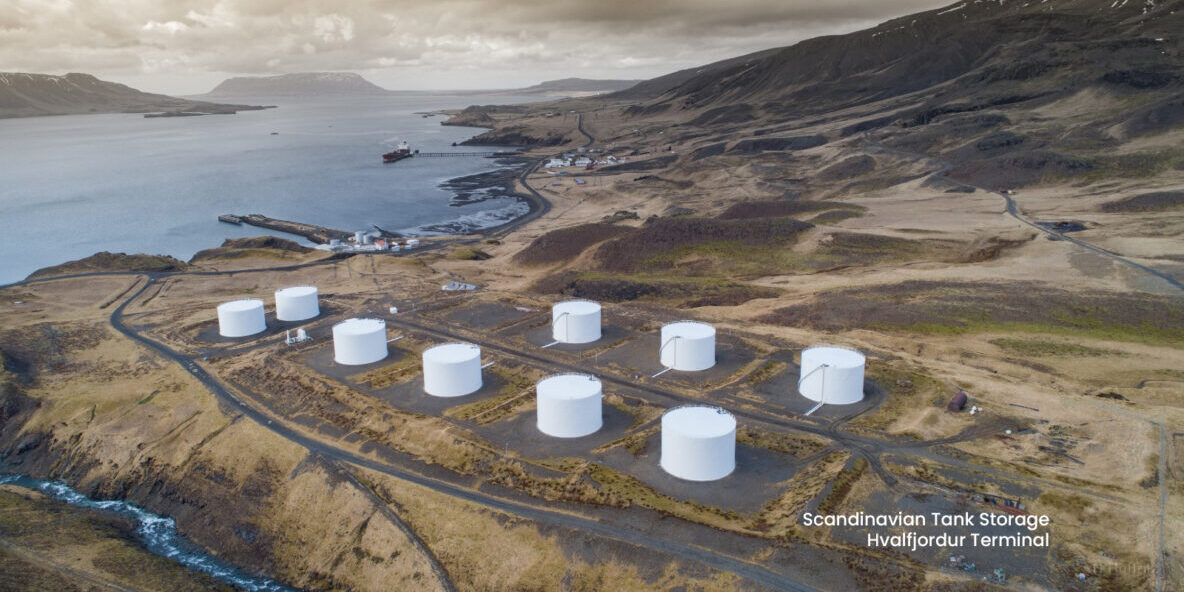
For more than three decades, STS has maintained an excellent safety record and a strong reputation for reliability, operational discipline and high-quality service. With ten terminals across Sweden, Finland, Denmark and Iceland and a combined storage capacity of approximately 4.1 million metric tonnes, STS is the Nordic region’s leading privately owned storage operator. Its strategically located terminals, including Norrköping, Gävle, Karlshamn, Malmö and Gothenburg, as well as Pori, Kristinestad, Aalborg, Keflavík/Helguvik and Hvalfjordur, form a critical logistics backbone connecting maritime flows with rail, pipeline and road.

Operations Shaped by Safety & Long-Term Partnerships

STS with its partners, serves a broad base of blue-chip customers, including international energy companies, trading houses, government organisations and industrial clients. The company’s long-standing market position reflects a culture built on transparency, responsiveness and a commitment to safe and dependable operations.

Preparing for the Future of Energy Logistics

The Nordic energy market is evolving rapidly, and STS continues to strengthen its ability to handle a broader mix of fuels including bio-based and low-carbon products. At the Malmö terminal, STS already manages significant bio-component flows, supported by a newly established rail unloading capability. The company will continue to develop its infrastructure and operational systems to meet the changing needs of its customers and ensure safe, efficient handling of both conventional and renewable products for and with the clients.

Sverker Lidén Appointed CEO

To lead STS into its next phase, the Board has appointed Sverker Lidén as CEO, effective February 1, 2026. Sverker joins from St1, where he served as Group Head of Logistics responsible for 27 terminals across Northern Europe. He holds an MSc in Chemical Engineering from Chalmers University of Technology and brings extensive technical and commercial experience from across the energy sector. He previously spent fifteen years in senior roles at STS and has also founded and operated energy businesses in Iceland, now integrated into STS’s operations. Earlier in his career, he worked for more than fifteen years as a trader at Preem.

Leadership Reflections

Knut Pousette, chairman of STS, said: “STS is a critical infrastructure partner for the Nordic energy system. With strong new ownership, deep sector expertise and a clear long-term perspective, we will continue investing in safety, reliability and customer service while preparing our terminals for today’s and tomorrow’s fuels. We are delighted to welcome Sverker, his industrial knowledge, commercial acumen and long history with STS will be invaluable for the company’s development.”

Incoming CEO, Sverker Lidén, said: “STS has built its position as Scandinavia’s leading storage provider by delivering first-class service and maintaining the highest safety standards. I look forward to working with STS employees, our customers, partners and owners to strengthen our capabilities and ensure that STS remains a dependable partner throughout the evolving energy landscape.”

Management Team

  • Sverker Lidén – CEO
  • Urban Assarsson – HSSE & terminal technical manager
  • Christoffer Lillhage – business development & Energy transition director
  • Reynir Gudlaugsson – COO
  • Jimmy Lindgren – chief investment & strategy officer

For more information visit www.scandinaviantankstorage.com

Aster plans completion of Singapore refinery expansion projects in H2 2026

Aster Chemicals and Energy expects to complete several strategic projects in the second half of 2026 to increase its refining capacity and enable supertanker crude imports for cost optimisation, according to the company’s chief financial officer.

The company, a joint venture between Indonesia’s Chandra Asri and Glencore, has announced a series of projects to strengthen its competitive position since acquiring the Bukom refinery and petrochemical assets in Singapore in April 2025.

Condensate Splitter Operations

Aster’s 70,000 barrels per day condensate splitter, acquired from Petrochemical Corp of Singapore, is scheduled to become operational in the second half of the year, mentioned CFO Andre Khor.

The upgraded facility will handle 30 percent sour condensate, sourced through Glencore’s global network, increasing Aster’s crude and condensate processing capacity to 307,000 bpd from the current 237,000 bpd.

Once operational, the splitter will enable Aster to increase Bukom’s cracker utilisation rates and export additional ethylene to Chandra Asri’s petrochemical complex in Cilegon, Indonesia.

Berth Infrastructure Upgrade

Aster expects to complete repairs on its single buoy mooring (SBM) in the second half of the year. This will enable Very Large Crude Carriers to berth and discharge 2 million barrels of oil per vessel. Currently, the Bukom refinery receives crude from the Middle East, Malaysia and Brazil via smaller tankers.

“By investing in a single buoy mooring, we are then able to bring larger ships that we know for sure are going to be cheaper and more competitive,” Khor said.

Chandra Asri completed the acquisition of Exxon Mobil’s Esso retail stations in Singapore last month and plans to revamp them.

Storage and Power Generation

The company is evaluating plans to lease unused crude and refined products storage tanks at the site, which were designed for a 500,000-bpd refinery capacity.

“We have 4.3 million cubic metres of storage that we can look to monetise and also provide strategic storage to add into the Singapore tankage ecosystem,” Khor said.

Through its power subsidiary, Aster plans to expand its low-carbon electricity generation and sell excess supply to Singapore’s power grid. The company is installing solar panels at its Bukom and Jurong Island sites and plans a final investment decision on a $150 million project to build a gas turbine integration unit capable of burning hydrogen by 2029.

Market Challenges and Recovery Outlook

“It continues to be a challenging time for the refining and chemicals industry, hence we need to invest and be able to generate all these credits that can improve our bottom line quickly to make the units more resilient,” Khor said.

Singapore will increase its carbon tax for high-emission businesses to S$45 ($35.42) per tonne, up from S$25 in 2024-2025.

While geopolitical events have supported global refining utilisation rates at 80-90 percent, chemical plants globally are running at 70-80 percent, below the healthy rate of 85-90 percent, according to Khor.

The sector should recover from 2027-2028 as the effects of petrochemical consolidation in South Korea and China work through the system, he added.

For more information visit www.aster.com.sg

Milestone achieved in motion: Vesta Terminals initiates first CEPS pumping

Vesta Terminals is currently celebrating a significant milestone as it sends jet fuel through the CEPS pipeline system for the very first time. This operation marks not only the commencement of jet pumping but also symbolises the pride, teamwork, and commitment that the company embodies in its endeavours.

As a prominent player in the ARA hub, this inaugural CEPS pumping enhances Vesta’s aviation logistics capabilities, making them faster and more reliable—essential for keeping Europe’s skies operational.

Transitioning from blueprints to actual pipelines, this achievement exemplifies the remarkable results of combining expertise with energy and is a moment truly worthy of celebration.

This marks just the beginning, with expectations for many more successful runs ahead, driven by the dedication and passion of Vesta’s team.

For more information visit www.vestaterminals.com

Facet to join Donaldson

Filtration Group has announced that it has entered into a definitive agreement to sell Facet, a long-standing innovator in aviation fuel filtration, to Donaldson Company, Inc., a global leader in technology-led filtration products and solutions. The agreement values Facet at $820 million.

Strategic Partnership

Facet has built a strong reputation for innovation in fuel and fluid filtration. Donaldson shares Facet’s deep commitment to engineering excellence, operational reliability and customer-first innovation, making them an exceptional home for the business.

As part of Donaldson, Facet will gain access to expanded resources, global reach and increased investment that will accelerate opportunities to advance product performance, broaden customer partnerships and fuel the next chapter of growth.

Leadership Commentary

Larry Gies, founder and CEO of Madison Industries, said: “Facet’s growth over the past several years has been truly remarkable, and we are thrilled to have found the perfect home for Facet’s customers and team members. Donaldson’s technical expertise, global infrastructure and commitment to customer innovation will allow Facet to unlock the next chapter of their journey as a global innovator in high-performance fuel filtration.”

Jon Pratt, president and CEO of Filtration Group, added: “This agreement brings together two businesses with incredible legacies in filtration that will be stronger together than they were individually – our customers and employees will benefit tremendously.”

Transaction Details

The transaction is subject to customary closing conditions, including receipt of applicable regulatory approvals, and is expected to close in 2026.

For more information visit www.filtrationgroup.com

JERA, METI, and QatarEnergy sign memorandum of understanding on emergency supply cooperation for Japan

JERA Co., Inc., a global energy leader and Japan’s largest power generation company, has announced that it has signed a memorandum of understanding with Japan’s Ministry of Economy, Trade and Industry and state-owned QatarEnergy to establish a trilateral cooperation framework for securing additional liquefied natural gas supplies during emergency situations.

Addressing Energy Market Uncertainty

The global energy market faces increasing uncertainty from geopolitical developments and large-scale natural disasters. As natural gas continues to play a critical role in energy security, particularly through access to supplemental volumes during supply disruptions, establishing a framework to secure stable LNG supplies during emergencies has become increasingly important.

Proven Partnership

Qatar is one of the largest LNG producers in the world and has been a key LNG supplier to Japanese buyers, including JERA, for nearly three decades. Following the Great East Japan Earthquake in March 2011, Qatar provided additional LNG supplies to Japan on an emergency basis, contributing significantly to the stability of Japan’s energy supply. This experience reflects Qatar’s capability to provide stable supply and respond effectively in emergency situations, and has supported long-standing cooperation among Qatar, the Government of Japan, JERA and other Japanese buyers.

Framework Mechanism

Under the MOU, in the event that global LNG market tightness or large-scale natural disasters in Japan threaten stable domestic energy supply, and if METI determines that such conditions warrant action, METI may request QatarEnergy to consider supplying additional LNG to Japanese buyers, including JERA. The parties will then consult on appropriate response measures.

Yukio Kani, global CEO and chair of JERA, said: “This MOU provides an important framework for cooperation with our partners in situations where Japan may face supply constraints. By strengthening coordination with METI and QatarEnergy, we are better positioned to respond with flexibility and agility to ensure stable energy supply for Japan.”

Commitment to Energy Stability

JERA will continue to strengthen its LNG procurement and operational capabilities to support timely and effective responses even during periods of supply-demand tightness. Through these efforts, JERA reaffirms its commitment to supporting Japan’s overall energy stability.

Commonwealth LNG announces 20-year LNG sale and gas supply agreements with Mercuria

Commonwealth LNG has announced the signing of an LNG Sale and Purchase Agreement with Mercuria Energy Trading S.A. to provide 1 million tonnes per annum of LNG for 20 years from the Commonwealth LNG export facility in Cameron, Louisiana and a Gas Supply Agreement with Mercuria Americas (together with Mercuria Trading, “Mercuria”) for the supply of a corresponding quantity of natural gas to Commonwealth. Mercuria is one of the world’s largest independent energy and commodities traders.

Strategic Partnership

David Lawler, CEO of Caturus, said: “These agreements mark a significant strategic partnership and market expansion. Mercuria’s global reach can help Commonwealth distribute our LNG to a broader international community, while Mercuria gains a competitive edge with additional supply sources.”

Brian Falik, president of Mercuria Americas, said: “This agreement reflects Mercuria’s commitment to securing long-term, reliable LNG supply from high-quality U.S. projects. Commonwealth LNG’s integrated approach, strong resource backing and focus on responsible, low-emission production align well with our strategy to serve global customers with dependable and competitively priced energy. We are pleased to partner with Commonwealth and Caturus as they advance a project that will play an important role in meeting growing international demand for LNG.”

Offtake Portfolio

With the signing of the Mercuria SPA, Commonwealth has secured long-term, binding offtake agreements for 7 of the facility’s 9.5 Mtpa permitted capacity, including commitments from prominent energy industry participants Glencore, JERA, PETRONAS and EQT. Final negotiations are underway for the facility’s remaining capacity.

Integrated Platform

In August, Kimmeridge announced a rebranding that saw Commonwealth LNG and Kimmeridge’s upstream operations (formerly Kimmeridge Texas Gas) combined under a new platform called Caturus. Caturus is building the nation’s leading integrated natural gas and LNG company, with a unique wellhead-to-water strategy that will deliver responsibly sourced, low-emission fuel to global markets.

The SPA will become fully effective upon the satisfaction of customary conditions, including an affirmative final investment decision on the project.

For more information visit www.mercuria.com

The “Lube Drive” lubricating grease filling tool from Lutz Pumpen takes the strain off maintenance engineers working on machines, systems and vehicles

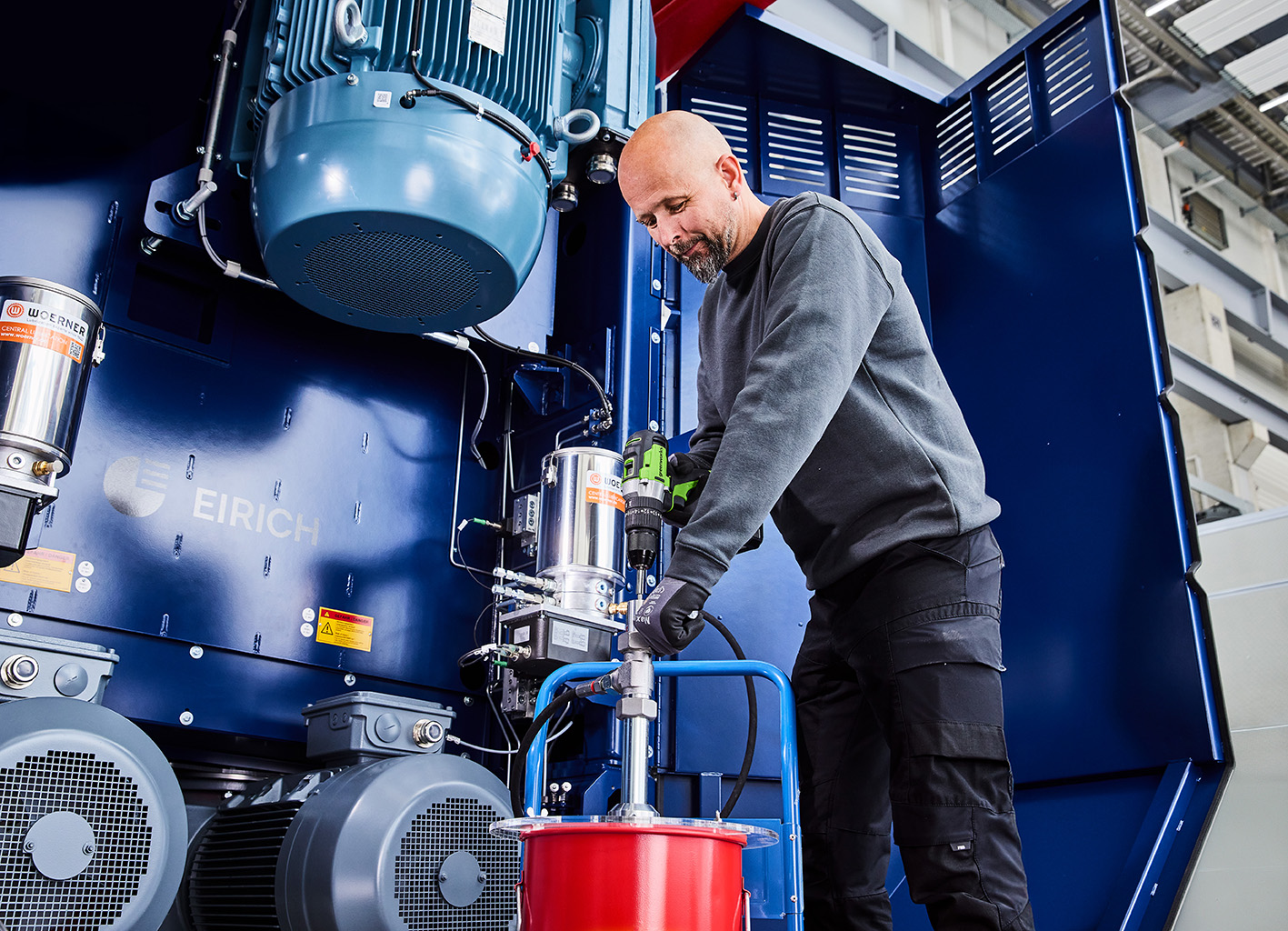
Handling lubricating grease can be a physically demanding task for maintenance engineers. This is especially true when thick grease has to be delivered using ergonomically unfavourable hand pumps. The Lutz Lube Drive filling tool, which can be powered by a cordless screwdriver, provides relief. It will be on display from 25 to 26 February at the Pumps & Valves 2026 trade fair in Dortmund (Hall 7, Stand 7228). Lutz Pumpen will also be showcasing the Battery B2 mobile drum pump, designed to make transferring liquids from canisters and hobbocks easier.

At the Lutz Pumpen stand, maintenance engineers can see for themselves how easy the Lube Drive is to operate compared to a hand pump. They can simply place the eccentric screw pump tube in a lubricating grease container and attach a cordless screwdriver with a bit holder. This drives a metal stator, which evenly pumps the lubricating grease through a hose. “Thanks to this energy-saving mode of operation, workplaces can be made significantly more ergonomic,” says Klaus Wadel, Sales Manager at Lutz Pumpen. “Whether maintaining vehicles in forestry, machinery in agriculture, or equipment in industrial plants, inappropriate physical strain often leads to health issues and costly employee absences.” The system’s delivery rate is up to 2 kg/min. It is suitable for all commercially available lubricating greases up to NLGI-2.

Makes filling central lubrication systems easier: the Lutz Lube Drive

One of the users of the Lube Drive is the contracting company May from Steinfurt, which supports farmers in the region with field and harvesting work. The company operates a large fleet of machines and vehicles that require regular lubrication. “The compact design and the ability to simply connect the pump to a cordless screwdriver noticeably reduce strain on the hands, arms, and back,” says Michael Bundschuh, machinist and agricultural service technician at May. “For us, the Lube Drive is therefore more than just a technical aid; it offers real benefits in terms of workplace ergonomics and comfort.”

B2 Battery drum pump: no back pain, no spillage

At Pumps & Valves 2026, Lutz Pumpen will be presenting another product that improves ergonomics in the workplace: the B2 Battery cordless drum pump. It consists of three modular components: a plug-in 260 W DC motor with a replaceable lithium-ion battery, pump tubes with impeller or rotor in immersion depths of 500, 700, 1,000 and 1,200 mm, and a hose with a nozzle. One battery charge is sufficient to empty a 200-litre container 12 times.

B2 Battery barrel pump facilitates refueling of vehicles

Its modular design allows users to equip multiple containers with a pump tube and seamlessly switch between them using a single motor, enabling quick transfer of liquids such as hydraulic oils for machine maintenance or diesel for vehicles. “Many companies still use conventional hand pumps for these tasks. However, liquids can splash and spill, which can lead to a risk of slipping or skin contact with harmful substances,” says Rössler. He goes on to explain that this danger no longer applies when the B2 Battery is used for pumping.

“The canister pumps have made our work a lot faster and more ergonomic at the same time.”

One of the users of the B2 Battery is the firewood dealer Holz-Hoh from Marktheidenfeld. The company uses the mobile cordless pump to refuel its vehicles in the forest. “We used to have to hoist 30-litre canisters of diesel fuel up to the fuel filler neck, which was about waist height. It felt like a compulsory and exhausting workout,” says managing director Pascal Hoh. “We now do this work with the B2 Battery from Lutz Pumpen. Compared to most permanently installed diesel tank pumps, the canister pumps perform far better. They have made our work a lot faster and more ergonomic at the same time.”

For more information visit www.lutz.group

Siemens Energy is investing $1 billion and creating highly skilled jobs in the United States

Siemens Energy has finalised the investment plans presented at its Capital Market Day in Charlotte, North Carolina last November: The company is investing $1 billion to ramp up manufacturing in the United States and will also significantly expand its workforce.

Meeting Unprecedented Electricity Demand

The United States is experiencing an unparalleled surge in electricity demand. The country is rapidly expanding data centres, artificial intelligence infrastructure and next-generation industrial electrification. Meeting this growth requires the accelerated deployment of modern, resilient grid infrastructure and a substantial increase in power generation capacity – ambitions to which Siemens Energy will make a significant contribution.

The programme will include several brownfield expansions, increasing transformer production and servicing, plus strengthening the manufacturing of large gas turbines on American soil. It also includes the construction of a brand-new factory in Mississippi that will build essential grid components. With that approach, Siemens Energy is pursuing a strategy of targeted expansion to ensure the efficient use of manufacturing capacity to meet market demand.

Workforce Development

Siemens Energy will create more than 1,500 highly skilled roles in manufacturing, operations and engineering to help deliver more power to more people throughout the country. Siemens Energy places great importance on providing high quality education, training and development opportunities that enable people at all stages of their careers to make a lasting contribution to the future of the energy industry in the United States.

Leadership Commentary

Christian Bruch, CEO and president of Siemens Energy, said: “Siemens Energy has been making things in the United States for more than a century and we are experiencing a once-in-a-generation growth opportunity due to the resurgence of U.S. manufacturing and the growth of artificial intelligence. The current policy environment has contributed to this momentum. The Trump Administration has made energy security, a reliable and resilient grid, and growing U.S. manufacturing jobs a priority. This has supercharged the energy demand which is supporting new investments across the energy sector. We are excited to help write this next chapter of American energy expansion.”

The Honourable Doug Burgum, United States Secretary of Interior and White House National Energy Dominance Chair, said: “This tremendous investment in a critical part of our power grid supply chain underscores President Trump’s success in expanding supply chain access and bringing major manufacturing back to America. We appreciate great partners like Siemens Energy, who proactively partner with the Trump administration for the benefit of the American people, prioritising critical components to make the United States Energy Dominant!”

Investment Locations

Siemens Energy is investing in these sites in the United States:

Mississippi (Greater Richland Area): Constructing a new high-voltage switchgear facility to build essential grid components. The facility also plans to hire up to 300 new employees and will include a state-of-the-art training centre to further the company’s commitment toward workforce development.

North Carolina (Charlotte, Winston-Salem and Raleigh): Increasing manufacturing and servicing capabilities for large power transformers and resuming gas turbine manufacturing in Charlotte; producing gas turbine parts in Winston-Salem; and expanding grid technology project execution, engineering and sales alongside research and development in Raleigh. The company also will add 500 jobs throughout these three communities, in addition to continuing strong partnerships with local trade schools and universities to develop and train the next generation of energy workers.

Florida (Orlando and Tampa): Growing the Tampa facility to manufacture more blades and vanes, critical parts in the supply chain for gas turbines. In Orlando, upgrading research and development capabilities at the company’s Innovation Center, including building an artificial intelligence digital grid technologies laboratory with NVIDIA. Also relocating and modernising the headquarters to Orlando’s Lake Nona community to provide an enhanced experience for employees and ensure continued growth in the region.

Alabama (Fort Payne): Expanding production of copper and insulation electrical components for generators, creating 120 new jobs.

New York (Painted Post) and Texas (Houston): Upgrading facilities that manufacture and service compression equipment used to move gas and liquids through pipelines.

For more information visit www.siemens-energy.com

JERA signs 27-year LNG supply agreement with QatarEnergy

JERA Co., Inc., a global energy leader and Japan’s largest power generation company, has announced the signing of a long-term liquefied natural gas sale and purchase agreement with QatarEnergy to secure the supply of 3.0 million tonnes per annum for 27 years, with deliveries expected to commence in 2028.

Agreement Signing

The agreement was signed on the sidelines of the 21st International Conference and Exhibition on Liquefied Natural Gas (LNG 2026) in Doha, by Mr. Yukio Kani, global CEO and chair of JERA and His Excellency Mr. Saad Sherida Al-Kaabi, the minister of state for Energy Affairs and the president and CEO of QatarEnergy.

Under this SPA, LNG will be supplied on a delivered ex-ship (DES) basis from Qatar’s LNG production facilities.

Building on 30-Year Partnership

This agreement marks a new chapter in a partnership started over 30 years ago. As one of the world’s largest producers with abundant natural gas reserves, Qatar has long been a cornerstone of Japan’s energy security, notably providing critical emergency LNG supplies following the Great East Japan Earthquake in March 2011. Building on the legacy inherited from its founding shareholders, JERA has further nurtured a longstanding partnership with QatarEnergy over the past decade.

Supporting Japan’s Energy Future

As Japan expects an increase in electricity demand driven by the expansion of data centres, semiconductor manufacturing and other energy-intensive infrastructure, gas-fired power generation will continue to play a critical role in maintaining Japan’s energy stability. This procurement aligns with Japan’s Seventh Strategic Energy Plan, which positions natural gas as an important energy source even after achieving carbon neutrality, underscoring the importance of securing long-term, stable LNG supplies.

Yukio Kani, global CEO and chair of JERA, said: “We are delighted to achieve this milestone and to further deepen our steadfast relationship with QatarEnergy. This agreement solidifies a vital pillar of JERA’s strategy to strengthen our global portfolio and support the surging energy demand of tomorrow. It ensures we remain fully aligned with Japan’s national policy and the energy transition goals, securing a stable and resilient energy future for the nation.”

Resilient Procurement Strategy

JERA remains committed to building a resilient, well-balanced LNG procurement portfolio by sourcing from the Middle East, Asia Pacific, the United States and other regions. The Company will continue to strengthen its stable and flexible LNG procurement and operational capabilities, while advancing public-private collaboration frameworks that enable timely and effective responses amid market fluctuations. Through these initiatives, JERA continues to make a substantial contribution to Japan’s long-term energy security.

For more information visit www.jera.co.jp

Penspen delivers record year with $500m in contract awards in 2025 – up 120% year-on-year

Penspen has announced a record year, securing $500 million in new contract awards in 2025, up 120 percent on 2024. The performance was driven by strong growth across the Middle East, Africa, Europe and the Americas, supported by major energy infrastructure and energy transition programmes.

The milestone reflects a year of strong global performance across engineering, project management consultancy (PMC) and asset integrity services, supporting national oil companies, utilities and infrastructure developers on complex energy projects worldwide.

Left: Neale Carter, executive vice president Right: Peter O’Sullivan CEO

Penspen’s record year was underpinned by growth and delivery across its key operating regions:

  • Middle East and Africa: 65 new contracts worth $456million, spanning project management supervision and consultancy services, FEED, detailed design and integrity assessment
  • Kingdom of Saudi Arabia: 12 new agreements, covering studies, FEED, detailed design and project management supervision services
  • UK and Europe: 177 new contracts worth $16million, including fuelling terminal operations, pipeline maintenance and inspection, hydrogen repurposing and blending, carbon capture studies, gas compression upgrades and pipeline diversions
  • Americas: 54 new contracts worth $5million, including pipeline fitness-for-service, electrical interference and cathodic protection studies, gas pipeline project management, production operations support and environmental testing

Energy transition momentum accelerates in Europe 

In the UK and Europe, Penspen continued to grow its energy transition order book through hydrogen, CO₂ and green ammonia projects, supporting the development of lower-carbon infrastructure at scale. This included two major contract wins: United Infrastructure’s Liverpool Bay project, where Penspen is delivering detailed engineering design for the development of onshore CO₂ pipelines and above-ground installations to the Liverpool Bay CCS Storage Facility, and the Trans Adriatic Pipeline, where Penspen is supporting one of Europe’s most strategic energy infrastructure assets through hydrogen repurposing assessment and gap analysis services.

Penspen also secured a new three-year contract to continue the provision of operations and maintenance services for Uniper’s Isle of Grain and Enfield power stations, reinforcing its long-term role supporting critical energy assets.

Expansion in Latin America 

In Latin America, Penspen expanded its service offering with the award of a major project management services contract by Grupo Carso, supporting the construction of a new pipeline in Mexico and helping secure access to energy for communities in the north of the country.

Additional asset integrity contracts were also awarded across Colombia, Peru and Chile, with clients including Sempra Infrastructure, ENAP and Perenco, strengthening Penspen’s delivery footprint across the region.

Middle East remains a strategic growth engine 

The Middle East continued to be a cornerstone market for Penspen in 2025, with the UAE remaining its largest and most strategic country of operation, supported by deep engagements across the ADNOC Group.

During the year, Penspen secured and executed multiple high-value PMC assignments supporting critical gas infrastructure, including LNG pre-conditioning, compression facilities, utilities and production enhancement programmes, alongside multiple offshore and onshore PMC packages.

The breadth and scale of delivery across ADNOC Gas, Offshore, Onshore, Distribution and downstream entities firmly establish Penspen as one of the ADNOC Group’s top-20 energy sector contractors operating in the UAE.

In Saudi Arabia, Penspen continued to build momentum through its selection under a framework with ENOWA, executed through a joint venture with Dar Al Handasah and in collaboration with Technip, positioning Penspen at the heart of NEOM’s next-generation energy and water infrastructure.

Peter O’Sullivan CEO, said: “2025 was a year marked by scale, complexity and geographic reach for Penspen, reinforcing our position as a trusted engineering, project management and asset integrity partner to national oil companies, utilities and infrastructure developers. With cumulative contract awards of $500 million, 2025 stands out as one of the strongest commercial and delivery years in Penspen’s history.

“While we continued to build momentum across Europe and the Americas – particularly in energy transition – our performance was anchored by exceptional delivery in core markets where demand for large-scale, complex energy infrastructure remains strong. This record year has been driven by our people’s unwavering commitment to quality delivery; in 2025, our headcount increased to over 1,700 talented people, with new offices opened in Aberdeen and Bogota.”

Neale Carter, executive vice president, Middle East, Africa and Asia Pacific Regions, added: “The Middle East was the single largest contributor to Penspen’s growth in 2025, accounting for the majority of our contract awards and reinforcing the region’s role as a strategic engine for the business.

“Our long-standing relationships across the UAE and Saudi Arabia, combined with our ability to deliver complex PMC, gas and LNG infrastructure programmes at scale, continue to differentiate Penspen in a highly competitive market. With sustained investment across gas, energy security and transition-linked infrastructure, we see significant opportunity to build on this momentum in the years ahead.”

For more information visit www.penspen.com

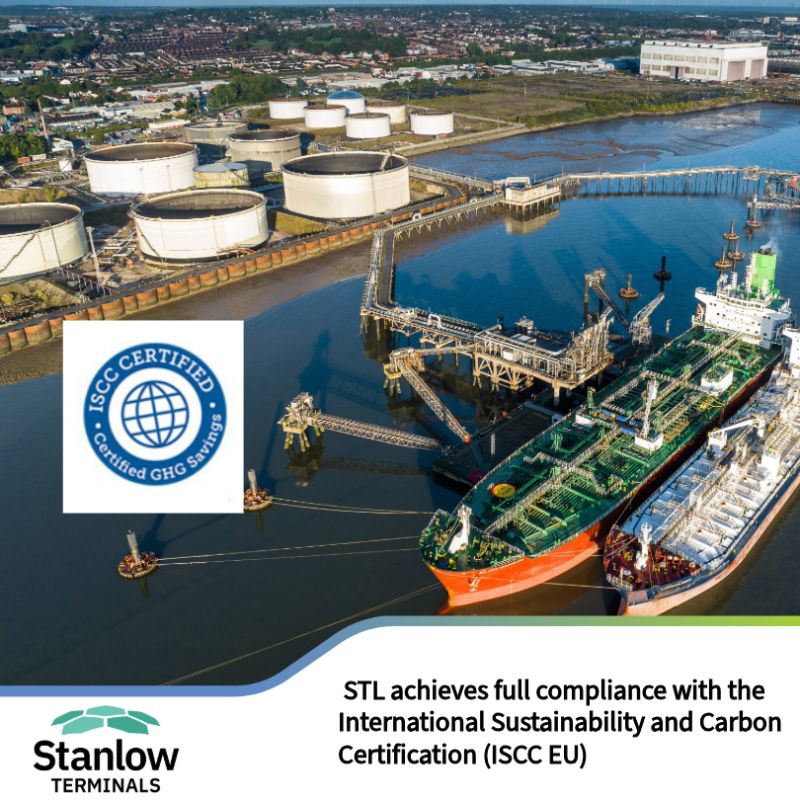
Stanlow Terminals maintains full ISCC EU certification compliance

Stanlow Terminals Ltd (STL) has announced that it has once again maintained full compliance with the International Sustainability and Carbon Certification (ISCC EU), a globally recognised standard for sustainable, transparent and climate-responsible supply chains.

This achievement reflects the dedication of Stanlow Terminals’ teams and the company’s ongoing commitment to enabling low-carbon fuels, responsible operations and a more sustainable energy future.

For more information visit www.stanlowterminals.co.uk

Devon Energy and Coterra Energy to combine, creating a premier shale operator

Devon Energy and Coterra Energy have announced the signing of a definitive agreement to merge in an all-stock transaction. The combination will create a leading large-cap shale operator with a high-quality asset base anchored by a premier position in the economic core of the Delaware Basin.

The combined company will be named Devon Energy and will be headquartered in Houston while maintaining a significant presence in Oklahoma City. The formation of this premier company is expected to unlock substantial value by leveraging each company’s core strengths and through the realisation of $1 billion in annual pre-tax synergies. The realisation of synergies, technology-driven capital efficiency gains and optimised capital allocation will drive near and long-term per share growth.

Key Highlights

  • Transformative merger combines high-quality assets and complementary technical capabilities
  • Creates a scaled, large-cap E&P with leading inventory duration and durable free cash flow
  • Devon to be a leader in the Delaware Basin, with more than 10 years of high-quality inventory
  • $1.0 billion in identified pre-tax synergies projected to drive significant, annual free cash flow improvements
  • Integration of technology platforms expected to materially enhance capital efficiency
  • Accretive to key per-share financial measures, including free cash flow and net asset value
  • Committed to returning capital to shareholders through a planned quarterly dividend of $0.315 per share and a new share repurchase authorization exceeding $5 billion, both subject to Board approval
  • All-stock transaction enhances investment-grade financial strength and lowers future cost of capital

Transaction Details

Under the terms of the agreement, Coterra shareholders will receive a fixed exchange ratio of 0.70 share of Devon common stock for each share of Coterra common stock. Based on Devon’s closing price on January 30, 2026, the transaction implies a combined enterprise value of approximately $58 billion. Upon completion, Devon shareholders will own approximately 54 percent of the go-forward company and Coterra shareholders will own approximately 46 percent on a fully diluted basis.

The transaction, which was unanimously approved by the boards of directors of both companies, is expected to close in the second quarter of 2026, subject to regulatory approvals and customary closing conditions, including approvals by Devon and Coterra shareholders.

CEO Commentary

Clay Gaspar, Devon’s president and CEO, said: “This transformative merger combines two companies with proud histories and cultures of operational excellence, creating a premier shale operator. We’ve now built a diverse asset base of high-quality, long duration inventory to drive resilient value creation and returns for shareholders through cycles. Underpinned by our leading position in the best part of the Delaware Basin, and a deep set of complementary assets, we expect to capture annual pre-tax synergies of $1 billion. This will drive higher free cash flow and greater shareholder returns beyond what either company could achieve alone.”

Tom Jorden, chairman, CEO, and president of Coterra, said: “This combination enhances the Delaware and brings together two premier organisations with complementary cultures rooted in operational excellence, disciplined capital allocation, and data-driven decision-making focused on creating per share value. The combined company will offer best-in-class rock quality and inventory depth, supported by a balanced commodity mix, leading cost structure, and a conservative balance sheet. Devon Energy will be strongly positioned to deliver top-tier capital efficiency gains and consistent profitable per share growth through the commodity cycles.”

Transaction Benefits

Creates a premier large-cap shale operator: The merger will create one of the world’s leading shale producers, with pro forma third quarter 2025 production exceeding 1.6 million barrels of oil equivalent (Boe) per day, including over 550 thousand barrels of oil per day and 4.3 billion cubic feet of gas per day. The combined company’s portfolio will be anchored by world-class acreage in the Delaware Basin, complemented by a balanced and diversified product mix that positions the company to deliver a resilient free cash flow profile.

Expands the Delaware, America’s premier basin: The combined company will be one of the largest producers in the Delaware Basin, with pro forma third quarter 2025 production of 863,000 Boe per day distributed across nearly 750,000 net acres in the core of the play. This franchise asset will account for more than 50 percent of the combined company’s total production and cash flow, underpinned by more than 10 years of top-tier inventory, including the largest amount of sub-$40 inventory in the industry.

Delivers significant cost synergies: The company expects to achieve $1.0 billion in annual pre-tax merger synergies by year-end 2027. Synergies to be realised through an optimised capital programme, operating margin improvements and streamlined corporate costs. The all-stock structure of the transaction ensures shareholders of both Devon and Coterra will fully benefit from this value creation.

Technology-focused leader: The combined AI capabilities of both organisations will establish a strong technology platform across subsurface, operations and enterprise functions. AI-driven optimisation will enhance capital efficiency, operational performance and decision-making at scale.

Accretive to financial metrics: The transaction is expected to be accretive to all shareholders on key per-share financial measures, including free cash flow and net asset value.

Accelerates shareholder returns: The company’s strong financial foundation combined with accretion from synergy capture will allow for the acceleration of cash returns to shareholders. Upon closing, the company plans to declare a quarterly dividend of $0.315 per share and establish a new share repurchase authorisation in excess of $5 billion, both subject to board approval.

Maintains fortress balance sheet: Enhanced economies of scale and an investment-grade balance sheet are expected to lower the company’s future cost of capital. The company has one of the strongest capital structures in the sector, with an estimated pro forma net debt-to-EBITDAX ratio of 0.9x and $4.4 billion in total pro forma liquidity as of September 30, 2025.

Governance and Leadership

Following the merger, the board of directors will consist of 11 members, six directors from Devon and five from Coterra. Clay Gaspar will serve as president and CEO, and Tom Jorden will assume the role of non-executive chairman of the board. Devon will appoint the lead independent director. The CEO and executive leadership will be based in Houston with executive leadership comprised of talent from both Devon and Coterra.

For more information visit www.coterra.com

SAFE TANK SOLUTIONS partners with SafeGlo™ to enhance tank storage safety and visibility

SAFE TANK SOLUTIONS has announced a partnership with SafeGlo™ to simplify sourcing for tank farms, terminals and bulk storage operators, combining flexible, explosion-proof LED strip lighting with trusted tank storage equipment and instrumentation.

Enhanced Safety and Visibility

SafeGlo™ delivers measurable safety improvements to the tank storage sector through high-performance lighting designed for critical operational environments. Ideal for ladder wells, handrails and tank-top platforms—where relief valves, gauge hatches and level instrumentation are located—SafeGlo enhances visibility during nighttime operations while driving long-term cost savings.

About SAFE TANK SOLUTIONS

SAFE TANK SOLUTIONS is a provider of tank storage equipment and instrumentation, serving tank farms, terminals and bulk storage operators with comprehensive safety and operational solutions.

About SafeGlo™

SafeGlo™ specialises in explosion-proof LED strip lighting solutions designed specifically for hazardous environments in the tank storage and petrochemical sectors, delivering enhanced safety and operational efficiency.

For more information visit www.safetanksolutions.com

Provaris and Yinson Production advance MOU with Himile to confirm feasibility of LCO₂ tank production

Provaris Energy Ltd  has announced that, in collaboration with its LCO₂ tank development partner Yinson Production, it has entered into a Memorandum of Understanding with Himile Heavy Equipment Co. Ltd to assess fabrication and costs of proprietary LCO₂ tanks at Himile’s manufacturing site in Rushan, China.

Himile’s Manufacturing Expertise

Himile is part of the Himile Group established in 1995, based in the Shandong Province of China, with assets of approximately USD 3 billion and more than 30,000 employees. Himile has an extensive track record working with global energy and EPC companies in the construction of large, complex modules for the oil and gas industry, having supplied 80% of the static equipment and skids for FPSOs developed in the past five years, including more than 25,000 pressure vessels. Additionally, Himile has an established history of delivering large complex modules for integration onto FLNGs, FPUs, and FPSOs/FSOs.

Collaborative Development Scope

The effort will focus on the preliminary design of a detailed robotic production facility and cost estimation to fabricate proprietary LCO₂ tanks suitable for Floating Storage and Injection Unit (FSIU) opportunities for Yinson Production. A kick-off meeting was held at Himile’s Rushan facility in mid-January 2026, where the following scope and roles were confirmed:

  • Provaris will develop and provide the preliminary design for the required robotic cells, material selection and laser-welding equipment to be installed at Himile’s Rushan facility, including a preliminary ‘digital twin’ that models full automation.
  • Himile will develop preliminary design packages for the required modifications and upgrades of their Rushan facility, including the installation and commissioning of the robotic fabrication cells. In addition, Himile will develop estimates for tank fabrication costs (FOB Rushan) and provide estimated dates for completion of factory upgrades and first deliveries of the LCO₂ tanks.
  • Yinson Production will support with studies on handling tanks from Rushan to selected shipbuilders, including integration of tanks in their FSIUs under development in 2026.

Industry Leadership Comments

Per Roed, chief technical officer at Provaris, commented: “We are excited to advance the collaboration with Himile on the next phase of the LCO₂ tank development given their expertise and extensive track record to date. Following our visit to their modern facility and processes implemented at their Rushan facility, we are confident that Himile can deliver a high-quality, cost-effective tank to meet the expected growth in maritime and offshore LCO₂ markets. Tanks that will be significantly larger than those currently offered in the market will offer cost benefits that will be of significant value to Yinson Production’s FSIU projects and other potential customers for carriers and storage.”

Lars Gunnar Vogt, chief technical officer at Yinson Production, commented: “This MOU is an important step in translating advanced tank design into scalable, industrialised fabrication. Working with Provaris and Himile allows us to assess not just technical feasibility, but also manufacturability, cost, and delivery timelines. These are factors that are critical as we develop FSIU concepts for carbon capture and storage value chains.”

Zongkui Han, President for Himile Heavy Industries, added: “We are delighted to partner with Provaris and Yinson Production on the fabrication of H2 and LCO₂ tanks – a venture with broad future prospects that is highly aligned with the prevailing policies for carbon capture and hydrogen energy. We are fully committed to leveraging our rich experience in heavy equipment fabrication to contribute to the success of the project.”

LCO₂ Tank Program Progress

Provaris is continuing with the delivery of the FEED and Class Approvals of a large-scale LCO₂ tank designed for Yinson Production, including the design of automated fabrication processes through the use of robots and laser welding. Final Phase 1 deliverables will be submitted to Yinson Production in January 2026, with Phase 2 to follow. The FEED programme includes an ongoing class approval process with DNV with target completion by mid-2026.

For more information visit www.provaris.energy

Wärtsilä chosen for a major US power plant project addressing critical energy demand driven by data center development

Technology group Wärtsilä has secured an order to supply 24 Wärtsilä 50SG gas engines for a 429 MW power plant in the United States, owned and operated by an investor-owned utility. The facility will provide electricity to support a large data centre development. The order was booked in the first quarter of 2026.

The project reflects the growing pressure on US power infrastructure as data centre expansion accelerates nationwide. Wärtsilä’s engine-based generation technology is designed to provide fast, flexible capacity capable of responding to rapid changes in demand while supporting grid stability.

Wärtsilä has been awarded an order to supply engines for an American power plant owned and operated by an investor-owned utility. This order is for 24 Wärtsilä 50SG engines delivering an output of 429 MW. © Wärtsilä Corporation

The Wärtsilä 50SG engine offers high efficiency in a compact design and is suited for both baseload and balancing applications. Its fast-start capability enables rapid response to fluctuating loads associated with data centres, as well as variability from renewable energy sources.

Delivery of the engines will follow an accelerated project schedule, with commercial operations expected to begin in late 2028 and early 2029.

For more information visit www.wartsila.com

MOL Group and Libya’s National Oil Corporation to establish strategic partnership in the oil industry

MOL Group has entered into a new strategic partnership with Libya’s National Oil Corporation. The Memorandum of Understanding sets the foundation for cooperation in hydrocarbons exploration, technological innovation and crude trading.

Strategic Framework

The memorandum of understanding was signed in Budapest by MOL Group Chairman and CEO Zsolt Hernádi and Masoud Suleman, chairman of the National Oil Corporation (NOC).

The strategic partnership agreement sets out the framework for NOC and MOL to exchange information and jointly explore potential areas of cooperation. These include hydrocarbon exploration and production, technological and field development innovations, oilfield services opportunities in Libya, crude supply and trading activities.

Regional Resilience and Energy Security

Zsolt Hernádi, chairman and CEO of MOL Group, said: “We recognise Libya’s oil and gas industry as a pillar of strength and expertise. I am sure that this new agreement will act as a catalyst for further expanding our international portfolio, creating clear mutual value for both companies and reinforcing the resilience of our region. From the perspective of security of supply and energy sovereignty, particularly for landlocked countries, diversification of sources is of crucial importance. Our cooperation also goes beyond business, as we have agreed to rebuild our educational, scientific, and university ties in order to learn as much as possible from each other. Such partnerships can also help Europe to find its own path to competitiveness, rather than switching between different forms of energy dependency.”

International Portfolio Expansion

As part of MOL Group’s international portfolio, the company has oil and gas exploration and production assets in nine countries, with production in eight countries: Croatia, Azerbaijan, Iraq, Kazakhstan, Russia, Pakistan, Egypt and Hungary. To maintain the updated SHAPE TOMORROW strategy target of at least 90 thousand barrels of oil equivalent per day production level over the next five years, MOL aims to further strengthen its international portfolio and seeks additional strategic partnerships.

Consequently, MOL has recently signed cooperation agreements with the national oil company of Kazakhstan (KazMunayGas), the national oil company of Azerbaijan (SOCAR), and the national oil company of Türkiye (Turkish Petroleum). As a result, MOL as operator starts onshore exploration in the Samakhi-Gobustan region of Azerbaijan, and joint exploration already started in Hungary with Turkish Petroleum.

For more information visit www.mol.hu

MB Energy inaugurates Hydrogen Refuelling Station for trucks in Lübeck

On 29 January, the MB Energy Group marked a significant milestone in its commitment to building a viable hydrogen infrastructure with the inauguration of a hydrogen refuelling station for heavy-duty vehicles (HDVs) in Lübeck, Germany. The official opening was attended by key customers, partners and stakeholders, including Jan Lindenau, Mayor of the Hanseatic City of Lübeck.

Construction of the station began following the receipt of the official building permit in July 2025. Designed by hydrogen infrastructure specialist Hypion, the facility has a daily capacity of up to 2,000 kilograms of hydrogen and is capable of refuelling up to 50 trucks per day.

Stefan Rehm, MD Hypion GmbH; Philipp Kroepels, director new energy, MB Energy; Jan Lindenau, mayor of the Hanseatic City of Lübeck; Annet van der Laan, CFO MB Energy; Till Homrighausen, hylane © MB Energy Holding GmbH & Co. KG

Strategically located close to the A1 and A20 motorway junction, the station sits alongside an existing diesel refuelling facility already operated by the MB Energy Group. It has been fully integrated into the group’s commercial road transport infrastructure, which includes more than 400 conventional fuel stations within the tankpool24 network.

Philipp Kroepels, director of new energy at MB Energy, highlighted the significance of the project, noting that the inauguration represents a tangible step towards supporting Germany’s hydrogen economy. He acknowledged the efforts of the project team, partners and suppliers in delivering the station within a short timeframe.

The project received financial support from the German Federal Ministry for Transport under the KsNI programme, which promotes climate-friendly commercial vehicle technologies and associated infrastructure.

Florian Lückmann, director of commercial road transport at MB Energy, emphasised the role of hydrogen in providing practical decarbonisation solutions for logistics and long-haul transport. He noted that the station enhances the company’s ability to offer low-carbon energy options, with hydrogen delivering short refuelling times, extended driving ranges and no compromise on payload capacity. He also reaffirmed MB Energy’s long-term commitment to developing a reliable and scalable hydrogen refuelling network.

The hydrogen station forms part of the wider tankpool24 network, which comprises more than 2,000 fuelling locations across Europe, including over 750 in Germany. The MB Energy Group’s commercial road transport unit is responsible for its integration and ongoing operation.

MB Energy continues to advance its multi-fuel strategy by investing in hydrogen, biofuels and e-fuels to support customers’ decarbonisation efforts. During 2025, the group established hydrogen refuelling stations in Sweden through its local operations and secured funding for additional sites.

The Lübeck project was developed and delivered in close collaboration with Hypion GmbH. Dr Stefan Rehm, managing director of Hypion, noted that the Lübeck hydrogen hub represents the company’s second high-performance refuelling station for heavy-duty mobility in Schleswig-Holstein, following the facility in Neumünster. He highlighted the importance of partnerships in accelerating the adoption of emission-free transport solutions.

With three hydrogen refuelling stations now fully operational, the MB Energy Group continues to strengthen its position in supporting future-focused commercial transport and accelerating the energy transition within the mobility sector.

For more information visit www.mbenergy.com

Europe maintains hydrogen commitment despite IMO setback, DNV analysis shows

Three months after the International Maritime Organization’s decision to delay a vote on the net zero framework, Europe continues to demonstrate commitment to hydrogen development through sustained policy support, infrastructure deployment, and production projects, according to analysis by Marte Riiber de Picciotto, service area manager, energy systems at DNV.

The October IMO meeting decision, effectively a no vote, was widely seen as a setback for hydrogen-derived fuels in shipping. Concerns were also amplified by strong lobbying against EU sustainable aviation fuel mandates, leading to well-justified fears that momentum would be lost.

Yet the past three months tell a different story, according to de Picciotto. Across Europe, hydrogen is still moving forward in policy, infrastructure, and production, albeit more selectively and at a more measured pace.

Europe Keeps Funding Hydrogen

European Hydrogen Bank: Launched its third auction in December with a EUR 1.3 billion budget, including EUR 300 million for maritime and aviation. Germany will add another EUR 1.3 billion for green hydrogen from Denmark, and Spain will contribute EUR 415 million. Spanish projects have been among the most successful in the auctions, though only a portion of projects awarded in earlier rounds have ultimately signed grant agreements.

German power plants: In January, the German government and the European Commission reached an “agreement in principle” to tender 12 GW of new hydrogen-ready gas-fired power plants this year. These backup plants would need to be fully decarbonized by 2045.

Policy Support Remains in Place

Sustainable Transport Investment Plan: Launched in November, with nearly EUR 3 billion in subsidies for clean aviation and maritime fuels by 2027, partly delivered through the European Hydrogen Bank and the Innovation Fund.

Innovation Fund: In December, the European Commission launched the latest round for net-zero technologies, with a total budget of EUR 2.9 billion. Part of this funding is likely to be awarded to hydrogen and derivative projects, in line with previous awards.

Projects of Common Interest (PCI): The second EU PCI list was announced in December, covering cross-border hydrogen pipelines, storage, and electrolyser developments. Once adopted, projects can access subsidies from the Connecting Europe Facility (CEF) for Energy, which has a 2028-2034 budget of almost EUR 30 billion.

Offshore Wind Declaration: At the North Sea Summit in Hamburg, the offshore wind declaration explicitly mentions the potential of offshore hydrogen production and calls for a “coordinated offshore system that combines offshore wind with hydrogen production”.

Infrastructure Moving from Plans to Pipelines

Germany: December saw 400 km of the Flow pipeline, part of the Core Grid, commissioned and ready for commercial operation.

Netherlands: Gasunie’s 32 km Rotterdam industrial cluster pipeline is almost complete, with first hydrogen flows expected later in 2026.

Denmark: Energinet will launch its capacity sale for the Danish hydrogen backbone on January 30, with the sale remaining open until December 1.

From DNV’s project experience, close to 70 percent of onshore pipelines are already technically suitable for hydrogen. The remainder also show potential, though some will require additional testing before hydrogen can safely flow. None of the pipelines assessed by DNV have been ruled out, making repurposing existing infrastructure a low-risk, cost-efficient way to support a gradual hydrogen transition. To secure cost-efficient solutions, each case needs to be assessed individually, taking asset-specific and key operational parameters into account.

Production Projects Begin to Deliver

Production projects are not standing still either. Hydrogen Europe’s most recent Clean Hydrogen Monitor shows that 2.8 GW of electrolysers are under construction in Europe. For example, Shell is nearing completion on its 200 MW Holland Hydrogen 1 project in Rotterdam; OMV is building a 140 MW plant in Austria, set to start operations by the end of next year; RWE has begun commissioning the first 100 MW phase of its 300 MW GetH2 Nukleus project in Lingen, Germany; and Uniper plans a final investment decision on the first 200 MW of its H2Maasvlakte project in the Netherlands. In Spain, Repsol has just taken FID on a 100 MW plant in the Petronor industrial complex in Bilbao.

These projects may not yet match the scale once imagined, but they are critical incremental steps toward a functioning hydrogen sector, according to de Picciotto.

A Question of Timing, Not Direction

As DNV’s Energy Transition Outlook shows, hydrogen and its derivatives will be critical over the long term, particularly for hard-to-electrify sectors. By 2060, these sectors are projected to rely on hydrogen for roughly 10 to 35 percent of their energy demand. To meet the goals of the Paris Agreement, hydrogen and its derivatives would need to account for about 15 percent of all global energy demand by 2050.

At the same time, deployment today falls far short of these levels. Hydrogen is projected to make up just 0.15 percent of the global energy mix by 2030, rising to around 4 percent by 2050 and close to 6 percent by 2060.

Against this backdrop, Europe is not stepping back from hydrogen, de Picciotto concludes. The region is getting more selective. Funding is still being provided, and production and infrastructure projects are still being built and commissioned. Progress may be slower, but it is grounded, practical and directed toward the hard-to-electrify sectors that will need hydrogen and its derivatives to achieve net zero in practice.

For more information visit www.dnv.com

EcoCeres inaugurates first sustainable aviation fuel plant in Malaysia, strengthening Hong Kong’s role in Asia’s Green Energy transition

EcoCeres Inc., a leading pure-play renewable fuels producer rooted in Hong Kong and recognized as a home-grown “unicorn”, has officially launched its state-of-the-art renewable fuel facility in Pasir Gudang, Johor, Malaysia, marking a historic milestone as the country’s first Sustainable Aviation Fuel (SAF) production plant. Commissioning and start-up of the plant were successfully achieved in October 2025. The facility also produces Hydrotreated Vegetable Oil (HVO) and Renewable Naphtha, with a combined maximum production capacity of 420,000 tonnes per year, reinforcing the company’s position in the global renewable fuels landscape and underscoring Hong Kong’s contribution as a platform for green innovation and investment.

Official Launch Ceremony

As host of the ceremony and a founding investor of EcoCeres, Dr. Peter Lee, chairman of Towngas and principal of Full Vision Capital, warmly welcomed YB Datuk Seri Dr. Noraini Ahmad, minister of Plantation and Commodities Malaysia, and invited her to officiate the inauguration of EcoCeres’ first SAF plant in Malaysia. The ceremony was further graced by Mr. Eddie Cheung, JP, permanent secretary for Environment and Ecology of the Hong Kong Special Administrative Region, together with EcoCeres co-chairmen Mr Alan Chan and Mr. James Tam, and CEO Mr. Matti Lievonen. Their presence marked a significant milestone and underscored the Hong Kong-headquartered company’s pivotal role in advancing cross-border collaboration in the low-carbon economy.

Regional Commitment to Sustainability

Reflecting on EcoCeres’ journey, Dr. Peter Lee said: “EcoCeres has grown from a laboratory in Hong Kong into one of the world’s leading producers of SAF, and this new Johor plant shows how regional commitment to sustainability can feed into the global search for climate solutions. With supportive government policies and the dedication of all our partners, we can turn the tide on climate change for future generations.”

Eddie Cheung, JP, permanent secretary for environment and Ecology of the Hong Kong Special Administrative Region, said: “EcoCeres shares Hong Kong SAR Government’s vision of achieving carbon neutrality and being a superconnector. The Johor SAF plant is a shining example of a Hong Kong company with a global vision putting one of its production facilities in a strategic location in the region.”

Technology-Driven Growth

As a technology-driven company, EcoCeres has developed its own proprietary waste-to-fuel processes in Hong Kong and successfully scaled them through its first facility in Zhangjiagang, China, which has helped the company become one of the world’s leading SAF producers by volume.

Matti Lievonen, CEO of EcoCeres, said: “The Johor plant is a major step forward for EcoCeres’ regional platform and for Malaysia’s renewable fuel industry. It also demonstrates our commitment to reliable supply capability and high product quality as customers’ demand for renewable fuel solutions accelerates. This facility supports Malaysia’s transition towards net-zero while strengthening Hong Kong’s strategic position as a regional hub for financing and scaling sustainable energy projects, enabling the supply of sustainable fuels to global industries. Our waste-to-fuel technology proves that economic growth and environmental stewardship can go hand-in-hand.”

Supporting Malaysia’s Net-Zero Goals

The establishment of this facility is aligned with Malaysia’s commitment to advancing renewable fuel development and adopting waste-to-fuel approaches to achieve its net-zero emissions target by 2050. At the same time, it showcases how Hong Kong’s innovation capabilities, capital markets and professional services ecosystem can enable the deployment of climate solutions across the region, with EcoCeres serving as a prime example of a Hong Kong-founded company commercialising homegrown technologies at scale overseas. By converting waste and residue feedstocks into high-value, low-carbon renewable fuels, EcoCeres supports Malaysia’s transition toward a sustainable and circular economy while addressing the growing demand for renewable fuels across aviation, maritime, transportation, mining and chemical industries.

YB Datuk Seri Dr. Noraini Ahmad, minister of Plantation and Commodities Malaysia, said: “The Malaysian government proudly supports EcoCeres’ pioneering facility, which aligns with our National Energy Transition Roadmap and National Agri-commodity Policy (DAKN) 2030. By fostering innovation in renewable fuels, we are creating high-value jobs, reducing carbon emissions, and strengthening Malaysia’s role as a leader in the green economy. This project exemplifies our commitment to sustainable industrial development.”

Global Expansion Strategy

EcoCeres remains committed to expanding its global footprint in renewable fuels, leveraging pioneering proprietary technologies to meet the increasing demand for sustainable energy solutions. From its Zhangjiagang plant in China to the new Johor facility in Malaysia, the company is building a regional platform anchored in Hong Kong that turns waste to wonders, supports global decarbonisation efforts and reinforces Hong Kong’s position as a super-connector for green development in Asia.

In addition to the Malaysian facility, EcoCeres’ Zhangjiagang plant also produces SAF and HVO, bringing its combined maximum global renewable fuels capacity to approximately 770,000 tonnes per year and further enhancing Hong Kong’s role as the headquarters of an integrated regional renewable fuels platform.

For more information visit www.eco-ceres.com

Eric Brisard joins Greenergy as managing director, France

Greenergy has announced the appointment of Eric Brisard as managing director, France. The newly created role follows the acquisition of French fuels and lubricants supplier Armorine in October 2025. Brisard will oversee Greenergy’s operations in the French market, lead its growth strategy and enhance Armorine’s offering.

Extensive Industry Experience

Brisard joins Greenergy from Bridgestone, where he held the role of managing director for the First Stop and Côté Route networks in France and the Benelux region. He brings extensive industry experience, having previously held senior roles at EG Group and BP.

Adam Traeger, CEO of Greenergy, said: “I am pleased to welcome Eric. He brings strong insight into the French market and the right leadership experience to oversee our operations in France. We are excited to start working together to accelerate Armorine’s European growth.”

Eric Brisard added: “Greenergy is an ambitious organisation, and this is an exciting time to join. I look forward to working with the teams at Greenergy and Armorine as we continue to expand and enhance our offering in the French market.”

For more information visit www.greenergy.com

Technical Toolboxes acquires HUVR to enhance asset integrity data management capabilities

Technical Toolboxes, the global leader in critical assessment software for energy infrastructure, has announced the acquisition of HUVR, a pioneer in inspection data collection and digital workflows for asset integrity programmes. This strategic move combines Technical Toolboxes’ 30-year history and expertise in pipeline and asset engineering software with HUVR’s next-generation asset data platform to redefine how the energy industry manages inspection records, compliance, and decision-making in the future.

Addressing Industry Challenges

Jim Schuchart, CEO of Technical Toolboxes, said: “Our customers have told us about their challenges in storing, sharing, and making decisions on their asset integrity data. Adding HUVR’s capabilities to Technical Toolboxes allows us to more rapidly deliver on connected capabilities between the two platforms. We’re well known for our critical engineering assessments. Integrating that with a flexible data storage platform to increase organisational insights and compliance in asset inspection is the next step in our journey.”

Unified Workflow Integration

Together with the capabilities of HUVR, Technical Toolboxes will create a more unified workflow and better customer experience between inspection field data collection (API 510, 570, 653), critical engineering assessment and data storage that is specifically tailored to the needs of energy asset owners and inspectors, while also ensuring these processes fit into the broader technological requirements of global energy operators.

Earl Crochet, midstream consultant, said: “I’m glad to know that HUVR will now be part of Technical Toolboxes. Having worked with both companies, they have various strengths in the inspection and asset data management spaces. I look forward to seeing how the combination will create more comprehensive solutions for both inspectors and asset owners going forward.”

Proven Track Record

Energy infrastructure operators are under constant pressure to deliver audit-ready compliance and streamline asset inspection processes to reduce costs through better decision making and technology. HUVR has over a decade of innovation serving a broad customer base of some of the world’s leading energy companies (such as ConocoPhillips, Invenergy and BTA Oil) with flexible, scalable asset data storage capabilities, serving as a critical bridge between field inspection, analysis, compliance and decision making.

Hill Davenport, Partner at BTA Oil Producers, said: “The implementation of HUVR’s platform yielded significant, measurable improvements across BTA Oil Producers’ operations and organisation. We look forward to the HUVR/Technical Toolboxes combination to further enhance the significant and measurable results for our company.”

For more information visit www.technicaltoolboxes.com