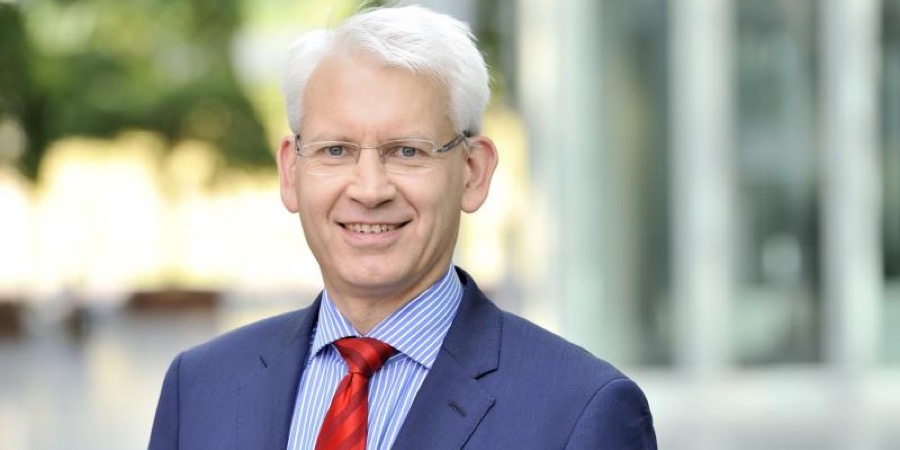

AMPP names Alan Thomas as its CEO

The Association for Materials Protection and Performance (AMPP), a global nonprofit representing more than 32,000 members in the materials, corrosion and coatings industries, announces the selection of Alan Thomas as its new Chief Executive Officer effective April 1.

“It is an honour to welcome Alan to AMPP,” said Amir Eliezer, chair of the AMPP Board of Directors and member of the CEO selection committee. “Alan is an accomplished executive with an admirable leadership track record of over 20 years in CEO roles in the association field and several business entities. Alan thoroughly understands our industry and AMPP’s mission and will continue a values-based leadership approach that will benefit our members. The board is confident that Alan, together with an expert staff team, will ensure the strong execution of AMPP’s Strategic Plan and take advantage of the significant opportunities ahead to increase the global impact that our members can have with their expertise in so many areas.”
Thomas added, “I am thrilled to join and lead AMPP forward. I greatly regard the organisation’s rich history and am happy to add that at one point in my career, I was a member of both the former NACE and SSPC associations. AMPP has significant potential to continue reshaping the future of the corrosion and coatings industries, and I look forward to working with the passionate and talented global membership to accelerate innovation in industry.”

Before this appointment, Thomas served as the Chief Executive Officer for GRIDIRON, LLC, where he oversaw the acquisition and total integration of a lower middle market SaaS company, doubling the size of the business. In 2014, Thomas launched Array Coating Technology, LLC, a full-service industrial blasting, coating, powder coating, and metal finishing company focused on the subsea oil and gas sector, where he cultivated strategic partnerships with industry leaders and customers. A past International Facility Management Association (IFMA) Executive Vice President and Chief Operating Officer, he also was responsible for developing strategic alliances and channel partners globally for the international nonprofit.

Thomas earned his bachelor’s degree in Christian Education from New Orleans Baptist Theological Seminary, and a master’s in business administration in finance from Tulane University. He also is a former member of the US Coast Guard, where he served for six years and received the US Coast Guard Achievement Medal for distinguished leadership and exceptional performance of duty.

“After an extensive search, we know Alan is the right person to guide the organisation as we continue to deliver value to our members and the industry,” said Kristin Leonard, vice chair of the AMPP Global Center Board of Directors, member of the AMPP Board of Directors and member of the CEO selection committee. “We look forward to introducing him to our member community and the wonderful staff that has continued their good work while we conducted our search.”

Thomas succeeds Robert Chalker, who has announced his retirement after a nearly 40-year distinguished career that included 13 years with AMPP.

For more information visit www.ampp.org/home
SSE Thermal exploring low-carbon flexible generation in Ireland

SSE Thermal is exploring options to develop two new low-carbon power stations in Ireland which would help to protect security of supply and provide flexible backup to renewable generation.

Sites in Tarbert in County Kerry and at Platin in County Meath, could provide the location for these new power stations, which would initially run on sustainable biofuel with the potential to convert to hydrogen in the future.

Biofuel provides a lower carbon option for use in power stations, using waste feedstocks to produce valuable flexible electricity making it an important transitionary solution as plans for a greater use of hydrogen and carbon capture are developed. The proposed units will run on Hydrotreated Vegetable Oil (or HVO), which is produced by processing waste oils to create a fossil-free alternative to diesel in accordance with EU sustainability standards.

Development at the two sites could provide up to 450MW of new generation capacity to the grid, with up to 300MW at Tarbert and 150MW at Platin. While in early development and still subject to a final investment decision, these new power stations could be operational as early as 2027, bringing with them the potential to underpin demand for low-carbon hydrogen in Ireland.

SSE’s existing Tarbert Power Station is required to close by the end of 2023 in line with its environmental licence. It was developed in stages between 1966 and 1977, as the final phases of Ireland’s Rural Electrification Programme were being implemented and demand for electricity was on the rise. It was the largest station on the system when it was fully commissioned. The site has a long history of power generation and local expertise, making it an ideal location for a new low-carbon plant, supporting a just transition away from high-carbon activities.

Meanwhile, Platin would help to address acute capacity constraints in the north Leinster region, with the same low-carbon technology.

These proposed stations are intended to participate in the Single Electricity Market’s upcoming Capacity Auction, which is a key tool to deliver the additional units needed to meet rising demand and replace ageing assets. Delivery of such flexible units is highlighted as a ‘national priority’ under Government’s 2021 Policy Statement on Security of Electricity Supply.

The transition to net zero will be renewables-led, but ‘on-demand’ low-carbon flexible generation is required as back-up to support the system when it is not windy or sunny. Government has set an emissions ceiling for the electricity sector requiring an approximate 75% reduction in emissions by 2030, compared to the 2018 baseline.

Likewise, SSE’s own science-based climate targets, following a 1.5-degree pathway, require it to reduce the carbon intensity of the electricity it produces by 80% in the same timeframe. Biofuel provides a transitional step away from fossil fuels and towards low-carbon hydrogen. These innovative units support an orderly transition to net zero, whilst tackling Ireland’s security of electricity supply challenges.

Catherine Raw, Managing Director of SSE Thermal, said: “There is a clear and present need for a new generation of flexible power assets in Ireland and as a company we are determined to play our part. New units at Tarbert and Platin, running on sustainable biofuel, can be a vital part of Ireland’s net zero future.”

“Each would help to address concerns around energy security while providing a clear bridge to a hydrogen future and backing up renewables when the wind doesn’t blow and the sun doesn’t shine. We look forward to engaging with the local communities around each site as we develop these exciting projects further.

“SSE recognises the unique heritage of Tarbert and with this proposal aims to keep power flowing from Tarbert Island for this and future generations. Just as Tarbert supported Ireland’s electrification in the 1960s, it can now lead the way in the next generation of critical technologies for today’s challenges.”

SSE Thermal is also currently engaged in discussions regarding a potential Temporary Emergency Generation project at Tarbert following a request from the Irish Authorities. That project would provide an additional 150MW of generation capacity to operate in periods when it is clear that market-sourced generation will not be sufficient to meet system needs, and would cease operations no later than March 2028.

For more information www.ssethermal.com

Michael Lewis to become new Chief Executive Officer of Uniper

The Supervisory Board of Uniper SE has resolved in an extraordinary meeting to appoint Michael Lewis as Chief Executive Officer (CEO) of Uniper SE. The formal appointment shall be made in a timely manner as soon as the entry date has been determined. His contract will be valid for a period of five years.

With Michael Lewis, Uniper is gaining a highly respected international Energy Manager. As a trained engineer, Michael Lewis has almost 30 years of experience in the energy sector with a special focus on renewable energy. He started his career in 1993 at Powergen in the UK. Since 2007, he has held various positions at E.ON, including CEO for Climate & Renewables and, since 2017, CEO of E.ON UK.

“It will take experience, a broad perspective and passion to anchor Uniper successfully within the new energy world. Michael Lewis brings all of those qualities to the table. We are very grateful to have him on board for this new chapter in the company’s history. I’m very pleased that we were able to determine the CEO succession so quickly. I would like to thank E.ON for the good discussions on Michael Lewis‘ transition and I would also like to take this opportunity again to thank Klaus-Dieter Maubach, who left the Uniper Management Board yesterday, for his extraordinary performance as Crisis Manager in 2022.”

Tom Blades, Chairman of the Uniper Supervisory Board

“Uniper faces large challenges, but above all huge opportunities when it comes to shaping the energy transition. We will deliver this with utmost reliability and focus. I am looking forward to approaching this task together with the executive team and all colleagues at Uniper, many of whom I still know from our common past and whom I value highly for their expertise and commitment.”

Michael Lewis, designated Uniper CEO

Until Michael Lewis takes office, the responsibilities of the CEO will be assumed by Uniper’s Chief Financial Officer, Jutta Dönges, and Chief Operating Officer, Holger Kreetz.

“Today is a good day for Uniper. With Michael Lewis, we have won an experienced CEO who cares for his colleagues. What’s more, Michael Lewis is an energy manager who stands for the future and the green transformation. These are precisely the issues we now need to drive forward. I look forward to working together.”

Harald Seegatz, Chairman of the Group Works Council and Deputy Chairman of the Supervisory Board of Uniper

For more information visit www.uniper.energy

Venture Global LNG announces the successful raising of the roof of the first LNG storage tank

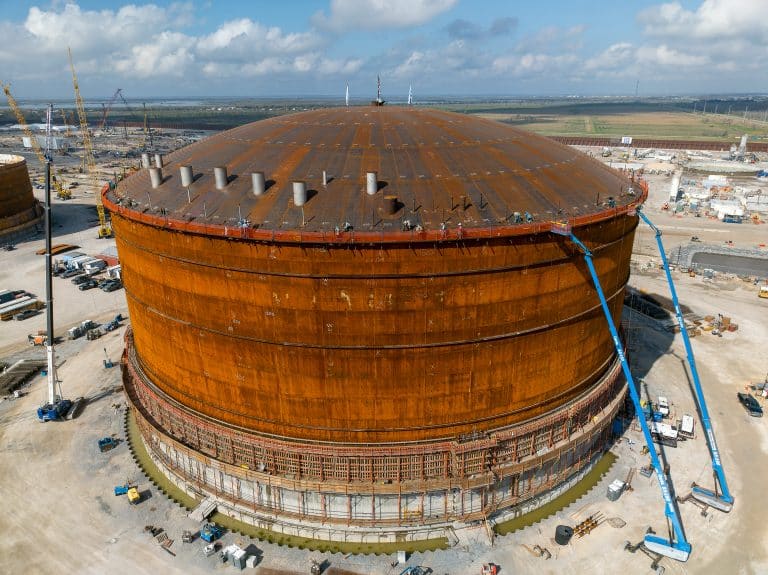
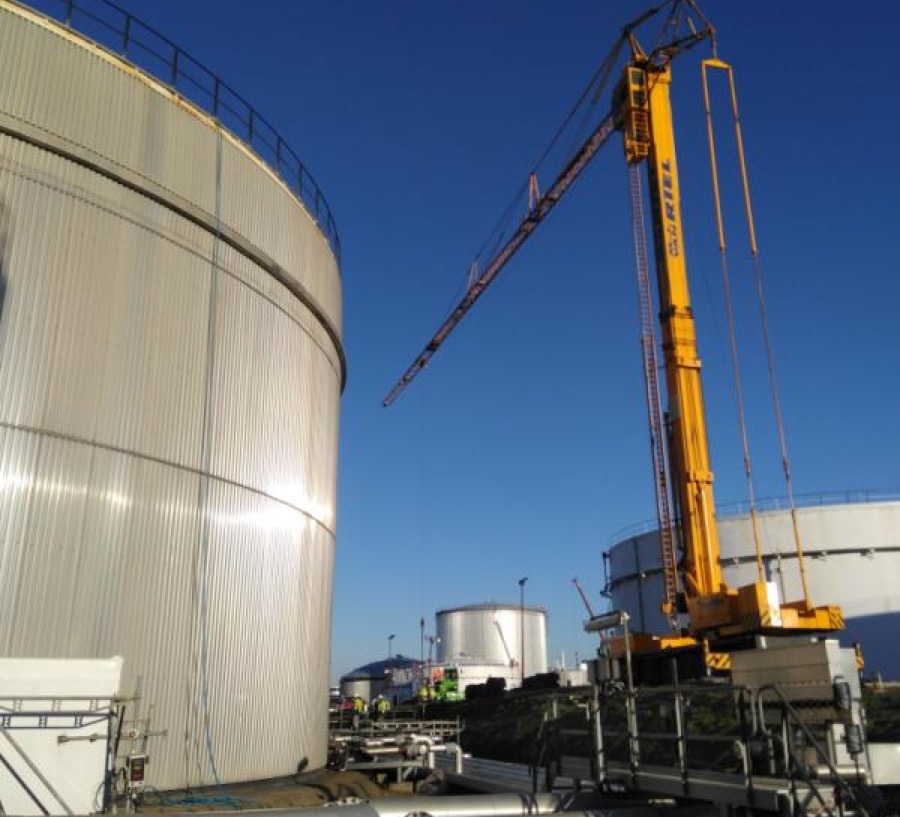
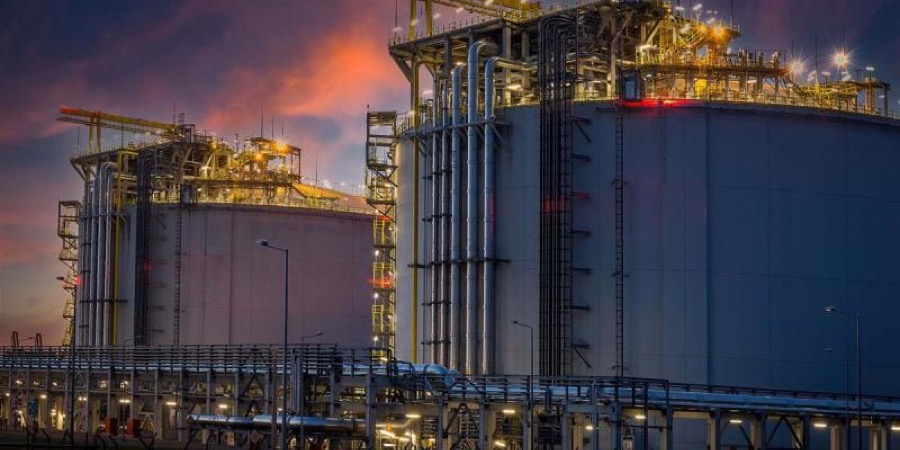
Venture Global LNG has announced the successful raising of the roof of the first LNG storage tank at the Plaquemines LNG export facility in Plaquemines Parish, Louisiana. This major project milestone was completed ahead of schedule and comes nine months after the project’s final investment decision (FID).

“I would like to thank both our team and partners at CB&I for the safe and successful roof raising of the first tank at Plaquemines LNG, an exciting milestone in the construction of our second LNG export facility,” said Mike Sabel, CEO of Venture Global LNG.

This is the first tank of four in total for Plaquemines LNG. When operational it will be capable of storing 200,000 m3 of LNG. The roof weighs 900 tonnes and is 294 feet in diameter. Air raising allows for better and safer access as well as a faster construction schedule, as the roof can be erected concurrently with the shell. The tank dome was raised in 85 minutes using 0.3 psi of pressure underneath the roof. It was raised from ground level to top of the wall height of 130 feet. Eventually, the tank will have an inner tank made from 9 percent nickel alloy and outer wall and outer roof made from concrete to provide full containment of the LNG and provide the maximum level of resilience and safety.

For more information visit www.venturegloballng.com

Sval, Storegga and Neptune apply for CO2 storage license in the North Sea

Sval, Storegga and Neptune apply for a CO2 storage license in the Norwegian North Sea. The project, called Trudvang, has the potential to store up to 225 million tonnes of CO2.

The application comes after the Norwegian Ministry of Petroleum and Energy on 11 January 2023 announced a new area in the North Sea for applications related to injection and storage of CO2.

Truls Olsen-Skåre, Senior Vice President Sustainability & HSEQ in Sval Energi, said: “Carbon capture and storage (CCS) is a solution that can significantly reduce CO2 emissions. The Trudvang partners have worked jointly since December 2021 to identify, nominate, and apply for this license. We have undertaken a substantial amount of work already, including subsurface evaluation of the storage complex, and technical and economic assessment of the CCS value chain. This work has shown that Trudvang can be matured into a commercially viable project with safe and efficient carbon storage.”

Significant capacity

The Trudvang license has a significant storage potential. It will be possible to inject about nine million tonnes of CO2 per annum for 25 to 30 years – a total storage capacity of at least 225 million tonnes of CO2. Dynamic modelling indicates that the total storage capacity could, over time, be substantially higher than this.

Olsen-Skåre said: “In Europe, approximately 300 million tonnes of hard to abate CO2 is emitted each year. The Trudvang project has the potential to reduce these emissions on a large scale.”

The Trudvang storage license is located in the Norwegian North Sea, to the east of the Sleipner field and about 165 kilometers from the coast. The storage reservoir is in the Utsira formation.

Start in 2029

Olsen-Skåre said: “We will focus on accelerating all phases of the work program to be able to start injecting CO2 in 2029, and we will continue our work with existing and new parties to mature the full value chain.”

The Trudvang project envisages the capture of CO2 by multiple industrial emitters in Northern Europe and the UK, the shipping of liquid CO2 from export terminals to an onshore receiving terminal in the south-west of Norway and then transport via a purpose-built pipeline to the Trudvang location for injection and permanent storage.

Sval is the proposed operator of Trudvang with a 40 percent ownership. Storegga and Neptune each has a 30 percent ownership.

Nick Cooper, CEO of Storegga said: “CCS is essential, as one of the few technological solutions that can prevent CO2 from industrial operations from entering the atmosphere and worsening climate change. Our Trudvang announcement today, and this round of CO2 storage license applications, builds on Norway’s pioneering progress with the world’s first industrial-scale, multi-user CCS project. We look forward to continuing our work with Sval and Neptune to ensure the Trudvang Project will have a significant impact on carbon emissions and a positive impact on the economy.”

Neptune Energy’s Global Head of Subsurface, New Energy, Pål Haremo, said: “The North Sea has great potential as a hub for carbon storage given the availability and proximity of existing infrastructure, depleted reservoirs, and saline aquifers. In addition to our CCS projects in Norway, Neptune is working on potential projects in the Netherlands and UK, as we aim to build a portfolio for carbon storage linked to our core areas in the North Sea.”

For more information visit www.sval-energi.no

Technip Energies awarded first FEED contract with NCOC

Technip Energies is pleased to announce the award of their first FEED contract with NCOC (North Caspian Operating Company) for the Kashagan Slugcatcher Project in Kazakstan.

Kashagan is one of the largest fields discovered in recent decades.

The new project will be led by their UK Operating Centre and executed by TKJV LLP, their locally incorporated joint venture, created in 2019 to serve the market by leveraging our engineering and technology capabilities.

Technip Energies are proud of having NCOC’s trust in their proven capabilities for delivering long-term production security.

For more information visit www.technipenergies.com/en

Shell completes acquisition of renewable natural gas producer Nature Energy

Shell Petroleum NV, a wholly owned subsidiary of Shell plc (Shell), has completed the acquisition of 100 percent of the shares of Nature Energy Biogas A/S (Nature Energy).

By purchasing the shares in Nature Energy, Shell has acquired the largest producer of renewable natural gas (RNG) in Europe, its portfolio of operating plants, associated feedstock supply and infrastructure, its pipeline of growth projects and its in-house expertise in the design, construction, and operation of innovative and differentiated RNG plant technology.

This acquisition supports Shell’s ambitions to build an integrated RNG value chain at global scale and to profitably grow its low-carbon offerings to customers across multiple sectors. Nature Energy is a cash generative business, and the acquisition is expected to be accretive to Shell’s earnings from completion and to deliver double digit returns. Shell will generate additional value in our unsurpassed customer access and global scale in our trading and supply chain positions.

Nature Energy will operate as a wholly owned subsidiary of Shell, initially under its existing brand.

For more information visit www.shell.com

ASCO invests over £10 million in its UK operations

Global integrated logistics and material management company, ASCO, is investing over £10 million in its UK operations, demonstrating its commitment to delivering a safe, sustainable and efficient service offering.

The investment adds to ASCO’s current low carbon transport fleet fuelled with hydrotreated vegetable oil (HVO) and improve efficiencies across ASCO’s UK service lines, including enhanced space and services within its Environmental Services business.

Steve Mitchell, group operations & HSSEQ Director, said: “Having almost halved our CO2 scope 1 emissions through the implementation of HVO in the UK last year, we are adding an increased volume of HVO-compatible trucks, cranes and forklift vehicles to our fleet. This investment strengthens our commitment to sustainably reducing the carbon footprint associated with our operations, directly impacting our client’s scope 3 emissions and cementing our dedication to becoming a net zero greenhouse gas emissions business before the end of 2040.”

NORM Solutions, ASCO’s integrated team dedicated to the safe handling and disposal of Naturally Occurring Radioactive Material (NORM), benefits from the investment. Improvements at its yard space in Aberdeen, worth around £200k, will accommodate increased operations while also allowing its jetting bay to be expanded upon.

Other investments include a new storage tank, which will be installed at the Damhead waste transfer station, allowing the company to safely store and dispose of hazardous waste materials, as well as a range of new specialist environmental equipment, including vacuum tankers, recycling drain cleaners and jetting units. The new equipment is more powerful and capable of handling a wider range of viscous fluids to deliver quicker movement of materials, resulting in improved operational efficiencies and services for clients.

The targeted investments will ensure that all ASCO’s service line solutions remain fit for purpose and ready to be deployed to meet growing demand.

Chris Lloyd, head of environmental and decommissioning, said: “The improvements to our UK fleet and NORM facilities reflect our focus on addressing our clients’ evolving needs and challenges.

“The scale of this investment demonstrates our determination to being a key player in supply chain efficiencies in the UK while actively reducing our environmental impact.”

For more information visit www.ascoworld.com

Shell and Hapag-Lloyd collaborate on marine fuel decarbonisation and sign multi-year LNG supply agreement

Shell Western LNG B.V and Hapag-Lloyd have announced the signing of a multi-year agreement for the supply of liquefied natural gas (LNG) to Hapag-Lloyd’s ultra large dual-fuel container vessels of 23,500+ twenty-foot equivalent units (TEU). Bunkering for these twelve new vessels is expected to commence during the second half of 2023 and LNG will be supplied in the Port of Rotterdam. The modern ships will be deployed on Europe-Far East routes and call at major ports including Rotterdam, Hamburg, Singapore, and Shanghai.

Using LNG enables Hapag-Lloyd to immediately reduce the CO2 intensity of these vessels by up to 23 percent compared to conventional fuels. Additionally, the use of LNG supports the almost complete reduction of particle emissions. This is another important step for Hapag-Lloyd to reduce emissions and decarbonise its fleet in line with its goal of becoming net zero carbon by 2045.

As a hard-to-abate sector, Shell is exploring the viability of, and investing in a range of fuels, technologies and solutions that will help decarbonise shipping. This includes the use of LNG, where through an extensive network of 15 LNG bunkering locations in 10 countries globally, Shell has already achieved over 1,000 safe ship-to-ship bunkering operations to its marine customers.

In addition to the LNG supply agreement, Shell and Hapag-Lloyd have entered into a strategic collaboration agreement intended to accelerate the further decarbonisation of alternative marine fuels. Initial focus will be given to developing the potential of additional low carbon fuels solutions including liquefied biomethane and the hydrogen-based fuel liquefied e-methane. Liquefied biomethane as a marine fuel has the potential to reduce greenhouse gas emissions by between 65 percent and 100 percent.

Tahir Faruqui, General Manager, Head of Downstream LNG at Shell

“We are delighted to have partnered with Hapag-Lloyd on this important initiative. Shipping decarbonisation must accelerate and, as the lowest-carbon fuel available at scale today, LNG is a key part of the transition to lower-carbon marine fuels. As we look to the future, we are committed to working with leading shipping companies like Hapag-Lloyd to establish the credible pathways to net zero.”

Jan Christensen, Senior Director Global Fuel Purchasing at Hapag-Lloyd

“We are pleased to share the execution of this long-term supply agreement. Hapag-Lloyd has finalised a contract with Shell which secures flexible LNG supply at competitive terms. Furthermore, we are excited about our agreement with Shell to explore further decarbonisation opportunities as it allows both businesses to drive impactful change in the industry. Collaborations like this are crucial in helping us deliver our sustainability strategy while also improving emissions in maritime shipping. Ultimately, this enables our customers to decrease their carbon footprint as well.”

This announcement supports Shell and Hapag-Lloyd’s long-standing collaboration, which over the past years included the LNG bunkering of the “Brussels Express”, the world’s first large container ship that was converted to gas propulsion.

For more information visit www.hapag-lloyd.com/en/

Essar launches EET to invest US$3.6 billion in energy transition in the UK and India

Essar Group, invested in Energy, Metals and Mining, Infrastructure and Technology sectors, today announces the formation of Essar Energy Transition (“EET”) to drive the creation of the UK’s leading energy transition hub in North West England.

EET plans to invest a total of US$3.6 billion in developing a range of low carbon energy transition projects over the next five years, of which US$2.4 billion will be invested across its site at Stanlow, between Liverpool and Manchester and US$1.2 billion in India.

EET will include:

  • Essar Oil UK, the company’s refining and marketing business in North West England;
    Vertex Hydrogen, which is developing 1 gigawatt (GW) of blue hydrogen for the UK market, with follow-on capacity set to reach 3.8GW;
  • EET Future Energy, which is developing 1 GW of green ammonia in India, targeted at UK and international markets;
  • Stanlow Terminals Ltd, which is developing enabling storage and pipeline infrastructure; and
  • EET Biofuels, which is investing in developing 1 MT of low carbon biofuels.


EET’s investment programme will play a major role in accelerating the UK’s low carbon transformation, supporting the government’s decarbonisation policy and creating highly skilled employment opportunities at the heart of the Northern Powerhouse economy.

The investments, across a range of hydrogen production technologies, decarbonisation, biofuels (road and aviation), and infrastructure projects, will contribute to North West England quickly becoming one of the leading post-carbon industrial clusters in Europe. EET believes that these investments will support the reduction of around 3.5 million tonnes of carbon dioxide, around 20 percent of the total industrial emissions in North West England.

The launch of EET heralds Essar’s repositioning for growth and resurgence. Essar is now investing in new forward-looking assets with modern, efficient, and ESG-compliant technologies to last for several decades. Other sustainability investments planned by the Essar Group beyond EET include the creation of an LNG value chain in India, including LNG truck manufacturing and LNG fuel stations, setting up a pellet plant in Odisha, in eastern India and a 4-million tonnes per annum green steel complex at Ras-Al-Khair, Saudi Arabia.

EET’s strategy is founded on the fact that hydrogen and biofuels are fast becoming globally significant fuels of the future and that the UK is positioned strongly to spearhead the rapid growth of the European low carbon fuels market. The UK already benefits from an advanced regulatory and policy framework to support low carbon energy production, including the UK government’s target of achieving 10GW of hydrogen production by 2030, alongside developing low carbon hydrogen infrastructure, expertise and significant customer demand. Such is the scale of the market growth opportunity that EET estimates approximately two-thirds of its aggregate cash flows could come from diversified low carbon sources before the end of the decade.

As a core part of the HyNet cluster, Essar’s Stanlow site already plays a prominent role in the UK’s energy transition planning framework, following the selection of HyNet by the UK government in 2021 as one of only two hydrogen clusters in the country to potentially be supported through to full operations.

The Stanlow refinery itself will also achieve a 75 percent reduction in carbon emissions before the end of this decade as part of EET’s decarbonisation plans, making this strategically critical fuel supplier to the UK one of the most sustainable refineries in Europe.

In addition to the US$2.4 billion investment in the UK, EET will also invest US$1.2 billion in developing a cost-efficient global supply hub for low carbon fuels in India, including green hydrogen and green ammonia. Ammonia will be shipped from India to the UK, Europe and globally to meet expanding market demand for green hydrogen.

EET’s investment in India will help deliver on the country’s emerging hydrogen ambition. The Indian government’s supportive regulatory framework is designed to help position the country as a leading global hub of green hydrogen production and exports, as set out in its National Green Hydrogen Mission, approved by the Indian government on 4 January 2023.

Prashant Ruia, Director, Essar Capital, said:

“The launch of EET is a major milestone in Essar’s long-standing commitment to put the UK at the forefront of low carbon energy. We are excited about the opportunity to drive the UK’s energy transition by producing low carbon future fuels which will help eliminate around 20 percent of the industrial carbon dioxide in Northwest England. In doing so, it will provide a blueprint for how traditional industries globally can be successfully transformed into hubs for the production of future energies.

Tony Fountain, Managing Partner of Essar Energy Transition, said:

“EET’s ambitious investment plans will not only help deliver the UK’s net zero ambitions and the enormous environmental benefits therein, but will also secure the long term sustainable future for Stanlow, protecting and creating new highly skilled job opportunities at the heart of the Northern Powerhouse economy for generations to come.”

For more information visit www.essar.com

Nabors Industries issues statement on planned business combination between Nabors Energy Transition Corporation and Vast

Nabors Industries Ltd. has issued the following statement from Chairman, President and CEO Anthony G. Petrello regarding the entry into a business combination agreement between the special purpose acquisition company (SPAC) Nabors formed in 2021, Nabors Energy Transition Corporation, and Vast Pty Ltd:

“We welcome Vast as Nabors’ ninth and largest energy transition investment to date. Vast’s next-generation concentrated solar power platform complements and enhances our existing portfolio of companies similarly pursuing clean, renewable, dispatchable and scalable energy solutions.

“Nabors has consistently focused our energy transition investments on technologies with material tangencies to Nabors’ technology platform. We are developing solutions to decarbonise and electrify our own operations. These technologies are totally transferrable to other industries and position us to lead in the new energy space. Our demonstrated strengths in innovation fully support our sustainability initiatives.”

Nabors have also unveiled a new vision to guide its energy transition efforts—Energy Without Compromise—that unites the Company’s sustainability efforts from its core business and its new clean energy initiatives. Petrello said:

“Building a sustainable economy requires affordable, reliable and responsible energy. Unfortunately, today there is no single source that can consistently deliver all three. So while we should embrace multiple sources of energy, the industry must focus on removing the existing trade-offs inherent in the existing energy alternatives. Oil and gas provide affordable and reliable energy, but we understand we must overcome the emissions burden associated with their production and consumption.

“Renewables offer cleaner power, but supporting the future economy requires eliminating intermittency while balancing cost, efficiency and supply chain trade-offs. Delivering on ‘Energy Without Compromise’ will take a relentless focus on innovation and best-in-class performance of our existing drilling business, as well as steady and consistent execution from our emerging clean energy initiatives.

“Our investment in Vast allows Nabors to participate in an exciting and relatively untapped source of renewable, clean and dispatchable energy, while at the same time helping our new partner scale its technology to deliver a meaningful contribution to the world’s need for power. Vast’s decision to join forces with Nabors validates the efforts we have made in developing our energy transition strategy.”

For more information visit www.nabors-etcorp.com

Venture Global and China Gas sign two 20-year long-term LNG agreements

Venture Global LNG and China Gas Holdings Limited, a leading natural gas operator in China, announced that the wholly-owned subsidiary China Gas Hongda Energy Trading Co., LTD and Venture Global LNG, have signed two 20-year LNG Sales and Purchase Agreements (SPA).

Under the deals, China Gas will buy 1 million tonnes per annum (MTPA) of LNG on a free on board (FOB) basis from Plaquemines LNG and another 1 MTPA from the CP2 LNG export facility, both in Louisiana.

Mr. Liu Minghui, Chairman and President of China Gas Holdings Co. Ltd., said “As a major participant in China’s energy market, we are committed to providing reliable and low-carbon LNG to Chinese customers. These two SPAs increase additional volume for our LNG portfolio and strengthen China Gas’s supply ability. We look forward to working with Venture Global over the coming years to help further reduce greenhouse gas emissions.”

Mike Sabel, Chief Executive Officer of Venture Global LNG said, “Venture Global is pleased to welcome China Gas as a customer both at Plaquemines and CP2. Through relentless execution and innovation, our company will continue to bring much needed new capacity to the global LNG market, supporting energy security and environmental progress both in Asia and Europe. Importantly, low-cost LNG supplied to the region will accelerate fuel switching and lower carbon emissions, contributing meaningfully to China and the world’s existing climate targets.”

For more information visit www.venturegloballng.com

Musket expands operations through first European subsidiary

Musket Corp. a member of the Love’s Family of Companies, has announced the establishment of its European operations with headquarters in Geneva, Switzerland. Musket Europe SARL will extend Musket’s established commodity supply and logistics platform, providing relief for the ongoing instability in global fuel supply chains.

“We are pleased to see Musket Europe become a reality at such a unique time in the market,” said JP Fjeld-Hansen, Executive Vice President of Musket. “In the past year we have increased our exports to Europe, showing that having options is critical with continued volatility. We are proud of the team we have assembled in Geneva, where the talent pool for energy supply and trading is the strongest in Europe and look forward to welcoming additional team members in the future.”

Musket Corp. is one of the largest trading and supply companies in the US and specialises in commodity supply and logistics across North America. The company’s primary focus is supplying Love’s Travel Stops with gasoline and diesel and managing the company’s biodiesel program. Headquartered in Houston, Musket also has a footprint in Oklahoma City, Oklahoma, and Phoenix, Arizona, with more than 200 employees.

“This is an exciting new era for Musket and Love’s,” said Shane Wharton, President of Love’s. “The Musket team is an integral part of our success in providing quality product at competitive prices, and this type of expansion and diversification of the business is a key part of our strategic growth plans for 2023 and beyond.”

For more information visit www.musketcorp.com

Starting from scratch has brought motivation and success to after sales in Calais

The after-sales activities at Svanehøj France are growing steadily. Meet Service Manager Axel Proc, who is shaping the new after-sales department in Calais.

Following the acquisition of Wärtsilä Tank Control Systems in early 2022, Svanehøj set out to increase focus on service and after-sales in the new business unit for land-based activities in Calais. Therefore, Axel Proc was chosen to lead a new after-sales department in Calais.

– It was clear that we had to start from a clean slate to build the type of service organisation Svanehøj is known for. Therefore, we had to consider a wide range of elements. I had a broad scope of experiences – both technical and business wise – so Svanehøj trusted me to draw the right lines towards the direction we, as an organisation, wanted to go, explained Axel Proc.

Axel Proc has a master’s degree in electronics and instrumentation as well as marketing later on. He started working as a service engineer at WHESSOE, and in 2012 he began working as a product manager and technical advisor for the sales department at Wärtsilä. Prior to Svanehøj’s acquisition, Axel was involved in business strategies as a Marketing & Business development manager.

A clear direction

A successful after-sales business requires a strong focus on transparency, response, support, and relationships. Therefore, the philosophy is to serve the clients throughout the lifecycle of their installation and secure a trustworthy relationship with them. Long-lasting relations are essential to ensure continuous product development and innovation.

– It helps a great deal to hear and help our clients on-site following an installation. From that, we can learn and keep innovating our line of products. Thanks to our readiness to serve our clients 24/7, we are now running fast and have passed our financial expectations. So, we are proud of how we have shaped and developed the after-sales organisation to be successful, explained Axel Proc.

Ready for the next step

The after-sales team has grown from four to seven in the last year, Axel Proc included. He appreciates the quality and mentality the new members bring to the team.

– They understand our mission, values, and where we are in the process. It is inspiring to be involved from the beginning and influence how your workplace takes shape. We are still in a flow of motivation, and everyone is ready to take the next step, said Axel Proc.

He explains that if the order intake is maintained at the current high level, the after-sales department will be looking for additional talents to join the team.

For more information visit www.svanehoj.com

Well Services Group invest £1m in new UK base to meet surge in demand

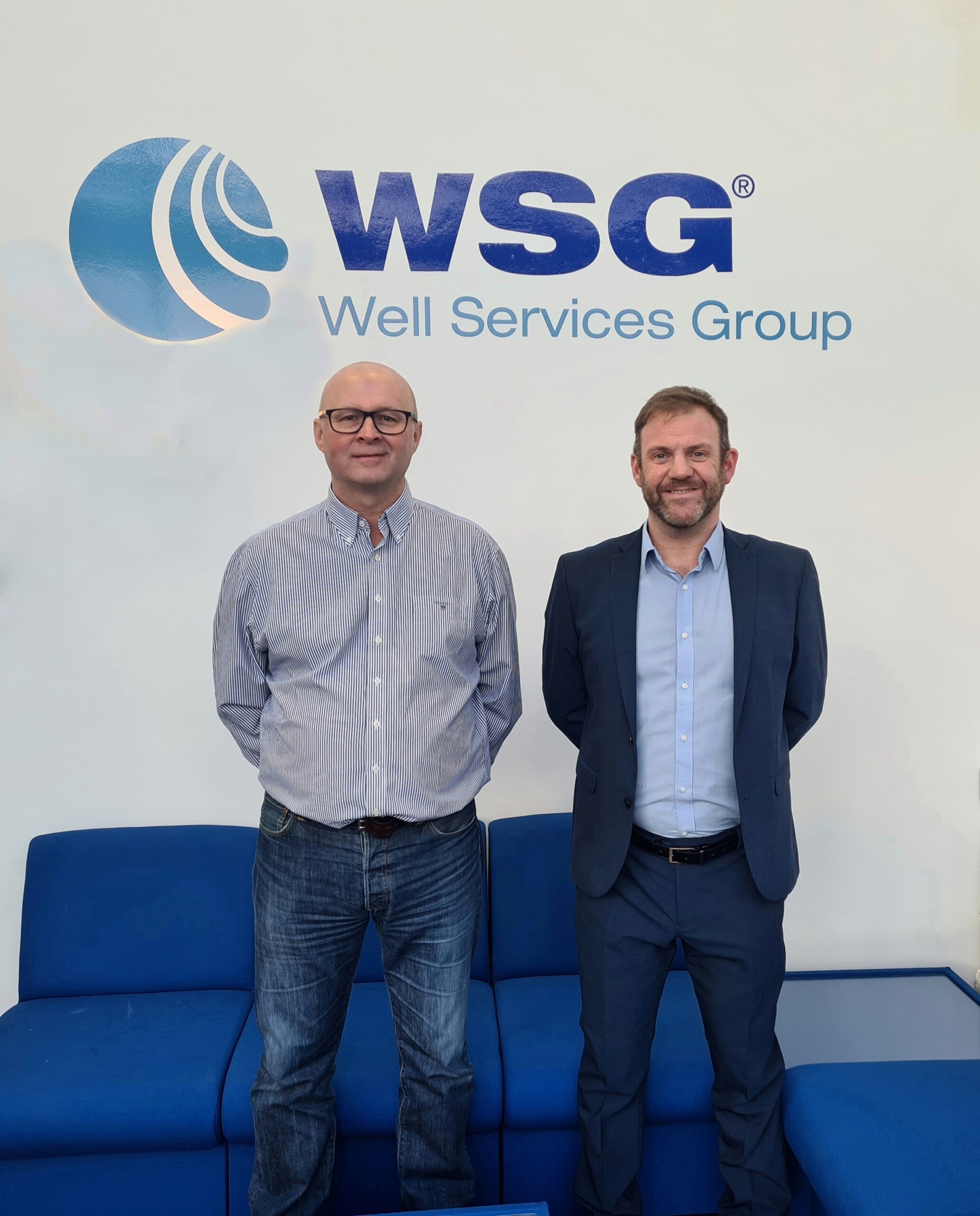
Energy services specialist Well Services Group (WSG) has made a £1 million investment in new premises in the UK.

The expansion is a result of increased demand for WSG’s products and technical expertise from clients in the petrochemical, refining, pharmaceutical, alternative, power and energy services sectors in the north of England.

The company’s Joint Integrity division is based in Cramlington, Northumberland, and provides controlled bolting, flange management, process and pipeline services and valve refurbishment and supply, to industrial clients engaged in construction, plant shutdowns and turnarounds.

Double the size of WSG’s previous Northumberland base, the new 1,100 sq m facility includes offices, workshop space, storage and test bay provision, and class rooms for training purposes.

The workshop has a hydraulic torque and tension equipment test bay and a secure 250 sq m yard has the potential to house a chemical/gaseous storage facility, which will benefit locally based WSG clients and can comfortably accommodate more than 40 staff.

Gary Todd, WSG’s European Business Manager for Joint Integrity, said: “We’ve made a substantial investment in this larger facility as a direct response to increased client demand for our various services and to be able to be more responsive and flexible in meeting client’s requirements.

“The location is ideal for serving our client base in the north east of England but also for supporting colleagues and WSG’s other service lines engaged in large-scale projects across Scotland, Yorkshire, Humberside and into the Midlands.”

The facility has the capacity to add to the existing 16 strong Cramlington team – not including field staff – and there are plans to grow the headcount by up to 25 engineers for major projects.

Gary Todd added: “We hope to develop the team with a number of key appointments in the next 12 months, and this investment underlines our commitment to the north east and mirrors the confidence we have that we can treble revenues and continue growing our client base over the next few years.”

WSG’s UK headquarters is in Normanton near Leeds, while it operates from other bases in Great Yarmouth, Middlesbrough and Immingham. The company’s global HQ is in Emmen, the Netherlands, and it also has a presence Australia, Canada, France, Germany, Indonesia, Malaysia and Singapore.

WSG is the largest independent provider of process, pipeline and industrial services to the UK and European refinery and LNG terminal sectors and the 1000-strong business also provides commissioning, valve services, specialist NDT, inspection, and well intervention services.

For more information visit www.wellservices-group.com

ROSEN updating the pipeline defect encyclopaedia – call for papers

ROSEN Group is updating “MACAW’s Pipeline Defects”, a compendium of pipeline defect pictures originally published by MACAW Engineering in 2003. Now, to reflect the latest industry experience, ROSEN will publish a new edition and therefore opens a call for pictures to collect images of pipeline defects from the pipeline community.

The book illustrates many defects that can be found in high-pressure steel pipelines and pipeline coatings. In addition, it advises on the probable cause and importance of the defects and comments on the appropriate corrective actions. The defect encyclopaedia quickly established itself as a useful reference guide for pipeline engineers, and in 2017, the book format was updated and first published under the ROSEN brand name as “The Encyclopaedia of Pipeline Defects”. We now ask the pipeline community for contributions to the next edition.

To become part of the new edition please follow these three steps:

1. Upload a photo that represents macro, micro or nano characteristics of any type of pipeline defect to: callforpictures.rosen-group.com
2. Write a description of up to 200 words in English, characterising the anomaly and commenting on possible damage mechanisms
3. … win great prizes in collaboration with The Competence Club! https://competence.rosen-group.com/

All submissions must be completed up to 31 July 2023. A panel of Competence Club experts will screen the pictures, for quality and industrial relevance. The ones selected will be submitted to a public vote, to be held from 1st to 8th of August, 2023. The winner will be announced by ROSEN during Rio Pipeline 2023.

Note the entries do not need to be referenced to a specific asset. All pictures selected for publication will be credited.

The contributors will receive a copy of the Encyclopaedia.

For more information visit www.rosen-group.com

Rotork electric actuators installed in glass factory help improve reliability and reduce emissions

Electric actuators have been installed at a glass factory in Turkey, allowing for efficient combustion and reduction of emissions.

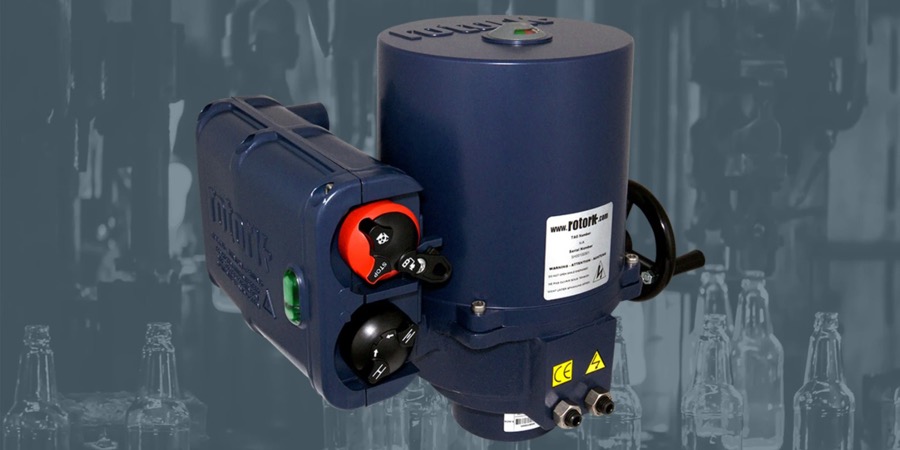
A glass plant in the Mersin area of southern Turkey, run by Şişecam, installed 33 ROMpak electric actuators. The ROMpak units replaced existing underperforming actuators to operate butterfly valves, controlling the flow of hot air at the heart of the glass manufacturing process. Glass manufacturing produces items like packaging, flat glass (e.g. in construction and commerce), fibreglass and speciality glass (tableware, lighting, cookware).

In order to achieve complete and efficient combustion, the exact ratio of fuel and air within a furnace to produce the right amount of heat must be precisely controlled to produce a lean burn. Complete combustion offers reduced running costs and less unnecessary fuel, so a reduction in emissions and environmental pollutants. The control offered by Rotork’s ROMpak electric actuators assist in the essential process of optimal efficiency.

ROMpak actuators offer quiet and reliable operation for smaller ball and butterfly valves. They have a continuous position indicator that is always available and can work in an ambient temperature of up to +70° C (158° F). Importantly in a glass application, they are watertight and dustproof to IP68 10m for 100 hours. The customer chose them after a successful period of consultation that included Rotork supplying sample actuators.

For more information visit www.rotork.com/en

CapeOmega, Neptune Energy announce NoordKaap, a cross-border CO₂ transport & storage development

CapeOmega and Neptune Energy has announced NoordKaap, a project concept for a cross-border CO₂ storage solution for industrial emitters across Europe. NoordKaap would involve transporting CO2 via vessels suitable for directly injecting the CO₂ at offshore locations and for terminal offloading. RWE has signed a Letter of Intent with CapeOmega and Neptune Energy in order to assess the possibility to ship green CO2 from their biomass Eemshaven facility for offshore storage in the Dutch North Sea.

NoordKaap will examine the potential for a network-based approach to Carbon Capture & Storage (CCS) via marine transport, and could make a crucial contribution to Dutch, Norwegian and European climate and energy goals. The overall objective of NoordKaap is to provide cost-effective, scalable infrastructure solutions to facilitate large-scale, flexible CO2 transport and storage from multiple industrial emitters clusters.

NoordKaap aims to offer CCS solutions to industrial clusters where ship transport is the primary or earliest available export option. The project will also examine opportunities for industrial clusters in Germany, Belgium, Scandinavia and northern France. It would provide access to CO₂ subsurface storage sites offshore the Netherlands and Norway. NoordKaap is supported by partners Groningen Seaport, KNCC, Vopak and Return Carbon.

NoordKaap is planned to be operational in 2028 and has been submitted to the EU as a Project of Mutual Interest on the 6th PCI List.

Evy Glørstad, CEO CapeOmega AS said: “NoordKaap comprises an integrated partnership of all stakeholders in the value chain, from emitters to storage facility owners, to ensure close coordination of these proposals as part of the development of a successful decarbonisation strategy. CapeOmega aims to support the value chain with the infrastructure needed to safely and successfully transport and store CO2. NoordKaap would enable us to use our position and experience in pipeline, terminal, shipping and offshore licence ownership to support CCS and decarbonisation.”

Lex de Groot, Managing Director of Neptune Energy in the Netherlands, said: “CO₂ storage is a crucial component for meeting the EU’s climate goals and for a well-functioning CCS market. Both emitters and storage providers need to be able to transport CO₂ safely, and we know access to pipelines will be limited for some, so we are focusing on both types of transport to offshore storage facilities: piping and shipping. CCS also supports Neptune’s strategy to store more carbon than is emitted from our operations and from the oil and gas products we sell by 2030.”

Roger Miesen, CEO RWE Generation, said: “RWE is keen to explore this opportunity together with CapeOmega and Neptune Energy. As RWE, we are currently assessing the possibility to ship and store green CO2 from our biomass Eemshaven plant to offshore storage in the Dutch North Sea, resulting in negative emissions. Our ambition is to make this happen in 2030. That is why the NoordKaap project is such an interesting opportunity for us.”

Projects of Common Interest (PCI) aim to link energy systems and bridge infrastructure gaps between EU countries. A Project of Mutual Interest (PMI) links energy systems between an EU country (or countries) and a third country. A successful award of PCI/PMI status gives access to accelerated permitting and funding under the Connecting Europe Facility.

For more information visit www.neptuneenergy.com

Neste collaboration helps Bell 505 become world’s first single engine helicopter to fly using 100% sustainable aviation fuel

Bell Textron has completed its first flight fuelled solely by 100 percent sustainable aviation fuel (SAF) with its Bell 505 becoming the first-ever single engine helicopter to fly using 100 percent SAF. This milestone flight was achieved by a close cooperation between Bell, Safran Helicopter Engines, GKN Aerospace, Neste and Virent.

Safran Helicopter Engines, manufacturer of the Arrius 2R engine on the Bell 505, and GKN Aerospace, the fuel system component supplier, conducted thorough testing on the engine and fuel system components. Neste supplied the SAF and collaborated with Virent, the supplier of the bio-based aromatic additive, to blend, test and deliver the SAF for this project as a 100 percent drop-in fuel.

“This flight is a monumental achievement for sustainability and decarbonisation in the rotorcraft industry,” said Michael Thacker, Executive Vice President, Commercial Business, Bell. “Showcasing a single engine aircraft’s flight capabilities with 100 percent SAF signals Bell’s commitment to alternative fuel usage and builds on its sustainability practices in its flight operations.”

“Neste is working closely together with forerunners in the aviation industry on verifying that aircraft can run safely on 100 percent SAF. This successful collaboration demonstrates that we are one step closer to enabling the entire aviation industry to take full advantage of 100 percent SAF as the key means to significantly reduce greenhouse gas emissions of air travel,” said Jonathan Wood, Vice President Global Commercial and Technical, Renewable Aviation at Neste.

SAF, made from renewable raw materials, such as used cooking oil, must currently be blended with conventional fossil jet fuel because SAF does not contain a component called “aromatics,” which is required to meet today’s aviation fuel specifications. Virent manufactures an aromatics component made from plant sugars, which was added to Neste’s 100 percent SAF, eliminating the need to blend SAF with fossil fuel. The SAF supplied for this test flight by Neste is therefore a “100 percent drop-in” replacement for fossil-based aviation fuel, requiring no engine modifications.

For more information visit www.neste.com

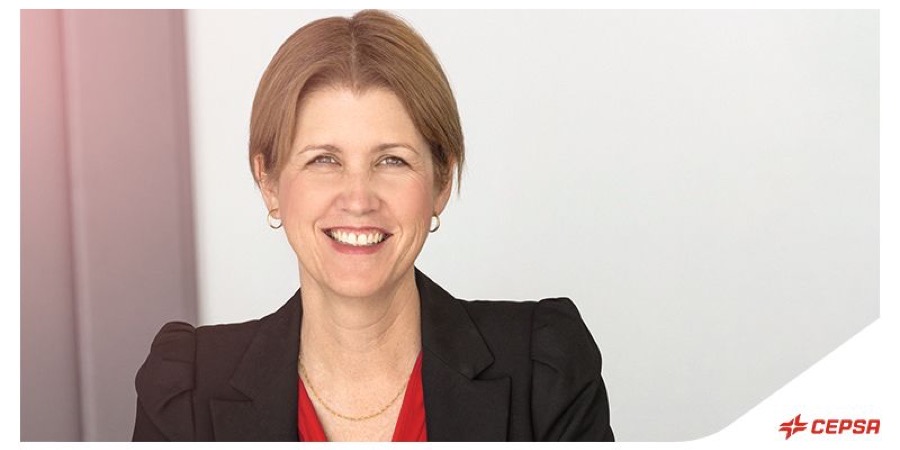
Mar Perrote, Cepsa’s new Safety and Environmental Protection Director

Cepsa has appointed Mar Perrote as the new Director of Health, Safety, Environment and Quality (HSEQ) to continue promoting the safety and sustainability of the company and the well-being of its employees, as a key part of its Positive Motion strategy.

Perrote will report to José Manuel Martínez, Cepsa’s Director of Technology, Projects and Services and member of the Management Committee, and she takes on this new responsibility after more than 18 years with the company in various positions of responsibility related to safety, environment, and industrial chemical processes.

“At Cepsa, safety is one of our main priorities, understood not only as measures to protect employees and the communities where we operate, but also as protecting and caring for the planet and its biodiversity. Mar will have the full support of the Management Committee in performing her new duties, which are an essential part of practicing our culture and values”. Maarten Wetselaar – Cepsa CEO

For her part, the new head of Cepsa’s Health, Safety, Environment and Quality (HSEQ) department said: “I take on this new challenge with the excitement of being able to contribute value in such a relevant area for the company, at a time of complete transformation, where safety and sustainability are part of our growth and development as a leader in the energy transition.”

Previously, she worked as a process engineer at the linear alkylbenzene plant at Cepsa Chemical Bécancour (Canada), and later moved to Shanghai to assume the position of Technical Services manager, developing the Safety, Environment and Process Engineering systems for Cepsa Chemical’s Phenol plant in China. Back in Spain, she led the unification and transformation of the company’s industrial laboratories, as well as developing circular economy projects. Prior to joining Cepsa, she was an environmental consultant in London and a process engineer for Total in France.

Her professional career, in addition to providing her with expertise in safety and environmental processes, has led her to speak four languages: Spanish, English, French, and Chinese.

She holds a degree in chemical engineering from the University of Cadiz and a degree in environmental sciences from Kingston University in the United Kingdom. She also received a scholarship from Cepsa for a Master’s degree in Petrochemicals and Polymers from the French Petroleum Institute (Paris) and McGill University (Montreal), and also completed the management training program from the Instituto de Empresa and the Financial Times.

For more information visit www.cepsa.com/en

Bioconversion phase 1 of tank pits S100-S400 at KTM is complete

A changing energy market demands movement among service providers in the world of fuels. Koole Terminals is going a step further and strategically investing in its infrastructure to anticipate now what international players in the energy market will soon need.

At a central location in the ports of Rotterdam, Koole is doing everything it can to be ready for a more sustainable future. With the Koole Tankstorage Minerals (KTM) terminal at the forefront, the company is working hard to store and transport greener fuels. The experience to do this safely has been there for years, and that provides a foothold for the future.

Following investments in an innovative truck loading station in 2021 and the launch of a second rail car loading system in 2022, Koole can add another milestone to the list in 2023. At KTM, phase 1 of converting tank pits for the storage and transfer of biofuels has been completed.

“We decided already in 2021 to say goodbye to mineral products there, such as fuel oil, to make way for green products,” says Wouter Koops, Terminal Manager KTM. “With this, we are taking a stand in the energy transition and making another big, important step towards the future. This is the beginning of much more.”

On the one hand, the market demands a different course and adaptability in Koole’s role as a service provider. “Our customers are in the midst of the transition to more sustainable products, and we are making the strategic choice to facilitate them in this. On the other hand, it fits within our vision to do the right thing—to contribute to a better world and a healthy future for the company.”

Last year, tank pits S100-S400 at KTM were prepared for the storage and transfer of biofuels. These previously contained fuel oil. “That meant cleaning tanks with ultra-high pressure, flushing piping systems, overhauling pumps and mixer, and servicing tanks. Because biofuel reacts differently to certain gaskets and seals, these were also replaced.”

As a result, the plant went into operation safely, without spills and product contamination, in mid-January. This means that everything has been properly cleaned, rinsed, assembled, and tested: “Completely by the book, an example for all other work in this field.”

Koops also praises the cooperation among various departments of the company: “We worked with a multidisciplinary team: operations, Customer Care Centre, HSEQ, maintenance, engineering, business development, and sales were involved. All these people worked together to make it a success. The team spirit make me very happy.”

Rotterdam-based Koole Terminals is proving, through a clear vision and entrepreneurial strategy, that it is a future-proof organisation by taking the initiatives that are needed—for itself, its customers, and the world around us.

For more information visit www.koole.com

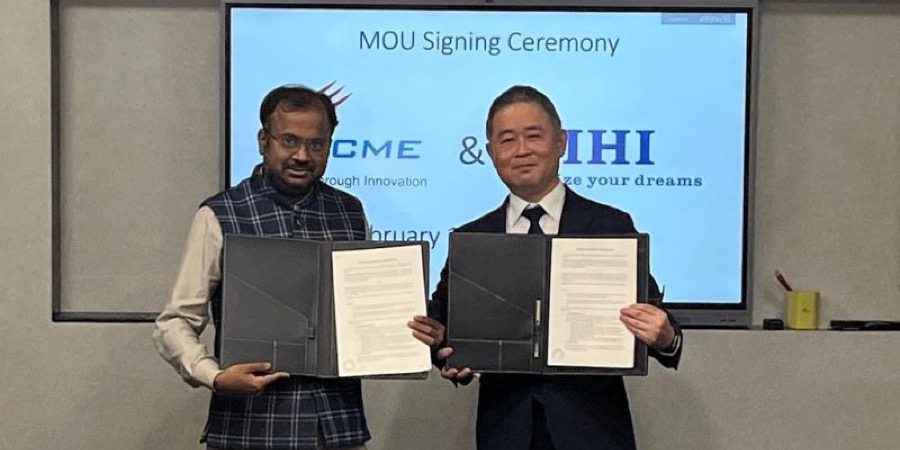
ACME Group and IHI sign MoU to explore opportunities in green hydrogen and its derivatives

Diversified renewable energy company ACME Group and Japan’s comprehensive heavy-industry manufacturer IHI Corporation has announced signing of a memorandum of understanding (MoU) to jointly explore the potential business opportunities of green hydrogen.

The intent of this MOU is to jointly study and evaluate potential projects with respect to collaboration opportunities across the green hydrogen and ammonia value chain, including production, handling, transportation, distribution, and power generation.

The MoU allows IHI to participate as an investor or take offtake in one or more project of ACME in Oman, India, USA or Egypt. Both the Companies will also explore opportunities to jointly offer a complete integrated solution to customers from green ammonia supply, bunkering and products or solutions for various applications.

Mr. Manoj K Upadhyay, Founder & Chairman, ACME Group said, “I would like to thank IHI for their commitment to develop renewable projects with us. We will together explore opportunities across the green hydrogen and ammonia value chain, including production, handling, transportation, distribution, and power generation.”

Mr. Kenji Konno, Country Head Japan, ACME Group said, “This collaboration will strengthen ACME Group’s innovative problem-solving approach by leveraging IHI’s technologies in ammonia value chain. We hope that this collaboration will pave the way to achieve our early global implementation of green and sustainable energy transition.”

Mr. Jun Kobayashi, Executive Officer, IHI Corporation said, “ACME and IHI have a shared vision to develop innovative solutions to produce and supply clean energy to users around the world. With ACME’s extensive experience in developing renewable energy projects and solutions, IHI’s understanding of the green ammonia value chain, and both companies’ passion and willingness to proactively tackle societal challenges and be at the forefront of infrastructure development, we possess the capability to lead the transition to carbon-free ammonia usage across a wide variety of industries.”

For more information visit www.acme.in

OneLng and Ecospray sign micro-liquefaction agreement

OneLng, Inc. is honoured to announce the signing of an agreement with Ecospray, an Italian developer of innovative solutions for micro-liquefaction of biofuels. Through the collaboration with OneLng, Ecospray will expand its offering to the natural gas liquefaction sector in the United States.

OneLng and Ecospray intend to target the US oil & gas exploration market by using Ecospray’s micro-liquefaction technology for flare gas recovery. The technology offers owners and operators of wells with insufficient infrastructure the possibility to avoid gas flaring, reduce environmental impact and turn operating cost into a potential source of revenue.

The agreement – signed in recent days by Maurizio Archetti (President, Ecospray) and Kees Onstein (Chairman & Co-Founder, OneLng) – provides for the supply of an innovative technology developed by Ecospray for the recovery of associated petroleum gas (APG) via conversion of the APG to liquefied natural gas (LNG) and natural gas liquids (NGLs).

“Our commitment to the energy industry is growing,” said Maurizio Archetti, President, Ecospray. “We will contribute to completing the energy supply chain by deploying innovative solutions to recover previously unusable resources. Our partnership with OneLng is part of a growth path that will allow us to offer new technology offerings to the American market.”.

“Over the recent years the US Oil & Gas market has been under pressure to balance its operational efficiencies and sustainability goals. We believe that the micro-liquefaction technology will offer an elegant solution to hundreds of oil producers who wish to minimize their routine flaring, increase revenue streams, and alleviate regulatory pressure”, added Martijn van Koolwijk, CEO& Co-Founder, OneLng. “In Ecospray, we have found a like-minded partner that shares our vision of creating value from industry’s by-products, and we are proud to bring their technology from Europe to the US”

The scope of supply under the agreement includes an initial demo plant to be delivered to OneLng by the end of 2023, followed by the delivery of six 2-million standard cubic feet per day (MMSCFD) plants to be delivered starting from the first quarter of 2024.

For more information visit www.onelng-new-site.webflow.io

Rubis Terminal reached a major milestone in the development of its business with the release of its sustainability mid-term roadmap until 2030

In October 2022, their 600 employees in France, Belgium, The Netherlands and Spain were presented with our short and mid-term targets to ensure the development of our business whilst maintaining a sustainable activity.

It is today’s commitments that define their role in tomorrow’s world.

A first step and a promise to go further to always propose sustainable storage solutions for everyday life.

Based on the (slightly) adapted “3P” framework : People, Planet and Prosperity as well as the 2030 United Nations SDGs, they identified relevant achievements to ensure the safety of their people, to promote diversity and integrity and to support local development.

Rubis also have a concrete goal to reduce their energy consumption and reduce their environmental impact, all while meeting the changing needs of their clients.

Finally, Rubis aim to operate at a sustainable level of profitability to ensure continuity to invest in innovation, decarbonize their activities and contribute to the transition whilst upholding the highest standards of safety and efficiency.

The Rubis roadmap is already in place but it is the cooperation and the continuous efforts of all the Rubis Terminal employees that will enable them to achieve these objectives.

For more information visit www.rubis-terminal.com

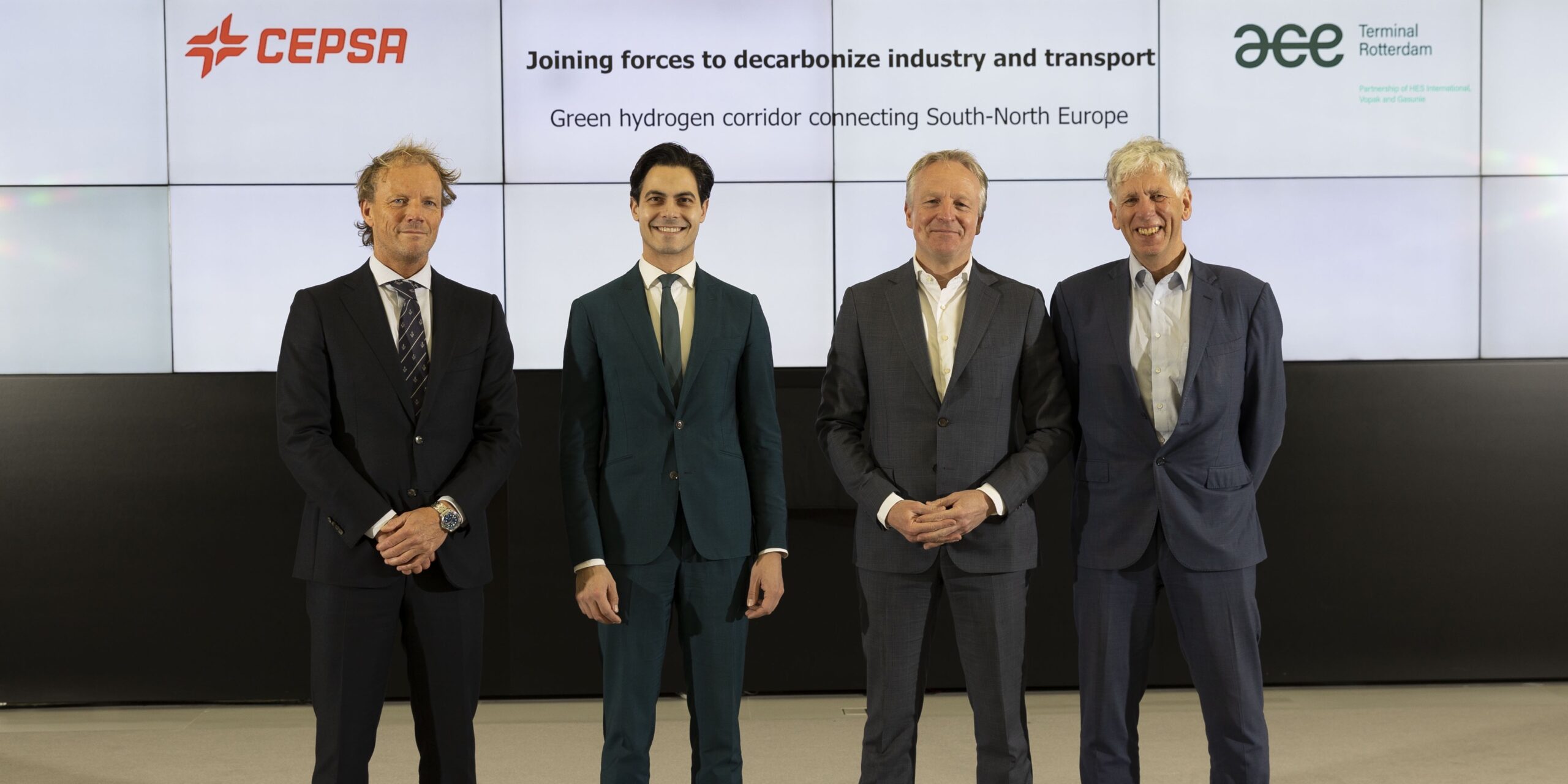
Cepsa and ACE Terminal join forces to create green hydrogen supply chain from Spain to the Netherlands

Cepsa and ACE Terminal have signed a Memorandum of Understanding (MoU) by which the Spanish energy company will supply green ammonia to the planned import terminal in the port of Rotterdam, for end use applications in the industry after conversion of the ammonia back into hydrogen, or for direct end use in the shipping and other industries in Northwest Europe.

Cepsa is developing 2GW of green hydrogen at its two Energy Parks in Andalusia, southern Spain, as part of its 2030 Positive Motion strategy to become a leader in sustainable mobility and the production of renewable hydrogen and advanced biofuels and a benchmark in the energy transition. The two hydrogen plants, with a 3 billion euro investment, will form part of the Andalusian Green Hydrogen Valley, the largest green hydrogen hub in Europe, for which Cepsa has recently signed a number of partnership agreements across the hydrogen value chain.

On the import side, Gasunie, HES International and Vopak have partnered to develop ACE Terminal as an entry point to the Netherlands for ammonia as a carrier for green hydrogen as well as a sustainable feedstock. The open access terminal will be located in the port of Rotterdam, a very important port for Northwest Europe from an energy point of view. With the planned reuse of assets and infrastructure, ACE Terminal is a project with a short time to market. The MoU with Cepsa is the first of agreements aimed between additional clients and the ACE open access hub terminal for green hydrogen and ammonia imports.

The MoU between Cepsa and ACE Terminal entails a cooperation intended to lead to a binding commercial agreement to facilitate the oversea transport of green ammonia, to redistribute the green ammonia to end markets in the hinterland, and to process the green ammonia into green hydrogen ready for use by end customers in Northwest Europe. The location of ACE Terminal in the port of Rotterdam offers direct connection to Rotterdam’s industry and the planned national hydrogen network, and has an excellent connection to the infrastructure into Northwest Europe.

By importing green energy that can be produced competitively by Cepsa in southern Spain thanks to conditions such as ample sun, wind and land, a solid electricity grid and access to high traffic ports, the alliance helps to decarbonise industry and transport in the North and ensure energy independence, security and affordability in Europe.

The alliance with ACE Terminal reinforces Cepsa’s agreement with the Port of Rotterdam to export hydrogen produced at its San Roque Energy Park near the Bay of Algeciras through hydrogen carriers such as ammonia, establishing the first green hydrogen corridor between southern and northern Europe and ensuring a green hydrogen supply chain between two of Europe’s main ports, Rotterdam and Algeciras.

Cepsa aims to start the first green hydrogen exports from Spain in 2027, timing that is well aligned with the ACE Terminal project timeline.

Rob Jetten, Minister for Climate and Energy, who was present at the signing of the MoU in Madrid, said: “This MoU between Cepsa and ACE Terminal is a great example of the type of collaborations that are needed and we want to stimulate with the new Memorandum of Understanding in the field of renewable hydrogen between Spain and the Netherlands. It constitutes a significant milestone for the European Hydrogen Strategy in developing hydrogen corridors between south and north Europe. This will enable us to reduce reliance on fossil fuels and to achieve the Dutch decarbonisation and climate goals”.

Maarten Wetselaar, CEO of Cepsa, said: “This alliance makes the Green Hydrogen Corridor a tangible reality and increases the international potential of the Andalusian Green Hydrogen Valley, allowing green hydrogen produced by Cepsa in southern Spain to be used for industry and shipping in northern Europe. Partnerships like these are examples of the collaboration needed across Europe to ensure energy security without jeopardising climate targets, and the important role that Cepsa, and Spain, can and must play in this journey.”

Egbert Vrijen, Project Director ACE Terminal, said: “We are delighted that Cepsa has stepped forward and has chosen ACE Terminal. We hope that in addition to Cepsa, more parties will join our open access ammonia/hydrogen import terminal in the port of Rotterdam.”

Rotterdam is the most important energy port in Europe, handling 13 percent of European energy demand, while the Port of Algeciras is first in Spain, fourth in Europe, and an important trade route between Europe and Asia. The future demand for green hydrogen in Northwest Europe exceeds the capacity that can be produced locally from sustainable sources, thus the need to import green hydrogen on a large scale.

For more information visit www.aceterminal.nl

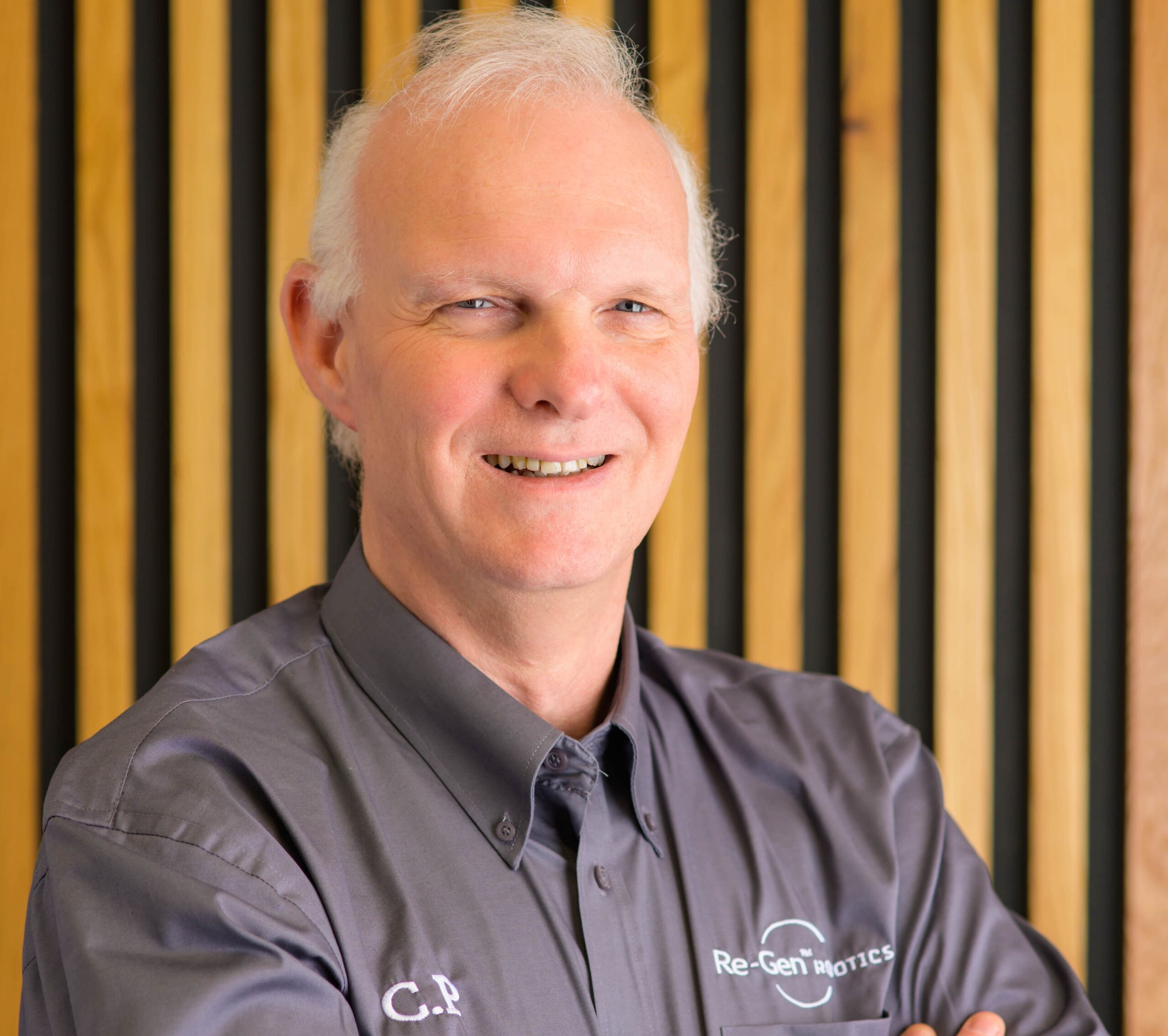
New Commercial Director at Re-Gen Robotics

Chris Platt has joined Re-Gen Robotics as Commercial Director. He brings extensive senior-level and technical experience in oil and gas operations, health and safety, and project management to the no-man entry robotic tank cleaning company, based in Northern Ireland.

A Chemical Engineer with over 35 years’ experience in world-scale oil and gas processes in refineries and storage terminals, Chris has a track record of delivery in multi-national and rapidly growing businesses.

Aidan Doherty, Managing Director at the Newry-headquartered company, said: “Chris is a respected leader in the oil and gas industry, having held positions in Petroplus, Greenergy, Navigator and latterly, VARO Energy and is very welcome to the Re-Gen Robotics team.

His track record of delivering safety and technical solutions will take our company to the next level. Chris will lead on our strategic plans, develop commercial opportunities, and establish effective relationships with current and new commercial partners.”

Chris is a Chemical Engineering Graduate from the University of Birmingham, holding a Diploma in Business management, a NEBOSH safety certificate, and is dedicated to continuous professional development.

He said: “Re-Gen Robotics is revolutionising safety in industrial oil tank cleaning, and it’s an exciting time to join the company. I’m looking forward to working with Aidan and the team on delivering solutions to tank storage owners, reducing confined space entry cleaning by staff, and promoting the safety benefits of the robotic tank cleaning system.

“I’ve previously held leadership roles in Group Safety, Health and Environment Management and Tank Storage line management, which have helped me understand the challenges of tank cleaning. I will bring my expertise to develop new markets for the business and I’m looking forward to the challenge being Commercial Director will bring.”

Since 2019, Re-Gen Robotics has eliminated over 15,000 hours of confined space entry and has completed tank cleans with oil majors including Shell, Phillips 66, Vermilion Energy, ExxonMobil, and Valero using its innovative no-man entry robotic system.

For more information visit www.regenrobotics.com

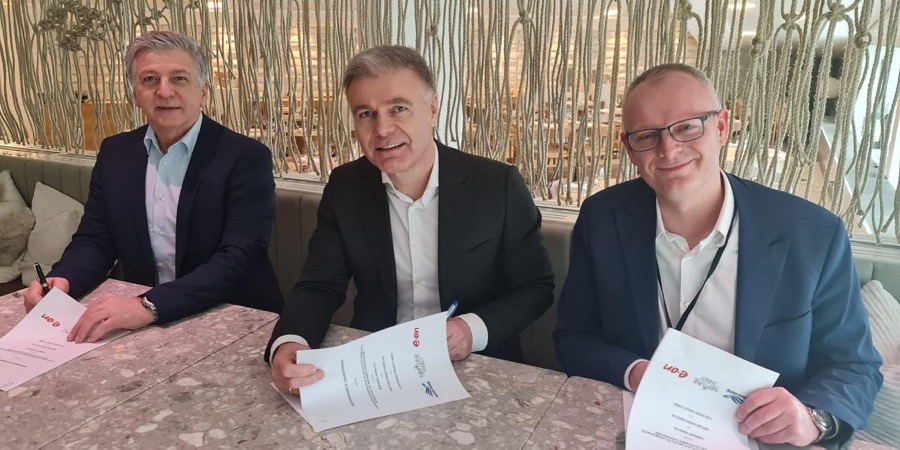
Horisont Energi, Neptune Energy and E.ON sign MoU for realisation of a European CCS value chain

Horisont Energi, a Norwegian clean energy company, and Neptune Energy, an independent global E&P company, have today signed a Memorandum of Understanding (MoU) with the international energy major E.ON with the aim to develop a European CCS value chain.

Through this MoU Horisont Energi will strengthen the existing cooperation with E.ON and by bringing in Errai partner Neptune Energy, Horisont Energi will expand the cooperation towards a jointly development of a European carbon capture and storage (CCS) value chain. The three energy companies will take a strong position in the CCS market, accelerating the transition to carbon neutrality.

The MoU covers several areas such as the development, financing, and funding of a complete value chain for CO2 handling. If Horisont Energi´s and Neptune Energy´s application for CO2 exploration for the Errai project is awarded, the intention is that this will be the first joint project.

“Our cooperation with E.ON and Neptune Energy is already strong. Through this MoU we are expanding the cooperation to include three experienced energy companies. Together we will strengthen our position to establish a European CCS value-chain business. In case of license award of Errai, a possible direct participation by E.ON would further strengthen the commercial basis for this project”, said Bjørgulf Haukelidsæter Eidesen, CEO at Horisont Energi.

Errai is planned as the first commercial CO2 project in Norway and will represent an important step in industrialising carbon capture and storage (CCS) as a competitive service. Bringing in E.ON will strongly contribute to linking CO2 projects on the Norwegian Continental Shelf (NCS) with development of the CO2 removal market in Europe. Pending legislative changes, the cooperation could furthermore lead the way for commercial carbon removal market based on sequestration of biogenic CO2.

Several industries cannot be fully electrified and will therefore depend on CCS to meet net zero emissions requirements and the fulfilment of the 1.5-degree target by 2050. Such industries are situated across Europe and include production of steel, cement, various chemicals, pulp, and paper. A full CCS value-chain will bring the solution to the customers offering a one-stop-shop for off-take of CO2 and permanent storage in safe sub-sea reservoirs.

Neptune Energy’s Managing Director in UK & Norway, Odin Estensen said “A partnership with energy major E.ON will strengthen our ambition in establishing Norway’s first commercial carbon storage project. This could be a key contributor to Neptune’s 2030 goal of storing more carbon than is emitted from our operations and from use of the oil and gas products we sell”.

The Errai project was initiated by Horisont Energi in 2021. In December 2022 Horisont Energi and Neptune Energy submitted a joint application for the acreage identified in the Errai project. In the application Neptune Energy has been proposed as operator.

The Errai project is planned with an injection capacity of 4-8 million tonnes of CO2 annually in the first development phase, with potential for more in later phases. The project includes an onshore terminal for intermediate CO2 storage and processing, prior to transport for permanent storage in an offshore reservoir.

As a part of the work to further develop the project, Horisont Energi has obtained a long-term lease option for a site suitable for a CO2 terminal at Gismarvik in Rogaland. The landowner, Haugaland Næringspark, possesses one of Norway’s largest industrial areas, with critical infrastructure including access to fibre, electricity, water, sewage, and a deep-sea quay already in place.

In November 2022 Horisont Energi signed a letter of intent with E.ON concerning for sequestration services of more than one million tonnes of CO2 planned to originate from E. ON’s European customer by 2030, starting from 2027 with gradual increase.

The three companies contemplate to cooperate as partners in different projects, but in case of license award to Horisont Energi and Neptune Energy, Errai could be the first possibility for E.ON to become a partner (subject to government approval).

The announcement of license award or not for ErraI to the applicants is expected in the first half of 2023.

For more information visit www.horisontenergi.no

Expansion of Dialog Terminals Langsat (3) Sdn. Bhd

Dialog Group Berhad is pleased to announce that DIALOG’s indirect wholly owned subsidiary, Dialog Terminals Langsat (3) Sdn. Bhd. will be expanding its terminal operations with the development of storage facilities for renewable products at its terminal in Tanjung Langsat, Johor Darul Ta’zim, Malaysia, namely DIALOG Terminals Langsat 3 (“Project DTL3”). Project DTL3 is DIALOG’s first foray into storage facilities for sustainable and renewable fuel products with a storage capacity of approximately 24,000 m3 connected to truck loading bays and existing marine facilities.

This development is largely in response to growing investor interest in low-carbon fuel alternatives and DIALOG is expanding its terminal operations to cater for such sustainable and renewable fuel products.

Bulk fuel storage terminals have an opportunity to become principal facilitators of the energy transition by helping to develop new low-carbon lines of products and services. Terminals could also play a pivotal role in the transport and logistics of newer, emerging product lines like biodiesel, sustainable aviation fuel and their associated feedstock. In essence, this gives terminals a new lease on life and new value in the energy transition, while retaining their traditional role as the gateway to energy trading. Potential users include biofuel production companies, energy trading houses, multinational energy companies and others.

The development of storage facilities for sustainable and renewable products is in line with low-carbon economy transition under DIALOG’s Climate Change Strategy as part of ongoing efforts to expand product and solution offering to support the growth and development in the sustainable and renewable sector. This development is also a continuation of the initiatives by the Group to achieve business sustainability and fulfill its Environmental, Social and Governance agenda through commercially viable ventures.

In addition, the strengthening of the midstream capabilities will lead to an increase in DIALOG’s sources of sustainable and recurring income in the future and reinforces DIALOG’s position as a leading integrated technical services provider.

DIALOG will remain focused and steadfast in the pursuit of diversification across the upstream, midstream and downstream energy sector as well as the sustainable and renewable sector to strategically position the Group to weather different economic and oil price cycles, which is in line with the Group’s strategy of generating long term recurring income.

For more information visit www.dialogasia.com

Advario Singapore Chemical wins again at the Annual SCIC Responsible Care Awards 2022

Advario knows how important it is to safely manage chemicals and contribute to high standards of health, safety, and environmental practices in the chemical industry. That is why Advario has put in place a deep commitment to safe and reliable operations, safety guidelines, and industry best practices. That’s how we safeguard the environment and ensure our people go home safely.

Advario are delighted to see our efforts recognised during the Responsible Care Awards, organised annually by the #SingaporeChemicalIndustryCouncil (SCIC). Advario Singapore Chemical (ADSC) received the Gold award in the #Security Code category, as well as Achievement awards in the #ProcessSafety Code and #EmployeeHealthandSafety Code categories.

The SCIC launched its Responsible Care Awards in 2001 to recognise the efforts of companies that have committed to practicing and implementing the SCIC’s Responsible Care Codes of Practices. This is the second year that Advario Singapore Chemical has participated in the Responsible Care program, and the second year it has been rewarded with multiple awards.

It is testament to the great work of all staff, partners and contractors that have helped make this award possible, by demonstrating our strong #HSSE culture and upholding the highest safety standards. For the year 2023, we will strive to achieve the same recognition for the other two terminals, Advario Singapore and Advario Helios Singapore, which operate on the same principles as ADSC.

For more information visit www.advario.com

Fulcrum BioEnergy’s United Kingdom waste-to-fuels project awarded £16.8 million grant

Fulcrum BioEnergy, Inc., a clean energy company pioneering the creation of renewable, drop-in transportation fuels from landfill waste, has announced that its United Kingdom subsidiary, Fulcrum BioEnergy, Ltd., has received a grant of approximately £16.8 million, USD $20.2 million, from the UK Department for Transport Advanced Fuels Fund. The grant, which runs through to 2025, will support development of Fulcrum NorthPoint, a residual waste to sustainable aviation fuel (SAF) facility which will be located at the Essar Stanlow Manufacturing Complex in Ellesmere Port, Cheshire in North West of England. Funds from the grant will be utilised to fund engineering activities for the plant, which is expected to have the capacity to transform about 600,000 tonnes of residual waste into approximately 100 million litres of low-carbon SAF per year when it enters operations in 2027.

“We are very pleased to have been selected and awarded this grant from the UK Department for Transport Advanced Fuels Fund,” said Eric Pryor, Fulcrum’s President and Chief Executive Officer. “Fulcrum applauds the UK Government and the Department for Transport for taking another step toward significantly reducing net carbon emissions for hard to abate sectors, including aviation, through the support of low-carbon SAF projects, including our Fulcrum NorthPoint facility. This funding furthers our engineering efforts for the plant and well positions Fulcrum for additional project financing for the facility. We look forward to bringing our patented process, technical expertise, IP and experience from the successful commissioning and initial operations of our first commercial-scale plant to the UK to make Fulcrum NorthPoint a success.”

Fulcrum recently announced the successful production of low-carbon synthetic crude oil from landfill waste at its Sierra BioFuels Plant, the world’s first commercial-scale waste-to-fuels plant, located outside of Reno, Nevada in the U.S. The Company has developed an innovative process for transforming a true waste product into a valuable low-carbon transportation fuel for the aviation industry. Fulcrum expects to utilise a standardised, scalable, low-cost approach for larger future projects, including Fulcrum NorthPoint, replicating the successful process at Sierra, which is backed by patents and capitalises on the intellectual property developed by the Company in its engineering and start-up operations of this first-of-its-kind plant.

For more information visit www.fulcrum-bioenergy.com

Vopak Agencies now a Wilhelmsen company

Wilhelmsen Port Services has completed its acquisition of Vopak Agencies which was first announced on 13 October 2022. Vopak Agencies, which has now become a Wilhelmsen group company, is highly complementary and a perfect match for the global reach of Wilhelmsen Port Services’ maritime network of 2,200 ports.

Vopak Agencies is a specialist within both hub services and port agency in the tanker segments in Europe and has extensive experience within their field. As part of the transaction, Wilhelmsen has also acquired 50 percent of diize, a Vopak developed digital software company aimed at the future of port orchestration.

One of the pillars of Wilhelmsen Port Services’ recently launched growth strategy is to be a leading partner in port in the markets it serves and the acquisition of Vopak Agencies and its position as a tanker specialist in North-West Europe is a perfect fit.

“This opportunity came at a perfect time for us with our ambitious growth strategy both targeting new segments as well as expansion of services in the port value chain. Now begins the work to bring the knowledge and experience from Vopak Agencies and diize into Wilhelmsen as well as to our global network of customers”, says Neal de Roche, President, Wilhelmsen Port Services.

For more information visit www.wilhelmsen.com

ExxonMobil to deploy Honeywell carbon capture technology

Honeywell has announced that ExxonMobil will deploy one of Honeywell’s carbon capture technologies – Honeywell’s CO2 Fractionation and Hydrogen Purification System – at its integrated complex in Baytown, Texas. This technology is expected to enable ExxonMobil to capture about 7 million tonnes of carbon dioxide (CO2) per year, the equivalent of the emission of 1.5 million of automobiles for one year.

Honeywell UOP’s carbon capture technology will be integrated into the design of ExxonMobil’s low-carbon hydrogen production facility and enable it to capture more than 982 percent of associated CO2 emissions. The captured CO2 is expected to be sequestered and permanently stored by ExxonMobil.

ExxonMobil’s Baytown low-carbon hydrogen, ammonia and carbon capture facility is expected to produce around one billion cubic feet of low-carbon hydrogen per day, making this the largest low-carbon hydrogen project in the world at planned startup in 2027-2028. ExxonMobil’s Baytown integrated complex is home to the largest olefins plant in the United States. The site is located on approximately 3,400 acres along the Houston Ship Channel.

“ExxonMobil’s investment in carbon capture technology shows our commitment to supporting customers in their decarbonisation efforts and to reducing emissions at our own operations,” said Dan Ammann, President of ExxonMobil Low Carbon Solutions. “The scale of this project is expected to enable up to 30 percent of Scope 1 and 2 emissions from our Baytown facility by switching from natural gas as a fuel source to low-carbon hydrogen.”

“The use of Honeywell’s technology enables ExxonMobil to reduce CO2 emissions at a large scale,” said Barry Glickman, Vice President and General Manager, Honeywell Sustainable Technology Solutions. “Our ready-now carbon capture technology works to decarbonise production processes and is effective because it can allow for significant emissions reduction that can play a major role in the energy transition.”

With more than 50 years of experience in gas processing, Honeywell has extensive experience with proven carbon capture and hydrogen technologies. Honeywell’s new advanced solvent CO2 capture and hydrogen solutions allow for CO2 to be captured, transported, and stored at a lower cost through greater efficiency, while allowing for smaller equipment and lower capital operational expenses needed to run the plant compared to existing technologies.

Today, 15 million tons per year of CO2 is being captured and used in storage/utilisation applications through Honeywell’s CO2 Solutions process expertise. Current Honeywell customers have the capacity to capture 40 million tons of CO2 per year through installed projects worldwide that utilise Honeywell CO2 technology3.

Honeywell is committed to achieving carbon neutrality in its operations and facilities by 2035. This commitment builds on the company’s track record of sharply reducing the greenhouse gas intensity of its operations and facilities, as well as its decades-long history of innovation to help its customers meet their environmental and social goals. About 60 percent of Honeywell’s new product introduction research and development investment is directed toward products that improve environmental and social outcomes for customers.

For more information on Honeywell’s carbon capture solutions, click here.

For more information visit www.pmt.honeywell.com

Svanehoj provides tank gauging systems for Calcasieu Pass LNG

As the US strives to meet the growing demand for LNG in Europe, more LNG tanks are required. Svanehøj France has provided safety instrumentation and software solution for a large LNG export facility in Louisiana.

LNG export between the US and Europe has increased significantly following the Russian invasion of Ukraine. In June 2022 alone, the US transported more LNG to European countries than in all of 2021.

Venture Global’s Calcasieu Pass LNG Terminal is one of those facilities contributing to the increase in LNG exports from the US.

Based on its experience and expertise regarding LNG tank instrumentation, Svanehøj France was chosen by CB&I to supply a tank gauging system for two LNG tanks at Calcasieu Pass LNG.

Our ambition is to be the prime provider of instrumentation and software systems for liquefied gas storage, and we are happy to apply our solutions at Calcasieu Pass LNG Terminal. We have the professional expertise to provide the optimal monitoring data and help the terminal make the right decisions, said David Clercq, Head of Sales at Svanehøj France.

Monitoring chemical composition

The chemical composition of any stored LNG is in constant flux. Therefore, it is vital to monitor the possible development of stratification and to be warned of any unstable stratifications.

Svanehøj’s instrumentation and software solutions are installed to ensure that all hazardous aspects related to liquified gas storage are known and controllable. The systems proactively measure possible development or creation of stratification by monitoring the tanks.

The product range includes gauges, temperature transmitters, and control systems that operate accurately under cryogenic conditions.

For more information visit www.svanehoj.com

A major lime supplier uses VEGA sensors and VEGA Inventory System to standardise their processes

A major supplier of lime, dolime, limestone, and clay products maintains plant locations throughout the US and Canada. This company’s materials are employed in a wide range of industries, giving it a strong presence in such sectors as steel, chemical production, water treatment, pulp & paper, and civil engineering. As a trusted supplier for so many industries, this company maintains a sizeable footprint across the U.S. More plant locations means being able to better provide essential materials to customers across the country, but it also brings its fair share of challenges.

In this company’s case, obtaining reliable measurements across facilities proved to be a costly challenge. Each of the company’s US sites independently selected a method of level measurement for their lime and dolime silos, some of which proved more effective than others. Some facilities utilised ultrasonic sensors, which turned out to be somewhat unreliable; others utilised rotary indicators or plumb bobs, mechanical devices that were more prone to failure. In some cases, personnel even had to physically crawl atop the silo and drop a line into it to check the level, which necessitated far more safety precautions than other methods. But consistent level measurement wasn’t the company’s only challenge: baghouses at one of their facilities were plagued by faulty measurement devices that, if left unchecked, could lead to disastrous consequences.

Putting a stop to blown baghouses

Baghouse failures mean major problems for aggregates companies. Baghouses are pollution control devices that remove the particulates or gas released from industrial processes out of the air. When a baghouse is “blown” (fails) because the silo is overfilled, it’s rendered unusable. This leads to its own share of issues: it can cost around $2000 to replace the bags, productivity is negatively affected, and the EPA may have to be notified depending on the extent of the overfill and failure, which opens a company up to fines and regulations.

One of the company’s locations in Nichols, Florida served as a proof of concept for the implementation of VEGA sensors and VIS on baghouses. This location features a baghouse that previously utilised a mechanical gauge for differential pressure measurement. The capillaries of this low-cost gauge could not hold up to the heat and harsh weather of the Florida climate; once the external forces took their toll, the capillaries would leak air, rendering them worthless and leading to blown baghouses. With this in mind, VEGA outfitted the facility with a VEGABAR 82 pressure sensor, along with a VEGADIS 81 external display so that facility personnel could check the baghouse’s status from up to 25 meters away. VEGABAR 82 is equipped with a ceramic measuring cell, making it highly resistant to the sort of temperature shocks and inclement weather events that troubled the mechanical gauges.

With VEGABAR 82 working in conjunction with VEGA Inventory System at the Nichols facility, the company not only has a better view of their inventory, they are also able to tell when to perform preventative maintenance on their baghouses, since dirty bags hold excess pressure; when it’s time to empty out material from the bags, VIS sends personnel an alarm so they know when to take action. VIS also provides the company with two years of trending baghouse pressure data, making it easy to demonstrate compliance with EPA regulations.

Seeking a standard level measurement

The lime supplier’s level measurement problems were twofold: first, with no standard measurement method across the enterprise, they were faced with major inventory uncertainty, and therefore less efficient operations. Second, some methods proved to be quite poor at accurately obtaining level data, resulting in costly issues like vessel overfills.

As issues from the assorted measurement methods piled up, the company turned to the experts at VEGA. After talking with the company’s personnel and assessing their needs, VEGA demonstrated their VEGAPULS radar level measurement sensors along with the VEGA Inventory System (VIS). VIS is VEGA’s software platform that enables users to monitor their inventory in real time from any web-enabled device with internet access. VIS gives users a view of their inventory across multiple locations, making it an ideal solution for the company when combined with VEGA’s reliable instrumentation.

VEGAPULS is highly precise and reliable, capable of detecting even the smallest of signals from media with poor reflective properties; this unparalleled precision meant no more costly inventory events like overfills. The sensor’s support for wireless operation over Bluetooth meant that operators no longer had to climb vessels to obtain measurements; with VEGAPULS radar sensors and VIS working together, inventory information across facilities was available to plant personnel at a glance.

Scaling Up

Impressed by the capabilities of VEGA Inventory System and the VEGAPULS and VEGABAR 82 sensors, the limestone provider entrusted VEGA with the task of streamlining their measurements across five of their US facilities. VEGA’s solution gives the company the quality inventory information they need to make strategic decisions and increase operational efficiency, and the customer reports savings of tens of thousands of dollars in recovered revenue. Thanks to VEGA’s measurement expertise, this enterprise’s processes are streamlined, safer, and more profitable.

For more information visit www.vega.com

European LNG demand to drive competition for new supply and dominate trade in the long term

Europe’s increased need for liquefied natural gas (LNG) looks set to intensify competition with Asia for limited new supply available over the next two years and may dominate LNG trade over the longer term, according to Shell’s LNG Outlook 2023.

European countries, including the UK, imported 121 million tonnes of LNG in 2022, an increase of 60 percent compared to 2021, which enabled them to withstand a slump in Russian pipeline gas imports following its invasion of Ukraine. A 15 million tonne fall in Chinese imports combined with reduced imports by South Asian buyers helped European countries to secure enough gas and avoid shortages. Europe’s rapidly rising appetite for LNG pushed prices to record highs and generated volatility in energy markets around the world.

With reduced Russian pipeline gas, LNG is becoming an increasingly important pillar of European energy security, supported by the rapid development of new regasification terminals in north-west Europe. In contrast, China is evolving from being a rapidly growing import market to playing a more flexible role with an increased ability to balance the global LNG market.

“The war in Ukraine has had far-reaching impacts on energy security around the world and caused structural shifts in the market that are likely to impact the global LNG industry over the long term,” Steve Hill, Shell’s Executive Vice President for Energy Marketing, said.

“It has also underscored the need for a more strategic approach – through longer-term contracts – to secure reliable supply to avoid exposure to price spikes.”

The drop in Russian pipeline gas flows prompted unprecedented policy and regulatory intervention as governments in Europe sought to bolster energy security and shield their economies from high costs, including prioritising LNG imports and quickly developing new import terminals.

In 2022, Europe’s LNG demand forced other buyers to reduce their imports and switch to other fuels, generating more emissions. High global LNG prices led to a drop in LNG imports in South Asia, with Pakistan and Bangladesh importing more fuel oil to minimise power supply shortages and India using more coal.

Total global trade in LNG reached 397 million tonnes in 2022. Industry forecasts expect LNG demand to reach 650 to over 700 million tonnes a year by 2040. More investment in liquefaction projects is required to avoid a supply-demand gap that is expected to emerge by the late 2020s.

Diverse new technologies to reduce emissions from gas and LNG supply chains will help to consolidate its role in the energy transition. And there is growing industry focus on the development and deployment of decarbonised gases – including renewable natural gas, synthetic natural gas, hydrogen and ammonia – to deliver more sustainable energy security in the future.

For more information visit www.shell.com