Advario enters the Port of Rotterdam to develop a new, future-focused energy storage terminal

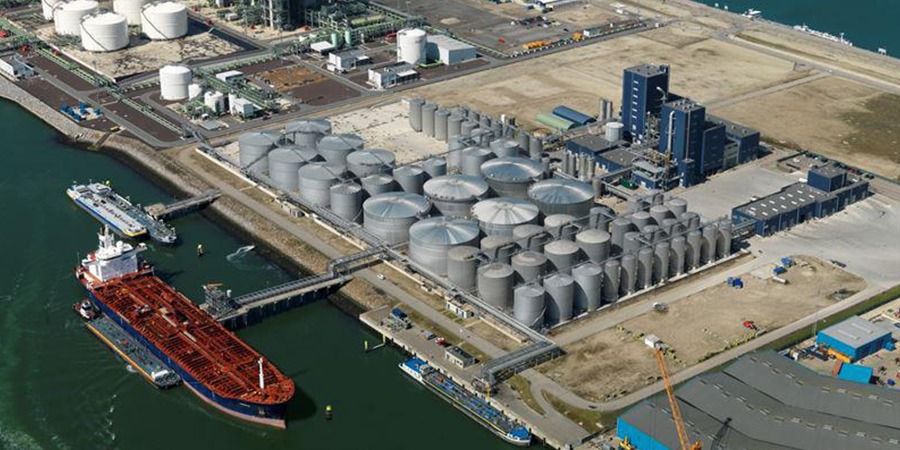
Advario Projects B.V. has signed a sales and purchase agreement with Aluminium & Chemie B.V. (Aluchemie). The agreement sees Advario acquire Aluchemie’s land lease. Establishing a presence in the Port of Rotterdam, at the heart of the Botlek area, Advario looks to develop the storage terminal for the energy products of the future, together with its partners.

“We are very pleased to have secured this strategic location in the Port of Rotterdam,” says Bas Verkooijen, Advario CEO. “This is another important step in the delivery of our long-term strategy to play a frontrunner role in supporting the energy transition. The site’s strategic location, ample size, and waterfront access offer us an excellent opportunity to enter one of the leading energy and chemical hubs in Europe. Advario looks to develop a new and future-focused storage terminal in close cooperation with our customers, industrial partners, and the Port of Rotterdam.”

Allard Castelein, CEO Port of Rotterdam: “As Advario plans to turn this large site at the heart of the port into a state-of-the-art storage facility for the energy, fuels, and chemicals of the future, we are pleased with Advario’s acquisition of the site. We expect that Advario’s activities will facilitate the transition of the Rotterdam port and industrial complex to become net zero by 2050. The Port of Rotterdam therefore looks forward to working together with Advario.”

A partner for progress

Advario is a leading globally operating energy storage company, with a track record as a safe and reliable operator. The company has over fifty years of experience building and operating complex storage infrastructure, and extensive experience with storage facilities for ammonia and future fuels.

Sustainability is embedded in every aspect of Advario’s business. As a partner for progress, the company actively works to reduce the carbon footprint of its operations. Advario aspires to be Net Zero by 2040, and invests in chemicals, gases, future fuels, and new energy products such as ammonia and hydrogen.

The new site in Rotterdam provides Advario with the opportunity to develop, build, innovate and operate the storage infrastructure its customers and partners need to successfully transition to cleaner energy. The 26-hectare Aluchemie site is located at the center of the Botlek, providing proximity to the existing hydrogen and carbon dioxide pipeline networks. Its waterfront on the 3rd Petroleumhaven gives quick access to Rotterdam’s main waterways. And lastly: the site is close to the operations of existing, valued partners Advario works with globally.

Aluchemie will prepare the site for handover by demolishing all structures above and underground, and by remediating the soil. The target date for completion is 31 December 2025, after which Advario can start construction at the site.

For more information visit www.advario.com

Linde signs agreement with ExxonMobil for carbon dioxide Off-take

Linde have announced that it has signed a long-term agreement with ExxonMobil for the off-take of carbon dioxide associated with Linde’s new clean hydrogen production in Beaumont, Texas.

Linde previously announced that it will build, own and operate an on-site complex to supply clean hydrogen and nitrogen to OCI Global’s new world-scale blue ammonia plant. Linde’s new facility is expected to start up in 2025 and will be integrated into Linde’s extensive US Gulf Coast industrial gas infrastructure. It will also supply clean hydrogen to other new and existing off-takers across the network.

Under the terms of the agreement, ExxonMobil will transport and permanently store up to 2.2 million metric tons of carbon dioxide each year from Linde’s hydrogen production facility, equivalent to the emissions from nearly half a million cars per year.

“Clean hydrogen is a key enabler of industry’s transition to a low-carbon economy,” said Dan Yankowski, Senior Vice President Americas, Linde. “Working with ExxonMobil as the carbon dioxide off-taker at our Beaumont project supports Linde’s strategy to decarbonize customer processes while safely and reliably supplying low-carbon hydrogen at scale.”

“ExxonMobil’s agreement with Linde underscores our growing momentum in providing industrial customers with large-scale solutions to sequester carbon dioxide emissions,” said Dan Ammann, President of ExxonMobil Low Carbon Solutions. “Linde’s Beaumont clean hydrogen project is another significant step towards achieving heavy industry’s decarbonization and net zero goals.”

As one of the world’s leading industrial gases and engineering companies, Linde is playing a key role in the clean energy transition. The company is actively supporting its customers to decarbonize their operations with the latest technologies for clean hydrogen and carbon capture, and by leveraging its world-class engineering organization, its existing hydrogen infrastructure and operational expertise. Linde offers solutions across the entire clean hydrogen value chain and is implementing projects across a range of applications and industries, with more in the pipeline.

For more information visit www.linde.com

Two rig contracts and a collaboration agreement with Transocean

Equinor, on behalf of several licences, has awarded contracts for the use of Transocean Encourage, mainly in the Norwegian Sea, and Transocean Enabler, for the Johan Castberg field. At the same time, the companies have signed a strategic collaboration agreement.

The rigs have been on eight-year contracts with Equinor that expire on 1 December 2023 and 1 April 2024, respectively. This will be the first contract extension since the rigs were built, as so-called Cat D rigs, specialised for Norwegian conditions.

The drilling programme in the Norwegian Sea consists of nine wells to be drilled on the Tyrihans, Verdande, Andvare and Vigdis fields located in the Tampen area of the North Sea.

Verdande and Andvare will be tied in to the Norne field. The drilling programme also include exploration wells, and may be further extended, adding six wells. The estimated total value of the nine wells is about USD 191 million, and the drilling campaign is expected to start on 1 December.

On the Johan Castberg field, Transocean Enabler will have a fixed drilling programme of 19 wells and options on another eight wells. The total contract value is estimated at USD 415 million, the fixed part accounting for USD 295 million. The new contract will come into effect between 1 April and 1 July 2024.

“We are pleased to sign a strategic collaboration agreement with Transocean, which is one of our largest rig suppliers. This reflects our perception of Transocean as a major contributor to our capability to realise our offshore ambitions also in the years ahead. We have been working closely for many years, and are now further expanding this cooperation by reserving one rig for the drilling of both production and exploration wells in the Norwegian Sea, and one rig for the development of the Johan Castberg field,” says Mette H. Ottøy, Equinor’s Chief Procurement Officer.

The strategic collaboration agreement will drive improvements in technology and innovation related to safety, efficiency and greenhouse gas emissions.

“We are now securing hot rigs, which we, together with Transocean, have already invested in upgrading, thus improving safety, reducing emissions and increasing efficiency. Operating for us for the past eight years, we already know the rigs well. We therefore have a lot of experience to build on, and we look forward to continuing our collaboration delivering safe and efficient wells,” says Erik G. Kirkemo, senior vice president for drilling & well.

The estimated contract values include drilling services such as casing running, wastewater treatment, cuttings management and two remotely operated vehicles (ROVs). The agreement with Transocean Enabler also includes wired drill pipe services.

Transocean Encourage and Transocean Enabler are 6th generation fully winterised, harsh environment semisubmersible rigs with automated drilling control specially designed for operations on the Norwegian continental shelf. In addition to these two rigs, Transocean Spitsbergen also has a contract with Equinor for the next few years.

For more information visit www.equinor.com

H2 Green wins £500k UK Government hydrogen grant to cut Highlands transport emissions

Edinburgh based H2 Green has secured a £500,000 grant from the UK Government’s Net Zero Hydrogen Fund to support the development of a green hydrogen hub in Inverness.

H2 Green, a wholly owned subsidiary of Getech, will construct a green hydrogen production, storage and fuelling facility to decarbonise transport in the Highlands after signing an MOU with the Highland Council last year.

The grant will support development expenditure for the front-end engineering design (FEED) and post-FEED studies for the production facilities, to be located in Inverness. The hub, which is targeting first production in 2025, will be powered by an array of wind and solar PV devices backed by grid-connected renewable energy supply. It will scale from 6MW to 24 MW over time, with the capacity at peak to generate up to 10 tonnes of green hydrogen per day, enough to fuel 400 HGVs.

Luke Johnson, managing director of H2 Green said: “The grant is a significant milestone in our plans to support the Highlands to cut transport emissions using clean, green hydrogen. Transport represents around 30 percent of the UK’s emissions and our project supports the Government’s ambition to deliver 10GW hydrogen production by 2030, with 5GW of that coming directly from green hydrogen. We are thrilled to have been selected in this highly competitive grant process.”

Dr Graham Cooley, H2 Green Chairman, added: “This grant award is a fantastic step by the UK Government to accelerate H2 Green’s progress in Inverness and in its network of sites across the Scottish Highlands. It is testimony to the hard work of the H2 Green team who have created a bold, exciting and practical project to decarbonise transport and industry in and around Inverness and deliver economic impact across the region.

Chair of Highland Council’s Economy and Infrastructure Committee, Cllr Ken Gowans, said: “The Highland Council identified early on that the development of green hydrogen infrastructure will play an important role in the region’s progress as a major producer of renewable energy and in delivering our part in meeting national ambitions for net zero.

“H2 Green’s vison for a regional approach in the development of hydrogen infrastructure is an extremely exciting opportunity for the region and fundamental in establishing the area as a leader in the production of a key energy source that will accelerate our transition to clean energy.”

A fuelling station will provide green hydrogen directly to rail, bus and HGV customers, supporting their decarbonisation and net zero strategies. The network will have the capability to distribute surplus hydrogen from the Inverness hub to a wider Highlands area.

For more information visit www.getech.com

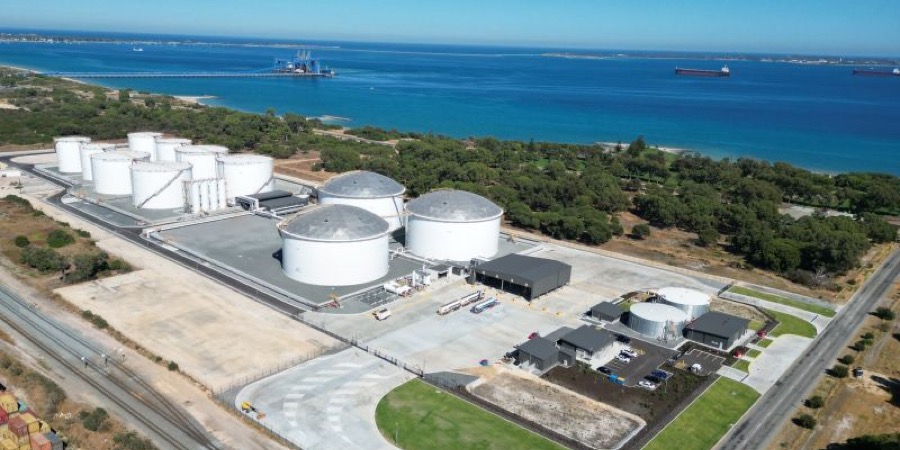
Impala Terminals inaugurates its 225 million litre energy import, storage and distribution terminal at Kwinana Bay in Western Australia

Impala Terminals Group has officially opened its first Australian energy import, storage and distribution terminal. The new facility at Kwinana Bay was inaugurated today in the presence of Her Worship Carol Adams, Mayor of Kwinana, Hon Klara Andric, Michael Parker, CEO of the Fremantle Port Authority, and Kevin Nichols, Chairman of Impala Terminals Group.

Strategically located next to the Kwinana Bulk Jetty, Impala Terminals Kwinana will bring fuel distributors alternatives to serve Perth and the surrounding region, creating a more resilient energy market and greater supply security to the people of Western Australia. With a growing demand for energy in the B2B market, the terminal will expand the region’s import, storage and distribution capacity with this new, state of the art facility.

The new terminal, which has been in operation since last October, has a storage capacity of 225 million litres/1.4 million barrels, with 11 bulk tanks, four day tanks and a butane tank. The facility includes a diesel express lane which significantly reduces loading time for delivery vehicles, and is equipped with the latest equipment and automation systems. The terminal is currently handling diesel and gasoline, as well as butane for blending, and is supported by a strategic anchor customer.

“We are very excited to be here, not only as an asset owner and operator, but also as a company committed to further investing into Western Australia infrastructure. We have been impressed by the support and collaboration with the local government, the Fremantle Port Authority and other key stakeholders and look forward to building on these relationships.

The terminal offers the latest infrastructure and technology and will help our customers better serve their customers by optimising their operations. Safety is our top priority, and we want to make sure that all of our employees, contractors and partners go home safe each day,” commented Sjoerd Bazen, CEO of Impala Terminals Energy Infrastructure, who attended today’s inauguration.

The terminal cost more than AUD 150 million to construct, signifying the Group’s long-term commitment to Western Australia. The investment has created eight full-time jobs and additional work for around 50 local contractors during the construction phase. More than 250 truck drivers have already received induction training aligned to Impala Terminals’ stringent global safety standards.

For more information visit www.impalaterminals.com

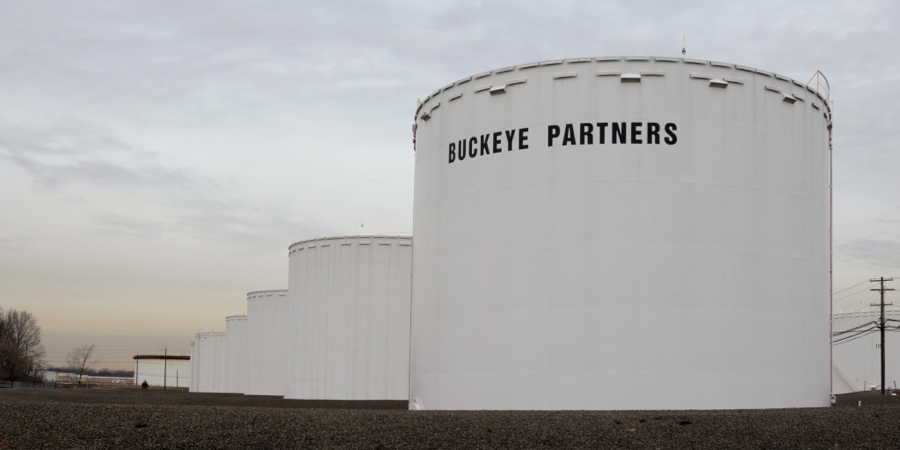
Buckeye Partners sells Bronx petroleum storage site for $74M

Buckeye Partners has sold its Bronx gas storage site at 1020 and 1040 East 149th Street for $73.5 million.

An entity that shares an address with energy supplier Sprague Energy bought the three buildings, used to store petroleum products before they are shipped to gas stations and other businesses.

Buckeye scored a pretty penny for the site, having purchased it for just $10 million in 2013 from energy firm Hess.

The Bronx site, on the East River waterfront, is one of a handful of properties Buckeye Partners own in New York. Other assets include fuel pipelines to LaGuardia Airport and JFK Airport and more than 18 million barrels of petroleum storage space around New York Harbour, according to the Buckeye website.

Reducing Risks: Pressure Swing Adsorption (PSA) Vessels

Pressure swing adsorption (PSA) vessels create and separate gases using a high degree of pressure. The PSA process can be implemented across a large range of applications and is commonly utilised by oil and gas refineries to purify hydrogen.

With this process, gases and impurities are filtered from the feed stream by being adsorbed onto solid surfaces at high pressure levels and desorbed at lower pressures. The higher the pressure, the more gases are adsorbed. While high pressure increases operational efficiency, it also increases the risk of structural issues that can lead to catastrophic failures and dangerous explosions.

Learn about some of the common damage mechanisms found in PSA vessels and what can be done to identify and address problem areas to optimise safe, reliable operations.

Understand and Mitigate Risks for Seamless Operations

Having knowledge of vulnerabilities and potential issues in facility infrastructure is critical in maintaining safe, uninterrupted operations. In an attempt to help mitigate risks and disruptions, many facilities develop risk based inspection (RBI) programmes.

As defined by Inspectioneering, a risk based inspection is a process that, “requires qualitative or quantitative assessment of the probability of failure (PoF) and the consequence of failure (CoF) associated with each equipment item, piping circuits included, in a particular process unit. A properly-implemented RBI programme categorises individual pieces of equipment by their risks and prioritises inspection efforts based on this categorisation.”

This method helps in optimising maintenance plans through improved risk management, enabling sites to maximise their resources and investments in the assets that have the highest probability for failure. The evaluation considers several different factors, including an asset’s safety, health, financial, and environmental risks to effectively construct inspection and maintenance strategies.

Once assets have been categorised and assigned a risk value, the site can begin prioritising its next steps. The equipment that poses the highest risks will be addressed first in an attempt to reduce the number of failures and unplanned outages. PSA vessels are often prioritised assets in risk based inspections due to their extremely volatile nature.

Common Damage Mechanism in Pressure Swing Adsorption Vessels

In determining an asset’s operational risk, a site will evaluate the known and potential damage mechanisms, and then estimate the consequences of a failure due to the identified damage mechanisms.

Fatigue cracking, which is caused by cyclic or fluctuating stress over an extended period of time, is a common damage mechanism found in PSA vessels due to the cyclic nature of a swing adsorber. It’s common for fatigue cracking to occur near a stress riser, like the junction point between the weld metal and base metal.

Once a fatigue crack forms in the material, continued exposure to cyclical stress can magnify the issue and cause the crack to grow. Additionally, environmental factors, like thermal conditions, corrosion, or hydrogen embrittlement, can also contribute to the acceleration of fatigue cracking and crack growth.

PSA vessels experience repeated pressure cycling and have exposure to high-purity hydrogen gas which can aggravate fatigue cracking, causing cracking and crack growth to occur all too often. If left unidentified or unaddressed, cracks can lead to major structural integrity problems for the asset and even explosions, presenting dangerous safety risks for facility personnel.

Expand Visibility into Asset Health to Detect and Monitor Damage

Routine inspections contribute to the overall safety, sustainability, and reliability of assets. Due to the inherently dangerous nature of the hydrogen production and separation processes, PSA vessels should be inspected thoroughly and on a routine basis for ongoing monitoring.

To make that possible, it is important to implement an inspection solution that enables in-depth data gathering to establish a current baseline of asset health and accurately track progression in subsequent inspections. Accurate, consistent, and repeatable inspection procedures will help in building an effective RBI program, ensuring individual assets are safe for continued use.

However, not all inspections are created equal. Traditional manual inspection methods often require sites to construct scaffolding to reach areas of the asset, which adds extensive time, resources, safety risks, and costs to a project.

Manual ultrasonic testing (UT) captures one reading per distance or grid, making it difficult to find localised corrosion or defects. Only collecting data from select points provides sparse coverage, which may not accurately identify the full extent of damage mechanisms or may completely miss them altogether. Not only do these methods lack data quality, but they are extremely time consuming to conduct. With reduced coverage, accuracy, and time efficiency, many companies turn to automated ultrasonic testing (AUT) solutions.

By design, robot-enabled AUT has the mobility to access hard-to-reach and hazardous areas, eliminating the need for scaffolding while expanding the amount of data coverage. This provides a more comprehensive assessment with a holistic view of asset conditions for confident RBI analysis and decision making.

A robust amount of data is gathered, which increases the quality and probability of damage detection. Continuous readings are captured across the asset rather than specific, predefined points that can leave gaps in coverage. Also, robots use encoders to determine their location on an asset, making it easy to conduct the same inspection again in the future to monitor the progression of damage.

Robot-enabled AUT inspection techniques provide better visualisations for more confident RBI assessments because of their advantages related to access, coverage, efficiency, and data quality. Phased Array Ultrasonic Testing (PAUT) is an optimal method for inspecting PSA vessels, inspecting both sides of welds and heat-affected zones simultaneously to provide in-depth data at speeds significantly faster than conventional AUT. By utilising automated PAUT, sites can gain visibility into the health of all weld seams, heat-affected zones, flanges, and any other areas prone to cracking or other damage mechanisms. Due to its comprehensive data capture, the probability of detection is drastically improved over traditional methods.

To complement PAUT, Rapid Automated Ultrasonic Testing (R-AUT) can also be performed for generalised or localised corrosion mapping of the asset. R-AUT provides high-density phased array UT data for in-depth analysis, collecting over 94,000 thickness readings/ft2 (1 million readings/m2) at speeds 5x faster than conventional AUT.

Pairing inspection technologies like PAUT and R-AUT results in high-quality, spatially dense data to create corrosion maps and weld scan data visualisations to easily identify and track damage without putting humans in harm’s way.

Increase Confidence in Your Inspections and Operations

Leveraging best-in-class inspection technologies will provide unprecedented data insights that empower impactful decision making. When choosing an inspection method, make sure to select a solution that is repeatable and provides ample data coverage to reduce costs and safety risk factors while improving reliability and operational uptime. By gaining a data-rich, in-depth understanding of asset health, you will confidently achieve your RBI program goals and maintain seamless operations today and in the future.

For more information visit www.blog.geckorobotics.com

Venture Global supplies first LNG cargo to Finland

Vitol has announced the delivery of the first LNG cargo to ever arrive in Finland. The tanker, which can hold 174,062 m3 of liquefied natural gas (LNG) was loaded at Venture Global’s Calcasieu Pass LNG export terminal and arrived at the new Inkoo terminal in Finland.

“Venture Global is proud to continue our support of a strong and secure Europe through the delivery of LNG to the newly installed Inkoo import terminal in Finland,” said Mike Sabel, CEO of Venture Global LNG. “Throughout this energy crisis, our allies in Finland have moved expeditiously to position new infrastructure that will allow their country to support the energy security of the Finnish people as well as the broader Baltic region. We congratulate Finland’s government and industry for this major accomplishment and are honoured to supply their first cargo of LNG from Calcasieu Pass.”

“Vitol is delighted to deliver the first LNG cargo to Elenger via Finland’s Inkoo terminal,” said Pablo Galante Escobar, Head of LNG & European Gas and Power, Vitol. “The opening of the terminal will enhance energy security in Finland and the Baltic region, facilitating the flow of LNG from around the world to European industry and consumers.”

For more information visit www.venturegloballng.com

Instrumentation Technical Services acquisition

ATS are pleased to announce that Instrumentation Technical Services, LLC (ITS) has joined the ATS Family of Companies. The addition of ITS is an exciting step in our strategic plan to broaden our service capabilities for our clients.

Based in West Chester, PA, ITS provides services and calibration for flow instrumentation, commissioning, repairs, validation project support, and installation and startup support. ITS’s expertise in embedded lab service will continue to be an integral part of its client offerings. ITS’s Precision Measurements division will continue providing ISO/IEC 17025 Accredited and NIST traceable calibrations.

ITS has been operating since 1989 and provides professional calibration services to quality-regulated clients. ITS’s talented team members will continue their tradition of service excellence. Ryan McBrearty, Jackie Perry, and the team will work with Josh Underwood and Robert Kurtzer as the Company joins our ATS Calibration business unit.

For more information visit www.atslab.com

Svanehøj France provides safety systems for Huizhou LNG receiving terminal

As part of a major LNG terminal project by Huizhou LNG Company Ltd., Svanehøj France has delivered the safety instrumentation and software for three LNG tanks at the Huizhou LNG Receiving Terminal.

The $1 billion Huizhou LNG Receiving Terminal is built with safety instrumentation and software solutions from Svanehøj France.

The three tanks form the first phase of the project and will have a capacity of 6.2 million tonnes annually. With the high capacity, it is necessary to ensure that every safety measure has been taken – especially in handling liquefied gas.

– In light of the growing capacities for LNG storage, it is essential to recognise the consequences following increased storage of LNG with different compositions, says Fabrice Vandewalle, Sales Manager at Svanehøj France.

Highest safety measures required

With a capacity of 6.2 million tonnes per annum, there is a higher risk of the chemical composition of the stored LNG developing into unstable stratifications.

However, with Svanehøj’s instrumentation and software solutions, it is possible to monitor any development of stratification in the composition. Thus, ensuring the highest safety measures for the stored liquefied natural gas.

– Our tank gauges, temperature transmitters, and control systems ensure that the LNG composition in the three tanks is constantly monitored and controlled so unstable stratification does not occur. We are proud to be a part of this ambitious project and ensure the highest safety measures in the LNG tanks at the Huizhou LNG import terminal, says Fabrice Vandewalle.

Huizhou LNG Company Ltd. will also include the construction of one jetty in the first phase, which can receive the world’s largest LNG carriers. The first phase is finalised, and in the project’s second phase, three additional LNG tanks will be built at the terminal. Huizhou LNG Company Ltd. expects the import terminal to be operational by the end of 2023.

For more information visit www.svanehoj.com

Kinder Morgan announces commercial in-service of Southern and Northern California renewable diesel hub projects

Kinder Morgan, Inc. have announced the full commercial in-service of its Southern and Northern California renewable diesel (RD) hub projects. RD is an alternative fuel that allows trucks, trains and any equipment that uses diesel to operate with significantly lower life-cycle emissions. Now in full operation, Kinder Morgan’s RD hubs are the most efficient and least carbon intensive method of transporting this lower emissions fuel from the Los Angeles refinery basin to San Diego and the Inland Empire and from the San Francisco Bay area to Sacramento, San Jose and Fresno. The initial phases of both hubs are fully subscribed with customer commitments.

“We are very pleased to be advancing California’s climate goals through our Southern and Northern California RD hubs,” said KMI’s President of Products Pipelines Dax Sanders. “These projects present a significant opportunity to participate in the transition to lower emissions energy sources of the future while continuing to provide fuels still in demand today. We are confident that the best way to serve markets during this energy evolution is through an all-of-the-above energy mix. Pipelines continue to be the safest and most cost-efficient mode of long-haul transportation for liquid fuels.”

The Southern California hub, which provides a throughput of up to 20,000 barrels per day (bpd) of blended diesel across the two inland destination truck racks, has been delivering RD to San Diego since the beginning of February 2023, with deliveries to Colton recently commencing. The Southern California hub connects marine supplies of RD coming into the Ports of Los Angeles and Long Beach to the Los Angeles market via the truck rack at SFPP’s Carson Terminal and to KMI’s SFPP pipeline system for delivery to the Inland Empire and San Diego areas.

The Northern California hub, which provides a throughput in aggregate of 21,000 bpd of RD via the SFPP northern pipeline system from the San Francisco Bay area to KMI’s Bradshaw, Fresno and San Jose terminals, is now commencing movement of RD to those markets. KMI capitalised on existing infrastructure for the Northern California hub, with potential capacity expansions available in subsequent phases.

For more information visit www.kindermorgan.com

Orbital Sidekick raises $10M to bring hyperspectral imaging to oil and gas pipeline monitoring

Historically, oil and gas companies have monitored pipeline leaks using inefficient, expensive methods: workers equipped with handheld optical gas imaging cameras, for example. Or, as Orbital Sidekick CEO Dan Katz put it in a recent interview with TechCrunch, “a young pilot sticking their head out the window of a crop-duster.”

“There’s really no persistent, objective, high-accuracy monitoring service that’s available to operators today,” he said. So he and Orbital Sidekick co-founder Tushar Prabhakar set out to create one. Their startup’s solution is a data analytics product that generates intelligence using a constellation of satellites equipped with hyperspectral sensors — and it’s caught the energy industry’s attention.

Today, Orbital Sidekick announced the close of a $10 million investment led by Energy Innovation Capital, with additional participation from major North American energy companies Williams and ONEOK. The University of Minnesota’s Endowment and existing investors 11.2 Capital, Syndicate 708 and the CIA’s strategic investment arm In-Q-Tel also participated.

The new capital is a major boon as the startup seeks to launch its first space-based commercial analytics product and as it gears up to launch its first two commercial satellites in April, aboard SpaceX’s Transporter-7 rideshare mission. Orbital Sidekick is also planning to launch two satellites, which it calls Global Hyperspectral Observation Satellite (GHOSt), each aboard Transporter-8 and Transporter-9. That means if all goes to plan, the company will have a six-satellite GHOSt constellation in orbit before winter this year.

Orbital Sidekick was founded by Katz and Prabhakar in 2016. Keeping true to the mythos of Silicon Valley, the two founded the company in Katz’s garage in San Francisco. The pair had met while working for Space Systems/Loral, a legacy space company that was acquired by Maxar in 2012. Katz has an academic background in physics and astrophysics, while Prabhakar has experience working for some energy tech companies; combined, the two realized there could be real demand for hyperspectral imagery in energy and other sectors.

The company sent its first tech demo to space in 2018 — a breadbox-sized hyperspectral camera that spent a year-and-half bolted outside the International Space Station. That was followed by a 30-kilogram tech demo satellite called Aurora, which launched in June 2021. (The GHOSt satellites are 100 kilograms each.) Alongside this, the company has been generating revenue through aerial programmes, which use the hyperspectral system on an aircraft that flies at an altitude of about 1,000 feet. But the company quickly realised that aerial was not a scalable solution.

“There are millions of miles of pipeline across the world,” Katz said. “To try to do that with aircraft is just not feasible, or scalable, from a margin standpoint.”

Hyperspectral lets companies “see” the chemical fingerprint of different substances, like gas, by collecting and measuring hundreds of wavelength bands. For pipelines in particular, hyperspectral information can help identify leaks even if the pipeline is buried underground, as is the case with the vast majority.

Compared to competitors, Katz said Orbital Sidekick provides higher resolution, at eight meters per pixel, by collecting more than 500 spectral channels. But the “big differentiator,” he said, is the company’s in-house analytics and intelligence platform. That product is called SIGMA, or Spectral Intelligence Global Monitoring Application.

Orbital Sidekick is also developing solutions for defence customers. Notably, the company won a $16 million STRATFI, or Strategic Funding Increase, contract from the US Air Force that matched dollar-for-dollar its $16 million Series A. For defence customers, hyperspectral imagery could be used to detect chemical weapons, or used with other imaging sensors to provide warfighters with a more complete picture of a battlefield.

“Sixteen million dollars in non-diluted capital really just helped accelerate our constellation plans,” Katz said.

Looking ahead, Orbital Sidekick is planning to expand within the energy sector, monitoring not just oil and gas pipelines but oil wells or off-shore oil facilities. Katz said the company is interested in exploring how customers can use Orbital Sidekick’s data and tech to verify carbon credits under a carbon credit marketplace. The startup also has plans in place to expand the GHOSt constellation to at least 14 satellites, to provide, Katz said, a hyperspectral “atlas of the world.”

For more information visit www.orbitalsidekick.com

Stolt-Nielsen Limited reports unaudited results for the first quarter of 2023

Stolt-Nielsen Limited have reported unaudited results for the first quarter ending February 28, 2023. The Company reported a first-quarter net profit of $99.8 million, with revenue of $708.7 million, compared with a net profit of $95.3 million, with revenue of $732.5 million, in the fourth quarter of 2022.

Highlights for the first-quarter 2023, compared with the fourth quarter of 2022, were:

  • Stolt-Nielsen Limited (SNL) consolidated EBITDA1 of $215.6 million, up from $197.8 million.
  • Stolt Tankers reported operating profit of $87.1 million, up from $78.2 million, largely driven by higher contract rates and improved spot volume.
  • The STJS average sailed-in revenue for the quarter was $29,066 per operating day, up 7.0 percent from $27,162.
  • Stolthaven Terminals reported operating profit of $25.1 million, compared with $20.8 million as operating revenue at the terminals in the US and Brazil improved.
  • Stolt Tank Containers reported operating profit of $39.3 million, down from $44.9 million. Lower transportation and demurrage revenue was partly offset by lower ocean freight cost and an increase in shipments.
  • Stolt Sea Farm reported an operating profit before fair value adjustment of biomass of $5.6 million, up from $3.3 million, reflecting seasonally higher sales volumes during the Christmas season and higher prices for sole.
  • Stolt-Nielsen Gas reported an operating loss of $3.4 million, compared to a loss of $2.9 million.
  • Corporate and Other reported an operating loss of $9.2 million compared with a loss of $10.4 million.


Niels G. Stolt-Nielsen, Chief Executive Officer of Stolt-Nielsen Limited, commented: “The first quarter continued where 2022 ended, with a solid performance from all businesses during what is typically the seasonally weakest quarter of the year. Stolt Tankers improved on the prior quarter results as we began to see the impact of contract renewals on our earnings. Results at Stolthaven Terminals improved on the back of continued high utilisation, although throughput volume was down slightly.

“At Stolt Tank Containers a decrease in container liner freight rates impacted the rates we charge our customers, and with the easing of logistics bottlenecks customers are returning tanks more quickly, reducing demurrage revenue. For Stolt Sea Farm, the Christmas season is our peak period, and it did not disappoint. However, as we entered 2023, we saw a slight reduction in the volume of turbot sales as the cost-of-living increase impacted the hospitality industry.

“The average rate increase on contract renewals by Stolt Tankers in the first quarter was approximately 50 percent, a significant improvement over the fourth quarter’s 30 percent rate increase. In pushing hard for improved terms, a number of contracts were not renewed, but we continue to see most of those contract volumes resurface in the spot market, where we have been able to fix at higher rates – negotiations continue. With a continued favourable supply/demand balance expected in the chemical tanker markets during the coming years we should see continued firmness in our segment.

“At Stolthaven Terminals, tightness in the global storage market, especially for chemicals and specialty liquids including biofuel feedstocks, has allowed for higher storage rates. We are seeing an increase in inquiries, which indicates a stronger storage market towards the end of the year.

“The tank container market has been holding up remarkably well. However, our expectation in the coming months is that we will move towards normalised market conditions.

“At Stolt Sea Farm we are seeing the impact of the increased cost-of-living on the hospitality sector in the form of easing demand. Consequently, we continue to expand our sales channels and geographical reach to support sales growth and price improvements, while focusing on maintaining the good growth in our biomass.”

For more information visit www.stolt-nielsen.com

Neste completed second series of runs at its Porvoo refinery

Neste has successfully concluded its second series of industrial-scale processing runs with liquefied waste plastic at its refinery in Porvoo, Finland. The goal of the processing runs is to further increase the company’s understanding of how different types of waste plastics behave during chemical recycling in the refinery processes. The end product gained in the runs – Neste RE™, a drop-in feedstock for petrochemicals – is turned into new plastics by Neste’s partners.

While Neste is establishing large-scale capacities to process liquefied waste plastic at its Porvoo site, the current processing runs utilise existing refinery equipment built for crude oil refining.

Successful conclusion of second series of waste plastic processing runs

Since Neste’s first processing run in 2020, the company has concluded a total of six successful runs, processing close to 3,000 tonnes of liquefied waste plastic in total. After processing 800 tonnes in the first series completed in 2022, the company has been able to more than triple that amount to date. The processing runs are a part of Neste’s strategy to advance chemical recycling and contribute to a circular polymers economy.

“We are walking the talk on chemical recycling,” says Heikki Färkkilä, Vice President Chemical Recycling at Neste. “Our processing runs provide us not only with valuable knowledge on the technologies, but also serve as a proof of concept: chemical recycling can be done on an industrial scale. Our focus continues to be getting from individual processing runs to continuous operation.”

Neste processed so called “hard-to-recycle” waste plastic which would have ended up in incineration or landfill had it not been directed to chemical recycling. This highlights how chemical recycling complements existing mechanical recycling technologies.

The liquefied waste plastic for the runs has been sourced from multiple suppliers that are part of a supply network Neste has continuously expanded. Among others, the suppliers include US-based Alterra Energy, in which Neste holds a minority stake, as well as Finland-based Wastewise, with which Neste recently cooperated to chemically recycle cross-linked polyethylene (PEX) waste from pipe production into new PEX pipes.

Moving from individual runs to continuous production

Neste is looking to build capacities at its Porvoo site to process 400,000 tonnes of liquefied waste plastic per year in the course of project PULSE, which is funded by the EU Innovation Fund. From 2030 onwards, Neste wants to process more than 1 million tonnes of waste plastic per year.

This ambitious aim is an important part of the company’s strategic study to transition its Porvoo refinery into a renewable and circular solutions site and possibly end crude oil refining by the mid-2030s. Liquefied waste plastic would play an important role in replacing fossil crude oil in the company’s Porvoo refinery.

For more information visit www.neste.com

Advario’s opportunity to share best practices

Having the opportunity to share best practices and learn from each other is one of the benefits of being a globally operating company. Last week, a delegation from the Daya Bay Chemical Industrial Park – where the Advario Daya Bay terminal is located – visited the Antwerp port and Advario Gas Terminal.

The delegation consisted of members of the Daya Bay authorities, joined by our VP China Colin Zhan. Advario’s guests were eager to learn more about automation and AGT, and interested to see how well-integrated the gas terminal is into the supply chain of their customers in the Port of Antwerp-Bruges. After visiting AGT, they met with other stakeholders in the port, to exchange views on port development, safety management and industry integration.

Advario looks back on a great visit, which demonstrates the collaboration between their terminals, all in support of their partnerships.

For more information visit www.advario.com

Hy2gen AG commissions Technip Energies to complete a pre-FEED study for its renewable hydrogen and renewable ammonia project

Hy2gen, the global project developer of renewable hydrogen, renewable ammonia and hydrogen-based e-fuels plants, has entrusted the completion of a pre-FEED study for its COURANT project to Technip Energies. The pre-FEED phase started at the beginning of March and is expected to be completed before the end of 2023.

It will provide insights into the configuration of the plant units and technologies, as well as information on the expected capital requirements of the project, ongoing operating costs and the possible initiation of environmental impact assessments and stakeholder engagement steps.

In addition, the results of the project phase will give insights for further partners of Hy2gen and Technip Energies to configure their downstream plants. Assuming a completed FEED and a positive investment decision, Hy2gen expects to have the plant completed by 2028. Production of carbon-neutral renewable ammonia is expected to start shortly thereafter, making it Hy2gen’s first Canadian project.

COURANT will produce renewable ammonia for local partners who will process it into ammonium nitrate, which is used in the fertiliser industry, for example. The hydrogen will be produced via electrolysers and the nitrogen will be produced in an air separation plant. The energy to operate both plants will supplied from hydropower. This makes the production of the ammonia completely climate-neutral. The expected production volume of ammonia is designed for 220,000 metric tonnes, and the planned energy requirement for this is 2.5 TWh per year.

“We are pleased by the trust placed in Technip Energies by Hy2gen to advance the COURANT project by carrying out the pre-FEED phase. This illustrates the relevance of our existing partnership with Hy2gen and we are looking forward to accelerating together the deployment of carbon-free hydrogen and its derivatives at scale,” says Marco Villa, Chief Operating Officer of Technip Energies.

“We very much welcome the opportunity to entrust Technip Energies with the implementation of the pre-FEED phase on COURANT. Technip Energies is a leader in the international carbon-free energy market and it was particularly important for us to place the responsibility in highly professional hands for our first Canadian project,” said Cyril Dufau-Sansot, CEO of Hy2en AG. Furthermore, the project sets an important impulse for the province of Québec and represents an important milestone on the way to a climate-neutral future for the region.

For more information visit www.technipenergies.com/en

Exolum invests in green hydrogen start-up H2Vector

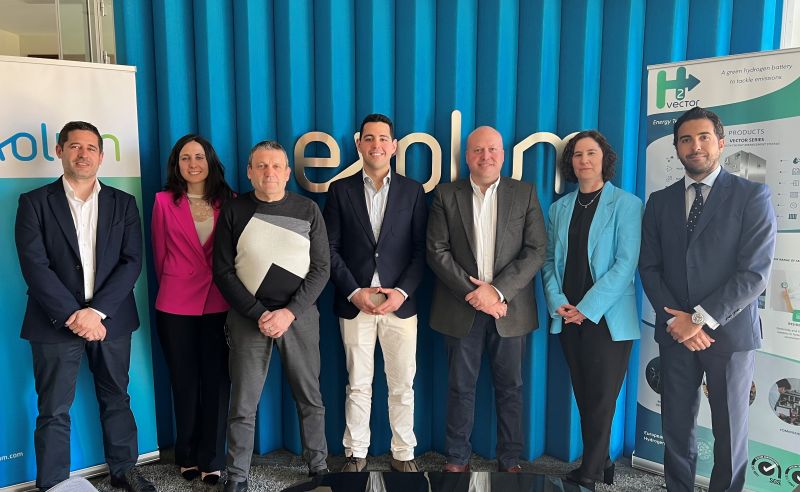
Exolum is taking another step forward in its decarbonisation and diversification strategy by becoming a shareholder of H2Vector, a technology start-up based in Asturias which aims to provide energy solutions to enable the decarbonisation and electrification of society, based on renewable hydrogen. Furthermore, the company is conducting research into new forms of storage and transportation of green hydrogen based on the use of organic liquids, a field that coincides with one of the strategic lines of Exolum.

The investment in H2Vector is part of an ambitious Open Innovation plan through which Exolum seeks to establish strategic agreements that will enable it to incorporate new technologies and new talent in its business areas related to decarbonisation.

To this end, the company invests in and cooperates with emerging companies from around the world that offer proposals to add differential value and provide innovative solutions in projects linked to the development of new energy vectors such as renewable hydrogen, biofuels and synthetic fuels, energy storage, sustainable mobility and the circular economy.

For Andrés Suarez, Exolum’s Global Strategy & Innovation Lead, this agreement represents “another step forward in Exolum’s strategy to be a relevant player in the development of new energy vectors, and an opportunity to support Spain’s entrepreneurial ecosystem and specifically a young team set on transforming the energy business with whom we can develop new competences.”

Miguelangel Ocando, CEO of H2 Vector, considers that “the investment by Exolum will allow us to accelerate our technological developments and to attain greater visibility in the green hydrogen energy sector. We are especially pleased to have established this relationship with an industrial partner that has a recognised track record, and with which we share values, mission and objectives.”

Exolum is developing business opportunities related to renewable green hydrogen, both for industrial use and for mobility. The company is building the first integrated plant for the production and supply of green hydrogen for mobility in the Madrid region, Hydrogen Henares – with a production capacity of 60 tonnes per year of this new energy vector.

Furthermore, together with other companies and research centres, Exolum participates in projects that aim to promote the development of new energy vectors while benefitting from existing infrastructures, by researching technologies for the storage and distribution of renewable hydrogen in liquid organic hydrogen carriers (LOHC). Such consortia include Regenera and GreenH2Pipes.

For more information visit www.exolum.com/en/

TGE Gas Engineering GmbH announce new CEO

TGE Gas Engineering GmbH are pleased to announce that Mr. Hongli Sun has been appointed as the new CEO of TGE Gas Engineering GmbH and the TGE Group from April 1, 2023. In addition to his new position, he will continue to serve as Managing Director of the Shanghai CIMC TGE Gas Engineering Co., Ltd.

After graduating as a Master of Mechanical Engineering from South China University of Technology (SCUT) in 1994, Mr. Hongli Sun began his career as a design engineer at CIMC group. In 2008 Mr. Sun participated the acquisition of TGE Gas Engineering and the company’s transition to the CIMC Group. A year later, Mr. Hongli Sun was appointed Deputy General Manager of TGE Shanghai, spent three years in Ningbo site working together with TGE project team and delivered TGE’s 1st EPC project in Chinese LNG Terminal Market, and in 2013, he was appointed Member of the Executive Board and Director of the Board of Directors of TGE and Technodyne Ltd. After spending three years in Bonn office since 2015, He has been managing the Shanghai CIMC TGE Gas Engineering Co. Ltd. since 2018 to now and he has continuously developed our business successfully there in a trend-setting manner.

TGE congratulates Mr. Hongli Sun on his promotion to Managing Director of the TGE Group and they look forward to an even closer working relationship in the coming years.

TGE would also like to thank Thomas Wehrheim, who resigned from his position as CEO of TGE Gas Engineering GmbH at his request. Thomas has shown extraordinary commitment to the interests of TGE over the past three years, and we deeply regret his decision.

For more information visit www.tge-gas.com
Buckeye Partners announces launch of Energy Transition Development Company

Buckeye Partners, L.P. has announced that it is launching BAES Infrastructure, a diversified energy company that will focus on the development, construction, and operation of energy transition projects. BAES Infrastructure will pursue new energy transition-related opportunities, with its seed assets being Swift Current Energy, OneH2, Bear Head Energy, a low carbon hydrogen and ammonia project under development in South Texas, and other advanced-stage solar development projects.

“The launch of BAES Infrastructure represents another step in our energy transition strategy, reinforcing our commitment to investing in growth that aligns with our customers’ current and evolving needs, while facilitating the decarbonisation of the broader economy,” said Buckeye CEO Todd Russo. “This new company will allow us to leverage existing and new relationships and focus on investment and development activity in the energy transition space without compromising our focus on safely and reliably operating our critical petroleum products infrastructure.”

BAES Infrastructure will be led by Jamie Cemm as CEO. Mr. Cemm is the former Chair of Buckeye’s Board of Directors (2019-2023) and has led the strategy to expand Buckeye’s business model into a diversified energy infrastructure business. BAES Infrastructure is an extension of that strategy. Mr. Cemm will be joined by a specialised global team with deep multi-disciplinary experience bringing together elements of development, finance, engineering, and investment.

For more information visit www.buckeye.com

Arabian Chemical Terminals Abu Dhabi announce new greenfield liquid bulk terminal

Arabian Chemical Terminals Abu Dhabi are thrilled to announce the opening of their new greenfield liquid bulk terminal in Khalifa Port Abu Dhabi, commencing operations from July 1, 2023.

Their state-of-the-art terminal offers unmatched facilities and services for storage and transportation of liquid bulk, ensuring the highest levels of safety, efficiency, and sustainability.

Whether you’re in the logistics and transportation industry or dealing with the oil and gas sector, the facility is equipped to cater to all your bulk liquid storage, distribution and transportation needs. Arabian Chemical Terminals mission is to provide you with unparalleled customer service and expert advice, ensuring your cargo is always in safe hands.

For more information visit www.act-uae.com

Moving towards a greener future with electric car charging stations at Alkion Terminals

As a company, Alkion aims to be a responsible actor that makes a positive and pro-active contribution to the communities and societies that we are proud to be a part of. As part of our continued focus on sustainability, two Alkion terminals have installed car charging stations available to use for free for their employees, as well as switching company cars to either hybrid or electric vehicles. Geertje Kramer, Terminal Manager of Alkion Terminal Amsterdam (ATA), and Fabien Lusson, Terminal Manager of Alkion Terminal Nantes (ATN) and Alkion Terminal Bayonne (ATB), explain.

Fabien Lusson: “Two years ago, we added a car charging station to the Bayonne terminal. It is now possible to charge up to four electric or hybrid vehicles at the same time. This innovation was not only motivated by sustainability, but also by employee wellness: gasoline is getting increasingly expensive, and the car charging station is available to use for free for all our employees.” A similar car charging station will be installed in Nantes this year.

Lusson has also switched his company car from a traditional vehicle to a hybrid: “Because of the distance between the Bayonne and Nantes terminals, a hybrid car is currently the best option. As electric cars start accomodating longer distances, I will hopefully be able to switch to a fully electric vehicle soon.”
At ATA, Geertje Kramer has also taken the initiative to install a car charging station, in order to support employees in making greener choices: “It’s great to be part of a company that wants to take meaningful actions in terms of sustainability.”

Kramer also drives an electrical vehicle herself, although it isn’t a car. Her choice of vehicle is decidedly more Dutch: “I think I am the only Terminal Manager at Alkion to not have a company car, but a company bike! People ask me all the time why I don’t take the car, but taking my electrical bike is actually faster because I avoid traffic. I enjoy processing my thoughts at the end of a busy day with the wind in my hair.”

“We want to facilitate and stimulate the move towards lower-carbon energy alternatives,” Lusson adds, “it’s the only way forward.” Alkion is moving forward, the electric way.

For more information visit www.alkion.com

Two GE-Led consortiums in agreement with TenneT for the award of contracts totalling approx. 10 billion euros

GE Renewable Energy’s Grid Solutions business have announced that it has been awarded three High-Voltage Direct Current contracts for a total of approximately 6 billion euros as part of a specially formed consortium with Sembcorp Marine for TenneT’s innovative 2GW Programme in the Netherlands. The contracts have been awarded as part of a five-year Framework Cooperation Agreement with the possibility to extend for another three years.

Furthermore, TenneT and a consortium formed by GE and McDermott have entered into an agreement based on which TenneT plans to award two further HVDC contracts in Germany for a total of approximately 4 billion euros to this consortium in April 2023.

The five contracts for the GE consortia are among 11 two-gigawatt (GW) contracts awarded to HVDC suppliers by the Dutch-German Transmission Systems Operator (TSO) as part of its goal to connect 40 GW of offshore wind farms to the high voltage grids in the Netherlands and Germany. TenneT’s large-scale project resulted from the Esbjerg Declaration in May 2022 at the North Sea Energy Summit, where Germany, the Netherlands, Denmark, and Belgium agreed to jointly install at least 65 GW of offshore wind energy by 2030 – up from 20 GW today – to accelerate Europe’s energy security following recent geopolitical developments. TenneT plans to install 20 GW each in the Dutch and German North Sea.

The GE consortia projects cover the offshore converter platforms and the onshore converter stations for the two-way conversion between alternating and direct current. The converter stations are based on bipolar Voltage-Sourced Converter (VSC) technology – the most advanced HVDC technology – and will have double the capacity compared to previous monopole grid connection systems, resulting in fewer cables and platforms.

Tim Meyerjürgens, TenneT COO, said: “We are delighted to be working with GE and their consortium partners as part of our task to connect 40 GW offshore wind in the North Sea, one of the most important infrastructure projects of the century. TenneT has the technical know-how, scale, and geographical position to connect wind energy from the North Sea, while GE and its consortium partners have the HVDC expertise. Together, with the GE consortia and other HVDC partners we will accelerate the development of the offshore grid, thereby strengthening Europe’s energy security and putting Europe on track to become the world’s first climate-neutral continent by 2050.”

Philippe Piron, CEO of GE Grid Solutions, said: “Together with our consortium partners Sembcorp Marine and McDermott, we are honoured and pleased to play a key role in this critical infrastructure project for European energy security and decarbonisation. These awards confirm that GE’s Voltage-Sourced Converter HVDC technology is now recognised as one of the most advanced in the world.”

For more information visit www.mcdermott-investors.com

Rysco International expands operations with launch of new UK office for corrosion monitoring services

Rysco International, a leading provider of corrosion monitoring services for the oil and gas sector, is pleased to announce the launch of its new office in the United Kingdom. The new office will serve as a base for the company’s expanding operations in the region, providing clients with access to state-of-the-art corrosion monitoring technologies and expert technical support.

With over 15 years of experience in the industry, Rysco International has developed a reputation for delivering innovative solutions to help oil and gas companies protect their assets from corrosion. The company’s innovative monitoring technologies and analytics tools enable clients to proactively identify and address potential corrosion issues before they cause downtime or damage to equipment.

The new UK office located within the Aberdeen Energy Park, Bridge of Don, Aberdeen will be staffed by a team of experienced corrosion monitoring professionals, who will work closely with clients to develop customised corrosion monitoring programs tailored to their specific needs. The team will also provide ongoing technical support and maintenance services, ensuring that clients can rely on Rysco Corrosion UK for long-term corrosion protection.

“We are thrilled to be expanding our operations with the launch of our new UK office,” said Ryan Finlayson, CEO of Rysco International. “This new location will allow us to better serve our clients in the region and provide them with the highest level of support and expertise in corrosion monitoring.”

The launch of the new UK office comes at a time of increasing demand for corrosion monitoring services in the oil and gas sector, as companies seek to minimise downtime and optimise production while ensuring the safety and reliability of their assets.

For more information visit www.ryscocorrosion.com

Vitol’s VTX targets more acquisitions as it completes the purchase of Delaware Basin Resources

VTX has completed its previously announced acquisition of Delaware Basin Resources and associated surface and water businesses. The assets comprise of 35,000 net leasehold acres and 46,000 surface acres across Reeves and Pecos counties in the Delaware Basin, with current production of approximately 40,000 barrels of oil equivalent per day.

“This is the starting step of our plan to build a significant producer in the Delaware Basin,” said Gene Shepherd, CEO, VTX. “We are excited to have closed our first acquisition since the launch of our partnership with Vitol. We look forward to growing our asset position, initially focused in the southern Delaware Basin.”

Ben Marshall, Vitol Head of Americas added: “This represents our second scale acquisition in the US shale patch. We believe the investment opportunity in upstream will remain attractive and are hopeful the VTX team can leverage our partnership to target new investment opportunities and build VTX into a sizeable producer.”

For more information visit www.vitol.com

New Energy Security Scenarios explore how the world could evolve

Shell plc has published its latest scenarios: the Energy Security Scenarios. The two new scenarios explore how the world could evolve following Russia’s invasion of Ukraine. Specifically, they look into the possible energy and climate outcomes that could result from a world that has security as its dominant concern.

Shell Scenarios are not predictions or expectations of what will happen, or what will probably happen. They are not expressions of Shell’s strategy, and they are not Shell’s business plan; they are one of the many inputs used by Shell to stretch thinking whilst making decisions.

The first scenario, called Archipelagos, follows how today’s pressures could play out to the end of the century. National interest remains key and renewables are mainly seen as a way to improve energy security. By 2100, net-zero emissions is within sight, but the world has failed to meet the goal of the Paris Agreement. This scenario is “exploratory”: it seeks to plot a course from where the world stood in 2022.

The second scenario, called Sky 2050, shows just how fast the world must move to meet the goal of the Paris Agreement. Global climate security becomes the primary concern. Nations race to switch to cleaner energy and a competitive landscape emerges for technology, minerals and manufacturing capacity. Competition drives rapid change and the world reaches net-zero emissions in 2050. This scenario is “normative” and extremely challenging: it set goals of net-zero emissions by 2050 and warming restricted to below 1.5°C by 2100, and then worked back to the realities of 2022 to explore how these end points could be reached.

Key points from the Energy Security Scenarios include:

  • Fossil fuels lose market share. The energy system is decarbonising, the questions is: how fast?
  • There is no realistic path to an instant and steep drop in emissions.
  • The average temperature rise is highly likely to breach 1.5°C.
  • The future of energy is electricity, although hydrogen and bioenergy have significant roles to play.
  • Bringing the temperature rise back down below 1.5°C will require large-scale carbon removal and storage.


Scenarios are informed by data, constructed using models and contain insights from leading experts in the relevant fields. Ultimately, for all readers, scenarios are intended as an aid to making better decisions. They stretch minds, broaden horizons and explore assumptions.

For more information visit www.shell.com/scenarios

IMTT announces plans to consolidate Bayonne, New Jersey operations and redevelop 130 acres of its property

IMTT have announced plans to consolidate its existing bulk liquid storage operations in Bayonne, New Jersey, which will free up approximately 130 waterfront acres for redevelopment on its 450-acre property. The consolidation will enable IMTT to serve its bulk liquid customers more efficiently and attract additional economic development opportunities to the Bayonne area. Even after the anticipated reduction in storage capacity, IMTT’s Bayonne terminal will continue to be the largest bulk liquids storage terminal in the New York Harbour area.

“We are pleased to announce that IMTT is consolidating a portion of the Bayonne terminal and embarking on a transformational development process for the eastern portion of the property. This will allow us to continue providing high-quality storage and logistics services on the west side of our property and pursue sustainable development opportunities on the east side,” said Carlin Conner, IMTT Chairman and CEO. “IMTT has proudly been operating in Bayonne for nearly four decades, and we are committed to continuing to provide the safe and dependable services our storage and logistics customers rely on, while also preparing the east side of our property for commercial activity that will support growth in the community for years to come. We are eager to work with the city of Bayonne, the state of New Jersey and other various stakeholders on a plan that will provide significant economic and environmental benefits to Bayonne and the broader New York metropolitan area.”

“We have been working closely with IMTT over the past year regarding the future of its Bayonne facility and I am pleased that this plan will bring economic development and jobs to the city,” said Jimmy Davis, Mayor of Bayonne. “We look forward to working with prospective partners to leverage the significant advantages of locating their businesses at IMTT’s unique property. This is a great day for the city of Bayonne.”

IMTT is actively considering all potential development opportunities for the approximately 130 acres on the east side of its Bayonne property. Given IMTT Bayonne’s unique location within a 15-mile radius of nearly 8.3 million people, the property is well suited for a wide variety of industrial and commercial uses. The property is also within a 3-mile radius of the Port of New York and New Jersey, the largest container port on the U.S. East Coast and one of the three largest in the nation. IMTT is focused on leveraging its property’s unique attributes, including access to the IMTT-owned East Jersey Railroad, multiple deepwater docks, and two interstate natural gas pipelines, to attract innovative and economic development to Bayonne, which is expected to generate a significant number of job opportunities and incremental tax revenue to the region.

For more information visit www.imtt.com

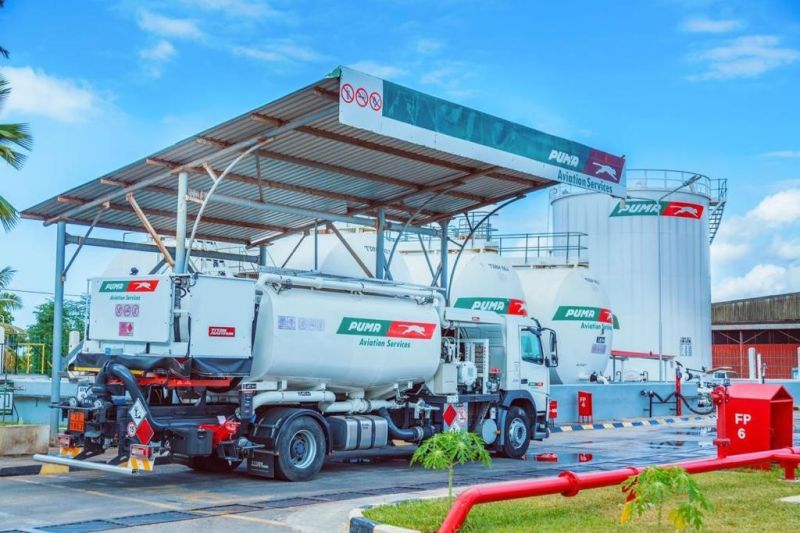
Puma Energy Aviation signal a strong return in growth with fuel sales

Figures from Puma Energy Aviation signal a strong return in growth across the aviation and tourism sector with fuel sales in many markets nearing pre-COVID-19 levels in 2022. Data from Puma Energy’s Annual Report show overall aviation fuel volumes rose 12 percent compared to 2021.

In Tanzania, where Puma supplies fuel at eight airports, jet fuel volumes grew by 45 percent year-on-year. This is encouraging news for economies which depend on tourism and air travel.

Puma Energy remains committed to supporting growth in the aviation industry through investments in state of the art new facilities and in cutting-edge digital systems.

For more information visit www.pumaenergy.com/en/

Energy Transfer to acquire Lotus Midstream in a $1.45 billion transaction

Energy Transfer LP and Lotus Midstream LLC have announced that the parties have entered into a definitive agreement pursuant to which Energy Transfer will acquire Lotus Midstream Operations, LLC (Lotus Midstream) in a transaction valued at approximately $1.45 billion from an affiliate of EnCap Flatrock Midstream (EFM). Consideration for the transaction will be comprised of $900 million in cash and approximately 44.5 million newly issued Energy Transfer common units. Lotus Midstream owns and operates Centurion Pipeline Company LLC, an integrated, crude midstream platform located in the Permian Basin. The transaction is expected to close in the second quarter of 2023, subject to regulatory approval and customary closing conditions.

Complementary Crude Gathering, Transportation and Storage Assets

Lotus Midstream’s Centurion Pipeline Company provides a full suite of midstream services including wellhead gathering, intra-basin transportation, terminalling and long-haul transportation services. Its expansive system, encompassing approximately 3,000 active miles of pipeline, covers major production areas of the Permian with nearly 1.5 million barrels per day of capacity. Lotus Midstream’s Midland Terminal offers 2 million barrels of crude oil storage capacity and additional supply and demand connectivity. The acquisition also includes a 5 percent equity interest in the Wink to Webster Pipeline, a 650-mile pipeline system transporting more than one million barrels per day of crude oil and condensate from the Permian Basin to the Gulf Coast.

Energy Transfer’s acquisition of Lotus Midstream’s Centurion Pipeline assets will increase the Partnership’s footprint in the Permian Basin and provide increased connectivity for its crude oil transportation and storage businesses. The Centurion assets, located across some of the most active areas of the Permian Basin, provide significant gathering volumes from key producers while also enhancing Energy Transfer’s access to key downstream markets with consistent sources of demand. The assets provide direct access to major hubs including Cushing, Midland, Colorado City, Wink and Crane. The system is anchored by large cap producer customers with firm, long-term contracts, and significant acreage dedications.

Additionally, upon closing Energy Transfer expects to begin construction on a 30-mile pipeline project that will allow Energy Transfer and its customers the ability to originate barrels from its Midland terminals for ultimate delivery to Cushing. This project is expected to be completed in the first quarter of 2024.

For more information visit www.energytransfer.com

TSA appoints new President and Vice-President

Wilma Kelly, HSE Director at Certas Energy, has been elected as the new President of the Tank Storage Association, the trade association representing all aspects of the UK’s bulk storage and energy infrastructure industry. Wilma succeeds Adrian Jackson, Chief Executive of the Oil and Pipelines Agency.

Arun Sriskanda, Managing Director at Oikos Storage, has been elected to the position of Vice-President, and will also join the Board of Directors of the TSA.

The Presidency and Vice-Presidency transferred at the TSA’s Annual General Meeting, which was held virtually yesterday.

Wilma Kelly said: “I am honoured to take on the role of President of the Tank Storage Association and I would like to thank Adrian Jackson for all his hard work, dedication and support over the past two years. I look forward to building on his success and taking the Association forward. The Tank Storage Association plays a leading role in several industry, regulatory and Government forums and works to ensure that members’ interests are at the top of the agenda. My priorities will be to continue to boost our connections whilst championing the value and benefits of this vital industry. I will be focusing on supporting the energy transition and ensuring the skills and resources for the future, particularly at a time of transformational progress for our sector.”

Arun Sriskanda said: “I am delighted to be taking on the role of Vice-President at this important time for our sector. I look forward to working together with the Association’s membership on the issues that matter most to us and helping to deliver the exciting new initiatives we are setting out for the months and years ahead. Thank you for the warm welcome from the existing TSA Board Members.”

For more information visit www.tankstorage.org.uk

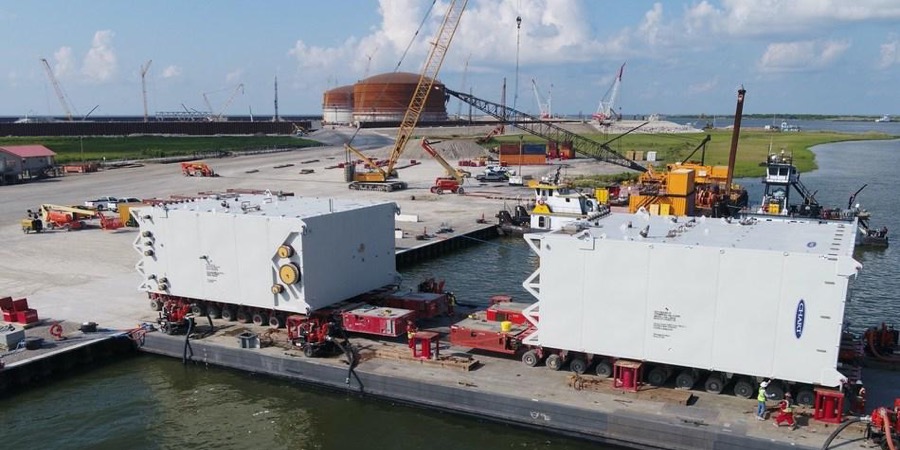
Enterprise Products awards Matrix Service EPC for a second ethane storage tank along the Texas Gulf Coast

Matrix Service Company have announced its subsidiary, Matrix Service, has been awarded the greenfield engineering, procurement, and construction of a second 600,000-barrel cryogenic ethane storage tank for a subsidiary of Enterprise Products Partners L.P. along the Texas Gulf Coast. The project, which was taken into Matrix’s backlog in the second quarter of Fiscal 2023, supports a continued demand for ethane in the global marketplace. Engineering for the storage tank will be completed by Matrix PDM Engineering.

“We value our long-standing relationship with Enterprise and appreciate their trust and confidence in us to engineer and construct this critical infrastructure,” Matrix Service Company President and CEO John R. Hewitt. “The global need for ethane continues to account for an increasing share of total U.S. production for its value as a petrochemical feedstock that can be broken down into ethylene, used in a wide variety of industrial, agricultural, and other applications. This greenfield infrastructure helps support that demand.

“With more than 65 years of legacy expertise in the engineering and design of cryogenic infrastructure, and as a leader in cryogenic storage and terminal solutions, Matrix is fielding a growing number of downstream project opportunities, including those for both ethane and ethylene, LNG, hydrogen, ammonia and propane.”

For more information visit www.investors.matrixservicecompany.com

VertiDrive acquired by BlastOne International

BlastOne is pleased to announce the acquisition of VertiDrive B.V. located in Rotterdam, The Netherlands.

BlastOne is a leading global provider of blasting and painting equipment and supplies and has been acting as a sales partner for VertiDrive, for more than five years.

The acquisition of Vertidrive will enable BlastOne to improve support for customers and provide innovative solutions for automating their blasting and painting processes.

The addition of VertiDrive’s robotics technology will enhance BlastOne’s ability to serve a wide range of industries, including shipbuilding, ship refurbishment, chemical industries, heavy fabrication, and infrastructure.

Blastone’s industry-leading experience and Vertidrive’s superior technology are a natural fit and complement the Superior Performance customers have come to expect from BlastOne solutions
“We are excited to welcome VertiDrive to the BlastOne family,” said Matthew Rowland, CEO of BlastOne. “Their cutting-edge robotics technology is a perfect complement to our existing product line, and we believe it will be a valuable asset as we continue to grow and serve our customers.”

“We are thrilled to join forces with BlastOne and bring our robotics technology to a larger audience,” said Stefan van Diessen, Managing Director of VertiDrive. “We believe this partnership will allow us to accelerate the development and deployment of our robots, and we are looking forward to working with the talented team at BlastOne.”

For more information visit www.vertidrive.com

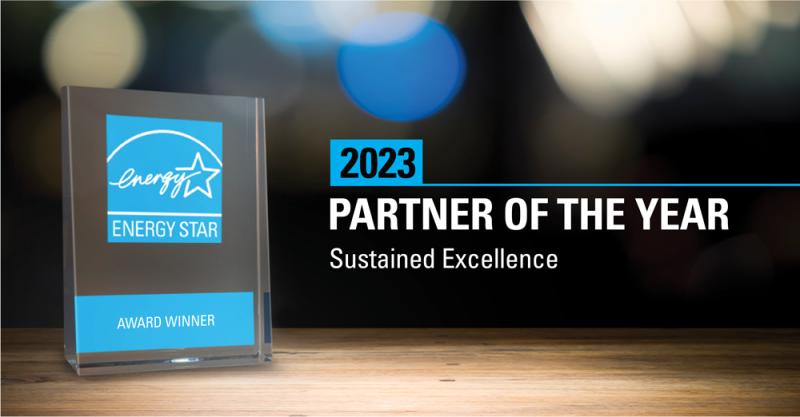
EPA honours Marathon Petroleum for sustained excellence in ENERGY STAR® programme

Energy efficiency and environmental compliance once again have put Marathon Petroleum Corporation (MPC) in a select group of US companies. MPC earned its fourth consecutive ENERGY STAR® Partner of the Year – Sustained Excellence Award, the highest level of recognition in the US Environmental Protection Agency’s (EPA) ENERGY STAR programme. MPC is one of only two companies in the petroleum refining industry to receive the Sustained Excellence Award this year.

EPA chooses Sustained Excellence Award winners at its discretion. Winning companies must go above and beyond the criteria for Partner of the Year recognition by showing continuous improvement over time in organisation-wide energy savings and environmental performance, demonstrating best practices and actively promoting the ENERGY STAR programme.

“As we accelerate historic efforts to address climate change, public-private partnerships will be essential to realising the scale of our ambition,” said EPA Administrator Michael S. Regan. “I applaud this year’s ENERGY STAR award winners for working with EPA to deliver a clean energy future that saves American consumers and businesses money and creates jobs.”

MPC’s award reflects company achievements in 2022, including:

  • The refining organisation’s Focus on Energy programme reduced energy consumption by about 20 billion Btu per day from baseline levels. This reduction amounts to conserving 14 tanker trucks of gasoline every day and avoiding 31,700 metric tonnes of carbon dioxide-equivalent emissions per month.
  • Six refineries (Anacortes, Washington; Canton, Ohio; Detroit, Michigan; Garyville, Louisiana; Robinson, Illinois; St. Paul Park, Minnesota) received 2022 ENERGY STAR certifications for energy efficiency performance in the top 25 percent of similar facilities nationwide. This was a record for the most certified refineries from a single petroleum refining company in one year.
  • Four terminals (Cincinnati, Ohio; Jackson, Michigan; Lansing, Michigan; Muncie, Indiana) in MPC’s midstream company, MPLX, achieved the ENERGY STAR Challenge for Industry in 2022 by reducing their energy intensity at least 10 percent within a five-year period.
  • A joint venture partnership with Neste was finalised to progress conversion of MPC’s Martinez, California, refinery into a renewable fuels facility. It joins the company’s fully operational Dickinson, North Dakota, renewable diesel facility, which is the second largest facility of its kind in the US with a production capacity of approximately 184 million gallons per year.


MPC received the ENERGY STAR Partner of the Year Award in 2018 and 2019 before earning the company’s first Sustained Excellence Award in 2020. For a complete list of 2023 award winners and more information about the ENERGY STAR awards programme, visit energystar.gov/awardwinners

For more information visit www.marathonpetroleum.com

Wood has worked on more than half of the world’s carbon capture & storage projects

Wood has completed carbon capture and transportation studies for more than half of the 300 carbon-capture facilities being planned worldwide.

From the US Gulf Coast of Louisiana and the oil sands of Canada to the Persian Gulf coast of Saudi Arabia, Wood’s experts are advising and engineering the design and digitalisation of more than 175 carbon capture projects.

Daniel Carter, Wood’s President of decarbonisation, explained: “The technology to capture carbon emissions is critical to energy transition and achieving net zero. Our top five clients have committed to invest over $100 billion in decarbonising their assets, which presents a significant opportunity for Wood.

“Our focus is on helping clients achieve their net zero goals through investments in decarbonisation projects with attractive returns. In the US, the Inflation Reduction Act (IRA) means US producers can receive $85 per ton of CO2 captured which exceeds the cost of CO2 capture. That’s why we’re seeing an increasing demand to design Carbon Capture & Storage hubs.

“Importantly, we need to digitalise assets before we can decarbonise. Existing technologies could cut three-quarters of methane emissions from oil and gas production at no net cost to operators. It starts with focusing on the simple stuff like the ability to actively identify and manage sources of greenhouse gas emissions in real time using digital tools, and harnessing data to identify the optimum pathway for an asset to achieve its carbon reduction goals.”

For more information visit www.woodplc.com

Essar UK appoints Mike Mackay as Chief Transformation Officer

Essar is pleased to announce that Mike Mackay has been appointed to the role of Chief Transformation Officer at Essar Oil UK. Mike will also join the company’s Executive Leadership Team.

Mike has over 25 years of experience in the oil and gas industry. He also has extensive knowledge of refining and the downstream oil sector in the UK. He recently returned to Essar from a successful secondment in the Department for Energy Security and Net Zero as the UK downstream oil sector’s advisor to Government.

Mike has a Master of Arts and Master of Engineering degree from Cambridge University, is an alumnus of the London Business School and is a Fellow of the Institute of Chemical Engineering.

In his new role, Mike will develop and implement strategies to improve business performance and reliability as Essar transforms for tomorrow.

Essar Chief Executive Officer, Deepak Maheshwari, said: “We would like to welcome Mike back after his secondment. This is an important appointment to a senior position within the company. Mike will work closely with me to improve business performance and reliability across Essar Oil UK.”

For more information visit www.essaroil.co.uk

Discussing LNG trends at the 9th International LNG Congress 2023

Discussions on the future of the LNG sector were held during two days at the 9th International LNG Congress (LNGCON) in Dusseldorf, Germany on March, 6-7, 2023. The Congress gathered key players of the industry to highlight topics of LNG’s role in energy transition, latest developments and asset solutions technologies, small-scale LNG facilities, automation technologies in LNG processes, alternative fuels, and sustainable production, transportation and liquefaction of natural gas.

Since 2016, the International LNG Congress (LNGCON) has welcomed gas majors, EPC companies, local gas companies, service and equipment providers, terminals, ports, truck and fleet owners, and governmental bodies to look through trends of the LNG industry and share innovative solutions.

In 2023 the 9th edition of the International LNG Congress assembled its participants in the Hilton Hotel, located in Dusseldorf. The Congress was supported by the Host Regional Partner – Hanseatic Energy Hub (HEH) that launched the Stade LNG terminal in Germany. These days Stade LNG terminal for liquefied gases “diversifies Germany’s import options for meeting affordable energy needs and contributes to a secure and sustainable supply”. Danielle Stoves, Commercial & Regulatory Director at HEH, shared an update on the LNG terminal project in Stade at the closing panel of LNGCON 2023. Danielle emphasised: “An emission-free terminal for LNG will commence operation at the Stade industrial park, whose infrastructure is also approved for bio-LNG and synthetic natural gas (SNG). Stade will also be the site of one of the five FSRUs chartered by the German government, a floating LNG terminal that is set to begin operations at the end of 2023”.

As for the audience, among the delegates were representatives from BP, Chevron, Naturgy, Shell, Repsol, Gasunie, Eni, Titan, Wood, and other LNG experts.

LNGCON 2023 began with an executive opening panel covering the topic of energy transition and LNG role in this process. Natalya Kusnetsova, Project Director of LNGCON, and Bertrand Leroy, Group GAS Director at Cryostar SAS, welcomed all the participants and gave the floor to Martin Cartwright from DNV to present the forecast to 2050. Then Alessio Torelli, Chairman & Managing Director at Snam4Mobility, shared Snam plans to put in operation small-scale LNG services and to increase its fueling stations network to meet the bio-LNG increase in demand. Other speakers from LIQVIS, Hoegh LNG, and PT Pertamina Gas gave an outlook to the LNG market of today and tomorrow.

The rest of the first day of the Congress delegates attended panel discussions and technical sessions dedicated to decarbonisation, bunkering, transportation, and terminal technologies. To round off the day, delegates visited the gala dinner, held in Seifenfabrik Dr. Thompson, which used to be the famous soap powder factory. Those days the fashionable restaurant opened its door to the Congress delegates to continue networking and then to feel an atmospheric ambience both indoors and outdoors.

The second day of the Congress started with a technical session on small-scale LNG case-studies and a panel discussion on LNG as an alternative to hydrogen. For instance, Julia Turner from McDermott gave a review of a number of concepts, highlighting the key drivers for small scale LNG projects and appropriate market conditions that help drive an economic and pragmatic solution. Also, Christian Hoellinger from Shell gave a speech on co-existing bioLNG and hydrogen together in the heavy duty road transport sector.

Moreover, delegates participated in the roundtable dedicated to the potential of alternative fuels. They brought up questions and expressed opinions on new approaches and implementation of bio-LNG and synthetic LNG.

LNGCON 2023 was finished by the closing panel where delegates reviewed the topics of countries expanding on the LNG market, trading and pricing strategies, and new projects in the LNG industry.

However, the LNGCON 2023 wasn’t only about discussion on LNG projects and insights. LNGCON 2023 had a closed door format that provided its participants with an opportunity to network only with top management and key technical representatives of the LNG industry. More than 380 delegates attended the Congress and the total number of meetings was 280.

The next, 10th anniversary edition, of the International LNG Congress is going to take place in Italy on 4-5, March, 2024. Do not miss the chance to join LNG industry leaders!

For more information visit www.sh.bgs.group/i2

TWTG and Thermo-Electra partner up in Wireless Temperature Measurement for I-IoT

TWTG and Thermo-Electra are excited to announce they have formed a partnership, which will combine the expertise in wireless temperature measurement solutions. The partnership will enable both companies to collaborate and leverage each other’s strengths to create new business opportunities and provide improved services to their customers. Customers will also benefit from bespoke tooling and improved operational safety and efficiency, the latter because of the increased accessibility of wireless temperature sensors. Thermo-Electra, established in 1962, is an independent Dutch manufacturing company specialised in designing and building thermocouple and Pt100 temperature sensors for industrial customers. Dutch scale-up TWTG is at the vanguard of Industrial IoT solutions and has become market leader in LoRaWAN®-based sensors with IECEx / ATEX certification. Both companies aim for growth and have a roster of international clients in the Energy sector and related industries.

The collaboration will combine the renowned expertise of Thermo-Electra in temperature measurement and TWTG’s proficiency in wireless IoT solutions to provide industrial customers with an end-to-end, one-stop-shop for wireless temperature measurement. Both companies will exchange know-how and support. This bundling of expertise will improve support to customers looking to add temperature measurement to their approach of monitoring operations. It also makes bespoke tooling in thermocouples and temperature sensors available to an increased customer base.

Growth is one of the aims behind the partnership. The changing Industrial IoT landscape, part of what is known as Industry 4.0, is the strongest enabler of that growth. The digital transformation sought by industrial customers in most notably the Energy sector, ensures increasing interest in wireless data acquisition and condition-based monitoring. Wireless I-IoT sensors, such as TWTG’s LoRaWAN®-based NEON product family, make that digital transformation and the reaping of benefits such as increased safety and efficiency, possible for larger customer groups than ever before. Besides temperature measurement, the NEON range also encompasses valve, pressure, and contact measurement and the ability to connect a temperature transmitter to specified thermocouples. Due to the cooperation, the design and manufacturing options for Thermo-Electra temperature sensors and the applications of TWTG equipment are almost infinite.

“I am glad Thermo-Electra and TWTG forged a partnership, one that opens new opportunities and is future-proof. While we are geographically in close proximity, both companies have a clear global reach. With the added expertise and the possibility of bespoke tooling, customers looking for wireless temperature measurement are in very good hands.” said Nadine Herrwerth, CEO of TWTG.

Claudia van Leeuwen, CEO of Thermo-Electra, explains: “We are very excited about the cooperation with TWTG. While we focus on manufacturing customer designed temperature sensors, TWTG focuses on the development of instrument digitalisation. The continuous pursuit of innovations and growth are characteristic for both of our companies. Alone we are strong but together we are stronger.”

For more information visit www.twtg.io