
Tree Energy Solutions, a global green energy company, and Ramboll, a leading engineering and consultancy firm, completed a joint engineering study for a CO₂ export terminal at TES’s Green Energy Hub in Wilhelmshaven, Germany. The study concluded this month and set the stage for the next phase of pre-FEED.
The collaboration assessed technical alternatives for CO₂ imports by rail and exports by ship. The terminal was designed to support carbon capture and storage by enabling the transport of CO₂ to offshore storage sites, representing a crucial component of Germany’s decarbonisation infrastructure.
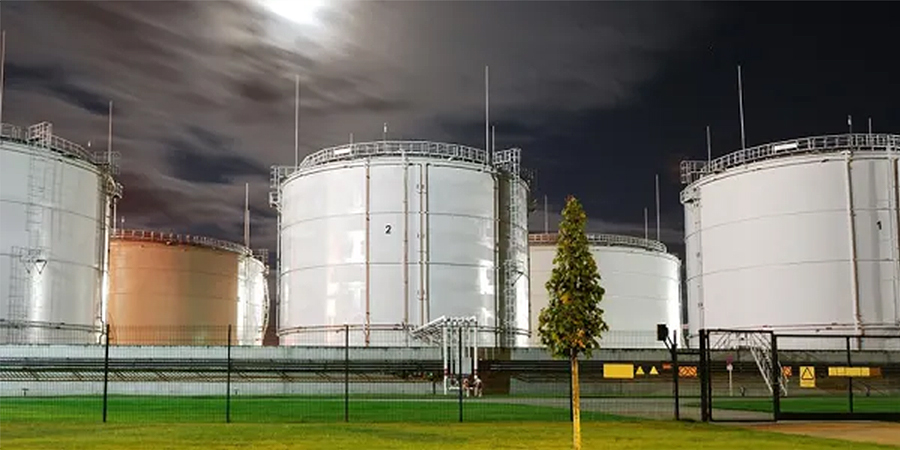
Ramboll’s comprehensive analysis covered a CO₂ receiving rail terminal and CO₂ export terminal, including rail-based offloading, buffer storage, boil-off gas (BOG) handling, and transfer to a jetty for ship-based export. The terminal will connect to Germany’s national rail system, the European high-pressure gas grid, the H2ercules hydrogen backbone, and the future CO₂ transport network.
In its first phase, the facility was expected to handle 3–5 million tonnes of CO₂ per year, with plans to scale up to 10 million tonnes. Once the onshore CO₂ pipeline network reaches Wilhelmshaven, capacity could be expanded further, positioning the facility as a major hub for European carbon management.
TES’s onshore terminal in Wilhelmshaven will facilitate LNG and e-NG imports, with an initial capacity of 15bcm as well as CO₂ exports, local power generation and hydrogen production. Strategically located at Germany’s only deep-water port, the hub connects to key infrastructure and plays a central role in Europe’s energy security and energy transition.
Hugo Dijkgraaf, COO of TES and MD of TES CO2 Company, emphasised the significance of the collaboration. “This excellent cooperation with Ramboll for technical maturation was a pivotal step in developing both our e-NG facilities and a dedicated CO₂ export terminal, reinforcing Wilhelmshaven’s role as a comprehensive energy gateway for Europe,” Dijkgraaf stated. “By creating state-of-the-art infrastructure for the export of CO₂, we were advancing Europe’s decarbonisation and CCS efforts. Our goal remained clear: to leverage existing networks for green molecules, ensuring both energy security and industrial growth.”
Hannes Reuter, MD of Ramboll Energy, highlighted the partnership’s environmental impact. “Our partnership with TES marked a significant milestone in advancing sustainable practices within the energy sector and underscored our commitment to reducing carbon emissions through innovative solutions and combating climate change,” Reuter said. “As TES’ engineering partner, Ramboll was dedicated to applying our advanced engineering capabilities to deliver a CO₂ terminal that not only supported Germany’s environmental objectives but also set a benchmark for global CCUS initiatives.”
The completed study represented a critical step toward establishing Germany as a leader in carbon capture, utilisation, and storage technology, with the Wilhelmshaven facility positioned to serve as a model for similar projects across Europe. The partnership between TES and Ramboll demonstrated the collaborative approach needed to develop the infrastructure necessary for achieving Europe’s ambitious climate goals.
For more information visit www.tes-h2.com