

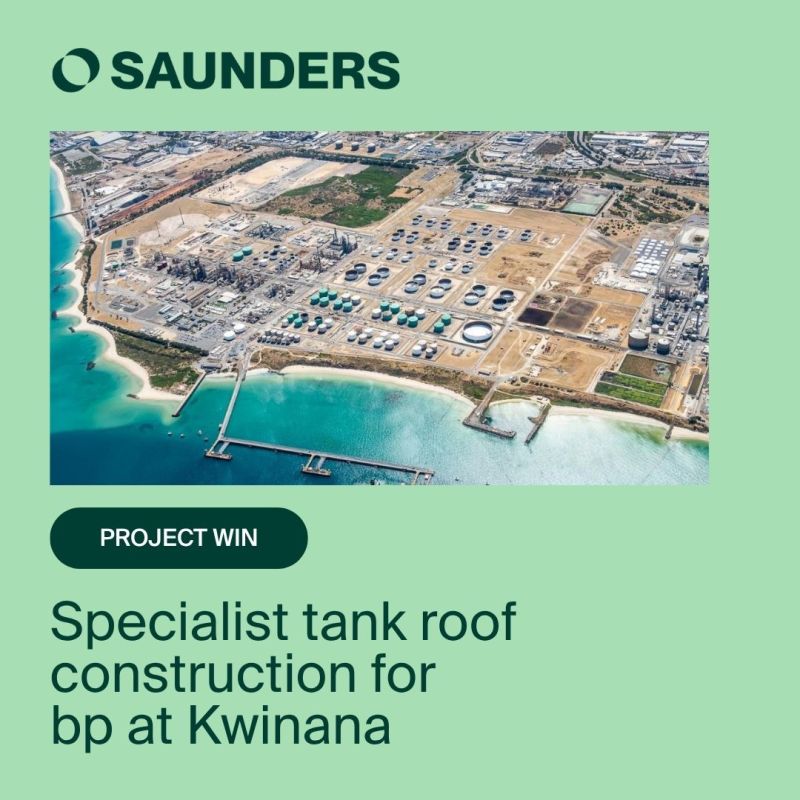
Saunders has been awarded the bp Kwinana Energy Hub T503 & T505 External Floating Roof Replacement project. The scope includes engineering, procurement, and construction of two new external floating roofs, with the team applying specialist tank roof construction expertise to deliver the upgrade.
The project will be delivered at bp’s operating Kwinana Energy Hub terminal, with work commencing soon and completion scheduled for mid-2026. Saunders characterised the award as another example of the team delivering complex fluid storage infrastructure solutions for one of Australia’s leading energy operators.
External floating roofs serve critical functions in petroleum storage tanks, floating on the liquid surface and rising or falling with liquid level changes during filling and withdrawal operations. The floating design minimises vapour space above the stored liquid, reducing evaporative losses and emissions of volatile organic compounds compared to fixed-roof tanks.
The replacement of existing floating roofs addresses ageing infrastructure requiring refurbishment or replacement after decades of service. Floating roofs experience wear from environmental exposure, mechanical stresses during operation, and corrosion from stored products and weather conditions. Systematic replacement maintains tank integrity, operational reliability, and environmental performance.
The engineering scope encompasses detailed design of new floating roof structures accounting for tank diameter, stored product characteristics, operational requirements, and relevant standards including American Petroleum Institute specifications governing floating roof design and construction. Design considerations include structural capacity for operational loads, drainage systems managing rainwater, rim seal systems preventing vapour escape, and access provisions for inspection and maintenance.
Procurement activities secure materials including steel plate for deck construction, pontoon or double-deck components providing buoyancy, rim seal assemblies, legs and supports, drainage systems, and safety equipment. Material specifications must ensure compatibility with stored products, structural performance meeting design requirements, and corrosion resistance supporting extended service life.
Construction work at the operating terminal requires careful coordination with ongoing operations, implementing safety protocols for hot work and confined space entry, managing logistics within active facilities, and scheduling activities minimizing operational disruptions. External floating roof installation typically requires tank decommissioning, cleaning, and entry for internal work, followed by roof assembly and installation before returning the tank to service.
The Kwinana Energy Hub operates as a critical petroleum storage and distribution facility serving Western Australia’s fuel supply requirements. The terminal receives refined products including gasoline, diesel, and jet fuel via pipeline from bp’s Kwinana refinery or marine imports, storing products for distribution to retail outlets, commercial customers, and Perth Airport.
Saunders’ specialist expertise in tank roof construction encompasses technical knowledge of floating roof systems, practical experience with installation methodologies, understanding of operational constraints in active facilities, and established safety management systems for high-risk construction activities. This specialized capability differentiates the company from general construction contractors lacking specific tank infrastructure experience.
The mid-2026 completion target indicates approximately 18-month project duration encompassing detailed engineering, procurement of long-lead materials and equipment, fabrication of roof components, site mobilization, tank preparation, roof installation, and commissioning activities verifying operational performance before return to service.
External floating roof replacement projects support asset integrity management strategies maintaining storage infrastructure reliability whilst meeting environmental performance standards. Regulatory requirements governing volatile organic compound emissions from petroleum storage increasingly favor floating roof tanks over fixed-roof alternatives, creating drivers for systematic maintenance and replacement programs.
The project represents continued investment in Australia’s petroleum infrastructure supporting fuel security and supply chain reliability. Western Australia’s geographic isolation from eastern Australian markets and reliance on maritime fuel imports create strategic importance for local storage capacity ensuring supply continuity.
Saunders’ characterisation of the work as complex fluid storage infrastructure highlights technical demands of floating roof replacement in operating facilities, requiring integration of engineering, procurement, and construction capabilities alongside safety management, stakeholder coordination, and quality assurance, supporting successful delivery for major energy infrastructure operators.
For more information visit www.saundersint.com