

Hamburg’s Authority for Environment, Climate, Energy and Agriculture (BUKEA) has granted MB Energy approval to construct and operate a new ammonia import terminal, marking a significant milestone in the development of Germany’s emerging hydrogen and alternative fuels infrastructure. Subject to a final investment decision, the facility is planned for development at the site of the Blumensand tank terminal within the Port of Hamburg and is set to become the country’s first large-scale ammonia import hub.
The project is expected to play a pivotal role in supporting future energy security and advancing the ongoing transformation of the industrial and energy sectors. The terminal will be designed for the import and distribution of ammonia, which serves not only as a hydrogen carrier but also as an industrial feedstock and potential alternative fuel, particularly for the shipping sector. By enabling the import of these molecules, the facility aims to strengthen the domestic ammonia market and establish a foundation for scaling the hydrogen economy. In the longer term, it is also anticipated to contribute to the decarbonisation of maritime transport. From a technological perspective, ammonia may additionally be utilised in gas-fired power generation. The terminal will be capable of handling lower-carbon and renewable ammonia, subject to technical feasibility, market availability, and regulatory requirements.
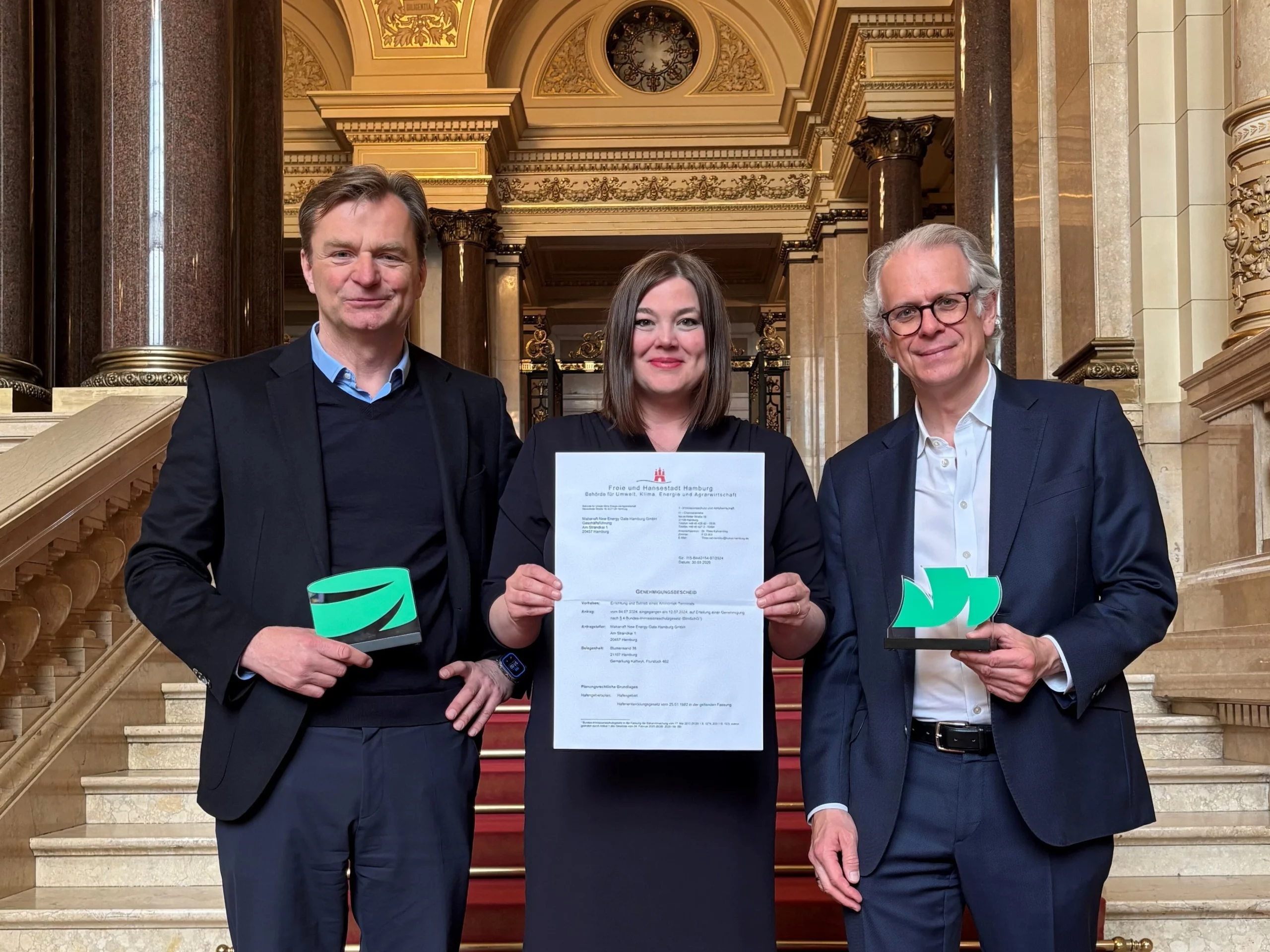
Development will take place at the Blumensand tank terminal, the largest storage facility in the Port of Hamburg, which is owned by MB Energy’s storage subsidiary, enport by MB Energy. The terminal forms part of the wider New Energy Gate project, which also includes planned methanol handling capabilities at the same site. Project plans include the construction of a new storage tank for temporary ammonia storage, upgrades to existing berth infrastructure for inland and seagoing vessels, and the development of rail loading facilities. Future integration options are also being considered, including a potential feed-in connection to a yet-to-be-developed cracker plant where ammonia could be converted into hydrogen for injection into a future hydrogen grid network. The planned annual throughput is expected to reach approximately 600,000 metric tonnes of ammonia.
Volker Ebeling, senior vice president New Energy, Supply & Infrastructure at MB Energy, noted that the granting of the permit represents a key project milestone following a constructive permitting process. He highlighted the significance of the ammonia terminal in advancing Hamburg’s energy transition, describing it as a strong signal for a future-oriented and reliable supply of energy and raw materials, and expressed appreciation for the collaborative and solution-focused engagement of all parties involved throughout the process.
For more information visit www.mbenergy.com