

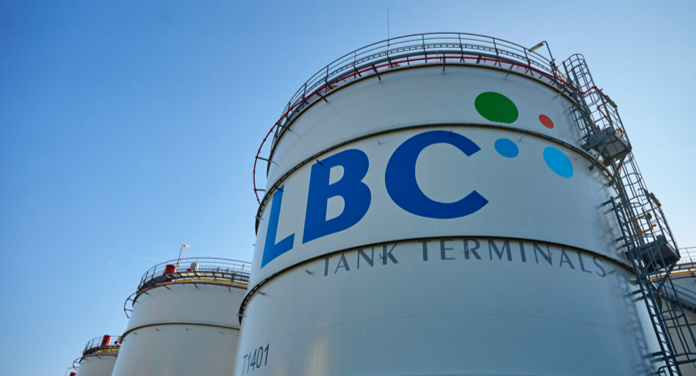
LBC has announced the launch of the open season for ammonia storage and ammonia cracking capacity at its state-of-the-art terminal, currently under development at the North Sea Port in Vlissingen, the Netherlands. Once completed, the terminal will serve as a cornerstone of Europe’s sustainable energy infrastructure, facilitating the import, storage, and conversion of ammonia into hydrogen.
Situated at the entrance of the Westerschelde River in the Amsterdam-Rotterdam-Antwerp region, the terminal will initially offer 150,000 cubic meters of ammonia storage capacity, with the potential to scale up to accommodate 3.5 million tonnes of ammonia annually.
“This open season is a significant step towards realising our vision for LBC Vlissingen as a leading green energy hub,” said Alexander Fokker, general manager of the terminal. “By offering both ammonia storage and cracking capacity, we are positioning this terminal as a key enabler of Europe’s hydrogen economy, driving the clean energy transition with integrated and sustainable solutions.”
A key milestone was achieved in December 2024 with the approval of the building permit for the quay wall and jetty. The project is now in an advanced stage of securing the environmental permit. The first phase will focus on ammonia import and distribution, supported by a deep-water jetty designed to accommodate the latest generation of very large ammonia carriers. Additionally, the terminal will feature advanced ammonia handling and loading facilities for barges, with future plans to integrate rail connectivity for efficient distribution across the European hinterland.
A critical component of the terminal’s development is the industrial-scale ammonia cracking facility, which will convert ammonia into hydrogen. Integrated into the terminal, this facility will provide a reliable hydrogen supply to meet Europe’s increasing demand, ensuring efficient distribution via barges and the European Hydrogen Backbone.
“LBC Vlissingen is central to LBC’s long-term strategy,” said Radboud Godron, group director of business development new energies. “It exemplifies our ongoing commitment to providing the infrastructure that will support the growth of clean energy, helping Europe reduce its carbon footprint and secure a sustainable energy future.”
The LBC Vlissingen terminal is scheduled to commence operations in Q4 2028, with ammonia cracking capacity following shortly thereafter. The project represents a key step in LBC’s commitment to developing the necessary infrastructure to support the energy transition.
LBC invites potential customers to participate in this open season to secure storage and cracking capacity at the terminal. More information and the submission process can be accessed via the dedicated website. Submissions will remain open until 31 March 2025.
This initiative marks a significant advancement in shaping the future of hydrogen supply and accelerating Europe’s transition to a sustainable energy economy.
For more information visit www.lbctt.com