

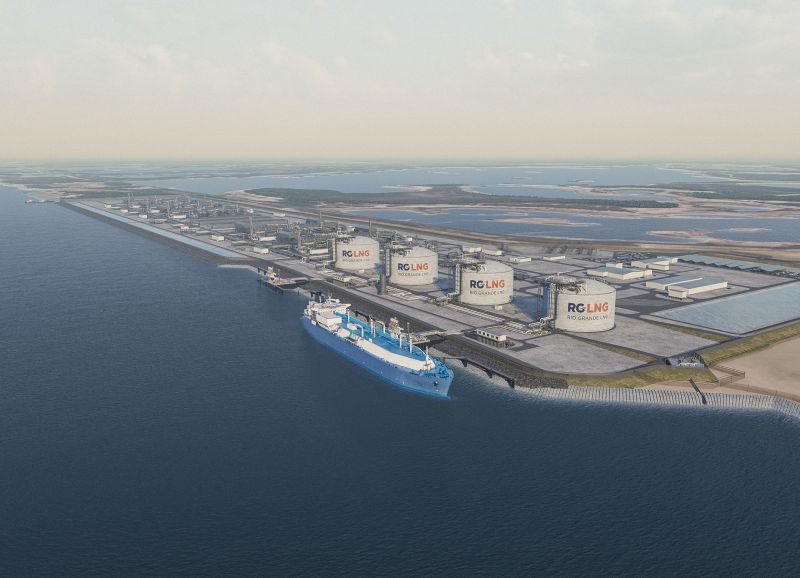
Kiewit Corporation has announced that NextDecade has awarded its subsidiary TIC – The Industrial Company the engineering, procurement, construction, and startup and commissioning scope for the high-integrity pressure protection system on pipelines feeding the Rio Grande LNG facility. The award marks the transition of this project element from early front-end engineering design work into full EPCC execution.
HIPPS Technology and Safety Function
The high-integrity pressure protection system represents specialised safety technology designed to protect pipelines and facilities from over-pressurisation by shutting off flow when pressure thresholds are approached. At Rio Grande LNG, the HIPPS will perform vital functions in safeguarding both personnel and infrastructure from potential overpressure scenarios that could compromise system integrity.
HIPPS technology provides an alternative to traditional pressure relief systems by preventing overpressure conditions rather than relieving excess pressure after it occurs. The system employs redundant sensors, logic solvers, and isolation valves to detect rising pressure and automatically close feed isolation valves, preventing downstream equipment from experiencing pressures exceeding design limits.
Project Scope and EPCC Execution
TIC – The Industrial Company will execute comprehensive engineering, procurement, construction, and startup and commissioning activities for the HIPPS installation. This integrated scope encompasses detailed engineering of the protection system, procurement of specialised instrumentation and valve equipment, construction and installation of system components, and commissioning activities verifying proper operation before facility startup.
The transition from front-end engineering design to full EPCC execution indicates project progression from conceptual and preliminary engineering phases into detailed design and construction activities. FEED work establishes a technical basis, scope definition, cost estimates, and execution strategies that inform final investment decisions and detailed engineering.
Rio Grande LNG Project Context
Rio Grande LNG represents NextDecade’s liquefied natural gas export facility under development in Brownsville, Texas, on the southern Texas Gulf Coast. The project is designed to liquefy natural gas from US production basins for export to international markets, contributing to US LNG export capacity and global gas supply.
The facility’s location near the US-Mexico border provides access to abundant natural gas supplies from Texas-producing regions whilst offering Gulf of Mexico deepwater port access for LNG carrier vessels transporting products to global markets. The project represents substantial infrastructure investment supporting US energy exports and contributing to regional economic development.
Pipeline Feed System and Safety Requirements
Natural gas pipelines feeding LNG facilities transport large volumes at elevated pressures from regional pipeline networks or directly from producing fields. These feed pipelines must deliver gas meeting facility specifications regarding pressure, temperature, and composition to liquefaction trains that cool the gas to minus 162 degrees Celsius for conversion to a liquid state.
Protection of liquefaction equipment from overpressure scenarios is critical, as exceeding design pressure limits could cause equipment damage, unplanned shutdowns, or safety incidents. Traditional pressure relief systems vent excess pressure through relief valves, whilst HIPPS prevents overpressure by isolating the source, eliminating or minimising product venting whilst providing robust protection.
Regulatory and Industry Standards
HIPPS installations in LNG facilities must comply with industry standards and regulatory requirements governing safety instrumented systems, pressure equipment protection, and process safety management. Standards published by organisations including the International Electrotechnical Commission, International Society of Automation, and American Petroleum Institute establish requirements for HIPPS design, installation, testing, and operation.
Regulatory authorities, including the US Federal Energy Regulatory Commission and Department of Transportation Pipeline and Hazardous Materials Safety Administration, establish safety requirements for LNG facilities and associated pipeline infrastructure. HIPPS implementation contributes to satisfying regulatory safety requirements whilst providing operational flexibility.
TIC Capabilities and Industrial Expertise
TIC – The Industrial Company, operating as a Kiewit Corporation subsidiary, specialises in construction and maintenance services for industrial facilities, including oil and gas, petrochemical, power generation, and mining sectors. The company’s capabilities encompass construction management, specialised fabrication, mechanical installation, instrumentation and controls, and commissioning services for complex industrial projects.
Experience with safety instrumented systems, process equipment installation, and commissioning of sophisticated control systems positions TIC to execute HIPPS scope requiring integration of mechanical, instrumentation, and control system elements with stringent safety and reliability requirements.
Collaborative Project Delivery
Kiewit expressed commitment to continuing collaboration with NextDecade and driving successful outcomes for critical energy infrastructure. Effective partnership between owner and EPC contractor proves essential for complex projects where technical challenges, schedule pressures, and quality requirements demand coordinated problem-solving and decision-making.
Early involvement through FEED work provides TIC with project familiarity, technical understanding, and relationship foundations supporting efficient transition to detailed engineering and construction phases. This continuity reduces risks associated with contractor transitions and enables application of lessons learned during earlier project phases.
For more information visit www.kiewit.com