
As industrial facilities face mounting pressure to reduce harmful emissions and protect worker safety, mobile degassing is emerging as a critical solution for managing residual gases and vapours during some of the most operationally sensitive moments in a plant’s lifecycle.
The Problem With Residual Gases
In industrial plants, a wide range of processes generate gases and vapours that pose risks to both human health and the environment. When chemicals, fuels, and other hazardous substances are stored in tanks and pipework, residual materials inevitably remain even after a vessel appears empty. These residues become a significant challenge during product changeovers, maintenance work, turnarounds, and short-term shutdowns, situations where residual gases must be removed in a controlled manner before work can safely proceed.
The stakes are high. Inadequate management of these vapours can expose workers to dangerous substances, release pollutants into the atmosphere, and create risks for surrounding plant operations.
How Mobile Degassing Works
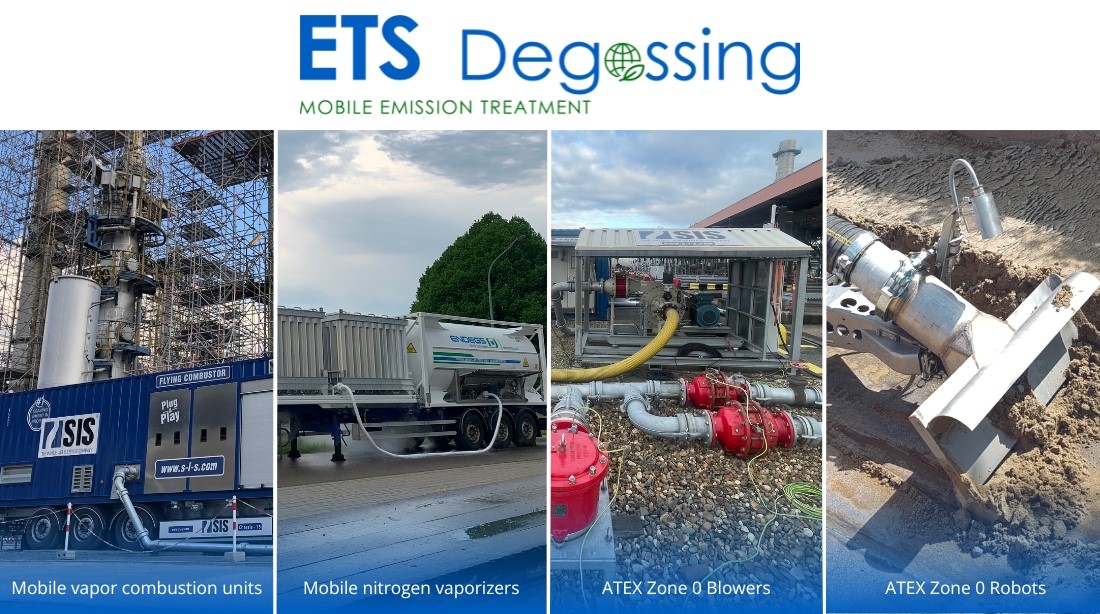
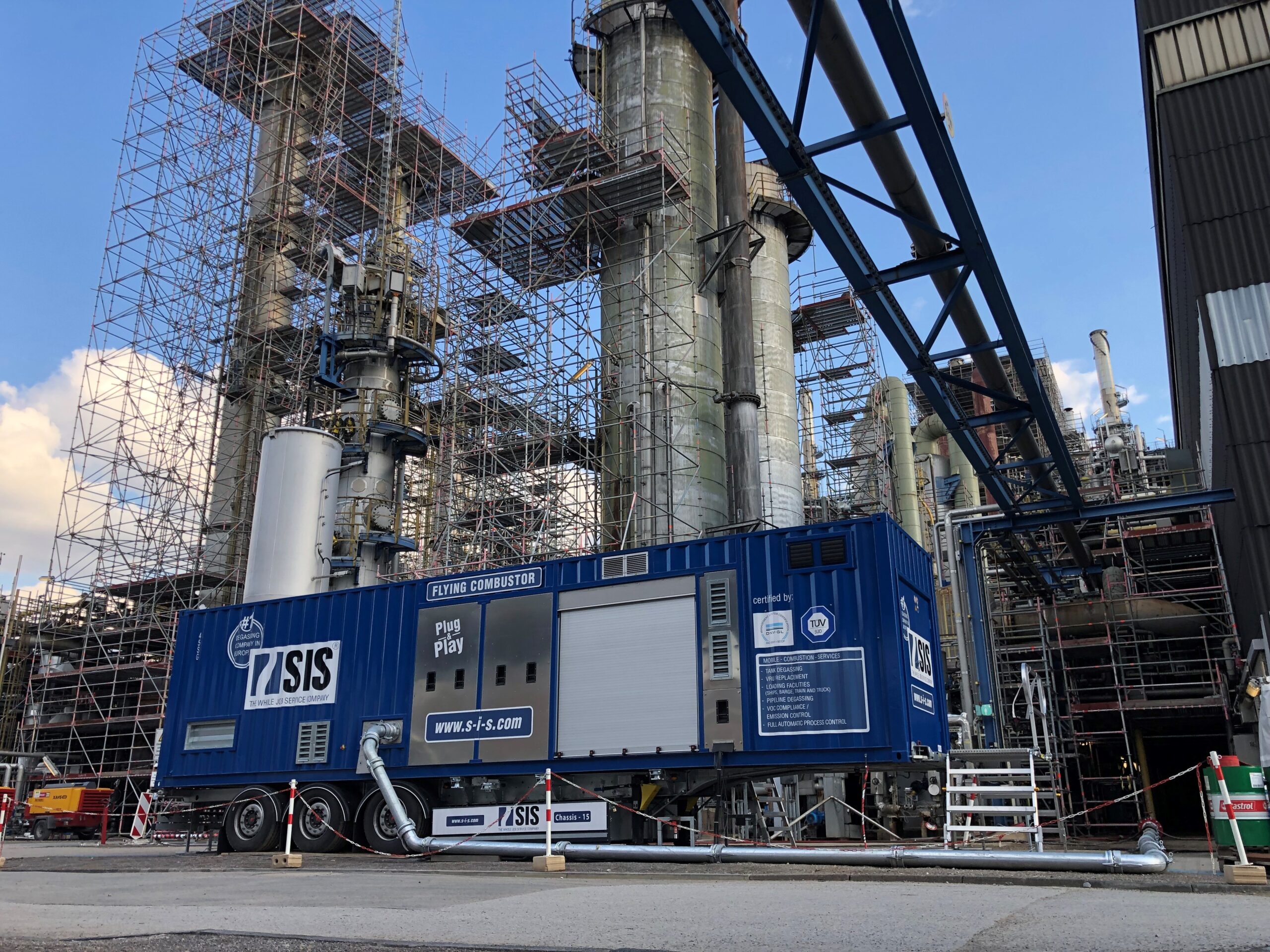
Degassing is the process of extracting and treating these residual gases and vapours in a safe and environmentally responsible way. Mobile vapour combustion chambers take this capability a step further by bringing emissions treatment directly to the source, rather than requiring gases to be transported or routed through fixed infrastructure.
These systems can be deployed at tank farms, refineries, ports, and chemical or other industrial plant, wherever emissions are being generated. Their mobility means they can be positioned precisely where they are needed, increasing operational flexibility and reducing the logistical complexity of emissions management.
Why Flexibility Matters
Fixed degassing infrastructure, while effective in purpose-built facilities, cannot always respond to the variable demands of industrial operations. Mobile systems fill that gap, offering plant operators the ability to respond quickly to unplanned shutdowns, accommodate turnaround schedules, and manage product changes without relying on permanent installations that may not be available or suitably located.
For ports and terminals handling a variety of products and vessel types, this flexibility is particularly valuable, as the nature and volume of residual gases can vary significantly depending on cargo and operational conditions.
A Growing Priority for Industry
With tightening environmental regulations and increasing scrutiny of industrial emissions, the ability to demonstrate controlled, documented management of hazardous vapours is becoming a compliance requirement as much as an operational best practice. Mobile degassing systems, such as those offered by specialist provider ETS Degassing, represent a practical response to these evolving demands, combining technical effectiveness with the deployment flexibility that modern industrial operations require.
For more information visit www.ets-degassing.com