
ETS Degassing has highlighted the operational and environmental challenges caused by downtime or failure of vapour recovery units (VRUs), and the role that mobile vapour combustion systems can play in maintaining continuous emissions control across industrial facilities.
VRUs are widely used in refineries, tank farms, chemical and petrochemical plants, and loading terminals to manage volatile organic compounds (VOCs) and hazardous air pollutants (HAPs) generated during production, transfer, and product handling processes. These stationary systems are critical for ensuring safety, environmental protection, and regulatory compliance.

David Wendel, Managing Director ETS Degassing
According to ETS Degassing Managing Director David Wendel, the failure or maintenance shutdown of a VRU can quickly escalate into a significant operational risk. Without functioning emission treatment systems, hazardous gases may be released uncontrollably, increasing risks to personnel, surrounding communities, and the environment, as well as raising explosion hazards. In many cases, affected operations must be halted immediately to maintain safety standards.
The company noted that this is particularly critical in facilities where emission control is directly linked to ongoing operations. In such environments, VRU downtime can lead to complete plant shutdowns, disrupting the loading and unloading of tank trucks, rail tank cars, and tank vessels, while also creating substantial financial and logistical impacts across supply chains.
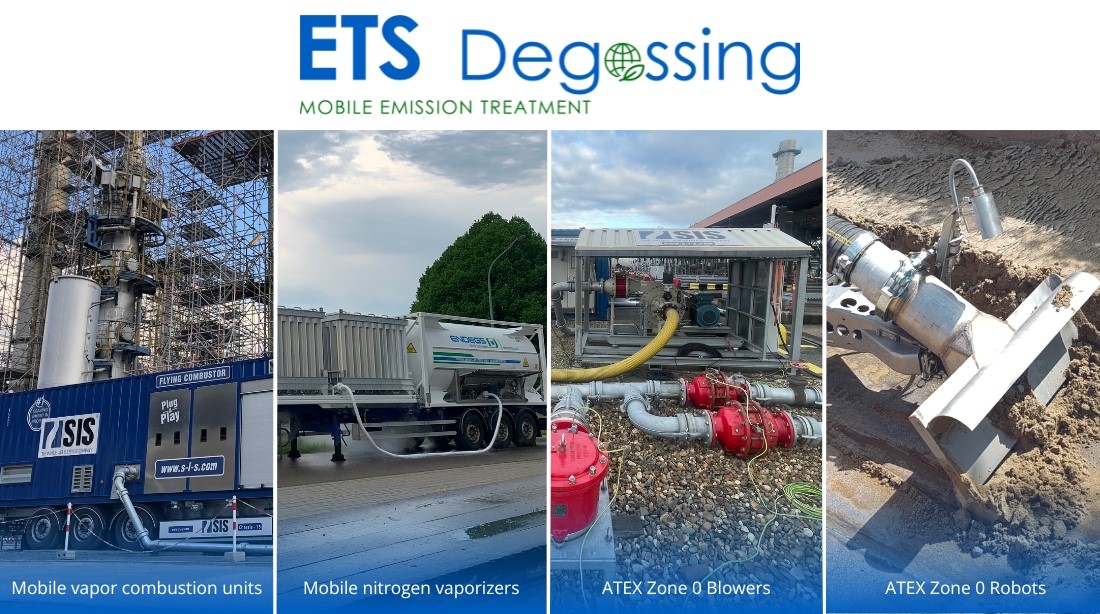
To address these challenges, ETS Degassing emphasised the use of mobile vapour combustion units as a temporary replacement solution. These transportable systems can be rapidly deployed and integrated into existing infrastructure, allowing them to take over emissions treatment directly on site during maintenance or repair of stationary VRUs.
The mobile units are designed to safely treat industrial vapours, gases, and gas mixtures with reported destruction efficiencies of more than 99.99 percent for VOCs and HAPs. ETS Degassing stated that this enables operators to remain compliant with environmental regulations even during VRU downtime, while maintaining safe handling of residual gases in tanks and pipelines, particularly during product changeovers.
The company added that the systems operate without open flames and are engineered to minimise noise and odour emissions, supporting safe and controlled degassing processes.
Due to their modular and transportable design, mobile vapour combustion units can be deployed for both short-term interventions and extended maintenance periods. ETS Degassing noted that these systems can help maintain continuous operations across tank farms, refineries, ports, and loading terminals by preventing unnecessary shutdowns during VRU outages.
The company highlighted several operational benefits, including rapid deployment, flexibility across different industrial applications, continued regulatory compliance, and reduced risk of production losses through uninterrupted operations.
ETS Degassing concluded that mobile vapour combustion technology provides a practical solution for maintaining operational continuity and environmental protection when stationary vapour recovery systems are temporarily unavailable.
For more information visit www.ets-degassing.com