
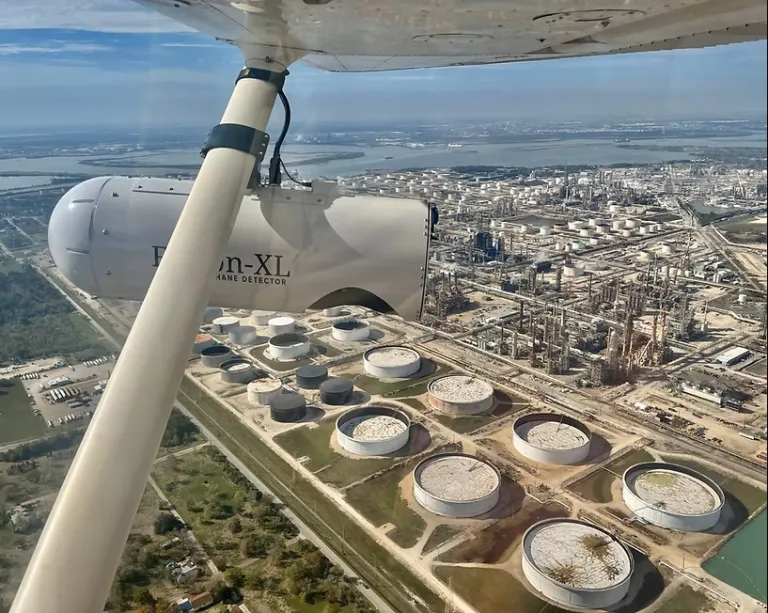
Energy Transfer has demonstrated its commitment to advancing pipeline safety and environmental responsibility through a strategic partnership with Vanguard Pipeline Inspection, LLC, supporting the development and deployment of the Falcon XL Aerial Methane Detection Technology. The collaboration has enabled the company to survey more than 44,000 miles of pipeline, marking a significant milestone in leak detection and emissions monitoring capabilities.
Early-Stage Investment in Emerging Technology
Energy Transfer’s involvement with the Falcon XL system predates its commercial market entry, reflecting the company’s proactive approach to identifying transformative technologies. The organisation partnered with Vanguard not merely as a commercial customer but as an active collaborator, providing research and development funding alongside technical guidance to shape the system’s evolution. This early-stage engagement ensured the technology was designed to address real-world operational requirements whilst maintaining rigorous safety and environmental performance standards.
The partnership exemplifies Energy Transfer’s broader strategic approach of investing in technologies aligned with its mission to reduce emissions, protect natural resources, and operate with transparency and accountability. By supporting innovation during development phases, the company aims to accelerate the creation of tools that deliver benefits across the entire energy infrastructure industry.
Technical Capabilities and Operational Integration
The Falcon XL system is engineered for deployment on both fixed-wing aircraft and rotary helicopters, enabling methane detection during routine aerial patrol operations. This integration allows Energy Transfer to enhance the efficiency of existing flight operations by adding a sophisticated layer of pipeline safety and environmental monitoring without requiring separate dedicated surveillance missions.
The system’s capability to detect low-level emissions provides valuable complementary support for Energy Transfer’s comprehensive leak detection programs. The technology’s sensitivity enables identification of potential issues that might otherwise remain undetected through conventional monitoring methods, strengthening the company’s overall approach to pipeline integrity management.
Expansion of Detection Technologies
In 2024, Energy Transfer further expanded its methane detection capabilities by launching an initiative utilising tunable diode laser absorption spectroscopy (TDLAS), an advanced laser-equipped technology. This next-generation approach represents a significant enhancement to the company’s ability to identify and address potential pipeline issues with increased speed and effectiveness.
The addition of TDLAS technology demonstrates Energy Transfer’s commitment to deploying multiple complementary detection methods, creating a layered approach to emissions monitoring that leverages different technological capabilities to provide comprehensive coverage across its extensive pipeline network.
Industry Recognition
The collaborative efforts of Energy Transfer and Vanguard Pipeline Inspection received formal industry recognition at the Texas Oil & Gas Association’s Energy Elevated Technology Showcase on 4 September 2025. The partnership was awarded the Expert Commentator Pick for Most Innovative 2025 following a joint presentation at the event, acknowledging the significance of their work in advancing methane detection capabilities.
This recognition underscores the industry’s acknowledgement of innovative approaches to environmental monitoring and the value of collaborative partnerships between operators and technology developers in addressing critical challenges within the energy sector.
Strategic Implications for Pipeline Safety
The partnership’s success reflects the scalability and practical application of advanced detection technologies across extensive pipeline infrastructure. Energy Transfer’s survey of more than 44,000 miles of pipeline using the Falcon XL system demonstrates both the technology’s operational viability and the company’s commitment to systematic implementation of enhanced monitoring capabilities.
The collaboration represents a model for how energy infrastructure companies can actively participate in technology development rather than solely adopting commercially available solutions. By engaging during research and development phases, operators can ensure emerging technologies address specific operational challenges whilst meeting industry safety and environmental standards.
Commitment to Responsible Operations
Energy Transfer has positioned the Vanguard partnership as emblematic of its approach to advancing safety and environmental initiatives through innovation and collaboration. The company emphasises that supporting technologies which improve operational performance whilst contributing to environmental responsibility aligns with its broader objectives for sustainable energy infrastructure management.
The integration of multiple advanced detection technologies, including both the Falcon XL system and TDLAS capabilities, illustrates Energy Transfer’s systematic approach to enhancing pipeline integrity and emissions monitoring. This multi-technology strategy provides operational redundancy and comprehensive coverage, strengthening the company’s ability to identify and address potential issues across its extensive pipeline network.
The partnership demonstrates how collaborative relationships between infrastructure operators and technology developers can drive meaningful progress in addressing environmental challenges whilst maintaining operational efficiency and safety standards across the energy sector.
For more information visit www.energytransferfacts.com