

The inaugural Finance & Investment Conference at ADIPEC 2024, the world’s largest energy event, concluded today with a clear focus on the urgent need for accessible, available, and affordable capital to support a secure, equitable, and sustainable energy transition. The conference brought together a diverse array of stakeholders from the Global North and South, including top financiers, policymakers, and energy executives, all intent on establishing sustainable and innovative finance structures for an inclusive energy future.
Prominent initiatives such as the UAE Leaders’ Declaration on a Global Climate Finance Framework were spotlighted as steps toward mobilising capital and mitigating investment risks. However, conference experts highlighted persistent challenges—such as high borrowing costs, lack of creditworthy off-takers, and regulatory uncertainty in developing economies—that hinder the pace of investment needed for global energy projects. Representatives from IRENA, MUFG, Houlihan Lokey, and Amundi concurred that addressing these barriers is essential to attract and secure the required funding.
Gurbuz Gonul, director of country engagement and partnerships at IRENA, underscored the funding inequities faced by developing regions: “Regional discrepancies in financing energy transition projects pose significant challenges. Developing countries face tougher financing terms, undermining the affordability of technology deployment. While governments should work to foster investment-friendly environments, we must also improve financing conditions to reduce this gap. Currently, we rely on bilateral climate finance, though philanthropy is emerging as an influential player in the sector.”
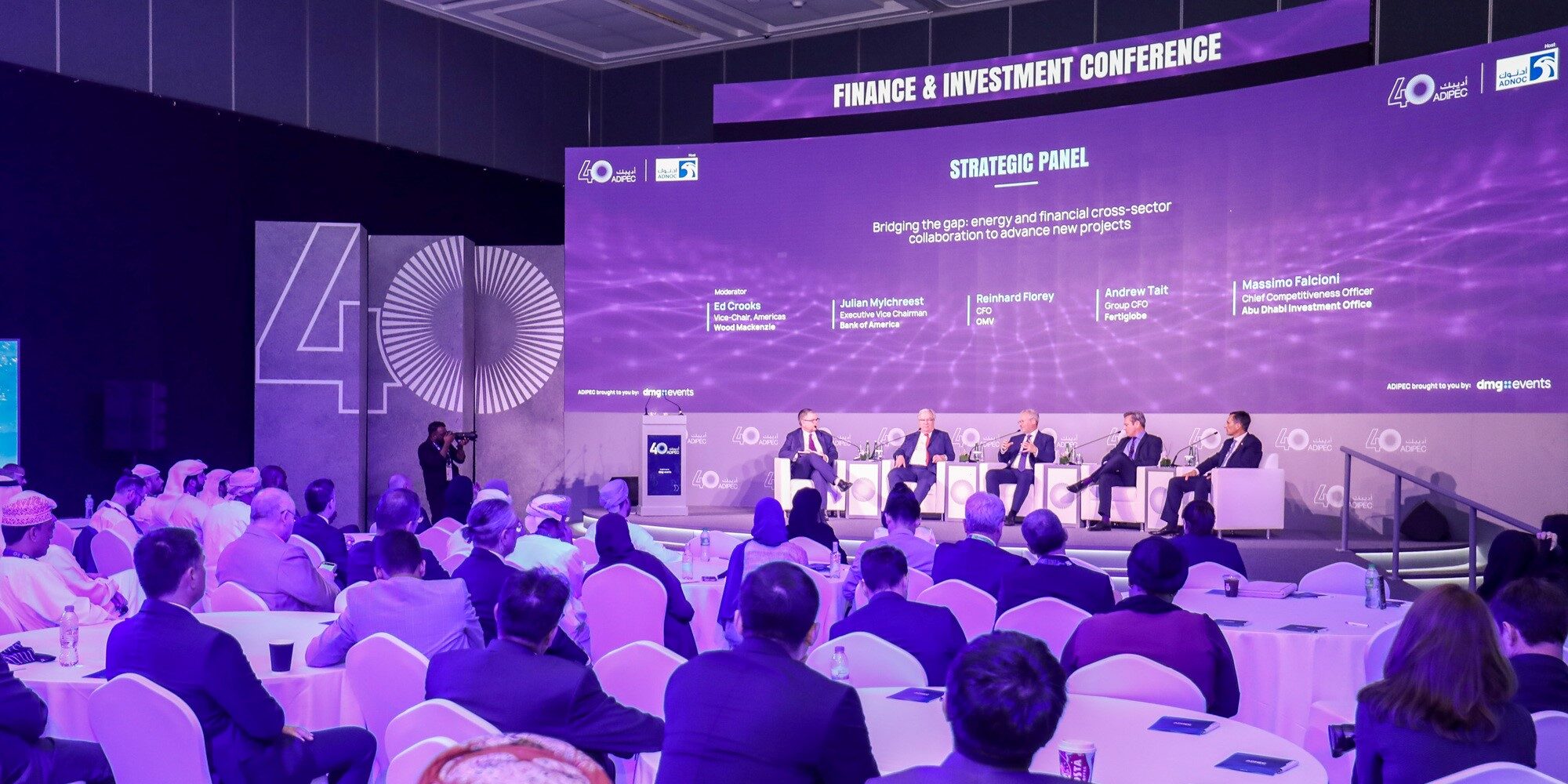
Another pivotal session, titled “Bridging the Gap: Energy and Financial Cross-Sector Collaboration to Advance New Projects,” brought together senior leaders from Bank of America, Abu Dhabi Investment Authority (ADIA), OMV, and Fertigro. This panel explored how collaboration between investors, banks, and the energy sector can provide the funding required to maintain momentum in the energy transition. Massimo Falcioni, chief competitiveness officer at ADIA, highlighted the bankability factors governments look for in energy projects: “A key criterion for support is a project’s contribution to local GDP, as we aim for sustainable economic development in Abu Dhabi. ESG compliance and employment impact are also essential. Sustainability remains at the core of all decisions.”
Building on its 40-year commitment to energy leadership, ADIPEC will further its mission to promote inclusive energy transformation through tomorrow’s Voice of Tomorrow Conference, which gathers diverse industry perspectives to find collaborative solutions. Topics will cover growth opportunities in African energy markets, expectations for the Global South’s energy sector at COP29, the role of diversity and inclusion in advancing the energy transition, and how organisations and governments can support communities in preparing for climate resilience. Notable speakers will represent ADNOC, the Abu Dhabi Sustainability Group, the Economic Research Institute for ASEAN and East Asia, the Oil and Gas Climate Fund, and the Global Impact Coalition.
As ADIPEC 2024 moves into its final day, the event remains a powerful platform for enabling secure, equitable, and sustainable energy solutions, playing an instrumental role in the world’s energy transition journey.
For more information visit www.adipec.com