


Cheniere Energy, Inc. has announced the release of an updated life cycle assessment study evaluating the greenhouse gas emissions intensities of its liquefied natural gas. This peer-reviewed research introduces an innovative gas-pathing algorithm that enhances the modeling of emissions across Cheniere’s supply chain using real operational data. The study benefits from the company’s extensive Quantification, Monitoring, Reporting, and Verification programme, which incorporates data collected from Cheniere’s facilities as well as collaborative work with natural gas producers, midstream operators, shippers, and academic experts.
Published in the American Chemical Society’s Sustainable Chemistry & Engineering Journal, this latest study builds upon Cheniere’s initial LCA analysis from 2021, refining the understanding of emissions throughout its LNG supply chain.
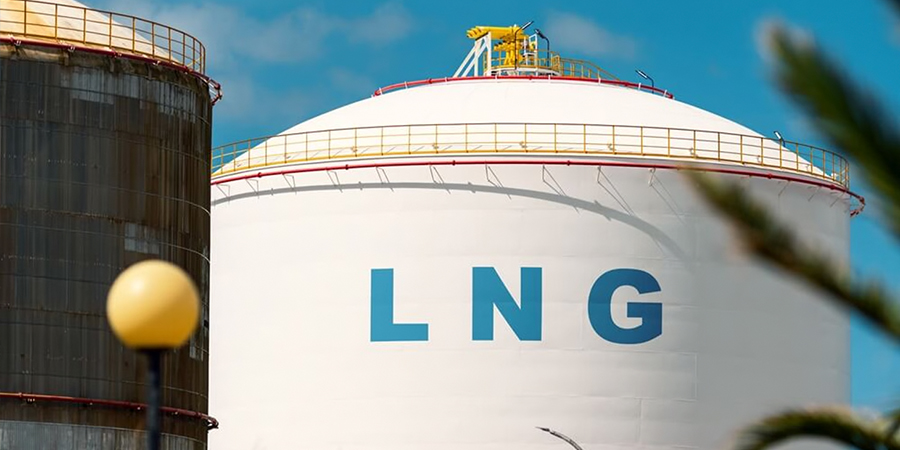
The updated LCA study applies an advanced algorithm that maps natural gas pathways through Cheniere’s 2022 supply chain, tracing the journey from production basins, through transmission networks, to the Sabine Pass and Corpus Christi liquefaction facilities on the Gulf Coast. By integrating data related to gas purchases, transportation capacities, and gas flows, this analysis provides an enhanced perspective on supply chain emissions and delivers more precise estimates of GHG emissions intensities for Cheniere’s LNG.
By comparing conventional emissions inventory data with measurement data, the study highlights that the 2022 emissions intensity of Cheniere’s delivered LNG is consistently lower than the figures reported in the US Department of Energy’s 2019 study from the National Energy Technology Laboratory. The study notes that emissions intensities for Cheniere’s LNG, when used for power generation in importing countries, are approximately 20-28 percent lower than those reported in the NETL study. The findings underscore the importance of integrating direct measurement data into LCAs to better reflect the variability and specifics of natural gas supply chains.
Jack Fusco, Cheniere’s president and CEO, stated, “This study reinforces the environmental competitiveness of Cheniere’s LNG, while demonstrating the value of direct emissions measurement to better understand the environmental footprint of LNG and identify areas for improvement. We are charting a path forward with concrete data, science and actions to ensure LNG and natural gas continue to play a role in the global transition to a lower-carbon future for decades to come.”
The updated study was co-authored by experts from the University of Texas at Austin’s Energy Emissions Modeling and Data Lab, Queen Mary University of London’s School of Engineering and Materials Science, Colorado School of Mines’ Payne Institute for Public Policy, Rystad Energy, KeyLogic Systems, and Cheniere Energy.
For more information visit www.cheniere.com