


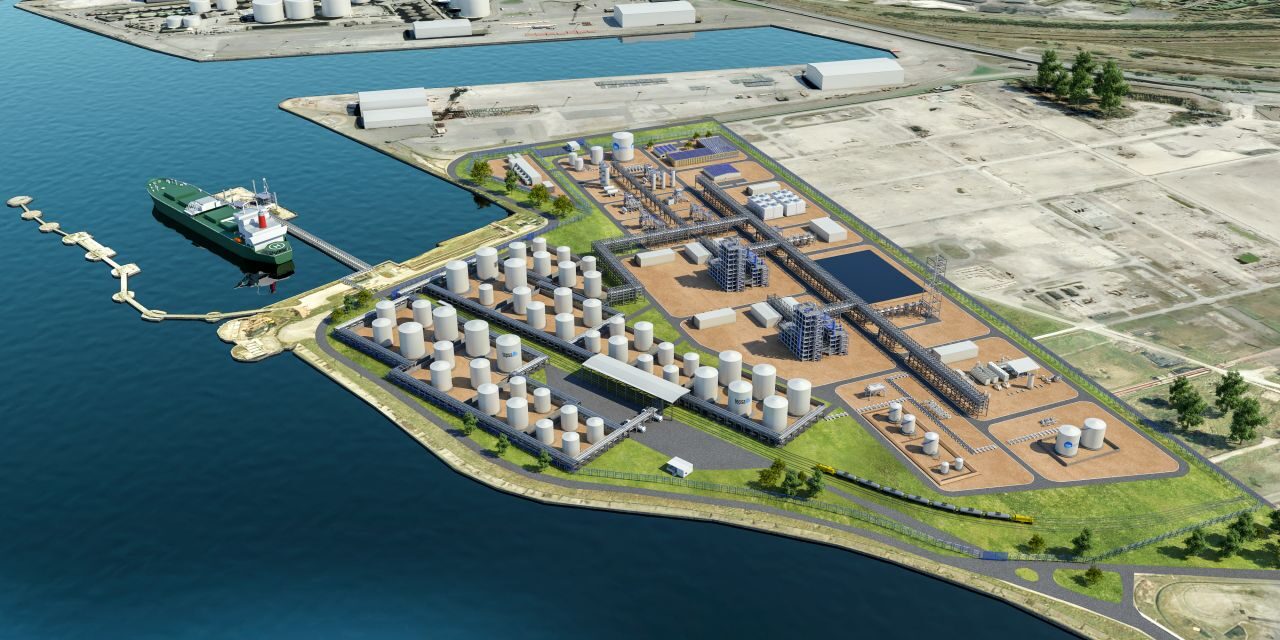
Technip Energies, Airbus, Safran and Tereos have signed an agreement to establish Rebound, a joint venture aimed at developing a large-scale Sustainable Aviation Fuel (SAF) production facility at the Port of Dunkirk in northern France. The project is expected to become one of the largest SAF facilities in Europe and represents a significant step toward strengthening the continent’s energy security and aviation decarbonisation efforts.
The proposed facility will use the Alcohol-to-Jet (AtJ) production pathway to convert advanced ethanol into sustainable aviation fuel, with an anticipated annual production capacity of approximately 160,000 tonnes. The partners have committed to funding the project’s development phase, which will include engineering studies and other preparatory activities necessary to support a future Final Investment Decision (FID).
The initiative comes at a time when demand for SAF is expected to increase significantly. Under the European Union’s RefuelEU Aviation regulation, mandatory SAF blending requirements will gradually rise from current levels to 6 percent by 2030 and 70 percent by 2050. These targets are projected to drive an eightfold increase in SAF demand between 2030 and 2050.
Among the various SAF production technologies available, the Alcohol-to-Jet pathway is increasingly viewed as a scalable and cost-competitive solution. The process converts advanced ethanol, produced from agricultural and forestry residues, into a drop-in aviation fuel that can be blended with conventional jet fuel and used without modifications to existing aircraft or engines.
During the development phase, Technip Energies will serve as lead developer and engineering partner, leveraging its expertise in technology deployment and large-scale project execution. Airbus and Safran will participate as industrial partners, facilitating offtake arrangements and potentially purchasing SAF produced by the facility. Tereos, one of Europe’s leading ethanol producers and a major French agricultural cooperative, is expected to provide the advanced ethanol feedstock required for production.
Together, the four companies will cover the entire value chain, from feedstock supply through fuel production to aviation end use, creating a fully integrated European-led SAF initiative.
A key milestone has already been achieved with the allocation of an industrial site at the Port of Dunkirk to Technip Energies. The location offers significant logistical advantages for both feedstock sourcing and product distribution, while also supporting a streamlined permitting process once the joint venture is formally established.
The partners plan to advance the project through a structured development process that will include selecting a technology licensor, securing permits, conducting pre-FEED and FEED studies, finalising feedstock supply and SAF offtake agreements, and arranging financing for construction. The joint venture remains subject to customary approvals and closing conditions and is expected to be formally established during the second half of the year.
Company representatives described the project as an important step toward accelerating aviation decarbonisation and building a competitive European SAF industry. The partners highlighted the strategic importance of developing scalable alternative fuel pathways, strengthening Europe’s energy resilience, supporting agricultural value chains, and creating new economic opportunities linked to the transition to lower-carbon aviation.
For more information visit www.ten.com