

Gasum has secured long-term LNG terminal capacity at the Klaipeda LNG terminal in Lithuania for the period 2033–2040, reinforcing its strategic ambition to remain a reliable partner in the energy transition. The agreement strengthens the company’s ability to supply liquefied natural gas (LNG) and liquefied biomethane (bio-LNG) to the Northwestern European market over the coming decade.
The Klaipeda LNG terminal already plays an important role in Gasum’s supply chain. The company primarily uses the facility as a reloading point for its LNG carrier and bunker vessels, while also supporting natural gas operations across Finland and the Baltic region.
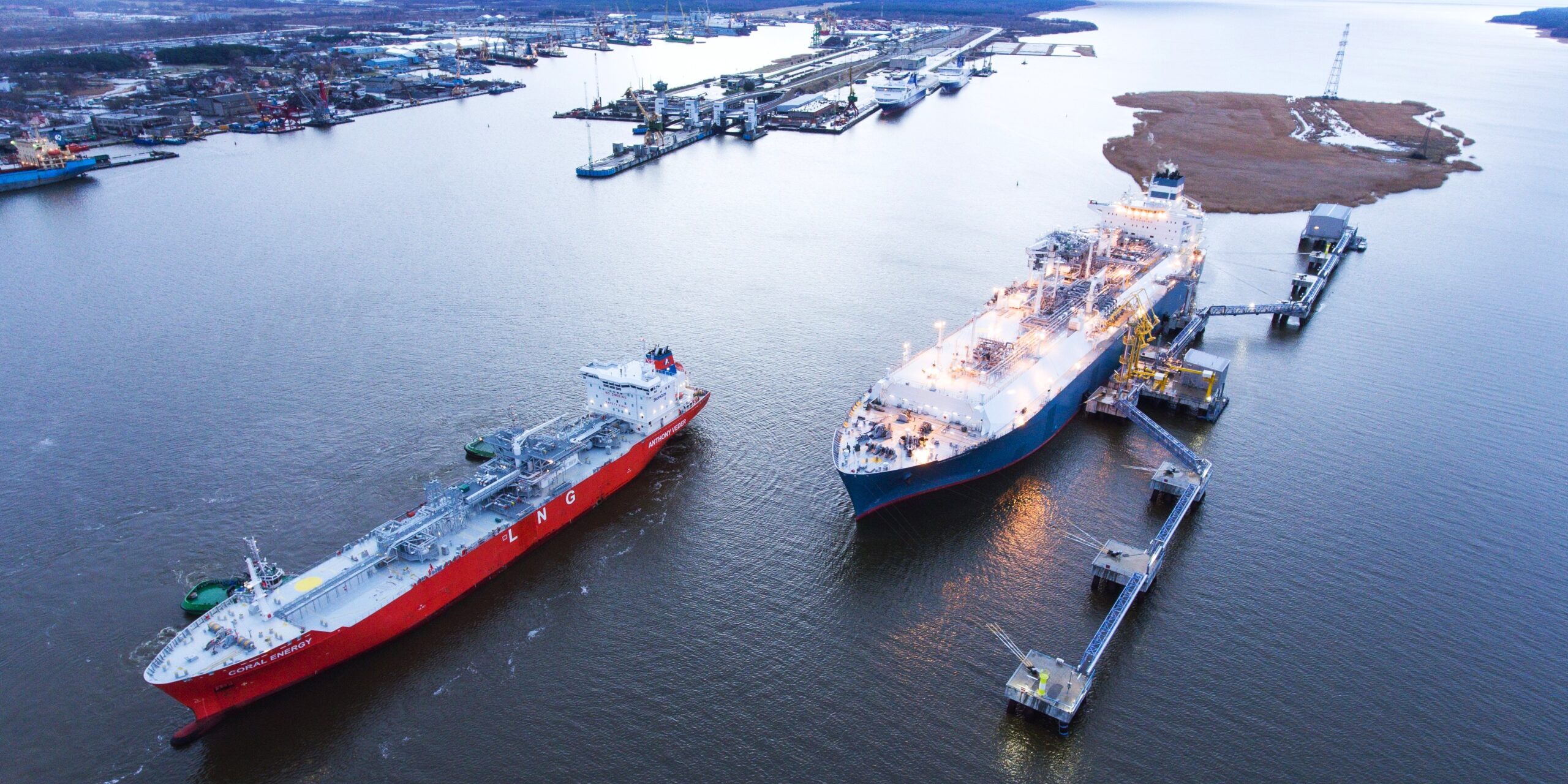
The terminal’s strategic location complements Gasum’s existing LNG terminal network in Finland, Sweden, and Norway. In addition, the reserved capacity will enable the company to better serve maritime customers operating in and around the Danish straits.
According to Anders Malm, senior vice president of supply & trading at Gasum, securing long-term capacity at Klaipeda enhances the company’s supply capabilities and provides greater flexibility in optimising deliveries across its terminal network and maritime customer base. He noted that the agreement also reinforces Gasum’s commitment to supporting customers throughout the energy transition.
Growing demand for LNG and bio-LNG
Demand for LNG is expected to increase significantly, particularly within the maritime sector, as the global fleet of LNG-powered vessels continues to expand. At the same time, the shipping industry is facing mounting pressure to adopt lower-emission fuels and reduce its environmental footprint.
Regulatory initiatives from both the International Maritime Organization (IMO) and the European Union are driving efforts to cut greenhouse gas emissions, while customers are increasingly seeking more sustainable transportation solutions to meet their own decarbonisation targets.
The capacity secured at Klaipeda also provides opportunities for the virtual liquefaction of pipeline-fed biomethane into bio-LNG through mass-balancing mechanisms and biomethane certificates. Gasum considers this capability increasingly important as demand grows for renewable fuel alternatives that can deliver greater lifecycle emissions reductions than conventional LNG alone.
For more information visit www.gasum.com